
Iran’s ruling establishment has, by multiple credible estimates, funneled tens of billions of dollars over the past several decades into armed proxy groups across the Middle East — Hezbollah in Lebanon, various militia factions in Iraq and Syria, Hamas in Gaza, and Houthi forces in Yemen — while its own domestic economy has deteriorated under a combination of international sanctions, mismanagement, and corruption. The result, as of recent reporting, is a country facing a dual collapse: the proxy network that Tehran spent a generation building has suffered severe battlefield and leadership losses, while ordinary Iranians contend with a currency in freefall, persistent inflation, water shortages, and an infrastructure deficit that grows worse each year. The Iranian rial, which traded at roughly 70,000 to the dollar a decade ago, has at various points reportedly plunged past 600,000 to the dollar in unofficial markets, though exact current figures fluctuate and should be verified against the latest data.
This article examines what is known about the scale of Iran’s proxy spending, how that investment has fared in the wake of recent regional conflicts and targeted strikes, and what the domestic cost has been for a population of roughly 88 million people. It also looks at the strategic logic Tehran used to justify this spending, the ways that logic has unraveled, and what accountability mechanisms — if any — exist for Iranian citizens who have borne the economic burden. For readers tracking government accountability and geopolitical spending, the Iranian case offers a stark example of a regime that prioritized power projection abroad over basic governance at home.
Table of Contents
- How Much Has Iran Actually Spent on Proxy Networks Instead of Its Own Citizens?
- Why Iran’s Proxy Strategy Made Strategic Sense — Until It Didn’t
- The Domestic Cost — What Iranians Have Lost While Proxies Were Funded
- How Regional Power Shifts Are Exposing Iran’s Strategic Overextension
- Can Iran’s Proxy Network Actually Be Rebuilt — And at What Cost?
- What Accountability Looks Like When There Is No Accountability
- What Comes Next for Iran’s Dual Crisis
- Conclusion
- Frequently Asked Questions
How Much Has Iran Actually Spent on Proxy Networks Instead of Its Own Citizens?
Precise dollar figures for Iran’s proxy spending are inherently difficult to pin down, since much of the funding flows through the Islamic Revolutionary Guard Corps (IRGC) and its Quds Force via channels designed to avoid detection. However, U.S. State Department estimates have historically placed Iran’s annual support to Hezbollah alone at roughly $700 million to $1 billion per year. Funding to Iraqi shia militias, Hamas, Palestinian Islamic Jihad, and the Houthis has been estimated in the hundreds of millions annually by various Western intelligence assessments, though these figures have fluctuated with oil revenues and sanctions pressure.
Over a span of two to three decades, credible analysts have suggested that total cumulative proxy spending could range from $16 billion to well over $30 billion, depending on how indirect support — weapons transfers, training, logistical infrastructure — is valued. To put that in domestic context, Iran’s annual national budget has historically hovered in the range of $50 billion to $80 billion equivalent, though currency instability makes precise conversions difficult. Even at the lower estimates, proxy spending has represented a meaningful percentage of national resources directed away from infrastructure, healthcare, education, and job creation. Iranian economists and opposition figures have repeatedly pointed out that the funds directed to Hezbollah’s reconstruction efforts in southern Lebanon, for example, could have addressed critical water infrastructure failures in provinces like Khuzestan, where residents have staged repeated protests over shortages. The comparison is not hypothetical — it represents a deliberate allocation choice by a regime that has consistently prioritized regional influence over domestic welfare.

Why Iran’s Proxy Strategy Made Strategic Sense — Until It Didn’t
From Tehran’s perspective, the proxy network was never charity. It was a relatively cost-effective way to project power and deter adversaries without risking direct military confrontation with the United States or Israel. For decades, this approach largely worked. hezbollah became the most capable non-state military force in the Middle East, capable of threatening Israel’s northern border. Iraqi militias helped ensure that Baghdad’s post-2003 governments remained at least partially responsive to Iranian interests. The houthis tied down Saudi Arabia in a costly and unpopular war. On a dollar-for-dollar basis, Iran arguably got more strategic leverage from its proxy investments than many nations get from conventional defense spending several times larger.
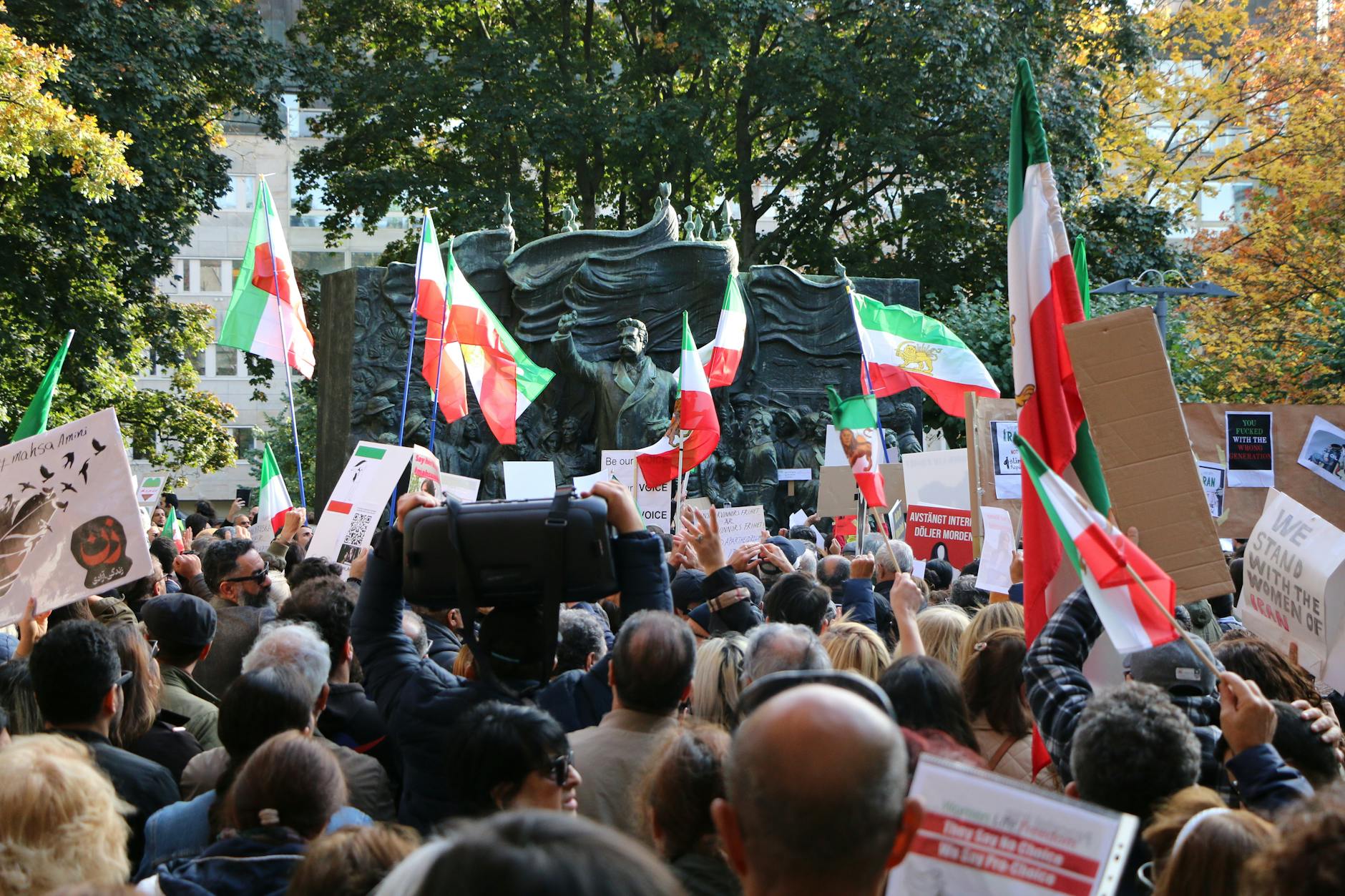
However, this calculus depended on two assumptions that have come under severe pressure. First, it assumed that proxy forces would remain effective and intact. The events of late 2023 and 2024 challenged that assumption significantly. Hezbollah reportedly suffered devastating leadership losses, including senior commanders, through targeted operations. Hamas’s military infrastructure in Gaza has been substantially degraded through sustained Israeli operations. The extent of these losses is still being assessed, but multiple reports suggest that Iran’s most valuable proxy assets have been diminished in ways that may take years to rebuild — if rebuilding is even possible under current conditions. Second, the strategy assumed that domestic unrest could be managed through repression. The nationwide protests that erupted in Iran in 2022, initially sparked by the death of Mahsa Amini in morality police custody, demonstrated that public tolerance for a regime that spends abroad while neglecting its people has limits, even if those protests were ultimately suppressed through force.
The Domestic Cost — What Iranians Have Lost While Proxies Were Funded
The human cost of Iran’s spending priorities is visible across nearly every sector of its domestic economy. Iran’s healthcare system, once considered relatively advanced for the region, has struggled under sanctions and underfunding. Reports from Iranian medical associations have described shortages of critical medications, outdated equipment in public hospitals, and a significant brain drain as trained physicians leave the country for better opportunities. Education funding has similarly lagged, with Iranian universities — which produced a generation of highly educated graduates in the 2000s — facing budget cuts and ideological restrictions that have driven academic talent abroad. Infrastructure tells a similar story.
Iran sits on some of the world’s largest natural gas and oil reserves, yet many Iranian cities experience regular power outages, particularly during extreme summer heat. The water crisis in southern and central provinces has been well-documented, with Lake Urmia — once one of the largest saltwater lakes in the world — shrinking dramatically due to a combination of climate change, dam construction, and agricultural mismanagement. While proxy funding is not the sole cause of these crises, the opportunity cost is difficult to ignore. Every dollar routed to militia groups in Iraq or rocket programs in Lebanon was a dollar not invested in desalination plants, power grid modernization, or earthquake-resistant construction in a seismically active country. The 2003 Bam earthquake killed over 26,000 people in part because of substandard building construction — a problem that persists in many Iranian cities two decades later.

How Regional Power Shifts Are Exposing Iran’s Strategic Overextension
The Abraham Accords and subsequent normalization efforts between Israel and several Arab states have further complicated Iran’s strategic position. Saudi Arabia and Iran reached a Chinese-brokered détente in 2023, but the underlying rivalry has not disappeared, and Riyadh’s growing diplomatic and economic ties with countries that were once more firmly in the non-aligned camp have left Tehran increasingly isolated. The contrast is instructive: while Saudi Arabia has invested hundreds of billions in domestic transformation projects — with debatable results but undeniable ambition — Iran has continued to prioritize external power projection on a fraction of the budget. The tradeoff is especially stark when comparing infrastructure investment. Gulf states have built new cities, airports, and transit systems.
Iran’s Tehran metro system, while functional, has been under construction in phases since the 1990s and still does not fully serve the capital’s population of roughly 9 million in the metro area. Iran’s road and rail networks, while extensive by regional standards, suffer from deferred maintenance and incomplete expansion plans. The regime has argued that sanctions, not spending priorities, are primarily to blame — and sanctions have certainly played a major role. But the argument rings hollow when billions have demonstrably flowed to armed groups abroad while domestic infrastructure projects stall for lack of funding. Iranian citizens have made this point repeatedly on social media and in street protests, often at significant personal risk.
Can Iran’s Proxy Network Actually Be Rebuilt — And at What Cost?
The question facing Tehran now is whether the proxy network that absorbed decades of investment can be reconstituted, and whether the regime can afford to try. Hezbollah’s organizational depth means it is unlikely to disappear entirely, but rebuilding its military capabilities — particularly its precision missile program and command structure — would require significant time and resources. In Lebanon’s current economic collapse, Hezbollah’s ability to function as both a political party and a social services provider has been severely strained even apart from battlefield losses. Hamas faces an even more uncertain future given the scale of destruction in Gaza and the intense international scrutiny on reconstruction funding.
The risk for Iran is a vicious cycle: weakened proxies provide less strategic deterrence, which makes Iran more vulnerable to direct pressure, which in turn makes the regime more inclined to spend on rebuilding those proxies rather than addressing domestic needs. Meanwhile, the population’s patience has demonstrably thinned. The protest movements of 2019 and 2022, while suppressed, revealed a generation of Iranians who are less willing to accept the regime’s framing of proxy wars as existential necessities. Any significant new investment in proxy rebuilding would likely deepen domestic resentment at a time when the regime can least afford it. The IRGC’s economic empire — which controls significant portions of Iran’s construction, telecommunications, and import sectors — also complicates reform, since the same institution that directs proxy funding profits from the domestic economic distortions that funding creates.
📨 Get Free Accountability Coverage Alerts
Free · No spam · Unsubscribe anytime
What Accountability Looks Like When There Is No Accountability
Unlike democracies where military spending is subject to legislative oversight and public audit, Iran’s proxy expenditures flow through channels that are largely opaque even to the Iranian parliament. The IRGC’s budget is not fully disclosed in public budget documents, and the Supreme Leader’s office controls substantial financial resources — including the Setad conglomerate, estimated to control assets worth tens of billions of dollars — that operate outside normal government accounting. This means that the fundamental question of how much was spent and what was gained may never be fully answerable, at least not while the current governing structure remains in place.
For observers focused on government accountability, this opacity is the point. The Iranian system is structured to prevent exactly the kind of cost-benefit analysis that would reveal the tradeoff between proxy spending and domestic investment. Iranian journalists and economists who have attempted to quantify these costs have faced arrest, censorship, and exile.
What Comes Next for Iran’s Dual Crisis
Looking forward, Iran faces a set of pressures that are mutually reinforcing and difficult to resolve. Demographically, Iran’s population is young, urbanized, and increasingly connected to global information flows despite censorship efforts. This population wants economic opportunity, not ideological justifications for foreign military adventures. The regime’s ability to maintain control through a combination of repression and limited economic concessions depends on having resources to distribute — resources that are increasingly scarce.
The collapse or severe weakening of Iran’s proxy network does not automatically translate into domestic reform or improved governance. It could just as easily lead to increased internal repression as the regime loses external leverage and focuses on maintaining control at home. What is clear is that the billions spent building a regional network of armed groups represented a massive opportunity cost for the Iranian people, and the returns on that investment — measured in strategic influence, deterrence, and regional power — are diminishing rapidly. Whether this leads to a fundamental reorientation of Iranian priorities or simply a more desperate version of the status quo will be one of the defining questions in Middle Eastern geopolitics in the years ahead.
Conclusion
Iran’s decades-long investment in proxy warfare across the Middle East represents one of the most consequential resource allocation decisions by any government in recent history. By directing tens of billions of dollars toward Hezbollah, Hamas, Iraqi militias, and the Houthis while its own infrastructure, healthcare, and economy deteriorated, Tehran made a bet that regional influence would provide more security than domestic prosperity. That bet is now being tested as proxy forces suffer significant losses and the Iranian public grows increasingly unwilling to bear the cost. The path forward for Iran involves hard choices that the current regime has shown little willingness to make.
Rebuilding proxy networks will require resources the country can ill afford. Redirecting those resources domestically would require acknowledging that the strategy was flawed — a concession that challenges the ideological foundations of the Islamic Republic itself. For those tracking government accountability and the consequences of unchecked military spending, Iran offers a case study in what happens when a government treats its own population as an afterthought. The crumbling is real, and it is happening on both fronts simultaneously.
Frequently Asked Questions
How much does Iran spend annually on proxy groups like Hezbollah?
Exact figures are classified and disputed, but U.S. government estimates have historically placed Iran’s annual support to Hezbollah alone at roughly $700 million to $1 billion per year. Total annual proxy spending across all groups has been estimated in the low single-digit billions, though these figures fluctuate with Iran’s oil revenues and sanctions environment.
Why does Iran fund proxy groups instead of investing domestically?
The Iranian regime views proxy forces as a cost-effective form of strategic deterrence — a way to threaten adversaries and project regional power without maintaining a conventional military capable of confronting the United States or Israel directly. The IRGC, which manages most proxy relationships, also benefits institutionally and financially from maintaining these networks.
Have sanctions or proxy spending hurt Iran’s economy more?
Both have played significant roles, and disentangling their effects is difficult. Sanctions have restricted Iran’s access to global financial markets, limited oil exports, and increased the cost of imports. However, proxy spending has diverted domestic resources that could have partially offset sanctions damage through infrastructure investment and economic development. The regime tends to blame sanctions exclusively, while critics point to the billions sent abroad as an equally significant factor.
What happened to Iran’s proxy network in 2023-2024?
As of available reporting, Iran’s proxy network suffered substantial setbacks. Hezbollah lost senior leadership figures and military capability through targeted operations. Hamas’s military infrastructure in Gaza was significantly degraded during sustained Israeli military operations. The full extent of these losses and Iran’s ability to rebuild remains an evolving situation that readers should verify against current reporting.
Could Iran redirect proxy funding to fix its domestic problems?
In theory, the sums involved — while not sufficient to solve all of Iran’s economic problems — could make meaningful differences in specific areas like water infrastructure, healthcare equipment, and power grid modernization. In practice, redirecting these funds would require political will from a regime whose power structure is built around the IRGC and its regional mission, making such a shift unlikely without fundamental political change.
You Might Also Like
- Iraq’s Shia Militias Receive Funding and Weapons From Iran — Both Are Now Under Threat
- The Power Struggle Inside Iran Right Now Could Be More Dangerous Than the Bombing
- The People With the Most Weapons in Post-War Iran Will Make the Rules