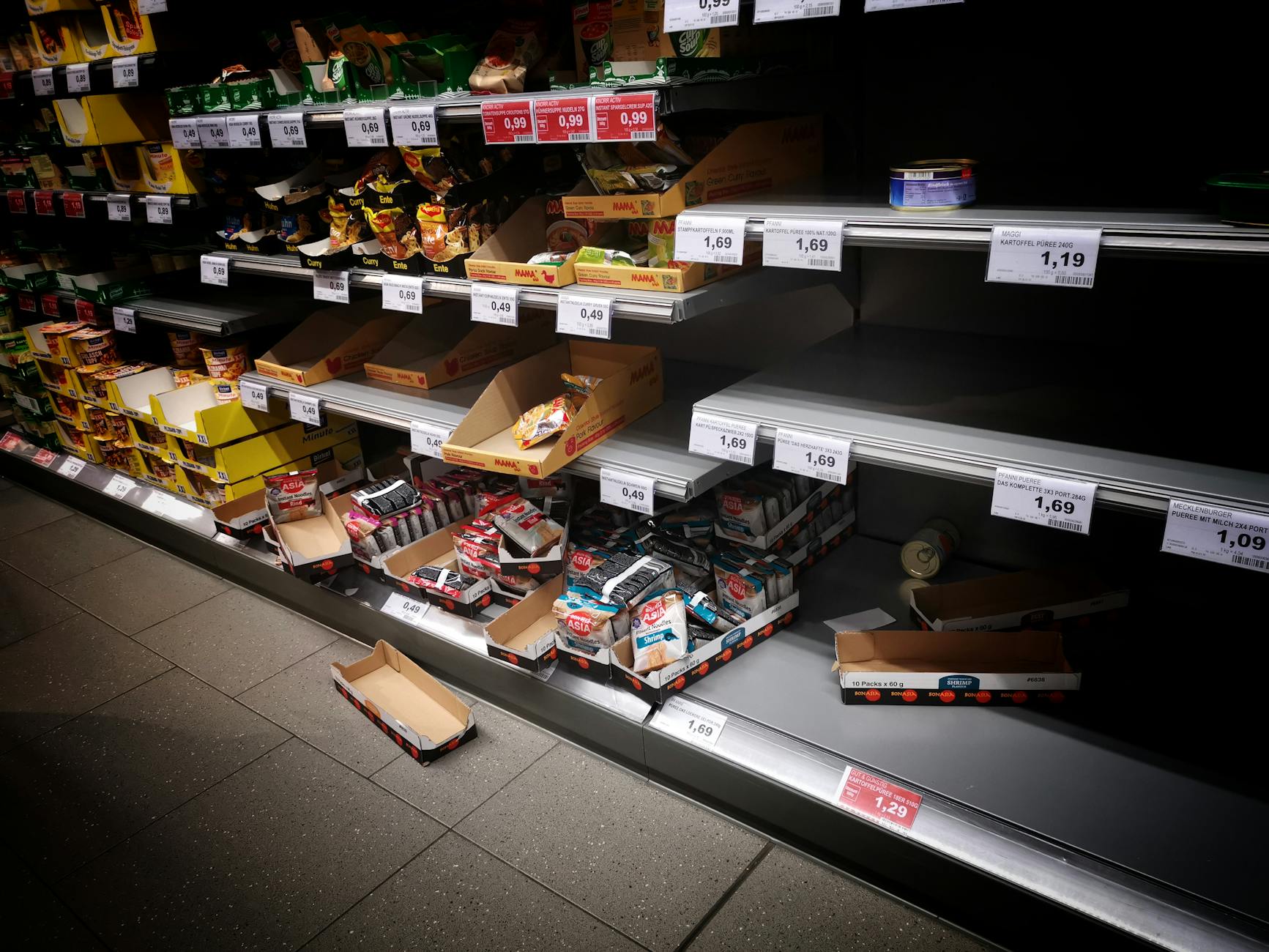
Grocery prices have finally started cooling off, but your wallet probably hasn’t noticed. That’s because the sticker shock you feel at the checkout line isn’t about this year’s inflation rate — it’s about the cumulative 29.4% increase in food-at-home prices since March 2020. A box of cereal that cost $3.50 before the pandemic now costs closer to $4.50, and the fact that it only went up another 2.4% last year doesn’t erase the damage already done. Meanwhile, restaurant prices continue climbing at 4.1% annually, outpacing grocery inflation by a wide margin and showing no signs of slowing down.
The disconnect between the headline numbers and how people actually feel about food costs is real and measurable. According to a January 2026 FMI survey, 62% of consumers said they feel “very or extremely concerned” about rising prices — even as annual grocery inflation has dropped to its lowest rate in years. The explanation is straightforward: inflation measures the rate of change, not the total price level. Prices across the economy are up roughly 25% since 2020, and for most households, wages haven’t kept pace. This article breaks down why grocery and restaurant prices are moving in opposite directions, which specific items are getting cheaper or more expensive, and what the USDA forecasts for the rest of 2026.
Table of Contents
- Why Do Food Costs Still Feel High When Grocery Inflation Is Slowing?
- Why Restaurant Prices Keep Climbing While Grocery Costs Stabilize
- The Egg Price Roller Coaster — From $9 a Dozen to Under $1 Wholesale
- Which Grocery Items Are Getting More Expensive — and Where to Look for Savings
- The Inflation Perception Gap and Why It Matters for Policy
- How Shrinkflation and Package Changes Disguise Real Cost Increases
- What to Expect From Food Prices Through the Rest of 2026
- Conclusion
- Frequently Asked Questions
Why Do Food Costs Still Feel High When Grocery Inflation Is Slowing?
The short answer is cumulative damage. U.S. food prices rose 23.6% from 2020 to 2024, according to the USDA Economic Research Service. The year-by-year breakdown tells the story: prices rose 3.4% in 2020, then 6.3% in 2021, then a brutal 9.9% in 2022 — the fastest annual increase since 1979. They climbed another 5.0% in 2023 before finally decelerating. So when the USDA says grocery prices rose “only” 2.4% in 2025, that 2.4% is stacking on top of a price base that’s already nearly 30% higher than it was five years ago. Think of it this way: if you spent $200 a week on groceries in early 2020, you’re now spending around $258 for roughly the same cart of food. Last year’s 2.4% increase added about $6 to that weekly bill.
Next year’s projected 1.7% increase will add another $4 or so. Each annual increase is smaller, but you’re never getting back to $200. The USDA forecasts food-at-home prices to rise just 1.7% in 2026, though the prediction interval ranges from a 2.3% decrease to a 6.0% increase — a wide band that reflects uncertainty around trade policy, weather, and disease outbreaks. The gap between perception and data also reflects how people shop. Nobody buys the “average grocery basket” that the Consumer Price Index tracks. If your household eats a lot of beef, your personal inflation rate is dramatically worse than the national average. If you’ve shifted toward eggs and dairy, you may have recently caught a break. The BLS averages smooth out these extremes, but your receipt doesn’t.
Why Restaurant Prices Keep Climbing While Grocery Costs Stabilize
Restaurant prices are a different animal entirely because food ingredients are only part of the equation. Food and labor costs have each risen approximately 35% in the last five years, and restaurant operating costs overall are 30% above 2019 levels. Menu prices have gone up 31% since 2020, but many operators say they still haven’t fully caught up with their actual costs. Full-service restaurant meals rose 4.7% year-over-year in January 2026, while limited-service meals — fast food and fast-casual — rose 3.2%, according to the BLS. The USDA projects food-away-from-home prices will accelerate to 4.6% in 2026, faster than the 20-year historical average.
The drivers are structural, not temporary. Minimum wage increases in multiple states, persistent staffing shortages, rising commercial rents, higher utility bills, and ballooning insurance premiums all flow into menu prices. Unlike commodity costs for eggs or milk, which can swing quickly with supply changes, labor and rent contracts adjust on longer timescales. A restaurant that locked in a lease renewal at 2024 rates is stuck with those costs for years regardless of what happens to ingredient prices. However, if you’re comparing restaurant spending to grocery spending as a household budget decision, the math increasingly favors cooking at home. The gap between food-at-home and food-away-from-home inflation has widened to nearly two percentage points annually. For a family spending $400 a month eating out, switching even half of those meals to home-cooked alternatives could save $100 or more per month at current price differentials — though that calculation doesn’t account for the time cost of cooking, which is a real tradeoff for dual-income households.
The Egg Price Roller Coaster — From $9 a Dozen to Under $1 Wholesale
No single grocery item illustrates the volatility of food prices better than eggs. In January 2025, avian flu wiped out nearly 19 million egg-laying hens, roughly 8% of the conventional flock. Retail egg prices spiked to $6.23 per dozen by March 2025, with some retailers charging over $9 per dozen during the worst of the shortage. The USDA invested up to $1 billion to combat the outbreak and stabilize supply. The recovery was dramatic.
By February 2026, wholesale egg prices had crashed from $8.53 per dozen to just $0.92 per dozen — a collapse driven by flock rebuilding and easing disease pressure. Retail prices followed, dropping 34.2% from a year earlier. The USDA expects 2026 average egg prices to land about 39% lower than 2025 levels. For consumers who were paying $6 for a carton of eggs last spring, that’s genuine, noticeable relief. But the egg story also illustrates a warning: commodity price drops don’t always reach consumers proportionally or immediately. Retailers and distributors have their own cost structures, and some were criticized for keeping shelf prices elevated even as wholesale markets softened. The gap between wholesale and retail prices during the decline was wider than during the run-up, a pattern consumer advocates have flagged repeatedly in the post-pandemic grocery market.
Which Grocery Items Are Getting More Expensive — and Where to Look for Savings
The grocery aisle is splitting into clear winners and losers for consumers. On the expensive side, beef prices remain the standout pain point. Beef roasts have climbed 73.8% since pre-pandemic levels. Beef steaks are up 57.0%. Ground beef — the workhorse protein for budget-conscious families — has risen 52.5%. The USDA forecasts beef prices will increase another 9.4% in 2026, driven by a cattle herd that shrank to its smallest size in decades due to drought and high feed costs in prior years. Coffee is another trouble spot, up 18.8% from November 2024 to November 2025, reflecting poor harvests in Brazil and Vietnam and rising global demand.
Frozen fish and seafood jumped 11.6% in the same period. Non-alcoholic beverages are predicted to rise 4.2% in 2026. These are categories where substitution is harder — you can switch from ribeye to chicken thighs, but there isn’t a cheap alternative to coffee for the people who need it. On the savings side, eggs offer the most dramatic relief, as noted above. Dairy products are expected to deflate by 0.9% in 2026, a modest but welcome reversal. The tradeoff for shoppers is clear: building meals around poultry, eggs, dairy, and seasonal produce will stretch a grocery budget further than relying on beef, coffee, and processed convenience foods. But that requires meal planning, cooking time, and access to a well-stocked grocery store — advantages that aren’t evenly distributed across income levels or geographies.
The Inflation Perception Gap and Why It Matters for Policy
The 62% of consumers who told FMI in January 2026 that they feel “very or extremely concerned” about food prices are not wrong, even if annual inflation rates are moderating. This perception gap has real policy consequences. Politicians promising to “bring prices back down” are either misunderstanding how inflation works or deliberately misleading voters. Deflation — actual price decreases across the board — would require an economic contraction that would cost jobs and income. What’s realistic is slower price growth, which is already happening in the grocery sector. The danger is that sustained consumer anxiety about food costs creates pressure for policy responses that could backfire.
Broad tariffs on imported food products, for example, would raise prices on items where the U.S. relies on foreign supply chains — coffee, tropical fruits, certain seafood, and off-season produce. The USDA’s wide prediction interval for 2026 grocery inflation (ranging from -2.3% to +6.0%) reflects this trade policy uncertainty. A scenario where tariffs push food-at-home inflation back toward 5% or 6% would undo years of deceleration. It’s also worth noting a limitation of the CPI data itself: it measures average prices across the country, but food costs vary enormously by region. A gallon of milk in rural Mississippi costs significantly less than in Manhattan. Households in food deserts — areas with limited access to full-service grocery stores — often pay more for staples because they’re buying from convenience stores or smaller markets with higher markup structures.
How Shrinkflation and Package Changes Disguise Real Cost Increases
Beyond sticker prices, many manufacturers have reduced package sizes while maintaining or increasing prices — a practice known as shrinkflation. A bag of chips that used to weigh 16 ounces now weighs 13. A roll of paper towels has fewer sheets.
📨 Get Free Accountability Coverage Alerts
Free · No spam · Unsubscribe anytime
A container of yogurt drops from 6 ounces to 5.3. These changes don’t show up directly in CPI calculations the way a straight price increase does, though the BLS does attempt to adjust for quantity changes. For consumers comparing their grocery bills year over year, shrinkflation means the effective cost increase is often higher than the official inflation numbers suggest.
What to Expect From Food Prices Through the Rest of 2026
The outlook for the rest of 2026 is cautiously optimistic for grocery shoppers but less encouraging for anyone who eats out regularly. The USDA’s central forecast of 1.7% food-at-home inflation would represent the slowest grocery price growth since before the pandemic. Egg prices should remain well below their 2025 peaks. Dairy is expected to hold steady or decline slightly.
The major upside risk is beef, with a projected 9.4% increase that could push overall meat prices noticeably higher. Restaurant prices are a different story. The projected 4.6% increase in food-away-from-home prices means eating out will continue getting meaningfully more expensive, with no structural relief in sight for the labor and occupancy costs driving those increases. For consumers hoping to feel less squeezed, the most actionable shift remains cooking more at home — particularly with proteins and staples that are in the deflationary column. The cumulative price increases of the last five years aren’t reversing, but the pace of new increases is finally approaching something that resembles normal.
Conclusion
The divergence between grocery and restaurant prices tells a story about where inflation pressures have eased and where they remain entrenched. Commodity-driven grocery costs are responding to improved supply conditions — rebuilt poultry flocks, stable dairy production, easing supply chain pressures. Service-driven restaurant costs are responding to structural forces — higher wages, expensive leases, rising insurance — that don’t fluctuate with harvest reports or wholesale markets. Both realities are true simultaneously, which is why the headline “inflation is cooling” can coexist with the lived experience of food still feeling painfully expensive.
The 29.4% cumulative increase in grocery prices since March 2020 is baked into every trip to the store. No policy or market shift is going to reverse that. What consumers can watch for in 2026 are the category-level trends: falling egg and dairy prices, rising beef and coffee prices, and the persistent premium on eating out versus cooking at home. Understanding which direction specific items are moving gives households more leverage to adjust their spending than any single inflation number can.
Frequently Asked Questions
Are grocery prices actually going down?
Not overall. The rate of increase is slowing — the USDA projects just 1.7% food-at-home inflation in 2026 — but prices are still rising, just more slowly. A few categories like eggs (down 34.2% year-over-year) and dairy (expected to drop 0.9%) are seeing actual price decreases.
Why are restaurant prices rising faster than grocery prices?
Restaurants face compounding cost pressures that go beyond food ingredients. Labor and food costs have each risen approximately 35% over five years, and operating costs are 30% above 2019 levels. Wages, rent, and insurance adjust on longer timescales than commodity prices, so restaurant inflation stays elevated even when ingredient costs stabilize.
How much have food prices risen since the pandemic started?
Food-at-home prices have risen 29.4% from March 2020 to December 2025, according to BLS data. The USDA reports that overall U.S. food prices rose 23.6% from 2020 to 2024. Prices across the broader economy are up roughly 25% in the same period.
Why did egg prices spike and then crash?
Avian flu wiped out nearly 19 million egg-laying hens in January 2025, cutting roughly 8% of the conventional flock and pushing retail prices to $6.23 per dozen by March 2025. The USDA invested up to $1 billion to combat the outbreak. As flocks were rebuilt, wholesale prices plummeted from $8.53 to $0.92 per dozen by February 2026.
Which grocery items are getting more expensive in 2026?
Beef is the biggest concern, with prices forecast to rise 9.4% in 2026. Beef roasts are already up 73.8% from pre-pandemic levels. Coffee increased 18.8% year-over-year, and non-alcoholic beverages are projected to rise 4.2%.
Will food prices ever go back to pre-pandemic levels?
Almost certainly not across the board. Broad deflation would typically require a severe recession. The realistic expectation is that price growth continues at a slower, more historically normal pace. Some individual items may drop — eggs have already demonstrated this — but the overall price level established over the past five years is the new baseline.
You Might Also Like
- Trump Says Drug Prices Fell 60%. Federal Data Shows a 4% Drop. Here’s the Actual Impact.
- The IRS Promised Faster Refunds. Average Processing Time Is Still 32 Days. Here’s Why.
- Fact Check: Is There a Secret $800 Internet Credit? Here’s the Only Broadband Program Still Active.