
Americans are spending significantly more on fuel in May 2026 than they were just one year ago. The national average price for regular gasoline stands at $4.50 to $4.53 per gallon as of mid-May 2026, representing a 43.6% increase from May 2025 when prices were $3.14 per gallon. This price surge translates into real financial hardship for millions of households across the country. Consider the case of a community health worker in a mid-sized city who was spending approximately $320 per month on gasoline earlier in the year when prices hovered around $3 per gallon.
By May 2026, that same worker’s monthly fuel expenses had climbed to roughly $400—an additional $80 per month or $960 per year—simply to maintain the same driving patterns and work commute. This dramatic price increase did not happen in isolation or gradually over time. In just 11 weeks between late February and mid-May 2026, gasoline prices jumped from $2.96 per gallon on February 26 to $4.53 on May 14—a 53% increase in less than three months. The underlying cause is geopolitical: military operations in the Middle East and the closure of the Strait of Hormuz since February 28, 2026 have disrupted global oil supplies and sent shockwaves through energy markets worldwide. Understanding how these international events translate into your fuel bill requires examining both the national picture and the striking variations between states, where some residents pay nearly $2.50 more per gallon than others.
Table of Contents
- How Much More Are Americans Actually Paying for Gas Than Last Summer?
- The Geographic Divide—Why Your State’s Gas Prices May Be Dramatically Different
- The Middle East Crisis and the Strait of Hormuz—What’s Actually Driving Prices
- Strategies Families Are Using to Cope With Elevated Fuel Costs
- Supply Chain Impacts and Business Pass-Through Costs
- What Happens If the Middle East Crisis Escalates or De-Escalates?
- The Long-Term Implications for American Energy Policy and Consumer Vulnerability
- Conclusion
How Much More Are Americans Actually Paying for Gas Than Last Summer?
The statistics are stark. American consumers are spending substantially more on fuel than they were just twelve months earlier. The year-over-year price increase reached 73.08% when comparing current may 2026 prices to the same period last year. Over the full twelve-month period ending in April 2026, gasoline prices jumped 28.4%. For a typical car owner driving an average vehicle with an average 12,000 annual miles at roughly 25 miles per gallon fuel efficiency, this price escalation could result in approximately $876 in additional annual fuel expenses if current prices persist. These numbers affect different households in different ways.
A person commuting 50 miles daily to and from work will feel the impact far more acutely than someone who works from home or lives in a rural area with shorter driving distances. Some families have already begun making uncomfortable choices—postponing road trips, consolidating errands into fewer but longer drives, shifting to public transportation, or carpooling when possible. Small businesses that rely on vehicle fleets have seen operational costs surge, with potential implications for service pricing and profit margins. The severity of this increase becomes even more apparent when viewed against historical context. Prices of $4.50 per gallon represent the kind of levels that historically trigger public outcry and political debate. During the 2008 financial crisis, comparable gas prices contributed to economic anxiety and shifting consumer behavior nationwide. Today’s situation mirrors that environment in terms of per-gallon cost but occurs against a different economic backdrop and within a specific geopolitical crisis that shows no signs of immediate resolution.

The Geographic Divide—Why Your State’s Gas Prices May Be Dramatically Different
Not all Americans are paying the same price at the pump. Regional variations in gasoline pricing remain significant and sometimes shocking. California residents face the highest burden, paying an average of $6.15 per gallon, while residents of Washington state pay $5.77, and Hawaii residents deal with $5.64 per gallon. These outlier states are paying substantially more due to additional state taxes, environmental regulations, local supply constraints, and refinery capacity limitations. Meanwhile, Oklahoma offers the lowest statewide average at $3.94 per gallon, followed by Mississippi at $3.98 and Louisiana at $4.00. The difference between the highest and lowest state averages is $2.21 per gallon—a 56% gap.
For a California resident driving 15,000 miles annually in a car that achieves 25 miles per gallon, the annual fuel cost would reach approximately $3,690, while an Oklahoma resident with identical driving patterns and fuel efficiency would spend roughly $2,370. That $1,320 annual difference is real money that affects household budgeting, discretionary spending, and financial security. However, it’s important to note that these variations have actually tightened compared to some historical periods when regional differences exceeded $1 per gallon, suggesting that some supply-chain adjustments have helped prevent even wider divergence. What’s remarkable is that despite these state-level differences, every single state in the nation has experienced double-digit price increases between May 2025 and May 2026. Even the states with the “lowest” prices today are substantially higher than they were a year ago. This universal increase confirms that the primary driver—global oil supply disruption related to Middle Eastern military operations—affects the entire nation, even though local factors create variation on top of this baseline.
The Middle East Crisis and the Strait of Hormuz—What’s Actually Driving Prices
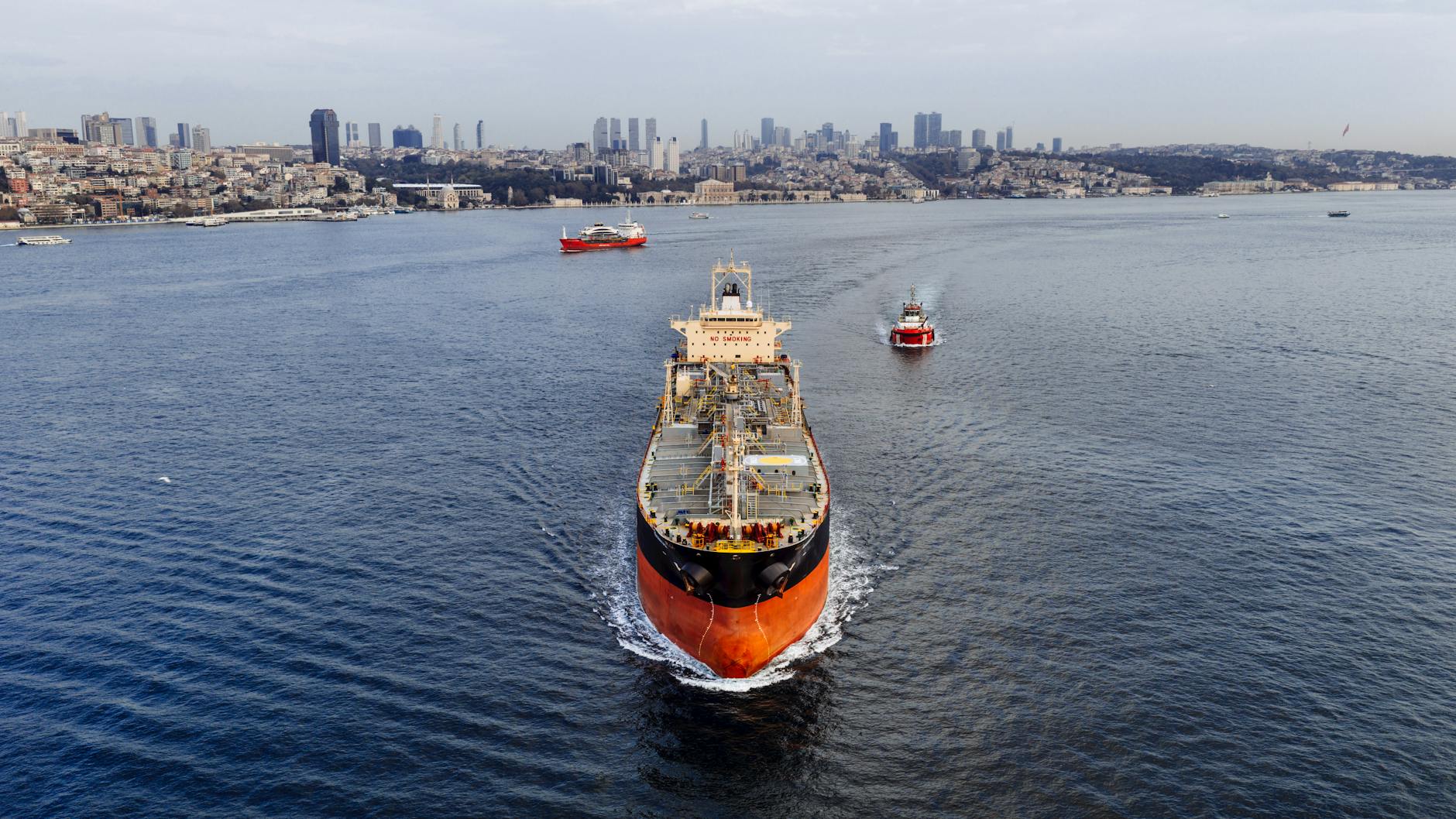
The primary cause of the dramatic 53% price increase since late February is not domestic policy or seasonal demand fluctuation, but rather geopolitical conflict and the closure of the Strait of Hormuz beginning February 28, 2026. The Strait of Hormuz is one of the world’s most critical chokepoints for global oil supply, through which roughly one-third of all seaborne traded oil passes. When military operations in the Middle East resulted in the closure of this strait, global oil markets seized up with anxiety about supply reliability. Oil prices spiked, and refined gasoline prices followed in a matter of weeks. This international crisis has direct, immediate consequences for American households and businesses. Global oil markets operate on expectations and futures pricing—traders don’t wait for actual supply shortages to raise prices. They anticipate potential disruptions and bid up the price of crude oil and refined products in advance.
The moment the Strait of Hormuz closed in late February, oil futures contracts jumped, refinery margins adjusted, and within weeks, pumps across America reflected the new reality. The $1.57 per gallon price increase from February 26 to May 14 is essentially the market’s response to the geopolitical uncertainty originating in a region thousands of miles away. The limitation of this analysis is that the situation remains fluid and unpredictable. As of May 2026, the military situation in the Middle East has not resolved, the Strait of Hormuz remains disrupted, and there is no clear timeline for normalization. OPEC decisions, potential sanctions, diplomatic negotiations, or unexpected military escalation could all move prices further in either direction. Energy markets are volatile, and predicting the next three to six months of price movement is essentially impossible for any analyst. What’s certain is that prices will likely remain elevated above historical norms as long as supply concerns persist.
Strategies Families Are Using to Cope With Elevated Fuel Costs
Americans are adapting to higher fuel prices through various strategies, some effective and some representing real sacrifices. Route optimization has become increasingly common—people are planning errands more carefully, combining multiple stops into single trips, and avoiding unnecessary driving. Some families have shifted toward public transportation where available, though the expansion of mass transit options has not kept pace with suburban sprawl in much of the country. Carpooling and rideshare arrangements have increased in some metropolitan areas. Others have made longer-term adjustments by changing jobs or relocating closer to work, though these dramatic changes are only available to a minority of workers with flexibility in their employment situations. Vehicle purchasing decisions have also shifted noticeably.
Buyers shopping for new cars increasingly prioritize fuel efficiency, examining EPA ratings more carefully, and considering electric vehicles or hybrids despite higher upfront costs. The calculus now favors a $35,000 efficient electric vehicle over a $25,000 conventional vehicle when factoring in total cost of ownership across five to seven years of elevated fuel prices. However, this vehicle replacement strategy only benefits those with the financial capacity to purchase a new car. Lower-income households that rely on used vehicle markets face a more constrained set of options and cannot easily upgrade to more efficient vehicles. The tradeoff is stark: those with financial flexibility can adapt relatively painlessly by shifting to more efficient vehicles or fuel technologies, while households without that flexibility bear the burden through reduced discretionary spending, delayed purchases, or constrained transportation choices. This dynamic has meaningful implications for economic inequality and household financial stress.
📨 Get Free Accountability Coverage Alerts
Free · No spam · Unsubscribe anytime
Supply Chain Impacts and Business Pass-Through Costs
The immediate consequence of higher fuel prices extends far beyond the individual consumer at the gas pump. Trucking, delivery, and logistics companies have seen operational costs surge. These costs are typically passed through to consumers in the form of higher prices for virtually every transported good—groceries, manufacturing inputs, delivery services, and online purchases. Small businesses that depend on frequent deliveries or operate vehicle fleets have experienced profit margin compression that many cannot simply pass along to customers without losing sales volume. Airline fuel surcharges have already increased, and ticket prices reflect higher jet fuel costs. Regional carriers that operate less fuel-efficient aircraft or serve routes with thinner margins have faced particular pressure.
Some smaller airports have seen reduced service as carriers concentrate flights on higher-density routes. For consumers, this means fewer direct flight options in some markets and higher ticket prices across the board. The global supply chain, still recovering from pandemic disruptions, now faces a new inflationary pressure that affects everything from manufacturing to final consumer prices. A critical limitation of focusing solely on business impacts is that they eventually become consumer impacts. Higher trucking costs become higher grocery prices. Higher airline fuel costs become higher travel expenses. While businesses absorb some cost pressure, the long-term effect is passed through to household budgets in ways that may be less visible than a pump price increase but are equally real.

What Happens If the Middle East Crisis Escalates or De-Escalates?
The price outlook depends entirely on developments in the Middle East that are impossible to predict with confidence. A military de-escalation or successful diplomatic resolution of the conflict could theoretically lead to Strait of Hormuz reopening and a rapid decline in oil prices. Conversely, further escalation or expansion of military operations could drive prices substantially higher. The risk scenarios are asymmetrical—prices could drop suddenly if geopolitical tensions ease, but they could also spike sharply if tensions worsen.
Historical precedent suggests that energy markets often overshoot in both directions. When supply disruptions end, prices sometimes fall below their “fundamental” level as confidence returns. Conversely, when tensions peak, markets sometimes price in worst-case scenarios that never materialize. As of May 2026, with the Strait of Hormuz still closed and military operations ongoing, the baseline assumption must be for sustained elevated prices until conditions change, but the possibility of rapid price movements in either direction remains significant.
The Long-Term Implications for American Energy Policy and Consumer Vulnerability
This price spike illuminates a fundamental vulnerability in American energy policy: the nation’s continued heavy dependence on global oil markets for transportation fuel, coupled with the inability to quickly substitute away from petroleum given existing vehicle fleet composition and limited public transportation infrastructure. The United States has made progress on renewable energy and electric vehicle adoption, but the vast majority of vehicles on the road still burn gasoline. Short of a national mandate to replace the entire vehicle fleet overnight—economically impossible—Americans will remain vulnerable to global oil price shocks. The geopolitical lesson is equally clear: instability in the Middle East, one of the world’s primary oil-producing regions, has direct consequences for American households regardless of U.S.
foreign policy. The consumer at the pump cannot separate their fuel expense from international tensions and military operations. This reality has shaped American foreign policy for decades and continues to create complex tradeoffs between geopolitical stability, economic interests, and domestic political pressure. As long as transportation fuel remains overwhelmingly dependent on petroleum products from globally traded markets, these vulnerabilities will persist.
Conclusion
Americans are paying substantially more for fuel in May 2026 than they were one year earlier, with prices having increased 43.6% year-over-year and 73% in raw comparison to last summer. A typical household driving average miles will spend approximately $876 more annually if current prices persist, with some households facing significantly higher burdens depending on location, driving patterns, and vehicle efficiency. The price surge was driven by military operations in the Middle East and the February 2026 closure of the Strait of Hormuz, a critical global oil transit point, which disrupted supply expectations and sent oil and gasoline prices soaring within weeks.
The path forward remains uncertain and depends on developments in the Middle East that are outside the control of American policymakers and consumers. While some households and businesses have adapted through route optimization, vehicle efficiency improvements, and modal shifts to public transportation, lower-income families and those without transportation flexibility have absorbed the cost increases with fewer options. Maintaining awareness of the geopolitical drivers behind these prices, understanding regional variations in your state, and making incremental adjustments to fuel consumption remain the practical strategies available while waiting for either geopolitical conditions or vehicle technology to shift the baseline.
You Might Also Like
- Gas Prices Today: Analysts Predict Volatile Summer Fuel Costs
- Gas Prices Today: What Experts Predict for June Fuel Prices
- Gas Prices Today: Phoenix Drivers Brace for Higher Summer Costs