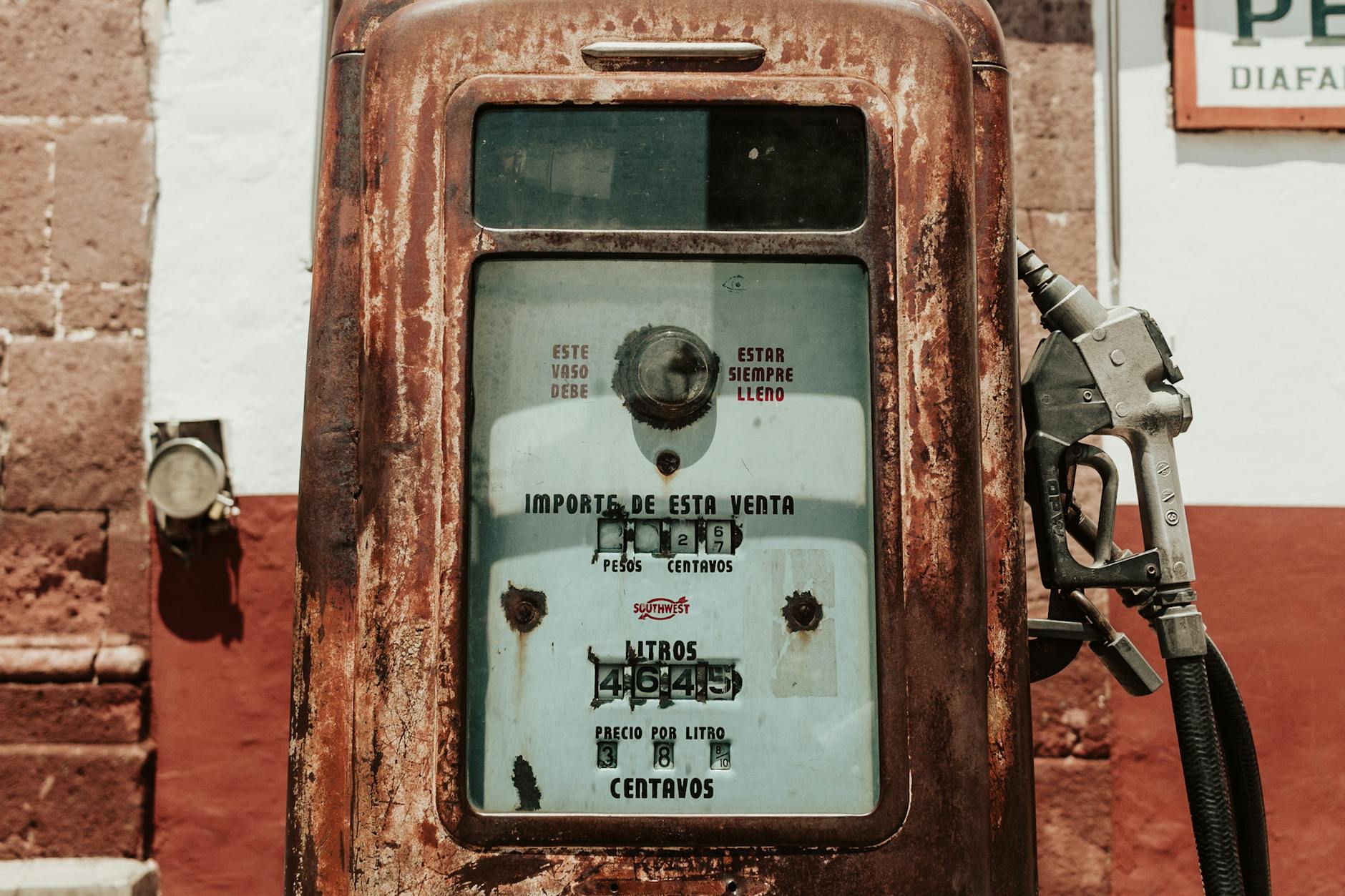
Every gas station in America is already feeling the shockwave from Operation Epic Fury, and the worst may not be over. Since the United States and Israel launched coordinated airstrikes against Iran on February 28, 2026, the national average price of gasoline has surged roughly $0.74 per gallon — from about $2.98 to approximately $3.72 — with one week alone seeing a 27-cent jump. In California, drivers are now paying north of $5.34 per gallon, the highest since 2024.
The mechanism is brutally simple: the Strait of Hormuz, through which roughly 20 percent of the world’s oil and liquefied natural gas shipments flow, has effectively become a no-go zone, and the global crude market is responding with panic-level pricing. This article breaks down what happened, why it matters for your wallet, and what comes next. We will examine how the Strait of Hormuz shutdown collapsed tanker traffic almost overnight, what crude oil markets are signaling about the duration of this crisis, how OPEC+ has responded (and why that response is largely inadequate), and what practical steps consumers and small business owners can take to manage the financial hit. We will also look at the international ripple effects already prompting fuel rationing in multiple countries, because what is happening abroad tends to arrive at American pumps with a short delay.
Table of Contents
- How Is Operation Epic Fury Already Hitting Gas Stations Across America?
- Why the Strait of Hormuz Shutdown Is Worse Than Most Americans Realize
- OPEC+ Response Falls Short as Production Cuts Deepen the Crisis
- What Can Consumers and Small Businesses Do Right Now?
- International Ripple Effects That Could Make Things Worse at Home
- The Crude Oil Market Is Sending a Clear Signal
- Where This Goes From Here
- Conclusion
- Frequently Asked Questions
How Is Operation Epic Fury Already Hitting Gas Stations Across America?
The connection between a military operation thousands of miles away and the price on the pump outside your local convenience store is not abstract — it runs through tanker ships, and those tanker ships have largely stopped moving through the most critical oil chokepoint on Earth. Before Operation Epic Fury began on February 28, an average of 24 vessels per day transited the Strait of Hormuz. By March 1, that number had collapsed to just four. Major shipping companies including Maersk, MSC, and Hapag-Lloyd suspended all vessel transit through the strait entirely. When a fifth of the world’s oil supply suddenly cannot reach its destination through the usual route, every barrel on the market becomes more expensive, and that cost rolls downhill to every gas station in the country. The price impact has been swift and measurable. The national average jumped from roughly $2.98 per gallon before the conflict to between $3.70 and $3.72 per gallon within the first two and a half weeks. Diesel hit $3.19 per gallon, its highest mark since October 2023 — a number that matters not just for truckers but for the cost of shipping virtually every consumer product that moves by road.
Heating oil climbed from $4.27 to $5.09 per gallon as of March 9, squeezing households in the Northeast that still rely on oil heat during the tail end of winter. These are not projections or forecasts. These are the prices Americans are paying right now. For independent gas station owners operating on razor-thin margins — often just pennies per gallon — the rapid price swings create a particularly painful dynamic. They buy fuel at wholesale prices that change daily, but customers see the posted price and expect consistency. A station that bought fuel at Monday’s price and sells it at Tuesday’s lower posted price to stay competitive can lose money on every gallon. Conversely, jacking prices up too fast invites accusations of gouging. Either way, every station in America is navigating this turbulence.

Why the Strait of Hormuz Shutdown Is Worse Than Most Americans Realize
The Strait of Hormuz is a narrow waterway between iran and Oman, and its closure or effective blockade is sometimes called the “oil jugular” scenario — the single disruption that energy analysts have worried about for decades. Iran’s new supreme leader, who assumed power after the operation included a decapitation strike that killed Ali Khamenei, has vowed to keep the strait closed. That statement alone is enough to keep insurance premiums for tanker transits at prohibitive levels, even if naval escorts were available. When shipping companies calculate the risk of sending a vessel carrying hundreds of millions of dollars in crude oil through waters where an adversary has publicly committed to blocking passage, the math does not work. However, the severity of the impact depends on how long the blockade holds. If the strait reopens within weeks, prices could settle back toward pre-conflict levels relatively quickly, since strategic petroleum reserves and alternative supply routes can absorb short-term shocks. But if the closure persists for months — which the new Iranian leadership’s rhetoric suggests is the intention — the situation worsens significantly.
Oil stored in floating storage and onshore tanks gets drawn down, alternative shipping routes around the Cape of Good Hope add weeks and cost to every cargo, and refiners begin competing for a shrinking pool of accessible crude. The crude oil market is already pricing in a sustained disruption: Brent crude surged from about $70 per barrel before the war to $83 by day five, broke $100 by day nine, and briefly touched around $120 before settling near the $100 mark. That spike is larger than the one that followed Russia’s invasion of Ukraine in 2022. The comparison to 2022 is instructive but also misleading in one respect. The Russian supply disruption was partially offset by other producers ramping up and by the release of strategic reserves worldwide. This time, the disruption is at a chokepoint rather than a source, which means the oil exists but simply cannot move through its usual corridor. Rerouting takes time, and time is money — specifically, money that shows up as higher prices at the pump.
OPEC+ Response Falls Short as Production Cuts Deepen the Crisis
One might expect the Organization of the Petroleum Exporting Countries and its allies to flood the market with additional supply to stabilize prices and prevent a global economic shock. The reality has been far more restrained. OPEC+ agreed to a modest production increase of 206,000 barrels per day, a figure debated within a range of 137,000 to 548,000 barrels per day before the group settled on the lower end. To put that in context, the Strait of Hormuz normally handles millions of barrels per day in transit, so 206,000 additional barrels is a rounding error in the face of this disruption. Making matters worse, the production picture on the ground tells a different story from the official announcements.
Kuwait, Iraq, Saudi Arabia, and the UAE collectively cut production by approximately 6.7 million barrels per day by March 10. Some of these cuts were pre-existing agreements from prior OPEC+ deals, but the net effect is the same: at precisely the moment the world needs more oil on the market, the countries best positioned to provide it are producing significantly less. For American consumers, this means the price relief that might have come from a robust OPEC+ response is simply not materializing. The geopolitics here are tangled. Saudi Arabia and the UAE have their own complex relationships with both the United States and Iran, and flooding the market with cheap oil to counteract an American military operation’s economic fallout is not a straightforward decision for Riyadh or Abu Dhabi. The result is that American consumers are essentially absorbing the economic cost of a military conflict with minimal cushion from the world’s largest spare-capacity producers.

What Can Consumers and Small Businesses Do Right Now?
The practical reality is that individual Americans cannot influence global oil markets, OPEC+ production decisions, or the military situation in the Persian Gulf. But there are meaningful differences in how households and small businesses can manage the financial impact, and the tradeoffs are worth understanding clearly. For consumers, the immediate options are familiar but newly urgent: consolidating trips, carpooling, using gas price apps like GasBuddy to find the cheapest local stations, and — where possible — shifting to public transit. The price gap between stations in the same metro area can be 30 to 50 cents per gallon during volatile periods, so shopping around is not trivial. However, driving 15 miles out of your way to save eight cents a gallon is a net loss, and the math changes depending on your vehicle’s efficiency.
For households that heat with oil, the $4.27-to-$5.09 jump in heating oil prices represents a genuine budget emergency; contacting your state’s Low Income Home Energy Assistance Program (LIHEAP) now rather than waiting is advisable, as demand for those programs surges during price spikes and funds are finite. For small businesses — particularly those in transportation, delivery, landscaping, and other fuel-intensive sectors — the calculus involves whether to lock in fuel contracts at current prices or gamble that prices will come down. Locking in at $3.72 per gallon feels painful compared to the $2.98 of a few weeks ago, but if Brent crude stabilizes above $100 for an extended period, today’s prices could look like a bargain in retrospect. The tradeoff is real: locking in protects your margins but costs more if prices fall; staying exposed preserves upside but risks further squeezing if prices climb. There is no cost-free answer, which is exactly the kind of decision the current crisis is forcing on businesses that had finally adjusted to a period of relatively stable fuel costs.
International Ripple Effects That Could Make Things Worse at Home
The United States is not the only country scrambling. South Korea, Thailand, Bangladesh, and Pakistan have already introduced price caps and fuel rationing — measures that signal genuine alarm about supply adequacy, not just price discomfort. When countries start rationing, it typically means their leaders believe the disruption will last long enough to threaten social stability. That assessment should concern American policymakers and consumers alike, because rationing abroad can redirect available supply in unpredictable ways. Heavy crude in the Americas has hit multi-year highs, according to reporting from Offshore Technology, as international refiners that previously sourced from the Middle East compete for Western Hemisphere barrels. This is a warning sign for a secondary price wave: even crude that never goes near the Strait of Hormuz is getting more expensive because demand for it has spiked.
American refiners that process heavy crude from Canada, Mexico, or Venezuela are paying more for feedstock, and those costs flow directly to the pump. The limitation here is that no amount of domestic production increase can fully offset a chokepoint closure of this magnitude in the short term — the U.S. produces significant oil, but the global market is interconnected, and prices are set at the margin. There is also the question of duration. If the Strait of Hormuz remains effectively closed through April and into the summer driving season, when American gasoline demand peaks, the combination of constrained supply and seasonal demand could push prices well above current levels. That is not a prediction — it is a scenario that energy analysts are actively modeling, and one that every gas station owner in the country is watching nervously.
The Crude Oil Market Is Sending a Clear Signal
The behavior of Brent crude over the first nine days of this crisis tells a story of escalating alarm. Moving from $70 to $83 to over $100 and briefly touching $120 before settling around $100 is not a normal market fluctuation — it is the kind of move that reprices an entire commodity complex. For comparison, the spike following Russia’s 2022 invasion of Ukraine was dramatic but occurred over a somewhat longer timeline and from a higher starting base. The speed of this move suggests that traders believe the Strait of Hormuz disruption is both severe and likely to persist.
📨 Get Free Accountability Coverage Alerts
Free · No spam · Unsubscribe anytime
What the market has not yet priced in, arguably, is a scenario where the conflict escalates further or where retaliatory actions target oil infrastructure in the Gulf states themselves. If that happens, the $120 peak could look like a waypoint rather than a ceiling. Consumers should understand that the current $3.72 national average reflects a market that is unsettled but still hoping for a resolution. If hope fades, the numbers move again.
Where This Goes From Here
The trajectory of gas prices in America over the coming weeks and months depends almost entirely on whether the Strait of Hormuz reopens to commercial traffic — and right now, there is no clear timeline for that happening. Iran’s new leadership has made the closure a point of national defiance, and naval operations to forcibly clear the strait would carry enormous risks of further escalation. Diplomatic channels exist but are complicated by the fact that the operation that triggered this crisis included the killing of Iran’s supreme leader, which does not create a conducive atmosphere for negotiation. What is clear is that every gas station in America — from the Chevron on the corner in suburban Dallas to the independent Mobil station in rural Vermont — is operating in a fundamentally different pricing environment than it was three weeks ago.
The $0.74-per-gallon increase is already baked in. The question is whether it grows or recedes, and the honest answer is that nobody knows. Consumers and businesses should plan for sustained elevated prices while hoping for a resolution that brings relief. The strategic petroleum reserve remains a tool the administration can deploy, but it is a finite buffer, not a solution. The solution is geopolitical, and geopolitics is not moving fast.
Conclusion
Operation Epic Fury has triggered the most significant fuel price disruption Americans have faced since at least 2022, and by some measures it is worse. A $0.74-per-gallon surge in less than three weeks, driven by the effective closure of the Strait of Hormuz and a collapse in tanker transit from 24 to 4 vessels per day, has raised the national average to its highest level since October 2023. OPEC+ has offered a token production increase that does nothing to offset the scale of the disruption, and several major oil-producing nations have actually cut output. California is above $5.34, diesel and heating oil are at multi-month highs, and Brent crude has settled around $100 a barrel after briefly touching $120.
For American consumers, the immediate steps are practical — reduce unnecessary driving, shop for the best local price, lock in heating oil if you can, and contact energy assistance programs if you need help. For policymakers, the crisis is a reminder that 20 percent of the world’s oil flowing through a single narrow strait has always been a vulnerability, and now that vulnerability has been realized. The coming weeks will determine whether this is a sharp but temporary spike or the beginning of a prolonged period of elevated energy costs. Either way, every gas station in the country is already living with the consequences.
Frequently Asked Questions
How much have gas prices gone up since Operation Epic Fury began?
The national average has risen approximately $0.74 per gallon, from about $2.98 before the conflict to roughly $3.72 as of mid-March 2026. In California, prices have exceeded $5.34 per gallon.
Why does a military operation in the Middle East affect gas prices in the United States?
About 20 percent of global oil and liquefied natural gas shipments pass through the Strait of Hormuz between Iran and Oman. The effective closure of the strait following the airstrikes has removed a massive volume of oil from global transit, driving up crude prices worldwide — including in the U.S.
Has OPEC+ increased production to help stabilize prices?
OPEC+ agreed to raise output by 206,000 barrels per day, but this is a small fraction of the disrupted volume. Meanwhile, Kuwait, Iraq, Saudi Arabia, and the UAE collectively cut production by approximately 6.7 million barrels per day by March 10, worsening the supply picture.
Will the Strategic Petroleum Reserve be used to bring prices down?
The SPR remains available as a tool, but it is a finite buffer meant for emergencies and cannot substitute for reopening the world’s most important oil chokepoint. Any release would provide temporary relief, not a long-term fix.
How long could elevated gas prices last?
That depends almost entirely on whether the Strait of Hormuz reopens to commercial shipping. Iran’s new supreme leader has vowed to keep it closed, and there is no clear diplomatic timeline for resolution. If the closure extends into summer driving season, prices could rise further.
Are other countries affected too?
Yes. South Korea, Thailand, Bangladesh, and Pakistan have already introduced price caps and fuel rationing. Heavy crude prices in the Americas have hit multi-year highs as global refiners compete for non-Middle Eastern supply.
You Might Also Like
- Iran Also Holds the Second Largest Natural Gas Reserves on Earth
- The Political Calculus of the Iran War Is Different for Every Single Member of Congress
- Tehran Alone Has 9 Million People — Any Ground Operation Would Be an Urban Warfare Nightmare