
The Iran war did what decades of climate reports, policy white papers, and environmental activism could not: it made the average American feel the cost of fossil fuel dependence in real time, at the pump, in their grocery bills, and in the growing anxiety that a military conflict thousands of miles away could upend their household budget overnight. When Operation Epic Fury launched on February 28, 2026, and Iran retaliated by effectively closing the Strait of Hormuz — choking off roughly 20 million barrels per day of crude, or 25 percent of global seaborne oil trade — gas prices jumped from $2.94 to $3.57 a gallon within two weeks. In California, drivers stared down $5.29 per gallon. No UN climate summit ever produced that kind of visceral, kitchen-table urgency.
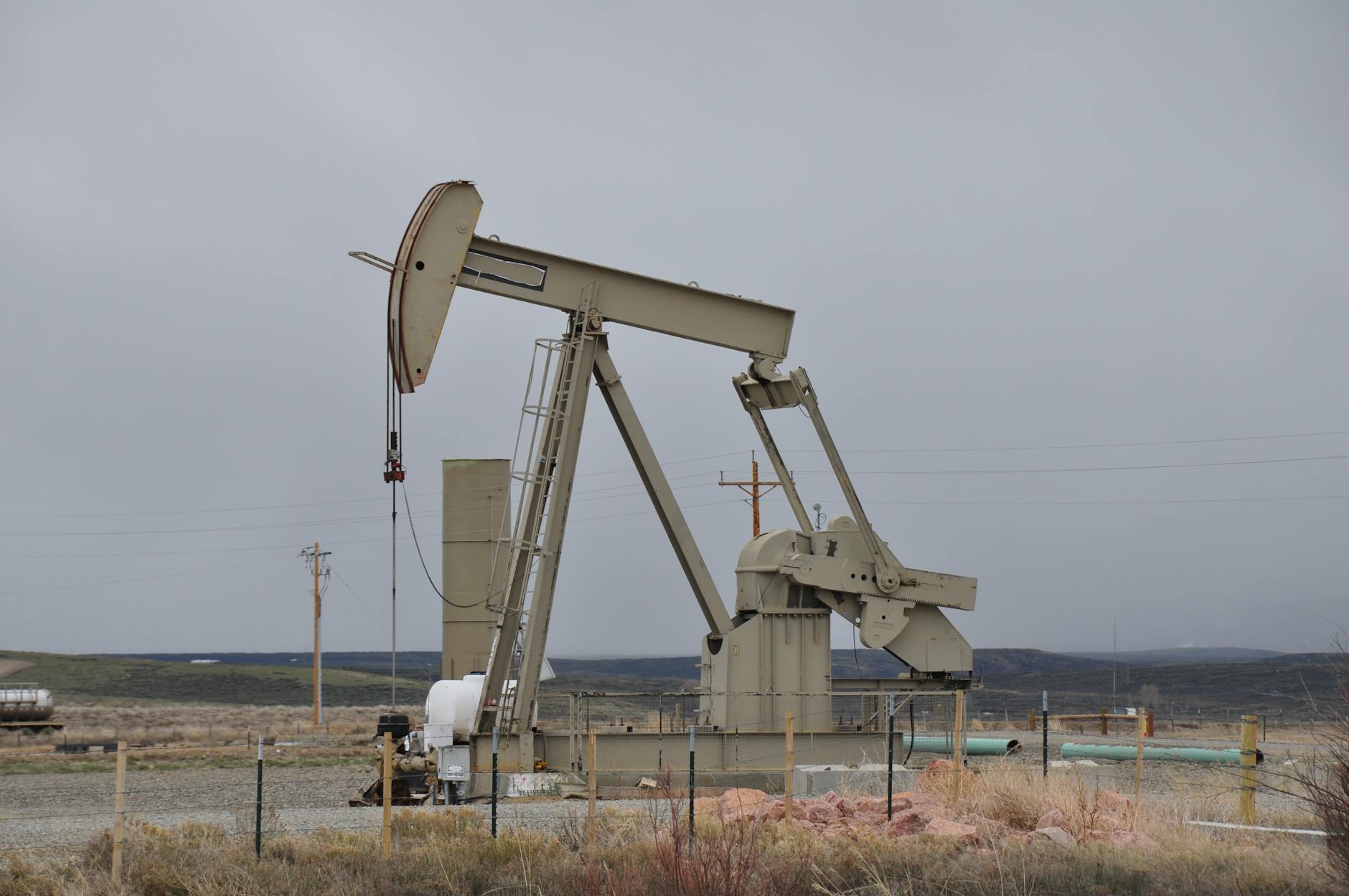
The cruel irony is that the United States produces nearly 13.6 million barrels of oil per day, near-record levels, and still could not shield its own consumers from the shock. That fact alone demolished the “drill, baby, drill” version of energy independence that politicians have sold for years. As Food & Water Watch bluntly put it, the crisis “exposes the lie of oil and gas energy independence” — because as long as oil is priced on a global commodity market, domestic production does not equal domestic price protection. This article breaks down how the war reshaped the energy debate, what it revealed about the limits of the Strategic Petroleum Reserve, why renewable energy suddenly looks less like ideology and more like national security, and what consumers and policymakers should actually take away from the most severe oil disruption in modern history.
Table of Contents
- Why Did the Iran War Make the Case for Energy Independence More Convincing Than Climate Reports?
- What Does “Energy Independence” Actually Mean When Oil Is a Global Commodity?
- The Strategic Petroleum Reserve Was Not Built for This
- Why Renewable Energy Suddenly Looks Like a National Security Strategy
- The EV Tipping Point May Already Be Here
- The Global Economic Fallout Is Just Beginning
- Where the Energy Debate Goes From Here
- Conclusion
- Frequently Asked Questions
Why Did the Iran War Make the Case for Energy Independence More Convincing Than Climate Reports?
Climate reports deal in projections — sea level rise by 2050, temperature increases by 2100, economic costs measured in trillions over decades. They are, by nature, abstract. The iran war delivered a concrete, undeniable lesson in a format Americans understand immediately: the price on the gas station sign. Within days of the Strait of Hormuz closure, Brent crude surged from roughly $70 per barrel to briefly touching $120 before settling around $100 to $105 — a spike of more than 25 percent. The International Energy Agency estimated the war cut global oil supply by approximately 8 million barrels per day in March, the largest oil supply disruption in recorded history. Tanker traffic through the strait dropped by 70 percent initially and then fell to effectively zero, with over 150 ships anchored outside, unable to pass. The difference between this and a climate report is not the severity of the underlying problem — it is the timeline.
Climate change operates on a slow burn that allows politicians to defer, deny, and delay. A war-driven oil shock operates on a timeline of hours and days. Morgan Stanley estimated U.S. inflation could hit 3 percent, with eurozone inflation peaking above 4 percent. The Chicago Council on Global Affairs characterized the situation as a full-blown global energy crisis. When your commute costs 20 percent more and your heating bill follows, the abstract concept of “energy vulnerability” becomes a line item in your checking account. That is a more powerful argument than any 1,200-page IPCC assessment, not because the science is wrong, but because human beings respond to immediate pain far more readily than to slow-moving catastrophe.

What Does “Energy Independence” Actually Mean When Oil Is a Global Commodity?
This is where the conversation gets uncomfortable for both political parties. The United States is technically a net energy exporter. Domestic oil production sits at approximately 13.6 million barrels per day, according to the Energy Information Administration. On paper, America produces more than it consumes. So why did gas prices spike at all? Because oil is fungible. It trades on a global market. When 8 million barrels per day disappear from the global supply — regardless of where they were produced — the price rises everywhere, including in Houston, Tulsa, and Midland. Chatham House analysts noted that U.S.
energy prices were set to rise long before the Iran war; the conflict simply accelerated a structural vulnerability that domestic production cannot fix. This is the critical limitation that “energy independence” boosters rarely acknowledge: producing oil domestically does not create a separate domestic price. American crude competes on the same global exchange as Saudi, Russian, and Nigerian crude. When supply contracts anywhere in the system, prices rise everywhere in the system. The Breakthrough Institute, which is generally sympathetic to pragmatic energy policy, acknowledged this directly, noting that the shale revolution made the U.S. an energy superpower but did not eliminate vulnerability to global price shocks. However, if the United States consumed energy that was not tied to a globally traded commodity — electricity generated from solar, wind, nuclear, or geothermal — a blockade in the Persian Gulf would have roughly the same impact on American electricity prices as a snowstorm in Siberia. Which is to say, none.
The Strategic Petroleum Reserve Was Not Built for This
The emergency response to the Hormuz closure was historic. The IEA unanimously agreed to release 400 million barrels from member reserves — the largest emergency release in the agency’s 50-year history. The United States contributed 172 million barrels, or 43 percent of the total, from the Strategic Petroleum Reserve. The release was expected to take roughly 120 days to fully deliver. On paper, it looked decisive. In practice, crude prices continued rising 17 percent after the announcement. Analysts were blunt: strategic reserves can smooth temporary disruptions, but they cannot replace a chokepoint through which a quarter of the world’s seaborne oil flows. The SPR was designed for short-term supply shocks — a hurricane that knocks out Gulf Coast refining for two weeks, a brief embargo, a pipeline disruption.
It was never intended to substitute for a prolonged, war-driven closure of the world’s most critical oil transit route. At current draw rates, the U.S. contribution would last months, not years. And every barrel released now is a barrel unavailable for the next crisis. This is the uncomfortable math that policymakers are confronting: the safety net exists, but it is finite, and its deployment during this conflict has left the country more exposed to future shocks. The SPR worked exactly as designed. The problem is that the design assumes disruptions are temporary. Wars, as history repeatedly demonstrates, are not always temporary.
Why Renewable Energy Suddenly Looks Like a National Security Strategy
For years, the argument for renewable energy was framed almost entirely through the lens of climate policy. Supporters talked about carbon emissions, global warming, and environmental justice. Opponents talked about cost, reliability, and grid stability. The Iran war reframed the debate entirely. Jon Gordon of Advanced Energy United stated plainly that the crisis is “a reminder of the benefits of clean energy that are not dependent on fuel prices.” Solar panels do not care about the Strait of Hormuz. Wind turbines are not subject to OPEC production decisions. No foreign adversary can blockade sunlight.
The tradeoff, of course, is real. Renewables require massive upfront capital investment, grid modernization, and battery storage infrastructure that does not yet exist at the scale needed to replace fossil fuels entirely. Intermittency remains a genuine engineering challenge. But the comparison has shifted. The question is no longer “Can we afford to transition to renewables?” The question, post-Hormuz, is “Can we afford not to?” When a single military conflict can add 60 cents to every gallon of gas in the country within two weeks, the cost of energy transition looks less like an expense and more like an insurance premium. Electrek declared that “EVs are the number one route to energy independence,” arguing that no blockade can stop the sun from shining or the wind from blowing. That is not just environmentalist rhetoric anymore. It is a statement about supply chain resilience.
The EV Tipping Point May Already Be Here
Consumer behavior tells the story more clearly than any policy argument. In the first weeks of March, online searches for electric vehicles jumped significantly, with electrified vehicle research rising to 22.4 percent of all activity on Edmunds, up from 20.7 percent before the war began. This pattern has precedent: during the 2022 oil spike triggered by Russia’s invasion of Ukraine, EV research queries surged from 17.5 percent to 25.1 percent within a month. Analysts have identified $4 per gallon as the psychological tipping point at which consumers seriously consider switching to electric vehicles. With the national average at $3.57 and climbing — and California already well past $5 — that threshold is either here or approaching fast.
The limitation is that EVs remain unaffordable for many Americans, particularly in the income brackets most harmed by gas price spikes. A household spending an extra $50 per month on gasoline is unlikely to have $35,000 available for a new vehicle purchase, even with federal tax credits. The EV transition, in other words, risks becoming a two-tier system: wealthier households insulate themselves from oil volatility while lower-income households absorb the full blow. Any serious energy independence strategy has to address this gap, whether through expanded EV tax credits, used EV markets, public transit electrification, or some combination. The demand signal is clear. The access problem is not solved.

The Global Economic Fallout Is Just Beginning
The war’s economic damage extends well beyond the gas pump. Morgan Stanley estimates inflation could peak above 4 percent in the eurozone, 3 percent in the United States, and 2.5 percent in Japan.
📨 Get Free Accountability Coverage Alerts
Free · No spam · Unsubscribe anytime
Eurozone growth could be reduced by 0.1 percent, with inflation rising by half a percentage point — numbers that sound small until you remember they translate to millions of households paying more for food, transportation, and heating. The Chicago Council on Global Affairs characterized the situation as a full-scale global energy crisis, and unlike previous oil shocks, this one arrived at a moment when central banks were already navigating the aftermath of pandemic-era inflation. The Federal Reserve now faces the impossible choice between raising rates to fight energy-driven inflation and holding steady to avoid tipping a war-stressed economy into recession.
Where the Energy Debate Goes From Here
The Iran war has not settled the energy debate so much as it has reshuffled the deck. The “drill more” camp can no longer credibly claim that domestic production insulates consumers from global price shocks — the evidence is now inescapable. The “transition now” camp cannot credibly claim that renewables are ready to replace fossil fuels overnight — the infrastructure is not there yet. What has changed is the center of gravity.
The Breakthrough Institute’s call for bipartisan energy policy reflects a growing recognition that energy independence is not a fossil fuel goal or a renewable energy goal. It is a structural goal that requires diversifying away from any single commodity that can be weaponized by conflict, cartel, or chokepoint. The war made the argument not by persuasion but by demonstration. That tends to stick.
Conclusion
The Iran war produced the largest oil supply disruption in history, the largest emergency reserve release in IEA history, a 25 percent spike in crude prices, and a 60-cent jump in gasoline costs — all within three weeks. It revealed that American oil production, even at near-record levels, does not equal American energy security as long as oil prices are set on a global market. The Strategic Petroleum Reserve provided a buffer, not a solution. And consumer behavior — the spike in EV searches, the renewed interest in electrification — suggests that millions of Americans are drawing their own conclusions about what energy independence actually requires.
The path forward is not simple, and anyone who tells you otherwise is selling something. Genuine energy independence means reducing exposure to globally traded fossil fuels, investing in domestic electricity generation that no foreign adversary can disrupt, and ensuring that the transition does not leave lower-income households stranded in an oil-dependent economy while wealthier Americans buy their way out. The Iran war did not create this argument. But it made it impossible to ignore. That may be the most consequential thing to come out of this conflict — not a military outcome, but an economic lesson that finally landed.
Frequently Asked Questions
If the U.S. produces so much oil, why did gas prices go up?
Oil is priced on a global market. When the Strait of Hormuz closure removed approximately 8 million barrels per day from global supply, prices rose everywhere — including in the United States — regardless of domestic production levels. Producing oil domestically does not create a separate, insulated domestic price.
How much did gas prices increase because of the Iran war?
The national average rose from $2.94 per gallon the week before the war to $3.57 per gallon by mid-March 2026 — an increase of roughly 60 cents. California prices reached $5.29 per gallon.
What is the Strategic Petroleum Reserve, and can it fix this?
The SPR is an emergency stockpile of crude oil maintained by the U.S. government. The IEA authorized a release of 400 million barrels from member nations, with the U.S. contributing 172 million barrels. However, crude prices continued rising 17 percent after the announcement. The SPR can smooth short-term disruptions but cannot replace a prolonged supply loss from a major chokepoint.
Are electric vehicles really a solution to energy independence?
EVs eliminate direct dependence on gasoline, meaning their operating costs are not affected by oil market disruptions. However, they require significant upfront investment and depend on an electrical grid that still relies partly on natural gas. They are one component of a broader diversification strategy, not a standalone fix.
How does this compare to past oil crises?
The IEA estimated the Iran war disruption at approximately 8 million barrels per day — the largest oil supply disruption in history. The emergency reserve release of 400 million barrels was also the largest in the IEA’s 50-year existence. For comparison, the 2022 Ukraine-related disruption was significant but smaller in scale.
Will oil prices come back down?
That depends on how long the Strait of Hormuz remains effectively closed and whether alternative supply routes can compensate. As of mid-March 2026, Brent crude has settled around $100 to $105 per barrel, down from a brief spike to $120 but still roughly 40 percent above pre-war levels. Analysts caution that strategic reserves alone cannot fully compensate for the Hormuz disruption.
You Might Also Like
- The Iran War Isn’t Just About Nuclear Weapons — It’s About Who Controls Middle East Energy
- The Iran War Could Permanently Reshape Global Energy Markets
- Whoever Controls Post-War Iran Controls Trillions of Dollars in Energy Resources