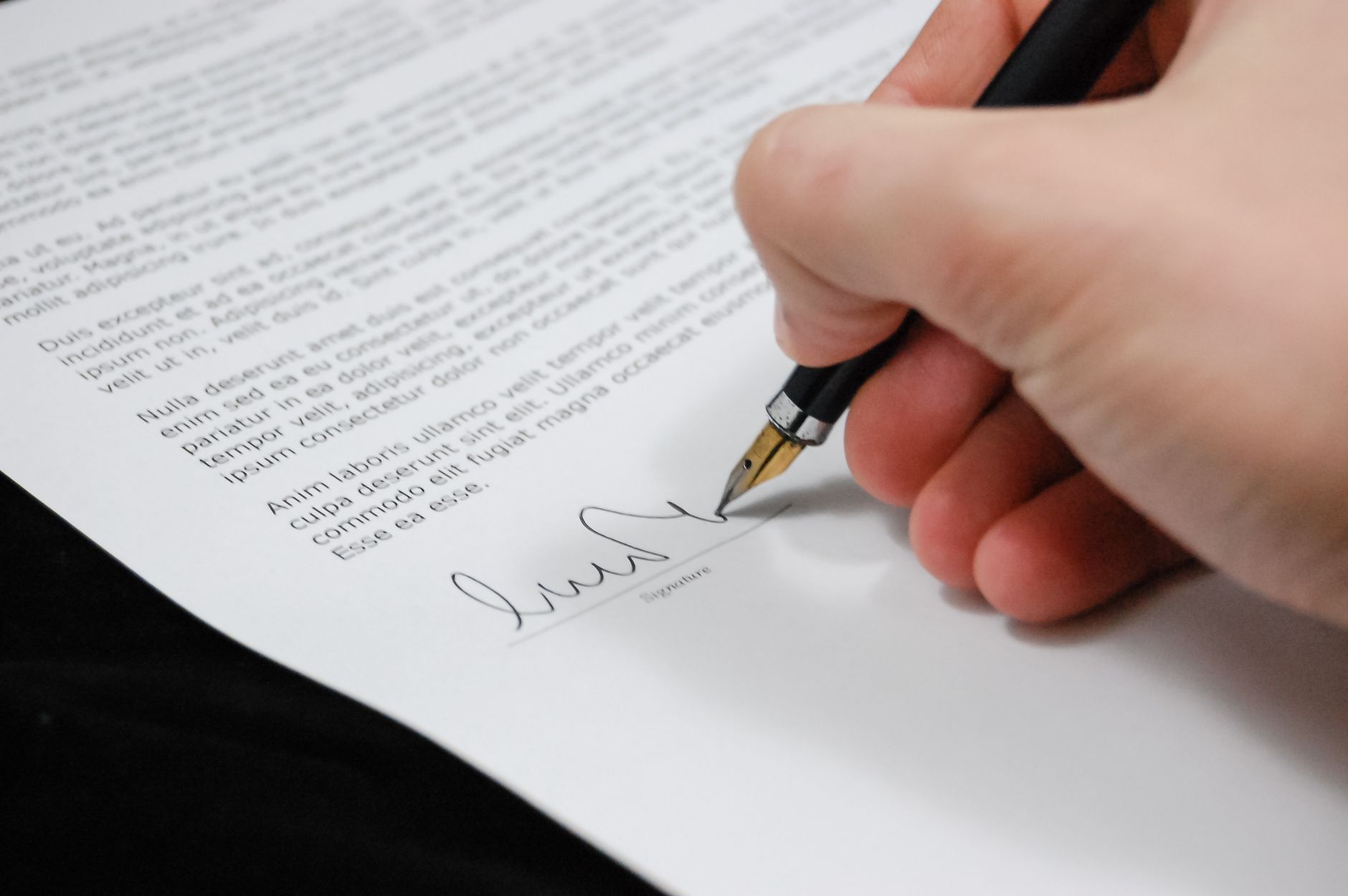
Can a pardon be revoked after it has been delivered? No court has ever allowed it, and legal scholars told fact-checkers there is no mechanism to do so. President Trump has declared Biden-era autopen pardons void, but as of late October 2026 no court had ruled that any Biden pardon is invalid. Biden has said he made every clemency decision himself, and his spokesperson called the Republican inquiry into it “baseless.”
Where it stands: In December 2025, Trump posted that anyone holding an autopen-signed Biden pardon should “be advised that said Document has been fully and completely terminated, and is of no Legal effect.” House Oversight Republicans had issued a report in October 2025 that “deems void” those actions. Attorney General Pam Bondi said her team was reviewing it. No court ruling on the validity of any Biden autopen pardon has been reported.
Can a pardon be revoked once it is delivered?
The only court decision on point says no. PolitiFact quoted an 1869 federal ruling: “The law undoubtedly is, that when a pardon is complete, there is no power to revoke it, any more than there is power to revoke any other completed act.”
The key word is “complete.” The Supreme Court described a pardon in 1915 in Burdick v. United States as a deed: “A pardon is a deed, to the validity of which delivery is essential, and delivery is not complete without acceptance.”
That is why the one historical revocation involved an undelivered grant. The Congressional Research Service wrote: “For instance, in 1869, after outgoing President Andrew Johnson issued but did not deliver a pardon, incoming President Ulysses S. Grant revoked the pardon, and a federal court upheld the revocation.”
WRAL’s fact-check added that, according to law professor Dan Kobil, presidents have occasionally withdrawn their own pardons before those pardons took effect, after changing their minds. That is different from one president canceling another’s completed grant, which has no precedent.
The 1866 case Ex parte Garland leans the same way on Congress’s side: the Court wrote that “Congress can neither limit the effect of his pardon, nor exclude from its exercise any class of offenders.” The House Oversight report, discussed below, does not argue for a revocation power. It argues the Biden grants were never valid because Biden may not have approved them. That is a factual claim about authorization, and Biden disputes it.
What did Trump claim about Biden’s autopen pardons?
He made the claim twice. In March 2025 he wrote that Biden’s pardons for members of the January 6 committee “are hereby declared VOID, VACANT, AND OF NO FURTHER FORCE OR EFFECT, because of the fact that they were done by Autopen.” An autopen is a machine that reproduces a signature with a mechanical arm.
The White House press secretary, Karoline Leavitt, defended the post as a question about Biden’s awareness, as PolitiFact reported: “The president was raising the point that, did the president even know about these pardons? Was his legal signature used without his consent or knowledge?”
In December 2025 Trump went further and declared autopen-signed Biden documents null, adding the “terminated” warning quoted above. WRAL reported that legal experts said reversing a pardon “would have to begin through a formalized process, not a Truth Social post.”
What did House Oversight Republicans conclude?
The Republican-led committee issued its final report in October 2025. According to CNN, it told Attorney General Pam Bondi that the committee “deems void President Biden’s executive actions that were signed using the Autopen, and the committee determines that action by the Department of Justice is warranted to address the legal consequences of that determination.”
Ed Martin, the Trump administration’s pardon attorney, wrote to Chairman James Comer: “My office cannot support the validity of AutoPen pardons for individuals such as Anthony Fauci, Adam Schiff, Mark Milley, and many more without further examination and fact-finding.” Bondi said her team was “reviewing the Biden administration’s reported use of autopen for pardons.”
Democrats rejected the report. CNN reported that Rep. Robert Garcia, the committee’s top Democrat, called it a “sham investigation” and said: “The testimonies also make it clear the former President authorized every executive order, pardon, and use of the autopen.” A Biden spokesperson said: “This investigation into baseless claims has confirmed what has been clear from the start: President Biden made the decisions of his presidency.”
📨 Get Free Accountability Coverage Alerts
Free · No spam · Unsubscribe anytime
A committee report is not a court ruling. CNN noted that “there is no mechanism or precedent to reverse a pardon issued by a past president, legal experts say.”
Does the Constitution require a pardon to be signed by hand?
Not by its text. The pardon clause says the president “shall have Power to grant Reprieves and Pardons” and says nothing about signatures. Stanford scholar Bernadette Meyler told PolitiFact: “The president possesses the power to pardon, but there is no specification (unlike for signing of bills) that this pardon be in writing.”
A 2005 Office of Legal Counsel opinion, written for bills rather than pardons, concluded that “the President may sign a bill within the meaning of Article I, Section 7 by directing a subordinate to affix the President’s signature to such a bill, for example by autopen.” PolitiFact found that “There is no legal precedent saying pardons are void if they are signed by a machine instead of the president.” WRAL reported that “Biden told The Times he had orally granted all the pardons and commutations issued at the end of his term.”
| Claim or action | By whom | Date | Legal status |
|---|---|---|---|
| Jan. 6 committee pardons declared “VOID” | President Trump (post) | March 2025 | No court ruling |
| Autopen actions “deem[ed] void”; DOJ action urged | House Oversight GOP majority | October 2025 | Committee assertion, not a ruling |
| Pardon attorney “cannot support the validity” without more review | Ed Martin, DOJ | October 2025 | Internal position; no court filing reported |
| Autopen pardons “terminated” | President Trump (post) | December 2025 | No court ruling |
| Completed pardon cannot be revoked | Federal court | 1869 | Only ruling on point |
What would happen if a future president tried to undo Trump’s pardons?
The same law would apply, and so would the same uncertainty. To test a revocation, the government would have to charge someone it considers unpardoned, and that person would raise the pardon in court. Michigan State law professor Brian Kalt told WRAL a pardon holder “could argue that they have been validly pardoned, and the judge could dismiss the claim then and there.”
Some scholars flagged the risk for Trump’s own grants. University of North Carolina professor Michael Gerhardt told PolitiFact: “Even under Trump’s conception of unlimited presidential power, a future president could undo anything he did — and I assume he would not be happy with that.” He also told WRAL: “It is well settled that once there is a pardon, no one — not any president or Congress or the courts — can undo it.”
The question is not academic. In an early-October 2026 report, NBC News wrote that “President Donald Trump said in an interview that he’s considering pre-emptively pardoning members of his administration before the end of his second term.” Any such grants, like the January 6 and elector pardons already listed on our Trump pardon tracker, would reach federal offenses only. What a later Justice Department could still pursue is covered in can a 2029 DOJ prosecute despite pardons, and whether the Court might narrow the power is in our Roe comparison.
Frequently Asked Questions
Can a president revoke a pardon?
A president may withdraw a pardon that has not yet been delivered; a federal court upheld that in 1869. Once a pardon is delivered and accepted, the same 1869 ruling said there is no power to revoke it, and no court has held otherwise.
Are Biden pardons void because of the autopen?
No court has ruled that any Biden pardon is void. Trump and House Oversight Republicans have said so; Biden says he made every decision, and legal experts told PolitiFact the Constitution does not require a handwritten signature.
Can a new president cancel the previous president’s pardons?
There is no precedent for it. Legal scholars quoted by PolitiFact and WRAL said no constitutional mechanism exists to overturn a completed pardon.
Has the Justice Department tried to prosecute anyone Biden pardoned?
Our sources report reviews by the attorney general and the pardon attorney, but no court case challenging a Biden pardon had been reported as of late October 2026.
Could Trump’s own pardons be revoked by a future president?
Under the 1869 ruling and the experts quoted here, a completed pardon cannot be undone. Any attempt would end up in court, which has not tested the question for a predecessor’s grant.
Sources
- Are Biden pardons ‘void’ because he used an autopen? No, Trump’s claim is False — PolitiFact, March 17, 2025
- Fact check: Trump says Biden pardons issued by autopen are ‘terminated’ — WRAL (PolitiFact), December 2025
- GOP-led Oversight Committee says Biden pardons signed by autopen are ‘void’ in final report — CNN, October 28, 2025
- Presidential Pardons: Overview and Selected Legal Issues (R46179) — Congressional Research Service (EveryCRSReport mirror), January 14, 2020
- Burdick v. United States, 236 U.S. 79 (1915) — Legal Information Institute (Cornell), January 25, 1915
- Ex parte Garland, 71 U.S. 333 (1866) — Legal Information Institute (Cornell), December Term 1866
- The Constitution of the United States: A Transcription — National Archives, text of 1787
- Trump says he’d consider pardoning administration officials before he leaves office — NBC News, October 1, 2026
This article is news reporting and analysis based on the public sources listed above, as they stood on the dates shown. Where officials, lawmakers or analysts disagree, including on whether an action is lawful, their positions are attributed to them; Donald Trump Class Action is not a court and nothing here is legal advice. Facts in a developing story can change.