
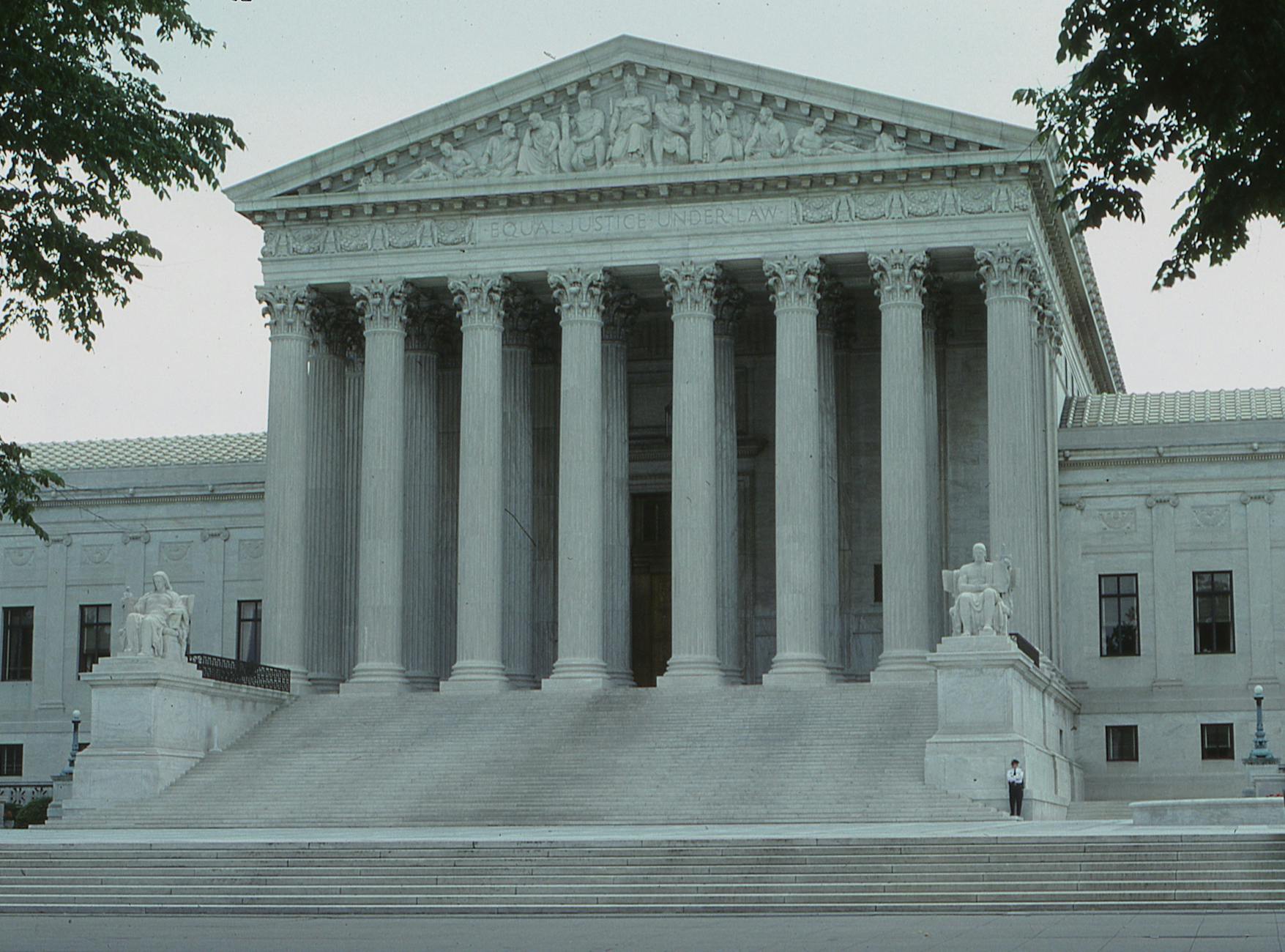
The Supreme Court has ruled that President Trump’s sweeping tariffs imposed under the International Emergency Economic Powers Act are illegal and unconstitutional, and now Americans could be owed refunds totaling well over $100 billion. The 6-3 decision, handed down on February 20, 2026 and authored by conservative Chief Justice John Roberts, validated what Oregon Attorney General Dan Rayfield and 11 other state attorneys general argued from the start: that these tariffs amounted to a hidden tax on Americans that no president has the constitutional authority to impose. As AG Rayfield put it bluntly, “Today, the Supreme Court made it clear that no president gets to levy taxes on Americans disguised as tariffs.” The numbers are staggering. U.S.
Customs and Border Protection collected approximately $133.5 billion in IEEPA tariff revenue as of mid-December 2025, with collections surging to $30 billion in January 2026 alone — a 304% increase over the same period in 2025. Already, roughly 2,000 refund claims have been filed for more than $170 billion in IEEPA tariff revenue. Democrats estimate the average American household is owed about $1,700, and 26 Senate Democrats have introduced the Tariff Refund Act of 2026 to force those refunds within 180 days. But getting that money back is far from guaranteed, and the path forward is tangled in legal complications, political resistance, and a refund process that could drag on for 18 months or longer. Here is what you need to know about where things stand, who actually gets the money, and what ordinary Americans can do.
Table of Contents
- Why Did the Supreme Court Rule Trump’s Tariffs Illegal — and What Refunds Are Owed?
- Who Actually Gets the Refund — Importers or Consumers?
- The Tariff Refund Act of 2026 — What Congress Is Trying to Do
- How to File a Tariff Refund Claim — and What to Expect
- Why the Trump Administration May Try to Keep the Money
- States Leading the Charge for Consumer Relief
- What Happens Next — and Will Americans Ever See the Money?
- Conclusion
- Frequently Asked Questions
Why Did the Supreme Court Rule Trump’s Tariffs Illegal — and What Refunds Are Owed?
The case originated with Oregon AG Dan Rayfield and attorneys general from 11 other states who challenged the legal foundation of trump‘s tariffs. The core argument was straightforward: the Constitution grants Congress, not the president, the power to levy taxes. Trump imposed the tariffs under IEEPA, a law designed for national security emergencies, but the Court agreed with the states that using it to impose broad import duties was an unconstitutional end-run around congressional authority. The ruling was notable because it was authored by Roberts and joined by both liberal and conservative justices, making it a 6-3 supermajority rather than a narrow partisan split. In terms of what is owed, the Penn Wharton Budget Model and CNBC reporting peg total IEEPA tariff collections at somewhere between $133.5 billion and $175 billion. Oregon alone could recoup roughly $670 million.
new York Governor Kathy Hochul has called on the Trump administration to return an estimated $13.5 billion to New Yorkers. Illinois Governor J.B. Pritzker went further, sending a letter and an invoice to Trump demanding $1,700 refunds for every Illinois family. The scale of this is nearly unprecedented in modern American governance — the federal government collected hundreds of billions of dollars under a legal authority the Supreme Court has now declared invalid. Rayfield has been particularly vocal about the administration’s resistance. He noted that Trump “saying, ‘I’m not going to give that money back’ … frustrates me,” underscoring the gap between what the Court ruled and what the executive branch is willing to do voluntarily.
Who Actually Gets the Refund — Importers or Consumers?
Here is the critical detail that most headlines gloss over: the refunds are legally owed to importers, not to everyday consumers. Tariffs are paid at the border by the companies importing goods into the United States. When those companies passed the costs along to customers through higher prices on everything from electronics to groceries, that was a business decision — not a government-collected fee from individuals. So when refunds are issued, they go back to the importers who originally paid them. This means the average American household will not receive a $1,700 check in the mail, despite the political rhetoric. CNN and NPR have both reported that consumers who bore the brunt of higher prices are unlikely to be directly compensated.
The $1,700 figure cited by Democrats is an estimate of how much each household effectively lost to tariff-inflated prices, but there is no legal mechanism currently in place to route refunds from importers down to the consumers who paid those higher prices. If you bought a washing machine that cost $200 more because of tariffs, the refund goes to Whirlpool or Samsung — not to you. However, there is a notable exception forming. Some companies are voluntarily passing refunds along to their customers. FedEx has begun issuing refunds, and Dame, a small business, has also started returning tariff-related surcharges to customers. These are voluntary goodwill gestures, not legal requirements, and there is no guarantee the practice will become widespread. If you paid tariff surcharges that were itemized separately on an invoice or receipt, you may have a stronger case to request a refund from the company that charged you.
The Tariff Refund Act of 2026 — What Congress Is Trying to Do
Twenty-six Senate Democrats, led by Senators Ron Wyden, Ed Markey, and Jeanne Shaheen, introduced the Tariff Refund Act of 2026 in direct response to the Supreme Court ruling. The bill would require U.S. Customs and Border Protection to refund all revenue collected under the now-invalidated IEEPA tariffs within 180 days, with interest. It specifically prioritizes small businesses, which were disproportionately hurt by the tariffs because they lacked the supply chain flexibility and financial cushion that larger corporations had to absorb the costs. The bill faces an uphill battle. It requires passage through both chambers of Congress and the president’s signature — and this is the same president whose tariffs were just struck down.
The Trump administration has signaled it is actively looking for ways to keep the tariff revenue, despite having previously told courts that issuing refunds would be straightforward. That earlier assurance, made during oral arguments, now looks like it was either misleading or made in bad faith, depending on your perspective. For small business owners, the legislation matters enormously. A retailer who imported $500,000 in goods subject to a 25% IEEPA tariff paid $125,000 in duties now deemed illegal. For a small operation, that is the difference between staying open and closing. The 180-day timeline with interest would provide meaningful relief — if the bill passes. Without it, those businesses are left navigating the Court of International Trade on their own.

How to File a Tariff Refund Claim — and What to Expect
If you are an importer who paid IEEPA tariffs, the refund process runs through the U.S. Court of International Trade. Roughly 2,000 claims have already been filed, collectively seeking more than $170 billion. The process requires documentation of the tariffs paid, typically through CBP entry records and customs broker files. Companies that used licensed customs brokers are in a better position because those brokers maintain detailed records of duties paid. The timeline, however, is daunting. TD Securities economists estimate the refund process could take up to 18 months as cases work through the trade court system.
That is the optimistic scenario — it assumes the administration cooperates in good faith. Given the administration’s stated intention to find ways to retain the revenue, legal challenges and procedural delays could extend the process further. Importers need to weigh the cost of legal representation against the size of their potential refund. For large importers with millions in claims, hiring trade attorneys is an obvious move. For smaller importers with claims in the tens of thousands, the legal fees could eat into a significant portion of the recovery. There is also a tradeoff between filing early and waiting. Early filers establish their place in line but may face a more adversarial government response as the administration mounts its defense. Later filers benefit from legal precedents set by earlier cases but risk longer delays and potential changes in the political landscape.
Why the Trump Administration May Try to Keep the Money
The Supreme Court’s ruling struck down the tariffs but did not explicitly address refunds. Justice Brett Kavanaugh noted in his dissent: “The Court says nothing today about whether, and if so how, the Government should go about returning the billions of dollars that it has collected from importers.” That silence has created an opening the administration appears eager to exploit. Fortune has reported that the Trump administration is actively exploring legal strategies to retain the tariff revenue, despite having told courts during arguments that refunds would be manageable. The contradiction is striking.
During litigation, the government’s position was essentially “even if we lose, refunds are simple.” Now that they have lost, the position appears to be shifting toward “refunds are complicated and maybe unnecessary.” This kind of reversal erodes public trust in government legal representations and may prompt courts to take a harder line on compliance. The practical risk for claimants is that the government could slow-walk the process, challenge individual claims on procedural grounds, or attempt to pass legislation retroactively authorizing the tariffs. None of these outcomes are guaranteed, but they represent real obstacles. Anyone expecting a quick resolution should prepare for the possibility that this fight is far from over.

States Leading the Charge for Consumer Relief
State-level action has been among the most aggressive responses to the ruling. New York Governor Hochul called on the Trump administration to refund $13.5 billion to New Yorkers, framing it as money taken from working families under false pretenses. Illinois Governor Pritzker took the more theatrical step of sending an actual invoice to the White House demanding $1,700 per household.
📨 Get Free Accountability Coverage Alerts
Free · No spam · Unsubscribe anytime
Oregon, whose AG led the case, stands to recoup approximately $670 million. These state-level demands carry political weight even if they lack direct legal enforcement power. They put public pressure on the administration and create a narrative that the federal government is sitting on money that belongs to the people. For residents of these states, the actions signal that their elected officials are actively fighting for recovery — though whether that translates into dollars returned to consumers remains an open question.
What Happens Next — and Will Americans Ever See the Money?
The months ahead will be defined by a collision between legal obligation and political will. The Supreme Court has spoken clearly: the tariffs were unconstitutional. The money was collected illegally. But the mechanics of returning $100 billion or more are genuinely complex, and the administration has every incentive to delay. The Tariff Refund Act of 2026 offers a legislative solution, but its passage is uncertain.
Court-ordered refunds will come, but the 18-month timeline may be optimistic. The companies voluntarily issuing refunds — FedEx, Dame, and potentially others — offer a glimmer of what corporate responsibility looks like in this situation. But consumer-level relief on a broad scale will likely require either legislative action or significant public pressure on importers to pass refunds through to their customers. For now, the most practical step for individuals is to document any tariff-related surcharges they were charged, monitor legislative developments, and contact their representatives to support the Tariff Refund Act. The money is owed. Getting it back is the hard part.
Conclusion
The Supreme Court’s 6-3 ruling that Trump’s IEEPA tariffs are unconstitutional represents one of the most significant checks on executive power in recent memory. With total collections estimated between $133.5 billion and $175 billion, and roughly 2,000 refund claims already filed, the scale of potential refunds is enormous. AG Dan Rayfield and his coalition of state attorneys general won a decisive legal victory, and the Tariff Refund Act of 2026 offers a pathway to force the return of illegally collected revenue within 180 days with interest. But the road from a Supreme Court ruling to money in people’s pockets is long and uncertain.
Refunds will initially flow to importers, not consumers. The administration is seeking ways to keep the revenue. The court process could take 18 months or longer. Americans should stay informed, keep records of tariff-related price increases, and push their elected officials to support legislation that ensures this money is returned. A constitutional violation of this magnitude and scale demands a remedy — the question is whether the political system will deliver one.
Frequently Asked Questions
Will I get a $1,700 refund check from the government?
Almost certainly not directly. The $1,700 figure is an estimate of how much each household lost to tariff-inflated prices. Legal refunds go to importers who paid the tariffs at the border, not to individual consumers. Some companies may voluntarily pass savings along, but there is no automatic mechanism for consumer refunds.
How much money was collected under the illegal IEEPA tariffs?
U.S. Customs and Border Protection reported approximately $133.5 billion collected as of mid-December 2025, with collections surging to $30 billion in January 2026 alone. The total is estimated between $133.5 billion and $175 billion, with refund claims exceeding $170 billion.
How long will the refund process take?
TD Securities economists estimate up to 18 months as claims work through the U.S. Court of International Trade. If the Trump administration actively contests claims or seeks to retain the revenue, the process could take longer.
What is the Tariff Refund Act of 2026?
Legislation introduced by 26 Senate Democrats that would require CBP to refund all illegally collected IEEPA tariff revenue within 180 days, with interest, prioritizing small businesses. It has not yet passed.
Are any companies already issuing refunds to customers?
Yes. FedEx and small business Dame have begun voluntarily refunding tariff-related surcharges to customers. However, this is not legally required and most companies have not followed suit.
Can I file a refund claim as an individual consumer?
The refund process through the Court of International Trade is designed for importers who directly paid tariffs to CBP. Individual consumers do not have a direct claim through this process. Your best option is to contact companies that charged you tariff surcharges and request a refund, or support legislative efforts like the Tariff Refund Act.
You Might Also Like
- Trump Says He’s “Considering” Limited Strikes on Iran — 90% Probability of Military Action
- Trump Blocked $16 Billion for Gateway Tunnel Until NY Agreed to Rename Penn Station
- Supreme Court Ruled Trump’s Tariffs Unconstitutional…$175 Billion Refunded…Costco Already Filed Claim