After a year living in the Netherlands, American expats confront a painful reality: the United States has designed its society around assumptions that prioritize cost-cutting, car dependency, and individual risk-bearing over functional infrastructure and public welfare. From the moment an American arrives in Amsterdam or Rotterdam, they begin noticing what their home country has gotten fundamentally wrong—not in matters of ideology, but in practical, daily systems that either work or don’t. A 45-year-old software engineer from California who moved to the Netherlands in early 2025 described the experience this way: “I spent months wondering why I felt less anxious. Then I realized it wasn’t a feeling—it was measurable. No gun violence in the news.
No bankruptcy from a hospital visit. No four-hour commute. America didn’t just make different choices; it chose worse ones.” The Netherlands hosts approximately 78,707 American citizens as of January 2026, many of whom arrived precisely because they could no longer rationalize the gaps between what America promises and what it delivers. These aren’t expatriates fleeing poverty or persecution—they’re middle-class Americans who discovered that a functioning society operates on different principles. What they’ve learned in their first year abroad reveals not moral failures in America but structural ones: systems designed to extract maximum productivity at minimum public cost, leaving individuals to absorb the fallout.
Table of Contents
- Why Transportation Infrastructure Exposes American Inefficiency
- The Healthcare System and Its American Failures
- Safety, Gun Violence, and the Absence of Constant Fear
- Work-Life Balance and the Myth of American Productivity
- The Illusion of Choice in an Underfunded Public Sphere
- Bureaucratic Efficiency and the Cost of Disorganization
- The Political Economy of American Decline
- Conclusion
Why Transportation Infrastructure Exposes American Inefficiency
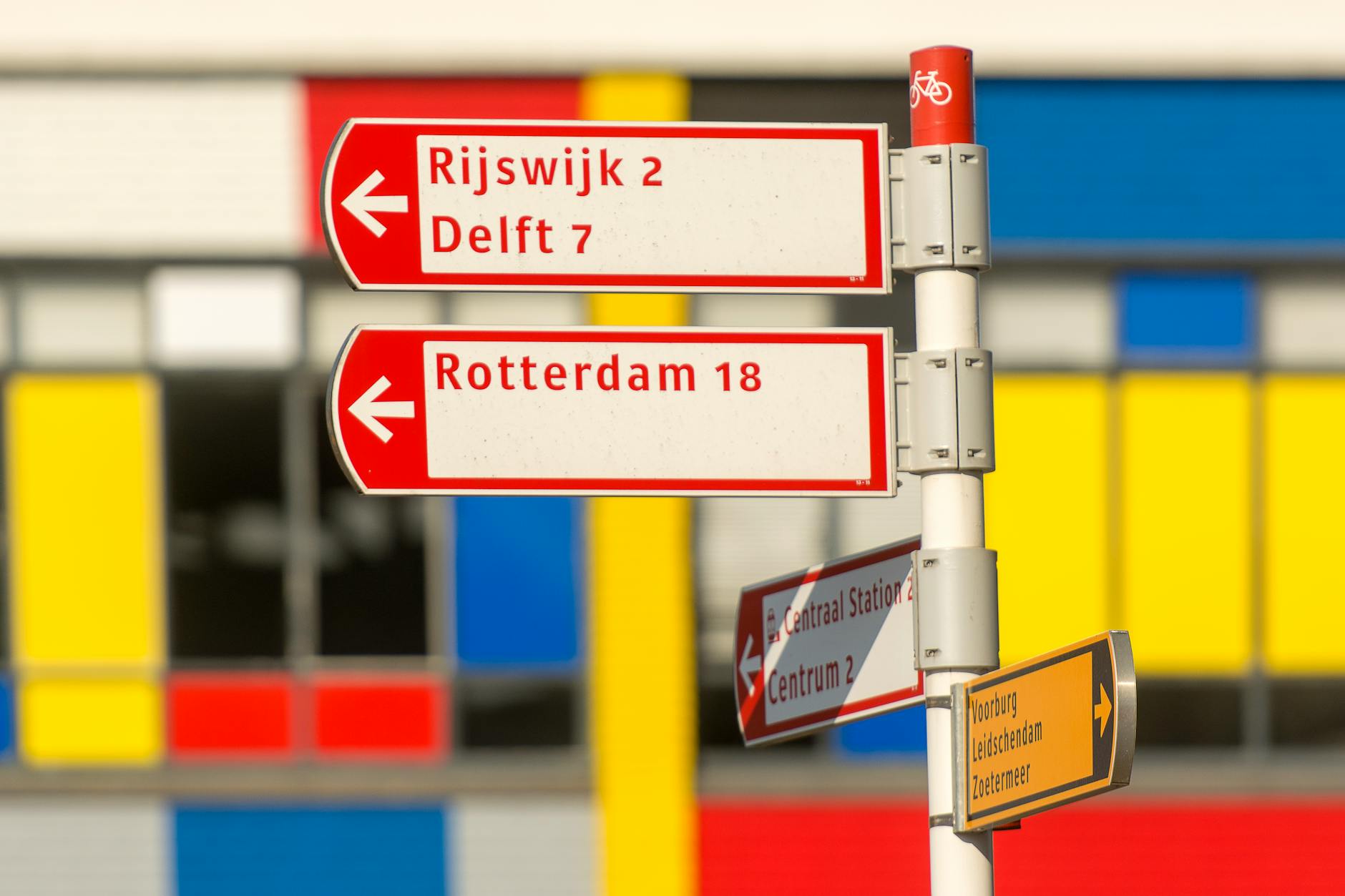
Americans rarely question the automobile-dependent structure of their lives until they live somewhere else. In the Netherlands, the majority of people use bicycles for daily transportation, supplemented by an integrated public transit system that works with metronomic reliability. Americans in the Netherlands quickly discover they’ve been subsidizing car culture their entire lives—not just through gas, which costs $8-9 USD per gallon in the Netherlands compared to the U.S. average of around $3-4, but through the hidden taxation of time.
A Dutch commute of 30 minutes by bike or train is considered standard; an American commute of 90 minutes by car is considered normal. The comparison becomes stark when Americans attempt to maintain driving habits in the Netherlands. A Dutch driver’s license costs approximately €2,000 and requires 1-2 years of classes, tests, and instruction—not because the Netherlands wants to discourage driving, but because the country has consciously decided that if you need a car, you should be thoroughly prepared to operate one safely alongside cyclists and pedestrians. Americans, accustomed to obtaining a license through a brief written test and a 20-minute driving examination, initially view this as excessive regulation. Within months, they recognize it as rational public policy designed to reduce accident rates and protect vulnerable road users—something America’s car-centric infrastructure has systematically failed to do.

The Healthcare System and Its American Failures
No single difference between the Netherlands and America strikes expats more forcefully than healthcare costs and access. The Dutch healthcare system requires mandatory insurance but caps out-of-pocket expenses at roughly €385 per year for most people, with no deductibles that bankrupt families after unexpected illness. Americans in the Netherlands report a psychological shift: they visit doctors without calculating whether the visit will trigger financial ruin. They pursue necessary treatments without rationing decisions between medicine and rent. A 38-year-old teacher from Texas described scheduling a root canal in the Netherlands and paying €400 out-of-pocket; she then learned that the same procedure would have cost her $2,000-4,000 in America after insurance and deductibles.
The limitation Americans must acknowledge is that the Dutch system requires higher baseline taxation—approximately 37-49% on high incomes, compared to progressive U.S. rates that can reach 37% federally but often feel lower due to deductions. This is not a hidden cost; it’s a transparent tradeoff that Dutch society has consciously accepted. Americans who move to the Netherlands and then complain about high taxes have misunderstood the transaction: the Netherlands taxes income heavily because it funds a system that eliminates the need for private insurance, separate healthcare spending, and catastrophic medical bankruptcy. America chose a different path, one where lower baseline taxes create the requirement for expensive private insurance, high deductibles, and coverage denials. Neither system is free; America’s is simply more expensive and less equitable.
Safety, Gun Violence, and the Absence of Constant Fear
One of the most disorienting experiences for Americans living in the Netherlands is the absence of gun violence as a structural fact of daily life. There is no scanning of theater exits for escape routes. There are no school shooting drills. There is no baseline calculation of which public spaces might become killing grounds. A HuffPost essay from an American who relocated in March 2025 described the realization arriving about a year into the move: “I stopped calculating exits.
I stopped feeling that low-level dread in crowds. I didn’t realize I’d been living in that constant state of vigilance until it was gone.” The Netherlands has experienced mass gun violence; it occurred roughly once per decade, and each instance created national trauma and policy change. The United States experiences mass shootings with such regularity that Americans have developed a psychological vocabulary around them—”active shooter drills,” “shelter-in-place,” “first responders”—as though these were normal features of a functional society rather than symptoms of policy failure. Americans living abroad often report that their primary realization about America is not that it’s uniquely violent, but that it is uniquely *accepting* of violence as the price of gun ownership rights. The Netherlands made a different calculation: limited gun access produces lower gun violence. America has not made that calculation; it has instead decided that unlimited gun access and high gun violence are the acceptable cost of constitutional interpretation.

Work-Life Balance and the Myth of American Productivity
American mythology celebrates the hustle—the 60-hour work week, the always-on professional, the person who claims to sleep four hours per night. Americans in the Netherlands encounter a culture where this is viewed not as admirable but as evidence of poor planning or exploitation. The Dutch legal requirement for vacation time—minimum 20 days per year, with many companies offering 25-30—is written into employment contracts, not negotiated as a luxury benefit. The concept of “unlimited PTO” that American companies advertise with pride is viewed in the Netherlands as a way to reduce vacation taken; studies confirm this: Americans with unlimited vacation time take less vacation than Americans with defined vacation days.
The tradeoff Americans must confront is that Dutch productivity, when measured per hour worked, exceeds American productivity. Netherlands workers produce more value per unit of time than American workers do, despite working fewer hours. This suggests that American overwork is not a driver of productivity but a source of inefficiency—people working beyond the point of diminishing returns, making mistakes, and requiring more hours to produce the same output. For corporate structures that profit from overwork and employee burnout, the Dutch model represents an erosion of extractable surplus value. For employees seeking sustainable careers, it represents a more rational organization of labor.
📨 Get Free Accountability Coverage Alerts
Free · No spam · Unsubscribe anytime
The Illusion of Choice in an Underfunded Public Sphere
Americans are often told they benefit from “choice”—choice of insurance plans, choice of schools, choice of public versus private services. What Americans living in the Netherlands recognize is that choice often masks the absence of a universal baseline. Dutch public schools are well-funded and produce strong educational outcomes; Americans therefore don’t need to “choose” between public school and private school in order to receive adequate education. Dutch public transportation is functional; therefore, Americans don’t need to choose between purchasing a car and financial immobility. Dutch healthcare is comprehensive; therefore, Americans don’t need to choose between comprehensive coverage and bankruptcy.
A warning that Americans encounter: this realization often produces defensiveness. Americans are trained to celebrate choice as an intrinsic good, even when choice exists primarily because the default option is inadequate. When Americans recognize that the Dutch “choose” not to privatize education and transportation because the public versions are excellent, they often respond not with admiration but with dismissal—”they have no choice,” as though eliminating the need to choose is a deprivation rather than an achievement. The real lesson is that choice is valuable only when meaningful alternatives exist. When people are forced to choose private healthcare because public healthcare is destroyed, that is not a benefit; it is a system failure with a choice-based veneer.

Bureaucratic Efficiency and the Cost of Disorganization
The Dutch government is not without bureaucracy, but it operates on a principle that American governments have largely abandoned: if the state requires paperwork from citizens, the state should make that process as frictionless as possible. An American moving to the Netherlands encounters a registration system that is comprehensive but coherent—one application, one office, documentation that is clearly requested and processed. An American living in the United States must navigate a fragmented landscape where getting a new driver’s license involves different procedures in each state, registering to vote involves different requirements, and accessing government services means visiting multiple offices with different hours and requirements.
A concrete example: a 52-year-old consultant from New York obtained permanent residence in the Netherlands by filing one comprehensive application, receiving clear written status updates, and completing the process in four months. The same person’s teenage son, applying for a passport renewal in the U.S., took seven months, required appointments at two different offices, and involved lost documentation and contradictory requests from different personnel. The Dutch system is not inherently more intelligent; it is simply designed with the assumption that government should serve citizens efficiently, not test their perseverance.
The Political Economy of American Decline
What Americans discover after a year in the Netherlands is not that America is uniquely flawed but that American dysfunction is often described as inevitable when it is actually the result of deliberate political choices. The Netherlands faces real challenges—housing shortages, immigration debates, climate concerns—but it addresses them through policy-making that assumes functional government is possible. America describes these same challenges and concludes that government is inherently broken, which becomes a self-fulfilling prophecy: governments treated as broken receive reduced funding, deteriorate, and confirm the prophecy. The forward-looking insight Americans gain is that the gap between America and the developed world is not widening due to American exceptionalism declining, but because other nations have maintained faith in the possibility of functional governance while America has systematized the destruction of its own public institutions.
The Netherlands invests in infrastructure, public transportation, education, and healthcare and receives functional systems. America disinvests from these systems and then celebrates the “freedom” that results from forcing individuals to purchase private alternatives. These are not competing philosophies; they are competing outcomes. After a year in the Netherlands, Americans recognize that their country chose worse.
Conclusion
The honest reckoning Americans experience after a year in the Netherlands is not that their country is uniquely bad, but that it made different structural choices—choices that prioritized individual cost-shifting over public investment, that celebrated choice as compensation for inadequate baselines, and that treated government dysfunction as inevitable rather than as policy failure. These choices are not accidents or failures of will; they are deliberate policy decisions made by politicians and corporate interests that benefit from a fragmented, privatized, underfunded public sphere. American exceptionalism has become the exceptionalism of dysfunction. The practical next step is recognizing that what the Netherlands demonstrates is not a utopian fantasy but a set of policy options available to any wealthy nation willing to implement them.
America has the resources to build integrated transportation infrastructure, to provide universal healthcare, to fund public education adequately, and to create functioning government bureaucracies. What it lacks is the political will to do so while also maintaining the low-tax regime and privatized profit structure that current American policy protects. Americans living in the Netherlands for a year typically conclude that their country must eventually choose: continue the present course and accept continued decline relative to peer nations, or acknowledge that functional society requires the public investment that current American ideology rejects. The Netherlands made that choice decades ago and is reaping the results.
You Might Also Like
- Is America Becoming More Isolationist?
- How Out-of-Network Trap Pushed Me Out of America and Into Panama
- How America Changed Since the 1980s — and Why I Now Live in Dominican Republic