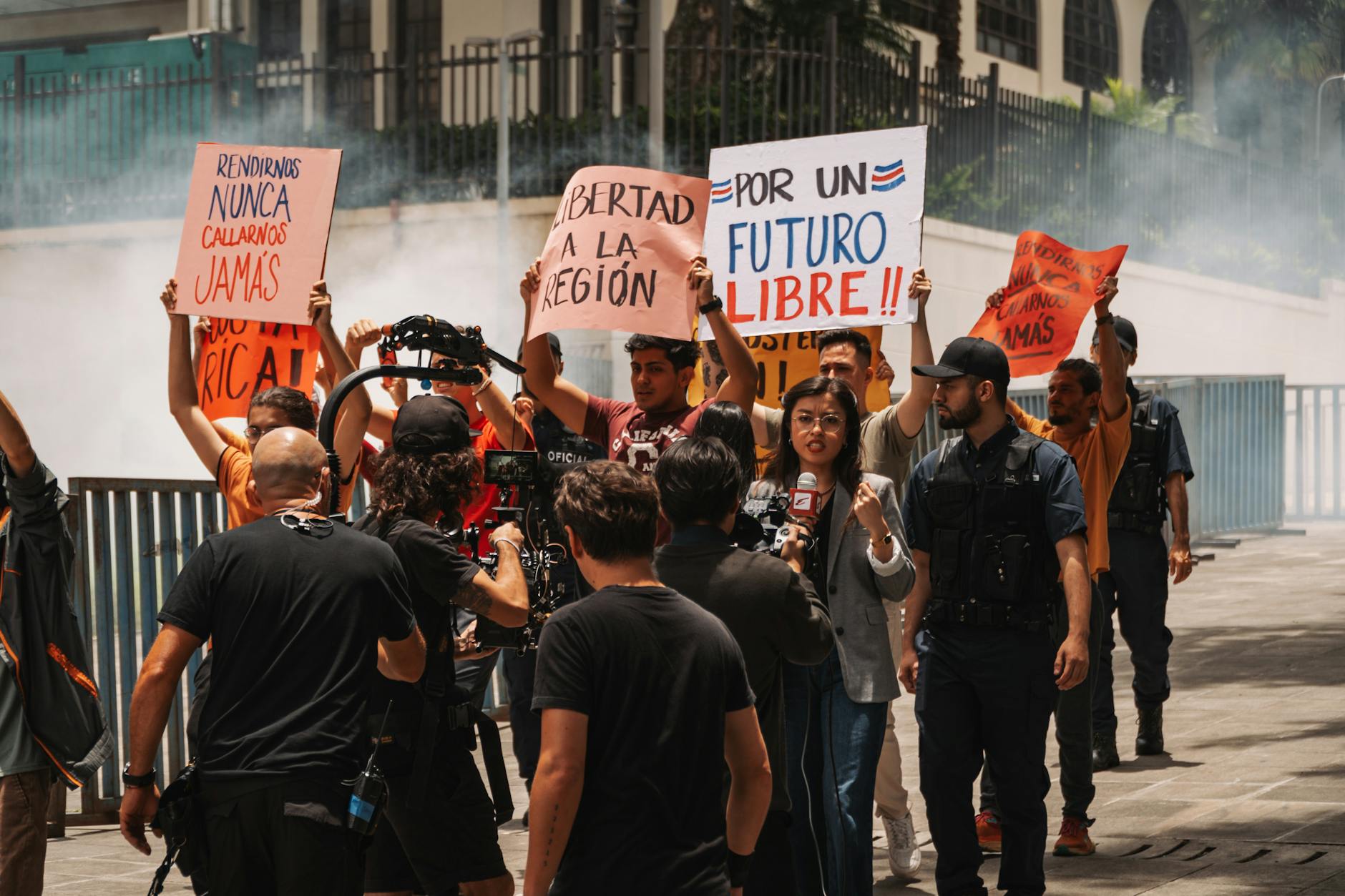
Democracy is stronger than social media chaos—but only by a narrower margin than most people realize. While democratic institutions have survived far worse threats than trending topics and viral outrage, the speed and scale at which social media amplifies disinformation, polarizes populations, and erodes faith in institutions represents a genuinely new challenge to democratic governance. The 2016 and 2020 U.S. presidential elections both demonstrated that social media platforms can distort political discourse and influence electoral outcomes, yet the institutions of voting, courts, elections administration, and legislative bodies ultimately proved capable of absorbing these shocks and functioning according to their core rules.
What distinguishes democracy from social media chaos is its structural resilience. Democratic systems have built-in correction mechanisms—independent courts, auditable voting systems, separation of powers, and public institutions with accountability requirements. Social media platforms, by contrast, are designed to maximize engagement and profit, with algorithms that reward divisiveness and sensationalism. The January 6, 2021 Capitol riot showed how social media can mobilize political violence, yet the immediate aftermath also showed how democracy’s institutional safeguards—law enforcement, the judiciary, Congress itself—contained and prosecuted that threat. This is not a tale of immunity but of institutional endurance under stress.
Table of Contents
- Can Social Media Undermine Democratic Legitimacy?
- The Polarization Trap and Democratic Dysfunction
- What Happens When Democratic Institutions Face Social Media Pressure?
- Comparing Democratic Resilience Across Nations
- The Threat of Coordinated Disinformation at Scale
- Media Literacy and the Infrastructure of Truth
- What the Future Likely Holds
- Conclusion
Can Social Media Undermine Democratic Legitimacy?
Yes, and it has already begun doing so at scale. When millions of citizens receive contradictory narratives about basic facts—whether an election was legitimate, whether a public health crisis is real, whether elected officials are acting in good faith—the shared reality upon which democratic deliberation depends fractures. A 2021 Stanford Internet Observatory study found that narratives about election fraud spread by social media influencers and politicians reached hundreds of millions of people before fact-checkers could catch up, creating an asymmetry where lies travel faster than corrections.
This erosion of shared truth has concrete political consequences. Voter confidence in election integrity dropped significantly between 2016 and 2020, particularly in communities where social media was the primary news source. In the 2022 midterms, candidates promoted election denial narratives that would have been marginalized in pre-social media campaigns, yet still won nominations and general election votes despite lacking credible evidence. However, the fact that election denialism did not succeed in overturning any elections demonstrates that while social media can shape the narrative, it cannot easily override the mechanical reality of vote counting and institutional oversight.
The Polarization Trap and Democratic Dysfunction
Social media algorithms are engineered to identify and serve users content that confirms their existing beliefs while showing them the most extreme versions of opposing viewpoints. This creates artificial polarization that cuts across traditional political geography and demographics. Research from Pew Research Center shows that americans are increasingly unable to understand or empathize with those holding different political views, citing social media consumption as a primary driver. This polarization damages democracy’s ability to function because compromise—the operational mechanism of legislative bodies and civil society—becomes politically toxic.
When your political opponents are portrayed by algorithms as evil, incompetent, or dangerous, negotiation feels like capitulation. The result is gridlock: Congress passes fewer bipartisan bills, state legislatures become more fractious, and local governments struggle to address shared problems. A critical limitation of this analysis is that polarization has multiple causes beyond social media—partisan media, gerrymandering, and legitimate policy disagreements are real factors. But the distinction matters: gerrymandering and media sorting can at least be addressed through institutional reform, while algorithmic polarization actively works against any such reform by making consensus-building feel politically suicidal.
What Happens When Democratic Institutions Face Social Media Pressure?
The Trump presidency from 2017-2021 provided a real-time test of this question. A president who used social media (primarily Twitter) to bypass traditional media filters, make policy announcements, attack opponents, and mobilize supporters directly challenged the intermediating institutions of the press and Congress. Despite extraordinary pressure, the courts blocked numerous executive orders, Congress conducted oversight hearings, inspectors general were (eventually) installed to monitor agency compliance, and the electoral system operated as designed in 2020—recounting votes, certifying results, and ultimately removing the sitting president through voting rather than coup. However, the same period showed democracy’s vulnerabilities.
The president could fire inspectors general with minimal congressional action. Senate Republicans largely declined to use their oversight power. Judicial confirmation became purely partisan. By 2021, the Capitol police were breached by a mob of several thousand people motivated partly by social media narratives. That event was contained and prosecuted, but the narrow margin between “Capitol secured by evening” and “Capitol held by insurrectionists for hours” illustrates how dependent democratic resilience is on the good faith of participants—something social media actively erodes by constantly framing the other side as illegitimate.
Comparing Democratic Resilience Across Nations
The pattern holds internationally, but with important variations. Brazil experienced significant social media-driven polarization leading up to the 2018 and 2022 elections; WhatsApp misinformation campaigns spread conspiracy theories at scale. Yet Brazilian democracy, while damaged and strained, has held together through both elections, with courts blocking unconstitutional actions by sitting presidents. Germany faces substantial misinformation campaigns and far-right mobilization via social media, but maintains strong institutional guardrails and media literacy programs that reduce the chaos’s political impact compared to the United States.
Conversely, social media chaos has contributed to democratic collapse in other contexts. In Myanmar, Facebook was the dominant social media platform, and its algorithm amplified hate speech and military propaganda targeting the Rohingya minority. The resulting genocide and military coup happened with social media serving as an accelerant. The key tradeoff: democracies with stronger institutions, educated populations, and less preexisting ethnic conflict appear more resilient to social media chaos, while fragile states with weaker rule of law can be destabilized much more easily. This suggests the question isn’t really “is democracy stronger than social media” but “how much institutional slack is available to absorb the stress?”.
📨 Get Free Accountability Coverage Alerts
Free · No spam · Unsubscribe anytime
The Threat of Coordinated Disinformation at Scale
State actors and coordinated networks have weaponized social media in ways that exceed organic polarization. Russian Internet Research Agency campaigns in 2016 reached millions of Americans with tailored disinformation designed specifically to maximize division and undermine election confidence. Chinese government-linked accounts spread conspiracy theories about COVID-19 origins and U.S. military bioweapons programs that reached hundreds of millions across multiple platforms. Iranian-linked networks impersonated U.S.
political activists to create social division. The danger here is that coordinated disinformation can be amplified by domestic political figures and media into something that organic algorithm-driven polarization alone could not achieve. In 2021, both Republican and Democratic members of Congress amplified unverified claims that have since been debunked. A critical limitation in defending against this: there is no clear bright line between legitimate political rhetoric, conspiracy theories, and foreign disinformation campaigns. Efforts to censor false content run up against genuine concerns about who decides what is “false,” and platforms have shown poor judgment in moderating content consistently. The warning is blunt: as state actors and domestic political actors learn to work the social media system collaboratively, the ability of institutions to separate truth from fiction degrades.
Media Literacy and the Infrastructure of Truth
The most direct intervention available is media literacy—teaching people to identify misinformation, verify sources, understand how algorithms work, and engage skeptically with sensational claims. Schools in some U.S. states have added curricula on identifying manipulation and evaluating sources.
Finland, with one of the world’s highest media literacy rates, experienced less social media-driven polarization around COVID-19 and election security compared to the United States. The gap is enormous: the United States has no mandatory media literacy curriculum, and platforms remain largely unaccountable for the accuracy of content they amplify. Without systemic investment in media literacy and institutional reform of social media platforms—such as algorithmic transparency, reduced use of engagement-maximizing feeds, or interoperability requirements—social media will continue corroding the shared informational foundation democracy requires.
What the Future Likely Holds
The trajectory suggests democracy will remain stronger than social media chaos, but the margin will narrow unless something changes. Artificial intelligence will soon allow bad actors to generate photorealistic deepfakes, impersonate public figures with synthetic voices, and scale disinformation production beyond current capabilities. The next presidential election cycle will test whether existing institutions can handle this new level of informational warfare. Generative AI could make it algorithmically possible to target millions of people with individually tailored false narratives in their preferred style, potentially overwhelming institutional capacity for response.
The hopeful scenario is that regulatory intervention finally arrives: platform regulation requiring algorithmic transparency, election security funding, media literacy investment, and international cooperation against state-sponsored disinformation. Several countries are exploring these paths, though the U.S. Congress has struggled with the scale of the problem. Democracy will almost certainly survive social media chaos—the system is designed to be remarkably resilient—but if the next decade proceeds without fundamental change, that survival may involve significantly degraded public faith in institutions, chronic dysfunction, and recurring crises of legitimacy.
Conclusion
Democracy is stronger than social media chaos, but not invincibly so. The institutions that constrain power, count votes, enforce laws, and represent diverse populations have absorbed unprecedented disruption and still functioned according to their fundamental rules. However, “stronger” is a measure of relative resilience, not immunity. The speed, scale, and targeting capability of social media—combined with state actors’ willingness to weaponize it and platforms’ profit incentives—have created a genuine threat to the shared informational foundation that democratic deliberation requires.
The institutional resilience test has already been run multiple times: the 2016 election despite Russia’s campaign, the 2020 election despite a sitting president’s false claims, the January 6 response despite massive social media mobilization. Each time, democracy held. But each crisis revealed new vulnerabilities, and the margin between “system functions under stress” and “system breaks” is narrower than democratic stability theory assumed. The next decade will determine whether democratic institutions can be strengthened to handle coming threats, or whether social media chaos gradually erodes them into something nominally democratic but functionally hollow.
You Might Also Like
- Is Truth Dead in the Social Media Era?
- Is Loyalty to Trump Stronger Than Party Loyalty?
- Why Marriage Across Party Lines Is Harder Than Ever