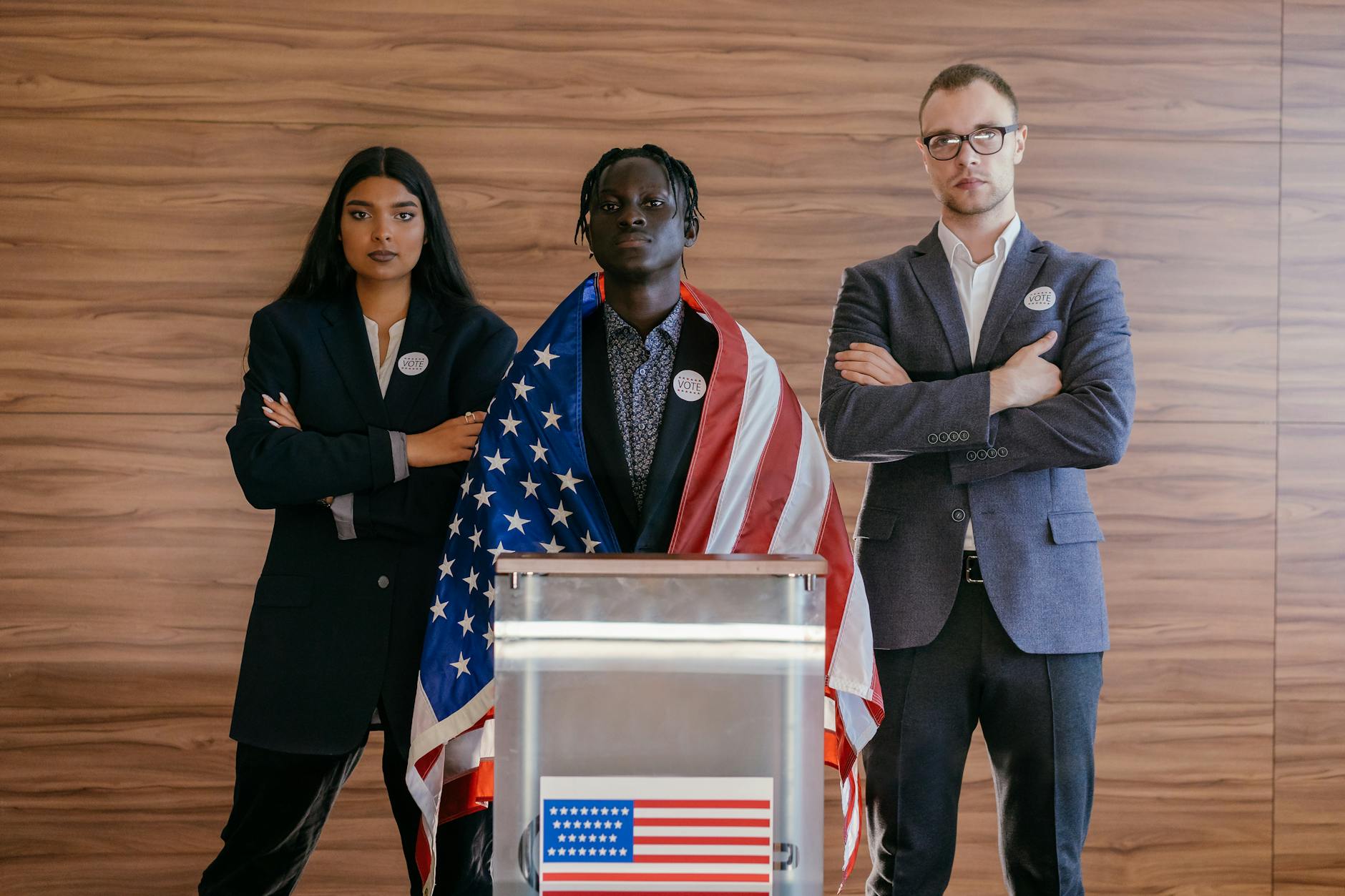
Yes, political differences are straining and in some cases destroying relationships, though not universally. Families, friendships, and marriages are experiencing measurable conflict over political disagreements at higher rates than in previous decades. A 2022 survey found that 64% of Americans reported that political disagreements had damaged at least one relationship, with 18% reporting “permanent” damage.
The difference lies not in disagreement itself—which has always existed—but in the intensity, frequency, and stakes with which people now approach political conversation, particularly in households where family members hold fundamentally opposed views on policy, leadership, and fundamental values. The damage occurs when political differences become identity markers rather than policy preferences. When someone views your voting choice as a direct reflection of your character, morality, or patriotism, the relationship itself becomes politicized. This has accelerated during the Trump administration and subsequent political cycles, where traditional boundaries between political debate and personal worth have blurred significantly.
Table of Contents
- Why Are Political Disagreements Now Damaging Relationships More Than Ever?
- The Hidden Psychological Cost of Political Estrangement
- Real-World Examples of Political Relationships Breakdown
- Can Relationships Survive Political Disagreement? Strategies for Staying Connected
- Common Mistakes That Accelerate Political Relationship Damage
- The Social Media Accelerant: Why Political Differences Feel More Damaging Online
- The Broader Question: Is Society as a Whole Becoming More Fragmented?
- Conclusion
- Frequently Asked Questions
Why Are Political Disagreements Now Damaging Relationships More Than Ever?
Political polarization has fundamentally changed how Americans relate to one another. Twenty years ago, political conversation was often compartmentalized—debated at Thanksgiving dinner, then moved past until the next election cycle. Today, politics is continuous, immediate, and algorithmically amplified. Social media platforms reward engagement, which means they reward outrage and divisive content. Family members who might see each other twice a year now see each other’s political posts dozens of times weekly, each one a potential flashpoint for conflict. The structural reason for increased damage is that political disagreements no longer feel like disagreements about policy—they feel like disagreements about basic human decency.
A 2024 Pew study showed that 70% of respondents believed the opposing political party threatened the nation’s well-being. When the other side is framed as an existential threat rather than a group with different priorities, compromise becomes morally indefensible. Parents have cut off adult children over voting choices. Spouses have separated. Decades-long friendships have ended. The psychological mechanism is that when your “side” is framed as defending civilization itself, accommodation looks like betrayal.
The Hidden Psychological Cost of Political Estrangement
Sustained political conflict in relationships produces measurable psychological harm. The American Psychological Association reported a spike in anxiety and depression correlated with periods of intense political divisiveness. People lose sleep arguing about politics with loved ones, ruminate on disagreements for days, and experience chronic stress from navigating relationships with people whose views they find deeply troubling. A critical limitation in how people handle these conflicts is the false assumption that they can convince the other person.
Decades of research on belief change show that direct argument, evidence presentation, and fact-checking actually entrench opposing views deeper. When you argue politics with your brother-in-law at dinner, you are almost certainly not changing his mind—you are activating his identity-protective cognition, making him more hostile and less open to your perspective. Yet people persist in these arguments, driven by frustration and moral conviction, even though the track record of success is essentially zero. The cost-benefit calculation is terrible: you maintain moral consistency at the cost of relationship damage, and accomplish no political goal whatsoever.
Real-World Examples of Political Relationships Breakdown
The damage manifests across every demographic category and relationship type. A 49-year-old woman in Ohio stopped visiting her parents after they voted for a candidate she viewed as dangerous to women’s rights; she now sees them once per year instead of monthly. A married couple in Arizona developed separate social lives after their political disagreements became too heated to navigate jointly; they no longer discuss politics at all, which solved the arguments but created emotional distance and a sense that they no longer know each other.
Three college friends from the same hometown stopped speaking after social media arguments escalated into accusations of racism and moral failure. The common thread is that these people didn’t set out to end relationships; relationships fractured under sustained pressure. Most cases don’t involve a single breaking point but rather a series of disagreements, failed conversations, and hardening positions that gradually made continued relationship untenable. The exception is cases where one person sets an explicit boundary—”I won’t talk politics with you anymore”—which sometimes stabilizes relationships though it creates a zone of required silence around a central issue in modern life.
Can Relationships Survive Political Disagreement? Strategies for Staying Connected
Relationships can survive significant political differences, but only with intentional, sometimes painful boundary-setting. The first requirement is accepting that you will not change the other person’s mind and releasing the need to try. This feels like giving up, but it’s actually the prerequisite for relationship survival. Once you accept that your spouse, parent, or friend will never vote the way you do, conversations become possible because the stakes psychologically shift from “defending truth” to “understanding another person.” The second requirement is compartmentalization—the deliberate choice to keep some relationships politics-free. This sounds dishonest, but it’s protective. With parents or in-laws, many functional families simply adopt a rule: we don’t discuss politics.
With spouses, the strategy is more complex, often requiring couples therapy or deliberate conversation protocols where political disagreement is acknowledged but limited to specific times and frames. The limitation is that this prevents complete honesty and can create a sense that the relationship exists in a protected bubble disconnected from reality. However, this is often the tradeoff required to maintain the relationship at all. A third approach is to identify the human need behind the political position. Someone who votes for immigration restriction might be expressing anxiety about economic security. Someone who votes for expansive government programs might be expressing a value around collective responsibility. Arguing about the position directly is pointless; understanding the need is the gateway to actual conversation.
Common Mistakes That Accelerate Political Relationship Damage
People make predictable errors that turn political disagreement into relationship destruction. The first is recruiting allies—bringing in social media, other family members, or friends to validate your position and attack theirs. This doubles the stakes from “you and I disagree” to “everyone agrees you’re wrong,” which activates threat response rather than curiosity. The second mistake is interpreting silence as agreement or conversion.
If you argue with someone and they stop arguing back, they haven’t changed their mind—they’ve decided the relationship isn’t worth the conflict and have withdrawn. This is where many people misread the situation; they think “finally she understands” when actually “she’s given up on being understood by you.” The warning is that forcing someone to stop arguing doesn’t produce agreement, it produces distance. The third mistake is using the relationship as a vehicle for activism. Trying to convert your family member to your political cause, or treating disagreement as a failure of your obligation to educate them, puts relational pressure on a political project. You cannot simultaneously demand that someone change their deepest beliefs and maintain an intimate relationship with them.
The Social Media Accelerant: Why Political Differences Feel More Damaging Online
Social media has transformed how political disagreement damages relationships by making it public, permanent, and algorithmically amplified. A private disagreement over dinner becomes a permanent argument thread visible to dozens of family members and friends. The performance element changes behavior—people adopt more extreme positions on social media than they hold in private because the audience reward system (likes, supportive comments, shares) incentivizes extremity.
📨 Get Free Accountability Coverage Alerts
Free · No spam · Unsubscribe anytime
This creates a specific damage pattern: people discover what their relatives or friends actually believe through their social media posts, often learning positions they never would have encountered in conversation. A parent might find out their adult child’s political views through a shared social media argument with strangers, not through direct conversation. This bypasses all the mechanisms that allow relationships to accommodate disagreement (gradual revelation, context, relationship trust) and instead produces shock and betrayal. The relationship damage compounds because the person feels their privacy was violated and their views were misrepresented in a public setting.
The Broader Question: Is Society as a Whole Becoming More Fragmented?
The cumulative effect of relationships damaged by political disagreement is a society increasingly fractured into separate information ecosystems and social circles. Research on social networks shows that Americans are increasingly choosing friends and communities based partly on political compatibility. Geographic segregation is increasing—blue-voting and red-voting neighborhoods are clustering further apart.
The result is that people spend less time around people who challenge their political assumptions. This creates a concerning feedback loop: as relationships across political lines become rarer, the ability to sustain such relationships atrophies. People have less practice disagreeing productively, fewer role models for how it’s done, and less motivation to maintain relationships that seem pointless when they’re surrounded by others who share their views. The forward-looking concern is that this pattern—if unchecked—produces a less integrated society with diminished capacity for bridging political divides at any scale.
Conclusion
Political differences are destroying relationships for a significant minority of Americans, with the damage most severe in households where disagreement involves different values around justice, identity, and national direction. The damage is real, measurable, and increasing, driven not by disagreement itself but by the intensity, identity-laden framing, and public nature of modern political discourse. However, destruction is not inevitable—relationships can survive and even deepen through political disagreement if people establish clear boundaries, release the need to convert others, and accept that some differences will simply remain.
The practical path forward requires both individual choices and societal patterns to shift. Individually, people must decide which relationships are worth protecting and what communication boundaries serve that protection. Societally, the challenge is higher: rebuilding a shared information ecosystem, depolarizing public discourse, and creating cultural permission for disagreement without demonization. Whether this happens depends partly on whether people value relationship maintenance over political victory in their immediate circles.
Frequently Asked Questions
Should I end a relationship over political disagreement?
Only if the political disagreement reflects a fundamental incompatibility in values (e.g., on human rights) rather than merely different policy preferences. Most political disagreements are about means, not ends. If you disagree on whether a tax policy is good but agree on the goal of prosperity, the relationship is worth preserving.
How do I talk to family members who I strongly disagree with politically?
Prepare by releasing the goal of conversion. Ask questions to understand their perspective rather than positioning to refute it. Find the human need behind the political position. Set a time limit and exit strategy if the conversation becomes heated.
Can a marriage survive deep political disagreement?
Yes, but requires active maintenance. Many couples benefit from couples counseling specifically around navigating political disagreement. The key is distinguishing between the disagreement itself (which is manageable) and the feeling of being morally judged by your partner (which is corrosive).
Why do political disagreements feel so personal?
Because modern political identity has merged with moral identity. Disagreeing on tax policy doesn’t feel like disagreement on tax policy—it feels like disagreement on whether you’re a good person. This is a recent historical shift, not inevitable.
Is unfriending someone on social media over politics healthy?
It can be, if it’s a boundary that protects your relationship. Sometimes limiting exposure to someone’s political posts protects the underlying relationship. The risk is that it creates distance and prevents understanding.
What if I can’t accept someone’s political views?
Distinguish between accepting a view and accepting a person. You can respect someone as a person without respecting their political views. This is the hardest boundary to maintain but the most essential one for relationship survival.
You Might Also Like
- Why Some Former MAGA Fans Are Walking Away
- Why Black Male Voters Are More Competitive Than Ever
- Why Automation Could Trigger a Political Earthquake