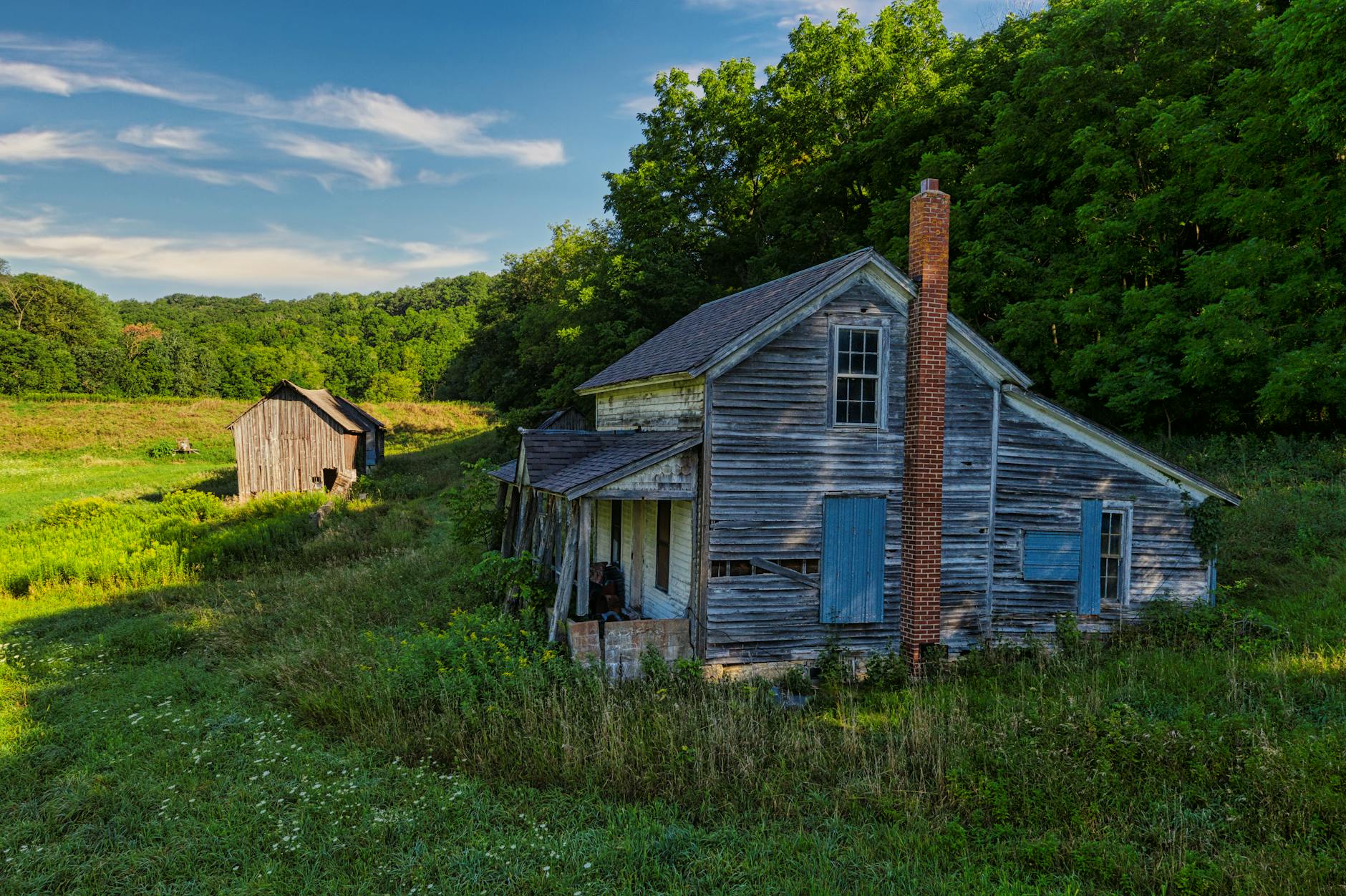
Rural America feels ignored because federal policy and investment decisions disproportionately favor urban centers, leaving rural communities with deteriorating infrastructure, fewer economic opportunities, and declining population. This isn’t perception—it’s structural. Rural counties receive less federal funding per capita for transportation, broadband, healthcare, and education than their urban counterparts, while decisions made in Washington increasingly ignore the distinct needs and priorities of non-metropolitan America.
A 2023 Brookings Institution analysis found that metropolitan areas captured 87% of all new job creation between 2017 and 2022, while rural counties watched employment stagnate and younger residents leave for cities. The rural economy has fundamentally changed, and federal policy hasn’t kept pace. The decline of manufacturing, agriculture’s shift toward larger operations, and the consolidation of retail into online platforms and regional chains have left small towns with fewer employers, fewer services, and deteriorating tax bases. When rural communities voice concerns about trade policy, environmental regulations, or immigration—issues affecting their livelihoods—they often encounter policies shaped by urban political priorities and coastal economic interests that don’t reflect their circumstances.
Table of Contents
- What Drives the Sense of Rural Neglect?
- The Disconnect Between Rural Priorities and National Policy
- Who Holds Political Power in Rural America’s Narrative?
- The Economic Mismatch: Policy Designed for the Wrong America
- The Healthcare Crisis in Rural America
- Rural America’s Brain Drain and Educational Exodus
- What Rural America Expects (and Isn’t Getting)
- Conclusion
What Drives the Sense of Rural Neglect?
Rural communities experience real geographic and economic disadvantages that federal policy has failed to adequately address. The closure of rural hospitals has accelerated, with 137 rural hospital shutdowns since 2005, leaving millions in rural areas more than 60 minutes from a major medical facility. Rural broadband deployment lags decades behind urban expansion, with nearly 20% of rural Americans still lacking reliable high-speed internet as of 2023—a critical gap when telemedicine, remote work, and online education require connectivity. The infrastructure investment prioritized by Congress, while substantial, rarely reaches smaller towns in the same way it reaches metropolitan areas.
Education funding disparities compound the problem. Rural school districts spend substantially less per student than suburban districts and struggle to attract qualified teachers, particularly in STEM fields. This creates a pipeline problem: students in rural areas receive fewer advanced placement courses, weaker college preparation, and less exposure to high-skill career paths. When it’s time to choose between staying in a declining rural economy or moving to a city with jobs, education, and cultural opportunities, millions choose to leave. Rural population decline accelerated after 2010, and the counties losing the most residents are predominantly rural, setting off a downward spiral of shrinking tax bases and fewer services.

The Disconnect Between Rural Priorities and National Policy
Federal policy increasingly reflects the concerns and voting patterns of urban and suburban voters, creating a fundamental misalignment with rural priorities. Environmental regulations, for example, often target industries central to rural economies—coal mining, timber harvesting, agriculture—without providing comparable alternatives. When the EPA implements stricter emissions rules on coal plants, rural communities see jobs disappear and limited options for economic replacement. In contrast, urban environmental victories (cleaner air, protected parks) often come at rural economic cost, and rural residents perceive the tradeoff as unfair—their sacrifice for urban benefit.
The limitation here is important: federal policy can’t simply reverse course on environmental protection or manufacturing policy without real consequences. Rural America’s economic decline didn’t happen because of recent regulations alone—it reflects decades of automation, global competition, and structural economic change. Yet rural voters rightfully identify that federal policy has either accelerated these trends or failed to mitigate them. A 2024 Harvard study found that rural counties targeted with federal job training and small business programs showed measurable employment gains, but such programs reach only a fraction of counties needing support. The scale of investment required to reverse rural decline runs counter to federal budget realities and political will.
Who Holds Political Power in Rural America’s Narrative?
Rural America’s political voice has become concentrated in a specific direction—toward one major political party—which paradoxically hasn’t translated into rural economic gains. While rural counties vote increasingly Republican, federal spending and policy priorities are negotiated through a political system where representation is split. Rural Republicans control the Senate through state-based representation, giving them disproportionate leverage on some issues, but lose influence on discretionary spending bills shaped by Democratic-controlled or split chambers.
This creates a dynamic where rural communities feel powerful in blocking urban priorities (climate policy, immigration reform) but powerless in advancing rural ones (broadband investment, rural hospital funding). The result is a form of political stalemate where rural areas use electoral power defensively—blocking changes they oppose—rather than offensively—winning resources and policy gains. When Congress passes infrastructure bills with broadband funding or rural development programs, it’s often not enough to reverse decades of underinvestment, and the distribution of funds often skews toward competitive grants that require local matching funds and administrative capacity rural communities lack. A county with 15,000 residents and a small planning department can’t compete for federal grants the way a mid-sized city with dedicated grant writers and multiple municipal departments can.

The Economic Mismatch: Policy Designed for the Wrong America
Federal economic policy is largely designed for an economy that looks like the coasts and major metros, not the rural heartland. Small business lending programs prioritize technology startups and service businesses; they don’t fit the needs of a farmer wanting to buy equipment or a manufacturer trying to upgrade a facility. Tax policy favors capital gains and intellectual property over agriculture and natural resource extraction, even though tax policy deliberately shaped agriculture and rural development for most of the 20th century. Compare this to how urban economies receive targeted support: venture capital funding, tech incubators, university-driven innovation hubs, and favorable regulatory treatment for emerging industries.
Rural areas need different tools—agricultural technology support, infrastructure for value-added agriculture, equipment financing, and support for rural manufacturing. When rural areas do receive support, it often comes through crop subsidies and conservation programs that primarily benefit large operations, not the kind of broad-based rural economic development that would sustain small towns. The warning is clear: redirecting federal policy toward rural needs would require deliberate choice and resources that compete with other priorities. It’s easier for policymakers to continue building on existing economic momentum in prosperous regions than to invest in reversing decline in lagging regions.
📨 Get Free Accountability Coverage Alerts
Free · No spam · Unsubscribe anytime
The Healthcare Crisis in Rural America
Rural healthcare decline represents one of the most urgent consequences of rural neglect, with real consequences for life expectancy and health outcomes. The rural hospital closure crisis has left vast regions without emergency departments, forcing residents to travel 60 to 90 minutes for trauma care in some cases. Rural America also faces shortages of specialists, mental health providers, and dentists. For conditions where minutes matter—heart attacks, strokes, severe injuries—the distance to care becomes a matter of life and death. A limitation that doesn’t get adequate attention: rural healthcare isn’t failing because of malice or simple neglect, but because of economic gravity.
Rural hospitals operate on thin margins with aging populations (rural areas skew older), lower insurance reimbursement rates, and smaller volumes. Medicare and Medicaid—which cover larger shares of rural patients—reimburse at rates that made sense in the 1990s but don’t cover modern costs. Without federal policy changes to rural Medicare/Medicaid reimbursement or investment in rural health infrastructure, the economic incentives push healthcare providers out of rural areas. Some solutions exist—loan forgiveness for doctors practicing in rural areas, telehealth expansion, federal funding for critical access hospitals—but the magnitude of funding required and the difficulty of enforcing rural practice requirements have limited uptake. Rural America’s healthcare crisis will worsen without deliberate policy intervention.

Rural America’s Brain Drain and Educational Exodus
One of rural America’s most damaging long-term problems is the loss of its most educated residents. Rural counties struggle to retain college graduates, who have few employment opportunities for advanced degrees outside major metros. This creates a vicious cycle: fewer educated professionals means fewer services, less economic dynamism, and fewer reasons for young people to return. A region without doctors, engineers, and skilled trades experts can’t develop the industries that would provide high-wage jobs and keep people there.
The example is stark: a rural county in northern Mississippi might produce an honors student who graduates college and finds the only local employment option is returning to the family farm or competing for low-wage service jobs in adjacent towns. The same student moving to Nashville, Charlotte, or Dallas finds immediate opportunity. Federal education policy could address this through loan forgiveness for professionals working in rural areas, grants for rural universities to develop rural-focused research and innovation, or incentives for businesses to locate in rural areas. Some programs exist, but not at sufficient scale to reverse the trend.
What Rural America Expects (and Isn’t Getting)
Rural communities don’t expect—and likely don’t want—subsidies or charity. They expect fair treatment: equal infrastructure investment, policies that don’t disproportionately harm rural economies while benefiting urban ones, and a federal government that remembers it represents all of America, not just the dense coastal corridors. The forward-looking issue is whether rural America’s economic decline is inevitable or whether deliberate policy could slow or reverse it. Some rural regions are proving economic revitalization is possible: regions that invested in tourism, craft industries, agricultural value-added products, and quality-of-life amenities have retained population and attracted new residents.
These successes, however, require federal support—good broadband, workforce training, small business lending—and deliberate local strategy. The question for policymakers is whether reversing rural decline is worth the investment and political effort. The answer shapes not just rural prosperity, but national cohesion. When half the country feels economically abandoned by the government and politically excluded from its benefits, the result isn’t just regional decline—it’s national fragmentation.
Conclusion
Rural America feels ignored because federal policy, investment, and the structure of the modern economy disproportionately benefit metropolitan areas and coastal regions. The gap in infrastructure, healthcare, education funding, broadband access, and economic opportunity reflects real federal choices—both what to fund and what not to fund. Rural voters have responded by consolidating their political power, but that power is used defensively to block policies they oppose rather than proactively to win resources and support.
The path forward requires federal policy that acknowledges rural America’s distinct needs and economic challenges, invests at meaningful scale in rural infrastructure and economic development, and structures tax and regulatory policy to support rural industries and businesses. Without deliberate action, rural decline will accelerate, and the geographic and political fragmentation it creates will deepen. The choice is whether Washington will treat rural America as a permanent part of the nation requiring sustained support, or continue treating it as a region left behind.
You Might Also Like
- Why Families Feel Ignored by Both Parties
- Why Boomers and Gen Z See America Differently
- Would Don Jr. Ever Run for President?