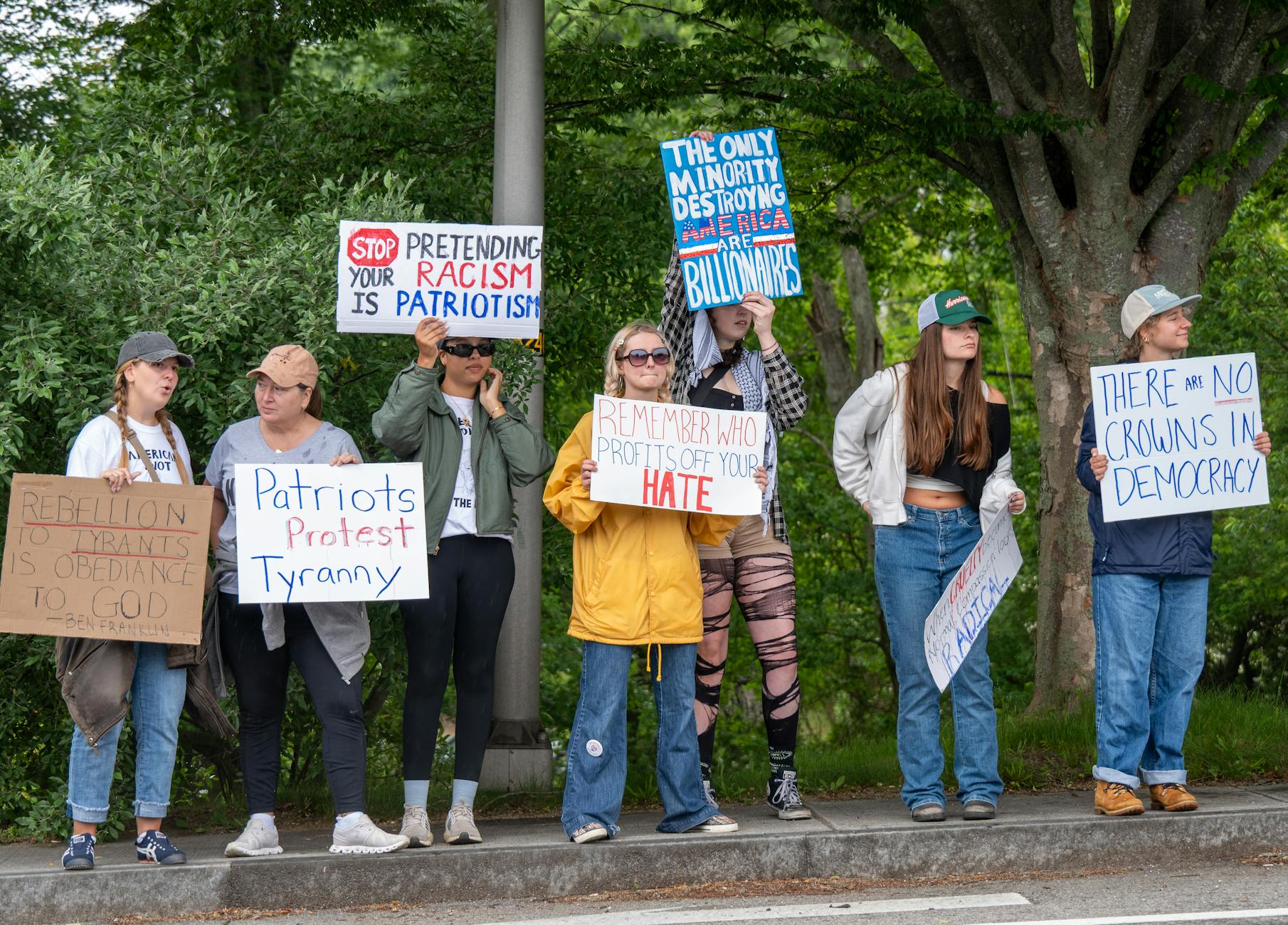
Billionaire politics feels bigger than ever because it literally is. In 2025 alone, billionaires added $2.5 trillion in collective wealth—three times faster than the previous year—while simultaneously channeling record amounts of money into elections and governance. For context, the richest 100 Americans increased their campaign spending from $46 million in 2004 to over $1 billion by 2024, a 140-fold increase in two decades. That’s not just inflation or normal political evolution; it’s a structural shift in who bankrolls democracy and who gets a seat at the table. The scale is now undeniable.
With 902 billionaires in the United States and over 3,000 worldwide for the first time, a concentrated class of ultra-wealthy individuals wields outsized influence over elections, legislation, and media narratives. Elon Musk alone holds over $500 billion in personal wealth and spent $278 million to support Republican candidates in 2024. When one person’s annual political spending exceeds the GDP of small nations, the phrase “one person, one vote” starts to feel like aspiration rather than reality. What makes this moment feel unprecedented isn’t just the money—it’s the visibility and directness of billionaire power. They don’t hide behind shell companies anymore. They own newspapers, lead cabinet departments, and run for office themselves.
Table of Contents
- How Did Billionaire Campaign Spending Become So Dominant?
- The 2024 Election as a Watershed Moment for Billionaire Influence
- From Campaign Donors to Cabinet Members and Elected Officials
- Billionaire Media Ownership and the Control of Information
- Citizens United: The Legal Infrastructure of Billionaire Democracy
- The 2026 Midterms: Billionaire Spending Is Already Escalating
- The Future of Billionaire Democracy and Public Resistance
- Conclusion
How Did Billionaire Campaign Spending Become So Dominant?
The exponential growth in billionaire political spending isn’t accidental; it’s the direct result of legal and structural changes that removed restrictions on wealthy donors. The 2010 Supreme Court decision Citizens United v. FEC gutted post-Watergate campaign finance regulations, opening the floodgates for unlimited contributions from individuals, corporations, and Super PACs. What followed was predictable: the wealthiest Americans, who had the most to gain from favorable tax policy, deregulation, and subsidy protection, dramatically increased their investments in political outcomes. In the 2024 election cycle, this became visible at a scale that shocked even observers accustomed to campaign finance excess.
The top 100 billionaire families alone contributed $2.6 billion—representing 1 of every 6 dollars spent across all candidates, parties, and committees. When you expand to the broader billionaire class of 300 billionaires and their immediate families, the total climbs to $3 billion in a single election cycle. To put this in perspective, billionaires provided nearly 20% of all federal election donations in 2024, despite representing a tiny fraction of the population. The republican Party has benefited disproportionately from this shift. Of the top 100 richest Americans’ 2024 spending, 80% went to Republicans, with $1.84 billion flowing to gop committees compared to $594 million for Democratic committees. This asymmetry matters because it translates directly into legislative power: tax policy, regulatory decisions, and government priorities increasingly align with billionaire interests.
The 2024 Election as a Watershed Moment for Billionaire Influence
The 2024 election cycle represents a breaking point in American campaign finance. The concentration of political power among a billionaire donor class reached levels that previous generations might have considered dystopian. elon Musk’s $278 million contribution to support Donald Trump’s reelection dwarfs what most Super PACs spend in an entire cycle. By itself, Musk’s spending would rank him among the top 10 largest political spenders in American history if measured alone. But the concerning part isn’t just the total dollars—it’s the leverage those dollars purchase.
When a single billionaire can effectively bankroll a presidential campaign, that individual gains direct access to policy-making, cabinet positions, and legislative priorities in ways that ordinary citizens, or even millionaires, cannot. The quid pro quo doesn’t always appear explicit in legal documents, but the correlation is undeniable. Billionaires who spend heavily in politics expect returns: tax cuts, regulatory rollbacks, government contracts, or favorable trade policies. The 2024 election proved that this expectation is backed by the Republican Party’s willingness to grant access and implement billionaire-friendly policies. This also illustrates a limitation of treating campaign spending as merely “free speech.” When billionaires can spend in amounts that exceed the annual budgets of entire federal agencies, the average voter’s political voice becomes mathematically irrelevant. One billionaire’s speech drowns out millions of ordinary citizens’ votes.
From Campaign Donors to Cabinet Members and Elected Officials
The line between campaign spending and direct political participation has blurred entirely. Billionaires are now 4,000 times more likely to hold political office than ordinary people—a staggering disparity that reflects not merit or popular vote, but wealth-based access to political machinery. The Trump administration has made this abundantly clear by appointing multiple billionaires to Cabinet positions, allowing ultra-wealthy individuals to write policies that affect their own industries and tax liabilities. Beyond Cabinet appointments, approximately 11% of the world’s billionaires have held or sought political office directly. Some, like tech entrepreneur Peter Thiel, have run for office.
Others leverage their wealth to influence political primaries and endorsements that effectively determine who gets elected. The message is clear: if you’re wealthy enough, you don’t need to wait for voters to choose you. You can simply buy your way into influence. This concentration of wealth and power in elected office creates obvious conflicts of interest and accountability problems. A billionaire Cabinet member setting energy policy while holding significant interests in oil companies, or a healthcare industry billionaire regulating pharmaceutical pricing, faces no structural requirement to divest or recuse themselves. The assumption of the American system—that elected officials serve the public interest—becomes difficult to maintain when those officials have personal fortunes at stake in their own policy decisions.

Billionaire Media Ownership and the Control of Information
Control of media has become the hidden leverage in billionaire politics. Jeff Bezos owns The Washington Post, Elon Musk controls Twitter/X, and Patrick Soon-Shiong owns the Los Angeles Times. These aren’t passive investments; they’re platforms that shape national political discourse, set editorial priorities, and determine which stories receive prominence. When billionaires own the outlets that report on billionaire politics, conflicts of interest become structural rather than incidental.
A news organization owned by a billionaire who spent tens of millions on a political candidate has every incentive to cover that candidate favorably and marginalize opposition coverage. The editorial independence that’s supposed to make the free press a check on power becomes impossible when the same person owns both the news outlet and the political interests being reported on. The limitation of media ownership concentration isn’t just editorial bias—it’s the erosion of shared reality. When different billionaires own different outlets and those outlets reflect billionaires’ competing political interests, the public gets fragmented information rather than a common factual basis for democratic decision-making. Musk’s changes to Twitter/X’s content moderation and verification systems, for example, directly affected the 2024 election by altering which political voices received visibility and which got suppressed or de-amplified.
📨 Get Free Accountability Coverage Alerts
Free · No spam · Unsubscribe anytime
Citizens United: The Legal Infrastructure of Billionaire Democracy
Citizens United v. FEC (2010) didn’t create billionaire political dominance, but it legitimized and accelerated it. The Supreme Court’s decision eliminated the distinction between campaign spending and political speech, effectively treating unlimited donations as a form of constitutionally protected expression. This means wealthy donors can spend unlimited amounts with minimal transparency, and candidates can accept those donations without legal restrictions. The practical impact has been transformative. Before Citizens United, campaign finance was regulated to prevent wealthy individuals from using money to drown out other voices. After Citizens United, the opposite became law: restricting billionaire spending became constitutionally suspect.
Super PACs, which can raise and spend unlimited funds for independent political expenditures, became the new standard for major campaigns. A billionaire can now give millions to a Super PAC supporting their preferred candidate with the full force of constitutional law behind them. The warning here is important: Citizens United created a legal pathway to a system where campaign spending is no longer limited by the democratic principle of equal political representation. The more money billionaires spend on politics, the more they’re exercising “free speech” in the eyes of the law, even as that “speech” drowns out the actual votes of ordinary citizens. The framework treats political money and political voice as equivalent, which it isn’t. Money can be concentrated; votes cannot. Citizens United essentially amended the Constitution without going through amendment procedures by reinterpreting what the Constitution permits.

The 2026 Midterms: Billionaire Spending Is Already Escalating
The 2026 midterm elections are shaping up to be another record-breaking cycle for billionaire influence. Fairshake, a crypto Super PAC funded by billionaires in the cryptocurrency industry, has already raised $133 million as of recent reporting—before the campaign season has truly begun. This signals the next frontier of billionaire politics: industry-specific funding coalitions that pool billionaire money around shared business interests.
Meanwhile, billionaires aligned with Democratic causes, like Michael Bloomberg through his organization Everytown for Gun Safety, are planning significant spending to elect Democratic attorneys general in 2025-2026. The pattern is identical regardless of party: billionaires set the agenda, fund the campaigns, and expect policy outcomes that align with their interests. The only difference is which industries and which policy areas billionaires choose to prioritize.
The Future of Billionaire Democracy and Public Resistance
As billionaire wealth and political spending reach historic highs, public concern is catching up to reality. A Washington Post/Ipsos poll found that 58% of respondents believe billionaires’ campaign spending is bad for the country. This majority opinion, however, hasn’t translated into structural changes because the legal and political mechanisms that enable billionaire dominance are now deeply embedded in how American democracy operates.
The trajectory is clear: without significant campaign finance reform or Supreme Court action to reverse Citizens United, billionaire political influence will continue to expand. The wealth concentration that produced 3,000 billionaires globally and 902 in the United States is accelerating, not slowing. Every year of wealth accumulation and every election cycle that allows unlimited spending further entrenches a system where ordinary citizens have less influence over policy outcomes than the ultra-wealthy. The question isn’t whether billionaire politics will feel bigger in 2026, 2028, and beyond—it’s whether democratic institutions can survive being subordinated to oligarchic wealth.
Conclusion
Billionaire politics feels bigger than ever because the material reality has fundamentally shifted. Billionaires now control more wealth than at any point in modern history, spend more money on elections than ever before, directly hold political office, own major media outlets, and operate within a legal framework (Citizens United) that treats unlimited campaign spending as constitutionally protected speech. The top 100 billionaire families alone can move $2.6 billion into a single election cycle, shaping outcomes in ways that hundreds of millions of ordinary voters cannot match. This concentration of political power around billionaire wealth represents a break from the democratic principle of equal representation.
It’s not a problem that’s going to resolve itself through market forces or political will—billionaires have every incentive to maintain and expand their influence, and the legal infrastructure supports their efforts. The 2024 election wasn’t an anomaly; it was a preview. Ordinary citizens concerned about oligarchy need to recognize that billionaire political dominance is now structural, and reversing it would require deliberate legal and political action. The status quo, absent intervention, will only deepen this trend.
You Might Also Like
- Can MAHA Become Bigger Than MAGA?
- Why Some Conservatives Distrust Tech Billionaires
- Why Nobody Trusts Mainstream Media Anymore