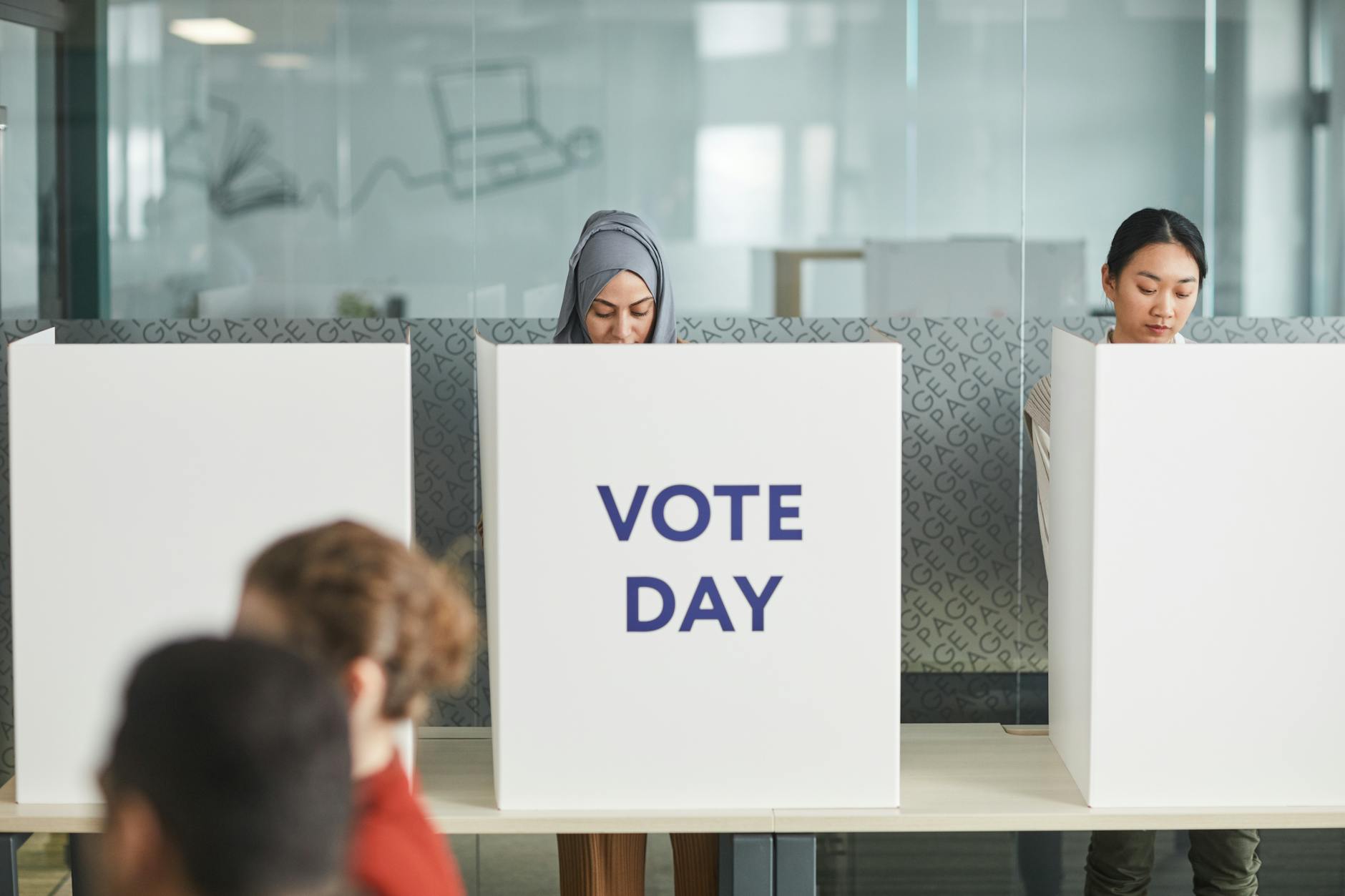
On March 17, 2026, the United States Senate voted 51-48 to begin debate on the SAVE America Act, a bill that would require voters to present documentary proof of U.S. citizenship before registering to vote. The procedural vote cleared the first hurdle, but the bill faces a steep climb: it needs 60 votes to overcome a filibuster, and every Senate Democrat has pledged to block it. Republican Sen. Lisa Murkowski of Alaska broke ranks to vote against advancing the bill, while Sen. Thom Tillis of North Carolina did not vote at all.
The SAVE America Act, formally known as H.R. 22 or the Safeguard American Voter Eligibility Act, passed the House on February 11, 2026, by a narrow 218-213 margin. President Trump has called it one of his top legislative priorities, framing it as essential to election security. But critics, including Sens. Mark Warner and Tim Kaine of Virginia, have labeled it a “voter suppression measure that could disenfranchise millions.” The math tells a stark story on its own: an estimated 21.3 million eligible American voters do not have or lack easy access to the documentary proof of citizenship the bill would demand. This article breaks down what the SAVE America Act would actually require, who it would affect, what the evidence says about the problem it claims to solve, and why even some Republican voters could end up on the wrong side of its requirements.
Table of Contents
- What Does the Senate Vote on Proving Citizenship Before Voting Actually Require?
- How Many Voters Could Lose Access to the Ballot Under the SAVE Act?
- What Does the Evidence Say About Noncitizen Voting in U.S. Elections?
- Can the SAVE America Act Actually Pass the Senate?
- The Kansas Precedent and Why Courts Have Blocked Similar Laws
- The DHS Provision and Voter Roll Purges
- Where Does the Debate Go From Here?
- Conclusion
- Frequently Asked Questions
What Does the Senate Vote on Proving Citizenship Before Voting Actually Require?
The SAVE America Act goes well beyond the voter ID laws already on the books in most states. Under this bill, anyone registering to vote would need to appear in person at an election office with documentary proof of U.S. citizenship — a passport, birth certificate, or naturalization certificate. A driver’s license would not suffice. This requirement would also apply to existing registered voters who update their registrations for any reason, including a change of address, a name change after marriage, or switching party affiliation. Given that 189.5 million Americans are currently registered to vote, any future update by any one of them would trigger the documentation requirement. The bill also mandates photo ID for casting a ballot, both in person and by mail.
That provision alone represents a significant expansion beyond current law in many states. Additionally, the legislation empowers the Department of Homeland Security to flag suspected noncitizens and notify states, which would then be responsible for removing those individuals from voter rolls. The combination of these provisions has drawn comparisons to a prior effort in Kansas under former Secretary of State Kris Kobach, which required documentary proof of citizenship to register. That program was ultimately blocked by federal courts after more than 30,000 eligible U.S. citizens were prevented from registering to vote. For context, consider what “documentary proof of citizenship” actually means in practice. If you were born in a hospital in the United States and have your birth certificate filed away somewhere — maybe in a safe deposit box, maybe in a box in the attic, maybe lost entirely — you would need to locate that document or order a replacement from your state’s vital records office before you could register or update your registration. For naturalized citizens, the requirement is a naturalization certificate, a single document that can cost over $500 to replace if lost.
How Many Voters Could Lose Access to the Ballot Under the SAVE Act?
The numbers paint a troubling picture regardless of where you sit on the political spectrum. A 2025 study from the University of Maryland found that approximately 21.3 million eligible American voters do not have or lack easy access to documentary proof of citizenship. That represents roughly 9% of all eligible voters in the country. The breakdown cuts across party lines: about 10% of Democrats, 7% of Republicans, and 14% of unaffiliated voters lack ready access to these documents. The passport statistic is particularly revealing. Fifty-two percent of registered voters do not have an unexpired passport with their current legal name.
While a passport is not the only acceptable document under the bill, it is the most portable and universally recognized one. Birth certificates can be lost, damaged, or difficult to obtain — especially for older Americans born at home or in rural areas where record-keeping was inconsistent. Naturalization certificates are issued once and never renewed, making them especially vulnerable to loss over a lifetime. However, if you live in a state that already requires ID to vote and you already have your documents in order, the practical impact on your voting experience might be minimal. The burden falls disproportionately on people who move frequently, who have changed their names, who were born in states with poor vital records systems, or who simply never had reason to keep a passport current. The Washington Post reported that the bill could actually backfire on Republicans, since GOP voters in rural areas are disproportionately likely to lack passports or updated documents. Elderly voters, voters with disabilities, and low-income voters of all political stripes face the steepest barriers.
What Does the Evidence Say About Noncitizen Voting in U.S. Elections?
The central justification for the SAVE America Act is the claim that noncitizens are voting in American elections in significant numbers. President Trump has repeatedly stated that elections are not secure because of noncitizen voting. But the actual evidence tells a very different story. Noncitizen voting is already illegal under federal law and has been for decades. The penalties are severe: a noncitizen who votes can face deportation, criminal prosecution, and permanent bars on future immigration benefits. For someone without legal status, casting a single ballot would be an extraordinarily high-risk act with almost no reward. The most comprehensive recent data point comes from Utah, which conducted a thorough audit of its voter rolls in 2025 and 2026. Election officials reviewed more than 2 million voter records.
The result: they found exactly one noncitizen registration and zero noncitizen votes actually cast. That is not a typo. Out of more than 2 million records, the confirmed problem amounted to a single registration that never resulted in a vote. Similar audits in other states over the years have produced comparable results — isolated incidents, not systemic fraud. This does not mean the system is perfect or that no noncitizen has ever cast a ballot anywhere. Mistakes happen in any system that processes hundreds of millions of registrations. But the scale of the problem — measured in single digits or low double digits across entire states — raises a serious question about proportionality. The bill’s critics argue that creating barriers that could affect 21.3 million eligible citizens to address a problem documented in the single digits is like requiring every airline passenger to undergo surgery to check for swallowed contraband because one person was caught smuggling.

Can the SAVE America Act Actually Pass the Senate?
The short answer is almost certainly not in its current form, and understanding why requires a quick look at Senate math and procedure. Republicans hold a 53-47 majority in the Senate. To overcome a filibuster, the bill needs 60 votes. That means at least 7 Democrats would need to cross the aisle — and every single Democratic senator has pledged to oppose the bill. Sen. Chuck Schumer has called it a “voter suppression” measure, and the party’s unified opposition shows no signs of cracking. Senate Majority Leader John Thune has scheduled extended debate on the bill, potentially stretching through the weekend.
The strategy is not necessarily to pass the legislation. Instead, it appears designed to force Democrats into a politically uncomfortable position: going on the record to vote against a bill that can be framed as simply requiring proof that voters are who they say they are. For Trump and Republican leadership, the political messaging value of the vote may matter more than the legislative outcome. Democrats counter that the framing is dishonest — that the bill solves a nearly nonexistent problem while creating real barriers for millions of eligible voters. The tradeoff at the heart of this debate is genuine. On one side, there is a principle that only citizens should vote, which virtually no one disputes. On the other, there is the practical reality that implementing strict documentary requirements will inevitably catch eligible citizens in its net, as the Kansas experience with over 30,000 blocked registrations demonstrated. The question is not whether election integrity matters — it does — but whether this particular bill is a proportionate response to a documented threat, or whether the cure is worse than the disease.
The Kansas Precedent and Why Courts Have Blocked Similar Laws
The SAVE America Act is not the first attempt to require documentary proof of citizenship for voter registration. Kansas under Secretary of State Kris Kobach implemented a nearly identical requirement starting in 2013. The results were instructive, and not in the way supporters had hoped. Over 30,000 eligible Kansas citizens were prevented from registering to vote because they could not produce the required documentation at the time of registration. Many of these were young voters registering for the first time, elderly voters who had been voting for decades, and people who had recently moved. A federal court ultimately struck down the Kansas law.
The judge in the case, Julie Robinson, found that the state had identified only 67 noncitizens who had registered to vote over a 20-year period — out of nearly 2 million registered voters. The court ruled that the burden on eligible citizens vastly outweighed the state’s interest in preventing the handful of noncitizen registrations that had occurred. Kobach, who personally argued the case, was sanctioned by the court for misleading conduct during the trial. The legal vulnerability of the SAVE America Act is real. Even if it were to pass the Senate — which, again, it is not expected to — it would almost certainly face immediate legal challenges. Civil rights organizations and voting rights groups would likely argue that the law violates the National Voter Registration Act, the Voting Rights Act, and the Equal Protection Clause of the Fourteenth Amendment. The Kansas precedent gives courts a clear roadmap for evaluating these claims, and the data from Utah and other states since then has only strengthened the argument that the problem being addressed is vanishingly small.

The DHS Provision and Voter Roll Purges
One provision of the SAVE America Act that has received less attention but carries significant risk is the section empowering the Department of Homeland Security to flag suspected noncitizens to states for removal from voter rolls. On its face, this sounds like reasonable interagency cooperation. In practice, database matching between federal immigration records and state voter rolls has a troubled history.
📨 Get Free Accountability Coverage Alerts
Free · No spam · Unsubscribe anytime
Previous attempts at cross-referencing these databases have produced massive numbers of false positives. A person who became a naturalized citizen after initially being recorded in immigration databases as a noncitizen, for example, might be flagged for removal even though they are a fully eligible voter. The bill does not appear to include robust protections for voters who are incorrectly flagged, raising the prospect of eligible citizens being purged from voter rolls and discovering the problem only when they show up to vote. Florida attempted a similar database-matching purge in 2012 and initially identified nearly 180,000 suspected noncitizens; after review, the actual number was closer to 85, and the state abandoned the effort after widespread errors.
Where Does the Debate Go From Here?
Even though the SAVE America Act is unlikely to become law this session, the debate it has sparked is not going away. The procedural vote to begin debate signals that Republican leadership sees election integrity — or at least the messaging around it — as a winning political issue heading into the 2026 midterm elections. Expect to see the bill, or versions of it, resurface in campaign advertising and stump speeches throughout the year. The more consequential action may happen at the state level.
Several Republican-led state legislatures are already considering their own proof-of-citizenship requirements for voter registration, which would not need to clear a Senate filibuster. These state-level efforts will face their own legal challenges, but they could reshape the voting landscape in significant ways before federal courts weigh in. For voters, the practical takeaway is straightforward: regardless of what happens with this bill, having your citizenship documents organized and accessible is never a bad idea. Whether or not the law changes, the political environment around voting requirements is shifting, and being prepared costs nothing.
Conclusion
The Senate’s 51-48 vote to begin debate on the SAVE America Act marks a significant moment in the ongoing fight over voting access in the United States. The bill would require documentary proof of citizenship to register to vote, mandate photo ID for all ballots, and give the Department of Homeland Security a role in maintaining voter rolls. Supporters say it is a common-sense measure to ensure only citizens vote. Opponents point to the 21.3 million eligible voters who could be affected, the near-total absence of documented noncitizen voting, and the Kansas experience where over 30,000 citizens were blocked from registering under a similar law.
The bill is not expected to pass the Senate, where it would need 60 votes and faces unified Democratic opposition. But the political fight over who gets to vote, and what hoops they must jump through to do it, is far from over. Whether at the federal or state level, proof-of-citizenship requirements will remain a flashpoint in American politics. Voters and advocacy groups on both sides would be wise to pay close attention to what comes next — because the next version of this bill may not need 60 votes to become law.
Frequently Asked Questions
Is it already illegal for noncitizens to vote in U.S. elections?
Yes. Federal law already prohibits noncitizens from voting in federal elections. Violations can result in criminal prosecution, fines, and deportation. The SAVE America Act would add documentary proof requirements on top of existing law.
How common is noncitizen voting?
Documented cases are extremely rare. Utah’s 2025-2026 audit of over 2 million voter records found one noncitizen registration and zero noncitizen votes cast. Similar audits in other states have produced comparably small numbers.
What documents would I need under the SAVE America Act?
You would need to present a U.S. passport, birth certificate, or naturalization certificate in person at an election office when registering to vote. A driver’s license alone would not be sufficient. You would also need photo ID to cast a ballot, whether in person or by mail.
Would this affect me if I am already registered to vote?
Not immediately, but yes if you ever update your registration. Any change — new address, name change, party switch — would trigger the documentary proof requirement. Given that 189.5 million Americans are currently registered, this affects a massive pool of voters over time.
Will the SAVE America Act pass the Senate?
It is not expected to pass in its current form. The bill needs 60 votes to overcome a filibuster, and Republicans hold only a 53-47 majority. All Democrats have pledged to vote against it, and at least one Republican, Sen. Lisa Murkowski, has already voted against advancing it.
Has a law like this been tried before?
Yes. Kansas implemented a similar documentary proof-of-citizenship requirement under Secretary of State Kris Kobach. It was blocked by federal courts after over 30,000 eligible citizens were prevented from registering to vote, while the state could identify only 67 noncitizen registrations over 20 years.
You Might Also Like
- Trump’s America: Iran Says Deal Is “Within Reach” — 48 Hours Before Geneva Negotiations
- Trump’s America: Treasury Sanctioned 30 Iranian Entities and Oil Tankers
- Trump’s America: Day 11 of the DHS Shutdown Crisis