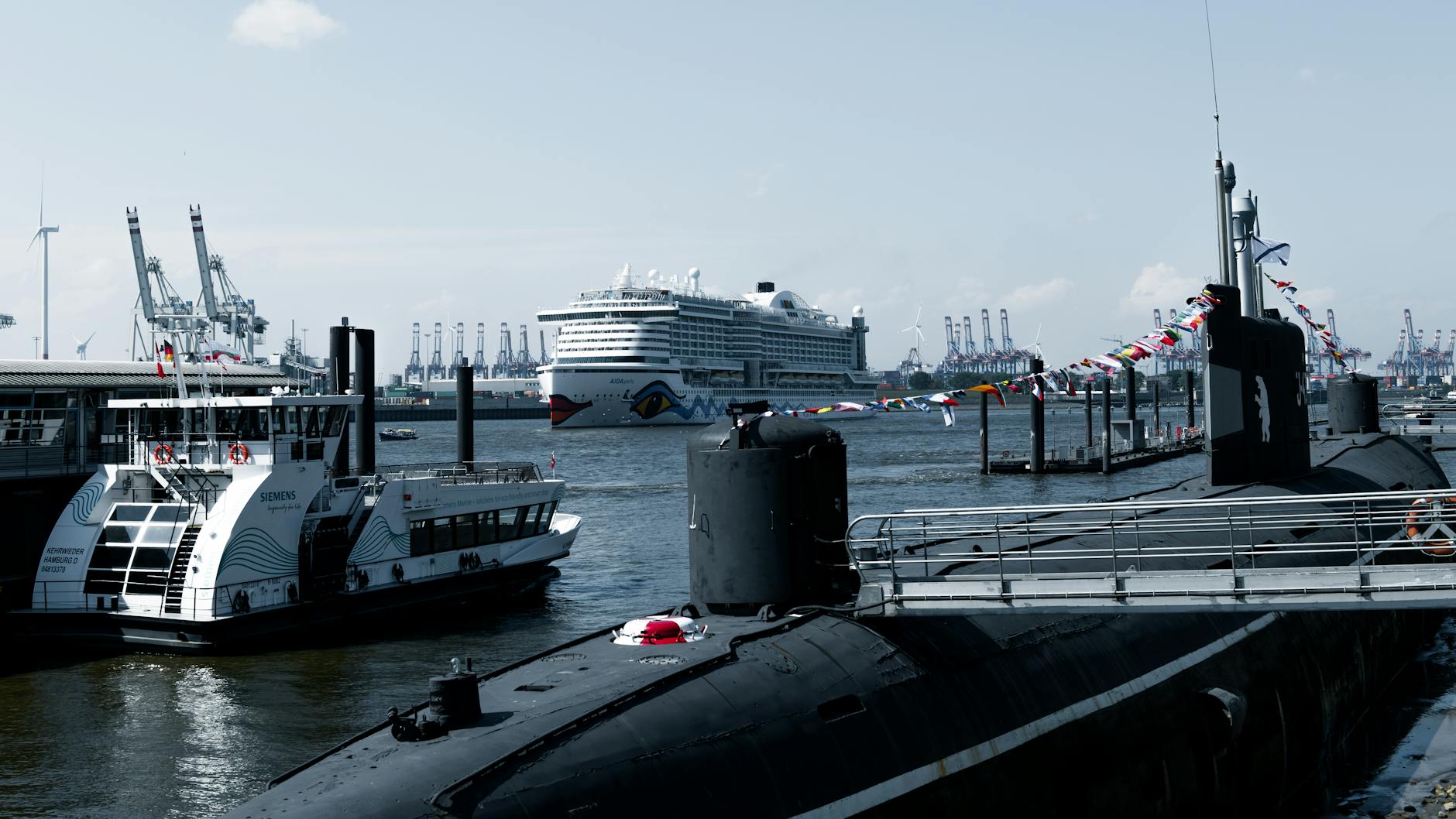
Submarine-launched cruise missiles were indeed part of the opening salvo against Iran when Operation Epic Fury commenced at 01:15 Eastern time on February 28, 2026. The USS Georgia (SSGN-729), an Ohio-class guided-missile submarine, reportedly launched more than 30 Tomahawk cruise missiles in the campaign’s first hours, targeting Iranian nuclear facilities including the site at Isfahan. As Gen. Dan Caine, Chairman of the Joint Chiefs of Staff, confirmed in a press conference the following Monday, “The first shooters at sea were Tomahawks unleashed by the United States Navy.” The submarine component of the strike was not a minor footnote. Ohio-class SSGNs are the single-largest conventional strike platforms in the U.S.
military outside the bomber fleet, each capable of carrying up to 154 Tomahawk cruise missiles. Their role in the opening salvo underscores how central undersea platforms have become to American power projection, even as the Navy faces growing questions about missile stockpile depth and the future of its aging submarine fleet. This article examines the submarine strikes in detail, including the platforms used, a previously unseen Tomahawk variant that made its combat debut, the staggering costs involved, and the controversial civilian casualties that have followed. In the first 24 hours alone, U.S. forces struck more than 1,000 targets across Iran using a combination of Tomahawk cruise missiles, B-2 stealth bombers, stealth fighter jets, and one-way attack drones. An estimated 160-plus Tomahawk cruise missiles were fired during the opening phase, with submarines providing a significant share of that volume.
Table of Contents
- How Did Submarine-Launched Cruise Missiles Factor Into the Opening Salvo Against Iran?
- What Is the Block Va Maritime Strike Tomahawk, and Why Does Its Combat Debut Matter?
- The Magazine Depth Crisis and the Cost of Tomahawk Consumption
- Impact on Iranian Naval Forces and the Strategic Calculus of Submarine Strikes
- The Minab School Compound Strike and the Risks of Cruise Missile Warfare
- The Future of Ohio-Class SSGNs and the Submarine Strike Mission
- What Operation Epic Fury Reveals About the Future of Submarine-Launched Strikes
- Conclusion
- Frequently Asked Questions
How Did Submarine-Launched Cruise Missiles Factor Into the Opening Salvo Against Iran?
The Ohio-class guided-missile submarines were central to the opening hours of Operation Epic Fury. These vessels, originally built as ballistic missile submarines during the Cold War and later converted to carry conventional Tomahawk land-attack cruise missiles, offered the Pentagon something no other platform could: the ability to position massive firepower undetected in waters close to iran before the first shot was fired. Unlike surface ships or aircraft, submarines operate beneath the surface with near-total stealth, making them ideal for a preemptive strike where surprise is paramount. The USS Georgia’s reported launch of more than 30 Tomahawks placed it among the most active strike platforms in the campaign’s first wave. For comparison, a single Arleigh Burke-class destroyer typically carries around 90 vertical launch cells shared among offensive and defensive missiles, meaning the Georgia alone may have contributed firepower equivalent to a significant portion of a surface combatant’s entire magazine.
The submarine’s strikes were coordinated with air-launched weapons from B-2 bombers and fighter aircraft as part of a synchronized time-on-target attack designed to overwhelm Iranian air defenses before they could react. The four Ohio-class SSGNs in the U.S. fleet are the USS Ohio, USS Georgia, USS Michigan, and USS Florida. The Pentagon had previously planned to retire two of them in fiscal year 2026, but those plans have been reversed in light of the ongoing conflict. That reversal speaks volumes about how indispensable these platforms have proven and how few alternatives exist for delivering that volume of conventional strike power from a concealed position.
What Is the Block Va Maritime Strike Tomahawk, and Why Does Its Combat Debut Matter?
One of the more significant revelations from the opening days of Operation Epic Fury was the appearance of a previously unseen Tomahawk variant. A photograph captured during strikes on Iran showed what defense analysts believe is the RGM-109 Block Va Maritime Strike Tomahawk, a so-called “black” variant that had never been publicly documented in combat before. If confirmed, this marks the missile’s first operational deployment, a milestone that defense planners and industry watchers had been anticipating for years. The Block Va MST represents a substantial upgrade over earlier Tomahawk models. It features multimode guidance including a radio frequency seeker, an imaging infrared sensor, GPS-assisted navigation, and a two-way datalink that has been standard on Block V variants.
The two-way datalink allows operators to retarget the missile in flight, a capability that proved critical during earlier Tomahawk campaigns where fixed targets sometimes turned out to be decoys or had already been struck. The addition of the RF seeker and IIR sensor means this variant can also engage moving naval targets, not just fixed land installations. However, the combat debut of a new weapons system under wartime conditions raises questions that peacetime testing cannot answer. Real-world performance against Iranian integrated air defense systems, some of which incorporate Russian-supplied technology, provides data that no test range can replicate. If the Block Va performed as designed against hardened nuclear facilities, it validates years of development investment. If any failed to reach their targets or were intercepted, that information is unlikely to be made public quickly, and the implications for future procurement would be significant.
The Magazine Depth Crisis and the Cost of Tomahawk Consumption
The sheer volume of Tomahawk missiles consumed during Operation Epic Fury has created what defense analysts are calling a “magazine depth” crisis for the U.S. navy. As of early March 2026, the campaign had consumed more than 600 Tomahawk missiles. To put that in perspective, the entire 2003 opening of the Iraq War involved roughly 800 Tomahawks over a longer period. The rate of expenditure in Epic Fury suggests the Navy is burning through its cruise missile inventory at a pace that outstrips production capacity. The Center for Strategic and International Studies estimated the cost of Epic Fury’s first 100 hours at $3.7 billion. A significant portion of that figure is attributable to cruise missile expenditure.
Each Tomahawk costs roughly $2 million per unit depending on the variant, meaning the 600-plus missiles fired represent over $1.2 billion in ordnance alone. The Pentagon has reportedly placed emergency orders for Tomahawk missile electronics and initiated a production surge, but cruise missile manufacturing is not something that scales overnight. Supply chains for guidance systems, propulsion components, and warheads involve specialized contractors and long lead times. This consumption rate has real strategic consequences beyond the current conflict. Every Tomahawk fired at Iran is one fewer available for a potential contingency in the Pacific, where U.S. war planners have long assumed they would need massive cruise missile stockpiles to counter Chinese naval forces in a Taiwan scenario. The magazine depth problem is not new, but Epic Fury has transformed it from a theoretical concern discussed in think tank reports into an urgent operational reality.

Impact on Iranian Naval Forces and the Strategic Calculus of Submarine Strikes
By March 4, U.S. officials confirmed that 20 Iranian naval vessels, including one submarine, had been sunk or critically damaged. Iran’s most advanced Kilo-class submarine, which was docked at its base when the strikes began, was among the casualties. CENTCOM confirmed it had specifically targeted “the most operational Iranian submarine,” a decision that reflects how submarine-launched strikes were part of a broader effort to eliminate Iran’s ability to threaten maritime traffic in the Persian Gulf and Strait of Hormuz. The destruction of Iran’s Kilo-class submarine is particularly notable when compared to the broader naval losses. Surface vessels like fast-attack craft and frigates can be replaced relatively quickly from domestic production or foreign purchases.
A Kilo-class diesel-electric submarine, originally acquired from Russia, represents a capability that Iran cannot easily reconstitute, especially under wartime conditions and international sanctions. The loss effectively eliminates Iran’s subsurface warfare capability for the foreseeable future. The tradeoff for the United States, however, is that expending submarine-launched Tomahawks against fixed naval targets like a docked submarine is an expensive use of a limited resource. A docked vessel could arguably be destroyed by cheaper precision-guided munitions dropped from aircraft. The decision to use Tomahawks likely reflects the opening salvo’s emphasis on simultaneity: hitting as many targets as possible in the same narrow window to prevent Iran from dispersing its forces or launching retaliatory strikes. Speed and surprise justified the cost, but it contributed directly to the magazine depth problem now confronting the Navy.
The Minab School Compound Strike and the Risks of Cruise Missile Warfare
Not all Tomahawk strikes in the opening salvo hit their intended military targets without controversy. A cruise missile struck near a compound in Minab, in southeastern Iran, that had once been a Revolutionary Guard facility but had been converted to a school. Iranian state media reported between 165 and 180 deaths, many of them students. The strike has become the most politically explosive incident of Operation Epic Fury and has drawn international condemnation. The Minab incident illustrates a fundamental limitation of cruise missile warfare that submarine-launched strikes share with all other Tomahawk platforms: the missile is only as accurate as the intelligence behind its targeting.
Tomahawks are precision weapons capable of striking within meters of their programmed coordinates, but if those coordinates are based on outdated intelligence that fails to account for a facility’s change in use, precision becomes irrelevant. Whether the targeting failure originated in outdated satellite imagery, a database that had not been updated, or a deliberate decision to strike a dual-use facility remains under investigation, but the consequences are already shaping the political debate over the campaign. This is not the first time cruise missile strikes have produced civilian casualties from targeting errors. During the 1998 Al-Shifa pharmaceutical factory strike in Sudan and the 2017 Shayrat airbase strike in Syria, questions about pre-strike intelligence and battle damage assessment followed the same pattern. For submarine-launched missiles specifically, the challenge is compounded by communications constraints: submarines operating at depth have limited bandwidth for receiving last-minute intelligence updates or target changes, even with the Block V’s two-way datalink capability, which requires the missile to already be in flight.

The Future of Ohio-Class SSGNs and the Submarine Strike Mission
The reversal of plans to retire two Ohio-class SSGNs in fiscal year 2026 reflects a broader reckoning within the Pentagon about undersea strike capacity. The four boats, USS Ohio, USS Georgia, USS Michigan, and USS Florida, are aging platforms that were originally commissioned in the 1980s as ballistic missile submarines before their conversion in the early 2000s. The Navy has no direct replacement planned for the SSGN mission; the Columbia-class submarines now under construction are dedicated nuclear deterrent platforms, not conventional strike vessels.
📨 Get Free Accountability Coverage Alerts
Free · No spam · Unsubscribe anytime
Defense planners have discussed integrating the Virginia Payload Module into newer Virginia-class attack submarines as a partial replacement, adding additional vertical launch tubes for Tomahawk missiles. But a Virginia-class boat with the payload module would still carry fewer cruise missiles than an Ohio-class SSGN. The gap in capacity is significant, and Operation Epic Fury has made the timeline for addressing it feel far more urgent than it did six months ago.
What Operation Epic Fury Reveals About the Future of Submarine-Launched Strikes
The opening salvo of Operation Epic Fury will likely be studied at war colleges for decades as an example of how submarine-launched cruise missiles integrate into a modern joint strike campaign. The combination of stealth positioning, massive firepower, and coordination with air and surface platforms demonstrated a level of operational sophistication that few militaries can match. The combat debut of the Block Va Maritime Strike Tomahawk adds a new dimension to the submarine strike mission, extending it beyond fixed land targets to potentially include mobile naval threats.
But the campaign has also exposed vulnerabilities that cannot be ignored. The magazine depth crisis, the intelligence failures behind the Minab strike, and the looming retirement of the Ohio-class SSGNs without a clear replacement all suggest that the United States is drawing on a capability that is simultaneously indispensable and unsustainable at current consumption rates. The emergency production orders and fleet retirement reversals are stopgap measures. Whether the defense industrial base can scale cruise missile production fast enough to replenish stocks while sustaining ongoing operations remains one of the most consequential unanswered questions of this conflict.
Conclusion
Submarine-launched cruise missiles played a pivotal role in the opening hours of Operation Epic Fury, with the USS Georgia alone contributing more than 30 Tomahawk strikes against Iranian nuclear and military targets. The Ohio-class SSGNs proved their value as stealthy, high-capacity strike platforms capable of delivering devastating firepower before an adversary can react. The combat debut of the Block Va Maritime Strike Tomahawk and the destruction of Iran’s most capable submarine underscore how central undersea warfare has become to American military operations.
The costs and consequences of that reliance, however, are mounting. More than 600 Tomahawk missiles expended, a $3.7 billion price tag for the first 100 hours, a magazine depth crisis with no quick fix, and civilian casualties at Minab that have generated global scrutiny — these are the realities that follow the initial battlefield success. As the conflict continues and the Navy confronts both depleted missile stocks and aging submarine platforms, the strategic decisions made in the coming months about production capacity, fleet modernization, and targeting protocols will shape American military power for a generation.
Frequently Asked Questions
What is an Ohio-class SSGN?
An Ohio-class SSGN is a guided-missile submarine converted from a former ballistic missile submarine. The four SSGNs (USS Ohio, USS Georgia, USS Michigan, and USS Florida) each carry up to 154 Tomahawk cruise missiles, making them the largest conventional strike platforms in the Navy outside the bomber fleet.
How many Tomahawk missiles were used in Operation Epic Fury?
As of early March 2026, more than 600 Tomahawk cruise missiles had been consumed during the campaign. An estimated 160-plus were fired during the opening phase alone, with the USS Georgia contributing more than 30 submarine-launched missiles.
What is the Block Va Maritime Strike Tomahawk?
The Block Va MST is a new Tomahawk variant that made its first confirmed combat appearance during strikes on Iran. It features upgraded guidance including a radio frequency seeker, imaging infrared sensor, GPS-assisted navigation, and a two-way datalink, allowing it to strike both fixed land targets and moving naval assets.
How much did the opening phase of Operation Epic Fury cost?
The Center for Strategic and International Studies estimated the cost of Epic Fury’s first 100 hours at $3.7 billion, with cruise missile expenditure representing a significant portion of that figure.
What happened at the Minab school compound?
A Tomahawk cruise missile struck near a compound in Minab, southeastern Iran, that was once a Revolutionary Guard facility but had been converted to a school. Iranian state media reported 165 to 180 deaths, many of them students. The incident is under investigation and has drawn international condemnation.
Will the Ohio-class SSGNs be retired?
Plans to retire two Ohio-class SSGNs in fiscal year 2026 have been reversed due to the ongoing conflict with Iran. There is currently no direct replacement planned for the SSGN conventional strike mission, though Virginia-class submarines with the Virginia Payload Module are being considered as a partial substitute.
You Might Also Like
- Jordan Has Quietly Supported U.S. Military Operations Against Iran for Months
- U.S. Intelligence Watched Iran Rebuild in Real Time — Then Decided to Strike Again
- Trump Bet His Entire Foreign Policy Legacy on Bombing Iran — The Stakes Could Not Be Higher