
If Supreme Leader Ali Khamenei dies or becomes incapacitated without a clean succession, Iran faces a realistic scenario in which centralized authority collapses and the country splinters into dozens of competing armed factions, each backed by different power centers within the Islamic Revolutionary Guard Corps, regional militias, ethnic groups, and rival clerical networks. This is not speculative fiction. The IRGC alone operates as a sprawling economic and military empire with semi-autonomous commanders who control everything from construction firms to missile programs, and whose loyalty runs to individual patrons rather than to any single institution. Remove the one figure who holds the system together through a combination of constitutional authority, clerical legitimacy, and personal relationships built over 35 years, and the incentive structure that keeps these factions in rough alignment disappears overnight. The fragmentation risk is compounded by Iran’s ethnic and geographic diversity.
Persians make up roughly 55 to 60 percent of the population, with Azeris, Kurds, Arabs, Baluchis, and other groups concentrated in border provinces where central government control has always been thinnest. Several of these communities already have armed organizations with cross-border ties. The Kurdish PJAK operates along the Iraq border, Baluchi insurgent groups like Jaish al-Adl launch attacks from Pakistani sanctuaries, and Arab separatist movements simmer in oil-rich Khuzestan. Layer these ethnic fault lines on top of an IRGC power struggle, a collapsing economy under sanctions, and a population that staged nationwide uprisings in 2019 and 2022, and the conditions for a multi-sided conflict become disturbingly concrete. This article examines who the armed players would be, what historical precedents tell us, what the United States should and should not do, and why the outcome matters far beyond Iran’s borders.
Table of Contents
- Why Could Iran Fragment After Khamenei Rather Than Hold Together?
- Which Armed Factions Would Compete for Power in a Post-Khamenei Iran?
- What Do Historical Precedents Tell Us About Post-Authoritarian Fragmentation?
- What Should U.S. Policy Prepare For in a Post-Khamenei Scenario?
- Why Iran’s Nuclear Program Makes Fragmentation Especially Dangerous
- How Would Iran’s Neighbors Respond to Internal Fragmentation?
- What Would a Fragmented Iran Mean for Global Energy and Economic Stability?
- Conclusion
- Frequently Asked Questions
Why Could Iran Fragment After Khamenei Rather Than Hold Together?
The Islamic Republic’s political system was designed around a single supreme leader who sits above every other institution, including the presidency, the parliament, the judiciary, and the military. Khamenei, who took over from Ayatollah Ruhollah Khomeini in 1989, has spent decades building a web of personal loyalties and playing factions against each other. The Assembly of Experts is constitutionally tasked with choosing a successor, but the body is stacked with aging clerics whose own authority depends on Khamenei’s patronage. There is no vice supreme leader, no automatic heir, and no tested mechanism for a contested transition. The last time this happened, in 1989, Khomeini’s towering personal charisma and the ongoing war with iraq forced a rapid consensus around Khamenei, who was a relatively weak compromise choice. No comparable unifying pressure exists today.
The deeper structural problem is that Iran’s armed forces are deliberately fragmented as a coup-prevention strategy. The regular military, known as the Artesh, is kept separate from the IRGC, which has its own ground forces, navy, air force, and the Quds Force for external operations. Below the IRGC sits the Basij, a paramilitary volunteer network embedded in neighborhoods and workplaces. Each of these organizations has independent command chains, separate budgets, and competing institutional interests. Khamenei manages this by being the commander-in-chief to whom all chains ultimately report. Without him, the question is not whether the system holds together but how quickly the seams rip open. The comparison to Yugoslavia after Tito, while imperfect, is instructive: a multi-ethnic state held together by one man’s authority, with armed forces divided along lines that mapped roughly onto the eventual fractures.
Which Armed Factions Would Compete for Power in a Post-Khamenei Iran?
The most powerful player would be the IRGC, but treating it as a single entity is a mistake. The IRGC is more accurately understood as a coalition of fiefdoms. The ground forces, commanded separately from the navy and aerospace divisions, have different operational cultures and patron networks. The Quds Force, which Qassem Soleimani once ran as a near-independent foreign policy apparatus, was reorganized after his assassination in 2020, but its successor commanders still maintain their own relationships with Hezbollah, Iraqi shia militias, and Houthi forces. Individual IRGC commanders control massive economic conglomerates, including Khatam al-Anbiya, one of Iran’s largest construction and engineering firms. These commanders have the money, the men, and the weapons to operate independently if central authority fractures. In a succession crisis, rival IRGC generals could back different clerical candidates or simply dispense with the clerical facade altogether. Beyond the IRGC, Iran’s ethnic periphery hosts armed groups that would seize on any power vacuum.
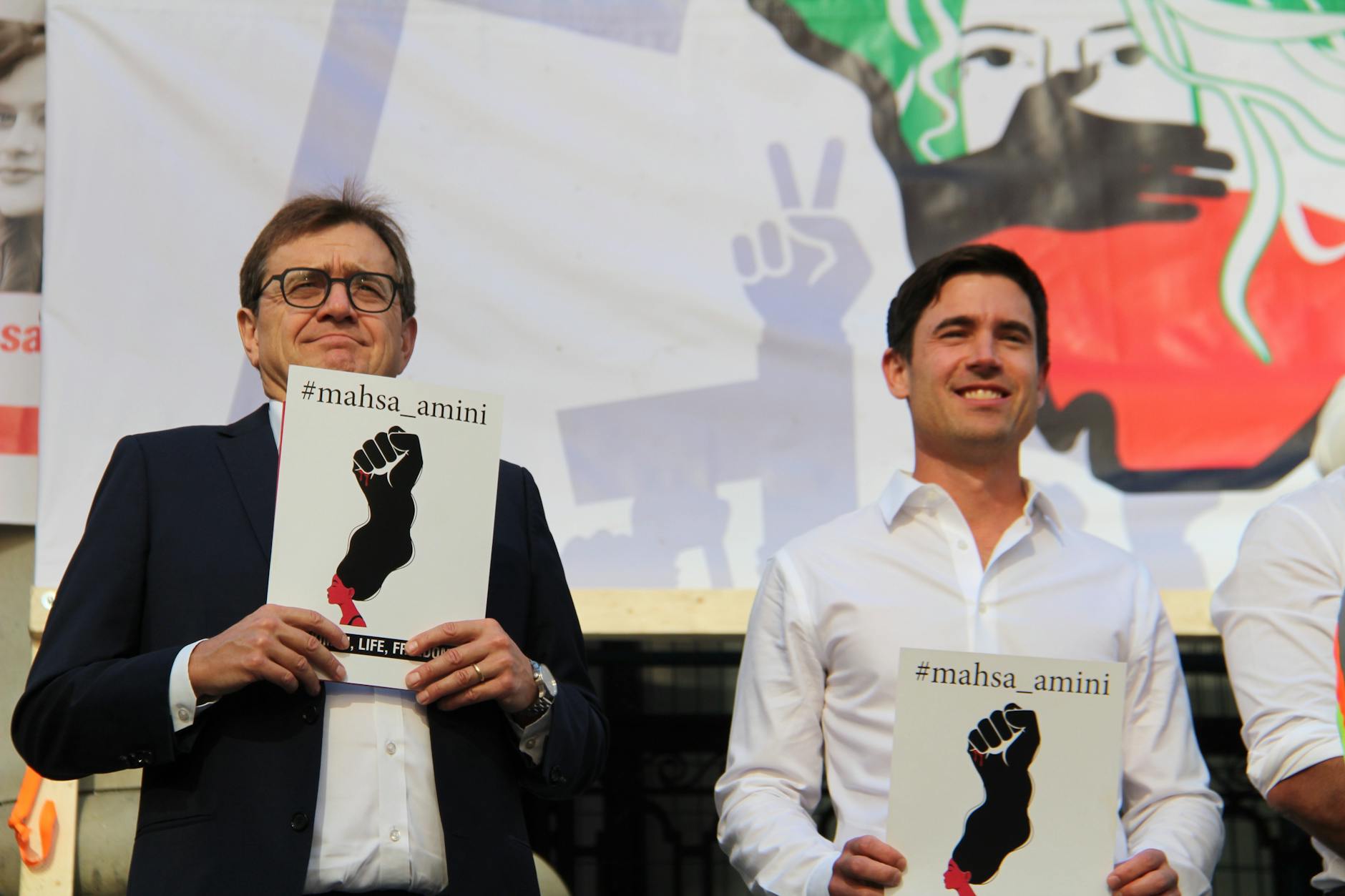
Kurdish peshmerga-style forces in the northwest, including the Democratic Party of Iranian Kurdistan and the Komala Party, maintain fighters and organizational infrastructure despite decades of repression. In Sistan-Baluchestan, Jaish al-Adl has carried out sophisticated attacks on IRGC border posts and would likely escalate operations if central security forces were distracted by an internal power struggle. However, if Khamenei’s successor emerges quickly and commands genuine IRGC loyalty, these peripheral groups would likely be contained rather than emboldened. The fragmentation scenario depends heavily on whether the center holds, and the center’s ability to hold depends on whether IRGC commanders can agree among themselves before ethnic and provincial tensions exploit the gap. A third category involves the organized opposition and protest movements. The 2022 Mahsa Amini uprising demonstrated that millions of Iranians, particularly women and young people, are willing to risk their lives against the regime. These movements are largely unarmed, which is a critical limitation. But in a fragmentation scenario where IRGC units are fighting each other, some military defections to the civilian opposition become plausible, particularly from Artesh units that have historically been more nationalist than ideological. The Mojahedin-e Khalq, based in exile in Albania, claims an internal network but its actual domestic support is widely regarded as minimal, and its history of siding with Saddam Hussein during the Iran-Iraq War makes it politically toxic to most Iranians.
What Do Historical Precedents Tell Us About Post-Authoritarian Fragmentation?
Libya after Muammar Gaddafi’s fall in 2011 offers the most cautionary parallel. Gaddafi, like Khamenei, had built a system of competing security forces designed to prevent any single institution from accumulating enough power to threaten him. When NATO intervention toppled the regime, no successor institution existed. The result was a civil war among dozens of militias organized along tribal, regional, and ideological lines that continues in various forms more than a decade later. Libya’s population is roughly six million; Iran’s is 88 million, with far more ethnic diversity, a much larger military, and a nuclear program. The scale of a comparable fragmentation in Iran would be categorically different. Iraq after 2003 is another instructive case, though the dynamics differ.
The dissolution of Saddam Hussein’s army by the Coalition Provisional Authority created a pool of armed, unemployed men with military training and tribal loyalties. Iran’s fragmentation would not involve an external invasion disbanding the military, but the underlying dynamic of multiple armed groups competing for territory, resources, and political control would be similar. The key difference is that Iran’s armed groups are already organized and equipped within the existing state structure. There would be no need to form new militias because the factions already exist; they would simply stop cooperating. The Soviet collapse provides a more optimistic, though still sobering, comparison. Several Soviet republics experienced armed conflicts during and after the dissolution, from the Nagorno-Karabakh war to the Tajik civil war, but Russia itself avoided full-scale internal fragmentation, partly because Boris Yeltsin moved quickly to establish a new political center and partly because the Russian military largely remained cohesive. If Iran’s Artesh, which is more professional and less ideological than the IRGC, were to coalesce around a transitional authority, it could serve a similar stabilizing role. But the IRGC would view any Artesh-led transition as an existential threat, making cooperation between the two forces unlikely without external mediation or exhaustion.

What Should U.S. Policy Prepare For in a Post-Khamenei Scenario?
The Trump administration and any successor administration face a genuine policy dilemma with no clean answers. The maximalist approach, actively encouraging regime change and supporting opposition factions, risks accelerating precisely the fragmentation that would threaten regional stability, endanger Iran’s nuclear facilities, and create refugee flows that would destabilize Iraq, Turkey, and the Gulf states. The minimalist approach, standing back and treating Iran’s succession as an internal matter, risks ceding influence to Russia and China, both of which have significant economic and strategic investments in Iran and would move quickly to back whichever faction serves their interests. The tradeoff is between influence and blowback. Direct U.S.
involvement in Iranian internal politics carries enormous risks given the historical baggage of the 1953 coup against Mohammad Mossadegh, which remains a potent political narrative inside Iran. Even factions sympathetic to better relations with the West would be undermined by visible American support. Covert support carries its own risks, as the track record of U.S. backing for armed factions in the Middle East, from the Afghan mujahideen to Syrian rebel groups, consistently shows that weapons and money flow to the most extreme actors, not the most moderate. The most productive posture is likely defensive: securing Iran’s nuclear sites through whatever diplomatic or military means are necessary, working with Gulf allies to contain refugee flows and cross-border militia activity, and maintaining channels to any emerging central authority without publicly picking sides.
Why Iran’s Nuclear Program Makes Fragmentation Especially Dangerous
Iran’s nuclear infrastructure, concentrated at sites in Natanz, Fordow, Isfahan, and Arak, represents the single most dangerous variable in any fragmentation scenario. Under centralized IRGC control, these facilities are at least managed by a command structure with a coherent strategic calculus, however adversarial to U.S. interests. In a fragmentation scenario, the question becomes which faction controls the centrifuges, the enriched uranium stockpile, and the technical personnel. The International Atomic Energy Agency estimated in early 2024 that Iran had accumulated enough enriched uranium, if further enriched to weapons grade, for multiple nuclear devices. Loose nuclear material in a multi-sided civil conflict is a nightmare scenario that transcends normal geopolitical competition.
The limitation of military solutions is significant. Airstrikes on Iranian nuclear facilities, a policy option that Israeli and American planners have studied for decades, become far more complicated in a fragmented Iran. A centralized government can be deterred or negotiated with; a dozen armed factions cannot. Striking nuclear sites could rally otherwise competing factions against a common external enemy, temporarily unifying a fragmenting country against the United States or Israel. However, if a radical faction appeared close to seizing nuclear material, the calculus would shift dramatically, and preemptive action might become unavoidable regardless of the political consequences. This is the scenario that keeps nonproliferation experts awake at night, and it deserves far more serious contingency planning than it has received from any recent administration.
📨 Get Free Accountability Coverage Alerts
Free · No spam · Unsubscribe anytime
How Would Iran’s Neighbors Respond to Internal Fragmentation?
Turkey would almost certainly intervene in Iran’s Kurdish northwest, just as it has in Syria and Iraq, to prevent the emergence of a contiguous Kurdish-controlled territory along its border. Saudi Arabia and the UAE would likely support Sunni Arab communities in Khuzestan, both to weaken a historical rival and to secure influence over the province’s oil infrastructure, which accounts for a substantial portion of Iran’s production.
Russia, which has coordinated with Iran in Syria and maintains arms sales relationships, would seek to protect its strategic investments and possibly its access to Iranian airspace and ports. For example, Russia’s use of Iranian air bases during the Syrian conflict demonstrated the operational value Moscow places on its Iranian relationship, an asset it would fight to preserve with whichever faction controlled the relevant territory.
What Would a Fragmented Iran Mean for Global Energy and Economic Stability?
Iran sits on the world’s fourth-largest proven oil reserves and the second-largest natural gas reserves. Even under sanctions that have reduced its official exports, Iran ships significant volumes of oil, primarily to China. A fragmentation scenario would likely take most or all of that production offline, at least temporarily, as competing factions fought for control of oil infrastructure and export terminals.
The Strait of Hormuz, through which roughly 20 percent of global oil consumption passes, could become a flashpoint if rival naval factions, or a desperate central government trying to rally nationalist support, attempted to disrupt shipping. The global economy has become somewhat more resilient to oil shocks than it was in the 1970s, but a sustained disruption of Hormuz transit would spike energy prices worldwide and tip fragile economies into recession. Planning for this contingency, including coordinated strategic petroleum reserve releases and accelerated alternative supply agreements, should be a quiet priority for the Treasury and Energy departments regardless of which party holds the White House.
Conclusion
The question of what happens to Iran after Khamenei is not a matter of if but when, and the honest answer is that nobody knows. What we can say with reasonable confidence is that the structural conditions for fragmentation are real: a deliberately divided military, deep ethnic and regional fault lines, a population that has repeatedly demonstrated willingness to revolt, a devastated economy, and a succession mechanism that has never been tested under adversarial conditions. The fact that Iran also possesses a near-threshold nuclear program and sits astride one of the world’s most critical energy chokepoints elevates this from a regional concern to a first-order global security problem.
American policymakers, journalists, and citizens should resist the temptation to view a post-Khamenei crisis through the lens of simple regime-change optimism. The fall of an authoritarian system does not automatically produce something better, as Iraq, Libya, Syria, and Afghanistan have demonstrated at extraordinary cost. The most responsible approach combines realistic contingency planning for worst-case scenarios, particularly around nuclear security and energy disruption, with diplomatic flexibility to engage whatever legitimate authority emerges. This is a situation where the cliché about hoping for the best and preparing for the worst is not a cliché at all but a policy imperative.
Frequently Asked Questions
How old is Khamenei and what is his health status?
Ali Khamenei was born in 1939 and is in his mid-80s. He has been reported to have prostate cancer, though the Iranian government does not officially confirm health details. His public appearances have become less frequent, and he has visibly aged, fueling persistent speculation about succession timelines.
Who is the most likely successor to Khamenei?
There is no consensus candidate. Mojtaba Khamenei, the Supreme Leader’s son, is frequently mentioned but a dynastic succession would be controversial in a system that presents itself as a republic. Ebrahim Raisi was considered a leading candidate before his death in a helicopter crash in May 2024. Other names include hardline clerics close to the IRGC, but none commands broad institutional loyalty comparable to Khamenei’s.
Could Iran become a democracy after Khamenei?
It is possible but far from guaranteed. Iran has a history of democratic movements, from the Constitutional Revolution of 1906 to the Green Movement of 2009, and polling consistently shows majority support for democratic governance. However, the path from authoritarian collapse to functioning democracy is historically treacherous, and the presence of heavily armed factions with competing interests makes a negotiated democratic transition extremely difficult without a period of instability first.
Would the United States intervene militarily in a post-Khamenei crisis?
Full-scale military intervention is highly unlikely given the size and complexity of Iran, the lessons of Iraq and Afghanistan, and the lack of domestic political appetite for another Middle Eastern war. However, limited military action to secure nuclear sites or protect Gulf shipping lanes is a realistic contingency that Pentagon planners have studied extensively.
How would Israel respond to Iranian fragmentation?
Israel would likely view fragmentation as both an opportunity and a threat. The weakening of a unified adversary that funds Hezbollah and Hamas would be strategically advantageous, but the risk of nuclear material falling into the hands of an unpredictable faction could trigger preemptive Israeli military action, particularly against enrichment facilities.
You Might Also Like
- Trump’s Iran War Could Push Dozens of Countries Closer to China and Russia
- The Power Struggle Inside Iran Right Now Could Be More Dangerous Than the Bombing
- Without Khamenei There Is No Clear Successor — Iran’s Political System Is in Crisis