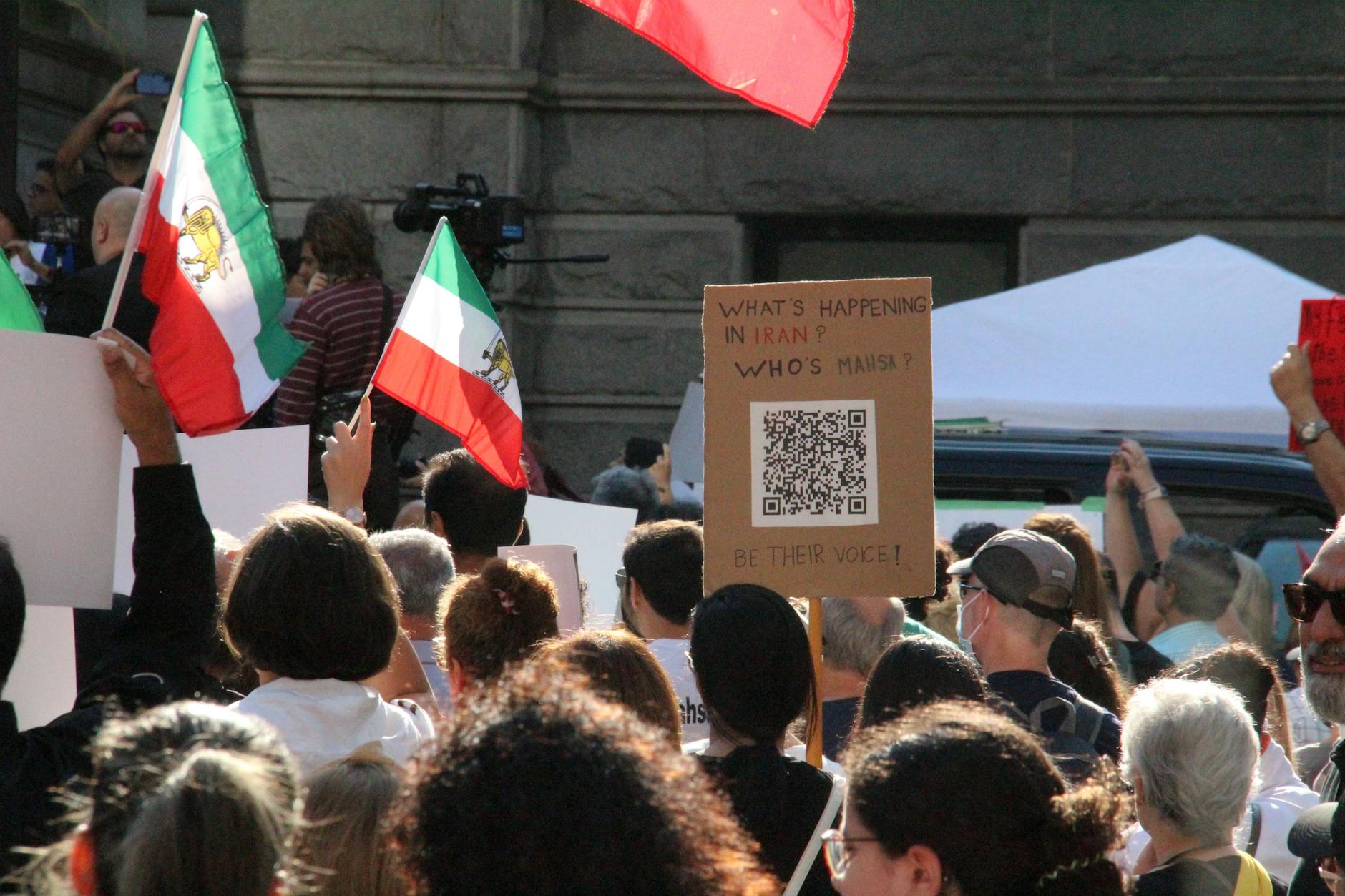
For years, Iranians took to the streets to demand the fall of their own government — from the 2009 Green Movement to the 2022 Woman, Life, Freedom uprising — and were met with bullets, mass arrests, and silence from the international community. Then, on February 28, 2026, the United States and Israel launched coordinated military strikes against Iran, killing Supreme Leader Ali Khamenei and targeting nuclear facilities, military infrastructure, and IRGC centers in what became the largest US military buildup in the region since the 2003 invasion of Iraq. The regime that Iranians had bled trying to overthrow was dismantled not by their revolution, but by American bombs. The bitter irony is impossible to ignore.
Iranian protesters — many of them women who had risked everything in the streets of Tehran, Isfahan, and Shiraz — had already brought the Islamic Republic to its weakest point in decades before a single American missile was fired. The massive protests that erupted on December 28, 2025, were the largest since the 1979 Islamic Revolution itself. The regime responded in January 2026 with a crackdown so savage that some observers called it “Iran’s Babi Yar,” with death toll estimates ranging from the government’s own admission of 3,117 killed to figures as high as 32,000 cited by Donald Trump. This article examines the timeline of Iranian protest, the regime’s final acts of brutality, the US-Israeli strikes that followed, and the uncomfortable questions about what it means when a superpower finishes the job that a civilian population started.
Table of Contents
- How Did Iranians Protest Their Government for Years Before America Intervened?
- The January 2026 Massacres — A Regime’s Final Act of Desperation
- The US-Israeli Strikes of February 28, 2026 — Scope and Stated Goals
- Regime Change From Within vs. Regime Change From Above — What’s the Difference?
- The Civilian Cost and the Accountability Gap
- What the Iranian Diaspora and Opposition Groups Are Saying
- What Comes Next for Iran and the Region
- Conclusion
How Did Iranians Protest Their Government for Years Before America Intervened?
The iranian protest movement did not begin in 2025. It was the product of nearly two decades of escalating confrontation between ordinary Iranians and an increasingly brittle theocratic state. The 2009 Green Movement saw millions flood the streets after a disputed presidential election. The 2017–18 economic protests spread to working-class cities that had previously been considered regime strongholds. The November 2019 protests, triggered by fuel price hikes, were crushed with an internet blackout and an estimated 1,500 killed in a matter of days. Then came the 2022–23 Woman, Life, Freedom movement, sparked by the death of Mahsa Jina Amini in morality police custody, which saw Iranian women burning headscarves and facing down security forces in every major city. Each wave of protest was larger, more organized, and more existentially threatening to the regime than the last.
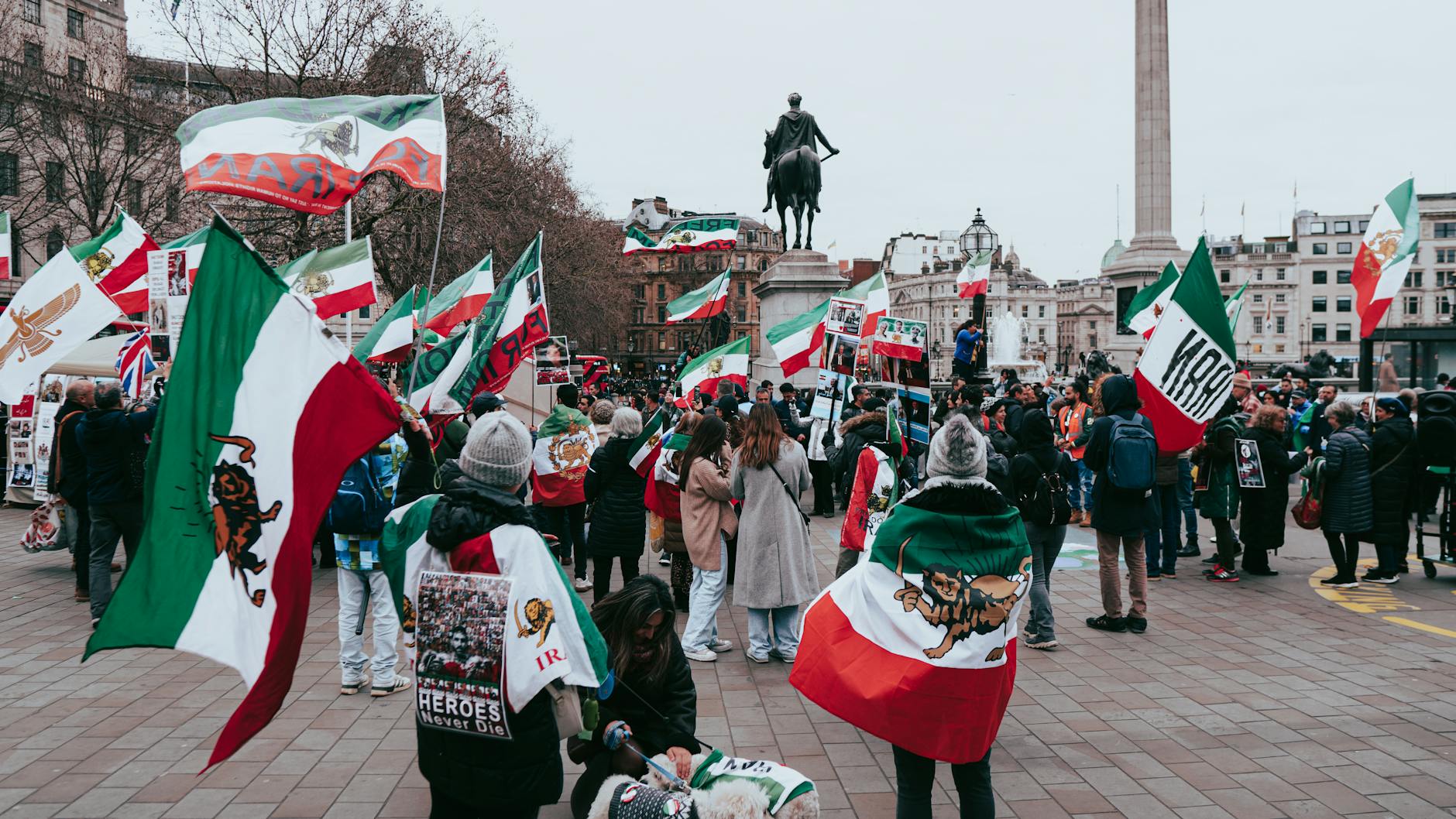
By the time the December 28, 2025 uprising began — driven by economic freefall, a sharp devaluation of the rial, and the regime’s humiliation in the 12-Day War with Israel in June 2025 — the Islamic Republic’s claim to domestic legitimacy was already in tatters. The 2025–2026 protests surpassed every previous uprising in scale and geographic reach. Women again played a leading role, building on infrastructure and networks forged during the Woman, Life, Freedom movement. These were not fringe radicals. They were teachers, students, shopkeepers, and factory workers who had decided, collectively, that the Islamic Republic could not be reformed. What made this final wave different was the regime’s response. Previous crackdowns had been brutal but somewhat calibrated — enough killing to restore fear, not enough to provoke total international rupture. In January 2026, that calculus changed entirely.
The January 2026 Massacres — A Regime’s Final Act of Desperation
On January 8, 2026, iranian security forces launched a crackdown that shattered any remaining pretense of restraint. The violence was so extreme that some observers described it as “Iran’s Babi Yar” — the deadliest single incident of state repression since the Islamic Republic’s founding in 1979. Two days later, on January 10, a second major massacre occurred. According to reports from Iran International, Supreme Leader Ali Khamenei personally ordered the nationwide killings. The death toll remains disputed, which is itself a measure of the scale of the horror. The Iranian government acknowledged 3,117 killed — a staggering admission from a regime that historically denied or minimized casualties.
The US-based Human Rights Activists News Agency (HRANA) estimated 7,000 dead. Iran International reported at least 12,000 killed, calling it the “largest killing in Iranian contemporary history.” Donald Trump and others cited a figure of 32,000. The true number may never be known, but even the regime’s own figures represent a massacre of extraordinary proportions. However, if the regime believed that mass killing would restore control — as it had partially succeeded in doing in 2019 — the calculation backfired catastrophically. Unlike the 2019 crackdown, which occurred under an internet blackout with limited international attention, the January 2026 massacres played out with far greater visibility. The sheer scale of the killing drew immediate international condemnation and fundamentally altered the geopolitical conversation about Iran. A government that slaughters thousands of its own citizens in broad daylight forfeits the diplomatic protections that might otherwise restrain foreign military intervention.
The US-Israeli Strikes of February 28, 2026 — Scope and Stated Goals
On February 28, 2026, the United States and Israel launched coordinated military strikes against Iran in what represented the largest American military buildup in the Middle East since the 2003 invasion of Iraq. The operation targeted Iran’s nuclear facilities, military infrastructure, irgc command centers, and leadership targets — including the office of the Supreme Leader himself. Ali Khamenei, who had ruled as Supreme Leader since 1989, was killed in the strikes on Tehran, along with senior Islamic Republic officials. The stated goals of the operation were sweeping: inducing regime change and dismantling Iran’s nuclear and ballistic missile programs. This was not a limited retaliatory strike of the kind that had characterized previous US-Iran confrontations.
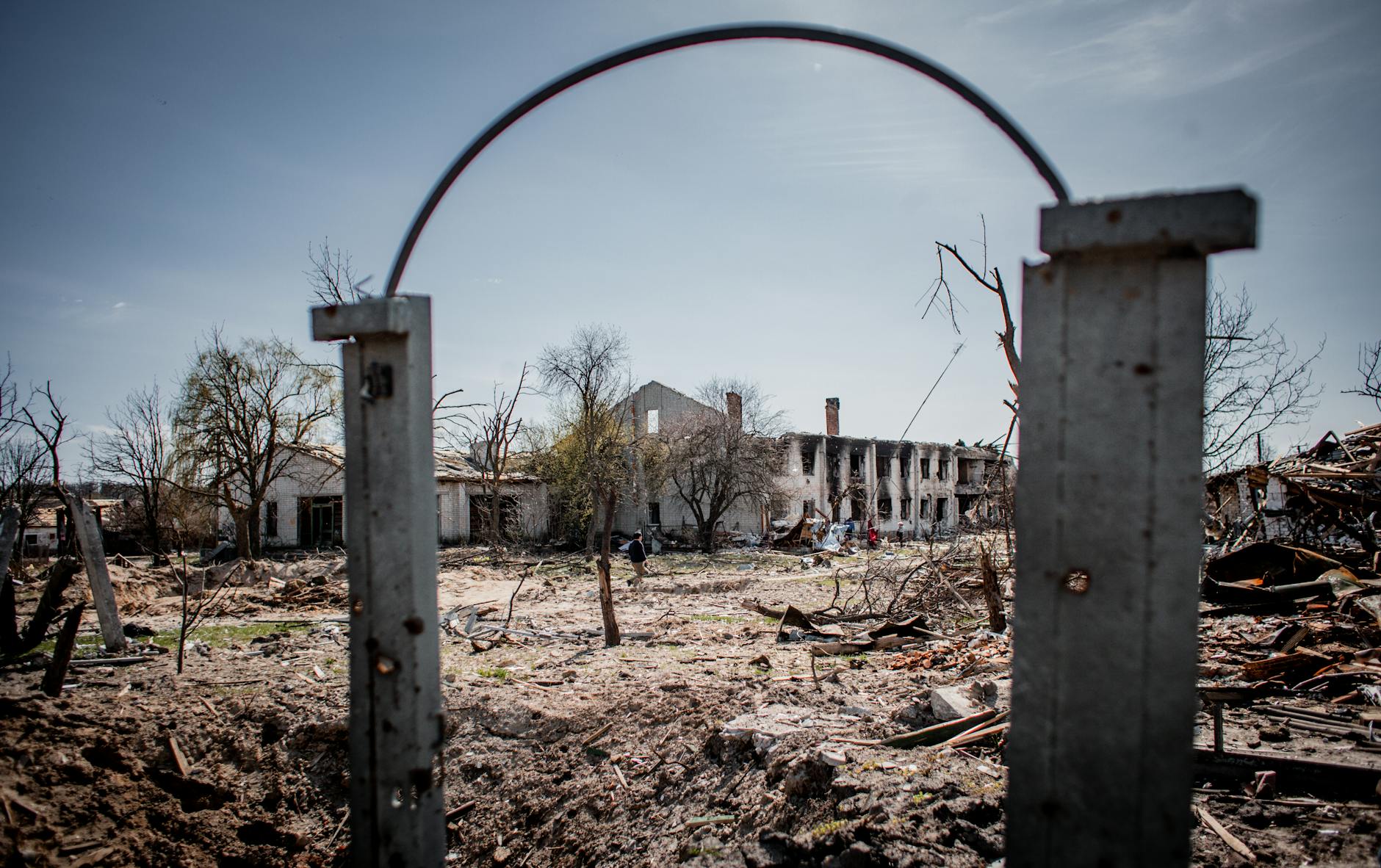
It was a comprehensive military campaign aimed at ending the Islamic Republic as a functioning state apparatus. The strikes caused both military and civilian casualties, though the full scope of collateral damage remains under assessment by international observers. The timing was not coincidental. The strikes came when the Iranian regime was at its weakest point in years. The protest movement had already severely undermined the government’s domestic legitimacy, and the January massacres had obliterated whatever international goodwill the regime might have leveraged for diplomatic protection. As the UK House of Commons Library and multiple international analyses noted, the convergence of internal collapse and external military pressure created a unique window — one that the US and Israeli governments chose to exploit.
Regime Change From Within vs. Regime Change From Above — What’s the Difference?
There is a fundamental difference between a people overthrowing their own government and a foreign power doing it for them, and that difference matters enormously for what comes next. When Iranians took to the streets, they were building something — networks of solidarity, local leadership structures, a shared political vocabulary about what kind of country they wanted to live in. Revolutions driven by domestic populations tend to produce messy but organic transitions, because the people who fought for change are the same people who must govern afterward. Iraq in 2003 stands as the most relevant comparison, and it is not a flattering one. The US toppled Saddam Hussein’s government with overwhelming military force and then spent the next two decades dealing with the consequences of having destroyed a state without a viable plan for what would replace it. The Iranian case is more complicated than Iraq, because the protest movement had already done significant work in undermining the regime before the bombs fell. The opposition was not a CIA-backed exile group landing on an airstrip — it was millions of ordinary Iranians who had repeatedly risked their lives over nearly twenty years.
But the US-Israeli strikes cut short whatever organic process might have unfolded. The question now is whether the infrastructure of protest — the women’s networks, the labor unions, the student organizations — will have a meaningful role in shaping what comes next, or whether the post-strike political landscape will be dominated by the same external powers that dropped the bombs. The tradeoff is stark. Without the strikes, the regime might have survived another crackdown cycle, as it had after 2009, 2017, 2019, and 2022. The January massacres demonstrated that Khamenei was willing to kill on a scale previously unimaginable to maintain power. Tens of thousands more Iranians might have died in a prolonged revolutionary struggle. But with the strikes, the trajectory of Iranian self-determination was fundamentally altered by foreign military power, and the precedent that sets — that the US will bomb governments it doesn’t like when domestic opposition creates a convenient opening — carries its own dangers.
📨 Get Free Accountability Coverage Alerts
Free · No spam · Unsubscribe anytime
The Civilian Cost and the Accountability Gap
Military strikes of this magnitude inevitably produce civilian casualties, and the US-Israeli operation against Iran was no exception. While targeting was reportedly focused on military and nuclear infrastructure, the strikes on leadership targets in Tehran — a city of nearly nine million people — carried inherent risks of collateral damage. The full civilian toll remains unclear, but independent assessments from international organizations are ongoing. There is a troubling accountability gap on multiple sides. The Iranian regime’s January massacres — which killed somewhere between 3,117 and 32,000 people depending on the source — demand investigation and accountability under international law. Khamenei personally ordered the killings, according to multiple reports, and the security forces that carried them out were acting on state authority.
But accountability for the dead becomes complicated when the state that ordered the killing has itself been destroyed by foreign bombs. Similarly, the civilian casualties caused by the US-Israeli strikes exist in a legal and moral gray zone. The stated justification of regime change, while politically popular in some quarters, sits uneasily with international legal frameworks that generally prohibit the use of force for that purpose absent a UN Security Council authorization. The people most affected — Iranian civilians who survived both their own government’s massacres and the subsequent foreign bombardment — have the least voice in how accountability is framed. This pattern is not new. It echoes the experience of Iraqi, Libyan, and Syrian civilians who found themselves caught between authoritarian regimes and foreign military interventions, with their suffering instrumentalized by all sides.
What the Iranian Diaspora and Opposition Groups Are Saying
The Iranian diaspora is deeply divided over the strikes. Some exile communities, particularly those who lost family members in the January massacres, have expressed relief that the regime responsible for decades of repression has been decapitated. For families of the estimated 7,000 to 12,000 killed in January alone, the destruction of the security apparatus that murdered their loved ones carries an undeniable emotional weight.
Others in the diaspora and domestic opposition have expressed deep ambivalence or outright opposition. Their argument is not that the Islamic Republic deserved to survive, but that Iranians deserved the chance to finish what they started. The protest movements of the past two decades represented a genuine, homegrown democratic impulse, and the US-Israeli strikes risk replacing one form of external domination — the theocratic state imposed after 1979 — with another. The experience of Iraq, where initial jubilation at Saddam’s fall gave way to years of sectarian violence and foreign occupation, looms large in these discussions.
What Comes Next for Iran and the Region
The destruction of the Islamic Republic’s leadership and military infrastructure has created a power vacuum that will define Middle Eastern geopolitics for years to come. Whether Iran’s future is shaped by the organic opposition networks that Iranians built through years of protest or by external powers seeking to install a friendly government remains the central question. The women who led the Woman, Life, Freedom movement, the labor organizers who coordinated strikes, the students who faced down security forces — these are the people who earned the moral authority to lead. Whether they get the chance is another matter.
The broader regional implications are equally uncertain. Iran’s proxy network — Hezbollah, various Iraqi militias, the Houthis — has been significantly degraded by both the 12-Day War with Israel in June 2025 and the February 2026 strikes. The dismantling of Iran’s nuclear program was a stated US-Israeli objective, and its achievement removes a long-standing source of regional tension. But the precedent of a preemptive regime-change operation, carried out without UN authorization and justified in part by a domestic uprising that was already underway, will reverberate through international relations for decades. Every authoritarian government watching will draw its own lessons — and not all of those lessons will be the ones Washington intends.
Conclusion
The story of Iran from 2009 to 2026 is the story of a people who refused to accept the government imposed on them, who protested at enormous personal cost through wave after wave of repression, and who were on the verge of achieving through sheer collective will what the United States ultimately accomplished with cruise missiles. The January 2026 massacres — in which somewhere between 3,117 and 32,000 Iranians were killed by their own government — represented both the regime’s most desperate act and the moral breaking point that made the February strikes politically possible. Iranians did protest their own government for years.
Then America bombed it for them. Both of those statements are true, and the tension between them defines everything that comes next. The questions that remain are not academic. Who governs Iran now? Do the protest networks that Iranians built through years of sacrifice have a seat at the table, or are they sidelined by the same foreign powers that decided the regime’s fate? What accountability exists for the thousands killed in January, or for the civilians killed in the February strikes? And what does it mean for the global order when the world’s most powerful military finishes a revolution that a civilian population started? These are the questions that will determine whether the Iranian people’s years of courage and loss ultimately lead to the self-determination they fought for — or to something else entirely.
You Might Also Like
- Whoever Takes Control of Iran’s Government Next Will Determine the Region’s Future for Decades
- Trump Pulled Out of the Iran Nuclear Deal in 2018 — 8 Years Later He’s Bombing Tehran
- The Think Tanks That Advocated for Iran Regime Change for Decades Got Their Wish