
The network of neoconservative policy architects, military contractors, and ideologically driven officials who have pushed for regime change in Iran since at least 2003 have, under the current Trump administration, finally maneuvered the United States to the brink of direct military confrontation with Tehran. This is not a sudden escalation born of a single provocation — it is the culmination of a two-decade campaign waged through think tanks like the Foundation for Defense of Democracies, advocacy groups like United Against Nuclear Iran, and a revolving door of officials who cycled between government posts and hawkish policy shops waiting for exactly the right political conditions.
John Bolton, who openly called for bombing Iran in a 2015 New York Times op-ed, served as Trump’s National Security Advisor during the first term and helped lay the groundwork by torpedoing the Iran nuclear deal. Now, with figures sympathetic to maximum confrontation occupying key positions in the second Trump administration, the policy infrastructure built over twenty years is being activated. This article traces the lineage of the Iran hawk movement from the post-9/11 era to the present, identifies the key players and organizations that kept the pressure campaign alive through multiple administrations, examines the financial and ideological incentives driving the push for war, and lays out what ordinary Americans should understand about the costs — human, economic, and constitutional — of a conflict that was engineered long before most people started paying attention.
Table of Contents
- Who Are the Iran Hawks and Why Have They Pushed for War for Over 20 Years?
- How the Iran Nuclear Deal Became the First Casualty of the Hawk Strategy
- The Money Trail Behind the Push for Confrontation with Iran
- What Americans Should Know About the Real Costs of a War with Iran
- The Constitutional Questions Congress Keeps Ignoring
- How Iran Hawks Used Media to Manufacture Consent for Escalation
- Where the Iran Confrontation Heads from Here
- Conclusion
- Frequently Asked Questions
Who Are the Iran Hawks and Why Have They Pushed for War for Over 20 Years?
The term “Iran hawks” refers to a loose but persistent coalition of policymakers, think tank fellows, lobbyists, and media commentators who have advocated for aggressive confrontation with Iran — up to and including military strikes and regime change — since at least the early 2000s. Many of them were the same voices who championed the 2003 invasion of Iraq and argued that Tehran should be next. The Project for the New American Century, a now-defunct neoconservative think tank whose members included Dick Cheney, Donald Rumsfeld, and Paul Wolfowitz, explicitly called for reshaping the Middle East through American military power. When Iraq turned into a quagmire, the Iran hawks did not abandon their project — they simply moved to new organizations and waited. The Foundation for Defense of Democracies, led by Mark Dubowitz, became the central nerve center for anti-Iran policy advocacy in Washington.
FDD spent years producing policy papers, congressional testimony, and media campaigns designed to make the 2015 Iran nuclear deal politically toxic and to build the case that diplomacy with Tehran was inherently futile. The organization received significant funding from pro-Israel billionaire donors including Sheldon Adelson, who publicly suggested detonating a nuclear weapon in the Iranian desert as a negotiating tactic. By the time Trump withdrew from the Iran deal in 2018, FDD’s policy recommendations had been adopted almost verbatim as administration policy. What distinguishes this movement from ordinary policy disagreement is its consistency and institutional memory. The same names appear across decades — Bolton, Dubowitz, former Senator Joe Lieberman, Reuel Marc Gerecht, Michael Ledeen — cycling between government advisory roles, think tank positions, and cable news appearances. They maintained relationships with allied members of Congress, cultivated intelligence contacts, and built media narratives that framed every Iranian action, no matter how minor, as an existential threat requiring military response.
How the Iran Nuclear Deal Became the First Casualty of the Hawk Strategy
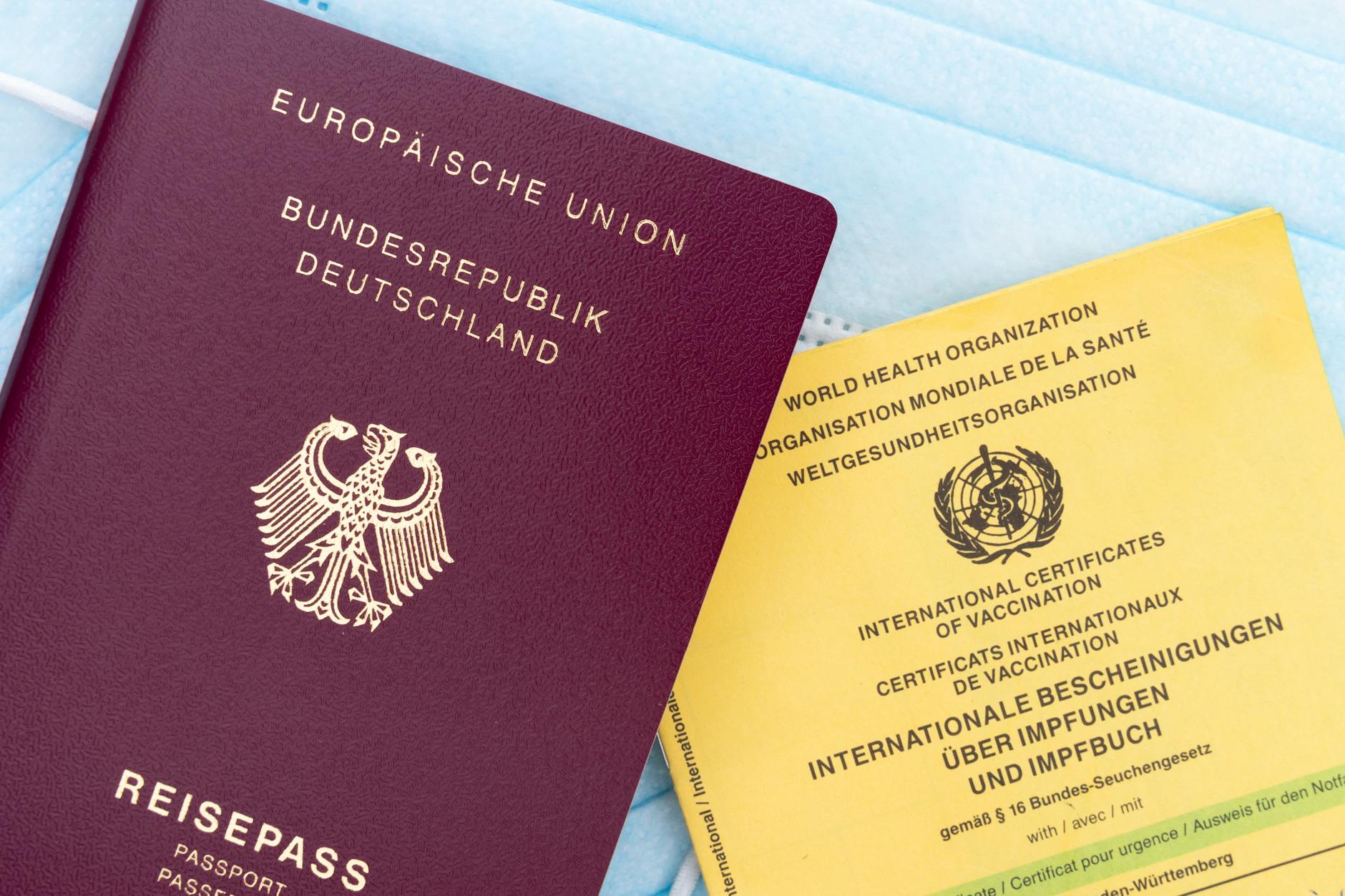
The 2015 Joint Comprehensive Plan of Action, negotiated under the obama administration and signed by Iran, the United States, and five other world powers, was the single largest obstacle to the hawks’ long-term objective. The deal placed strict limits on Iran’s uranium enrichment, subjected its nuclear facilities to the most intrusive international inspections regime ever negotiated, and effectively extended the timeline for any potential Iranian nuclear weapon from months to over a year. International inspectors confirmed Iranian compliance in report after report. For the hawks, this was precisely the problem — a working diplomatic agreement eliminated the justification for military action. The campaign to destroy the deal was methodical. FDD and allied organizations spent over $20 million on advertising campaigns targeting Democratic members of Congress during the 2015 ratification debate. They produced a steady stream of policy papers arguing that the deal was insufficient, that Iran was cheating through loopholes, and that the sunset provisions would eventually allow Tehran to build a weapon.
However, these arguments required ignoring that the alternative — no deal at all — would allow Iran to enrich uranium without any limits or inspections, which is exactly what happened after trump withdrew. By 2023, Iran had enriched uranium to 60 percent purity and significantly expanded its stockpile, a direct and predictable consequence of the policy the hawks championed. The withdrawal also demonstrated how a small number of committed ideologues can override the assessment of the broader national security establishment. Defense Secretary James Mattis, Secretary of State Rex Tillerson, and the Joint Chiefs of Staff all reportedly counseled Trump against leaving the deal. The intelligence community assessed that Iran was in compliance. None of it mattered. Bolton and Secretary of State Mike Pompeo, both longtime Iran hawks, had the president’s ear, and the institutional weight of two decades of anti-Iran advocacy made withdrawal the path of least political resistance within the Republican coalition.
The Money Trail Behind the Push for Confrontation with Iran
Following the financial incentives behind the Iran hawk movement reveals a network of defense contractors, wealthy donors, and foreign policy organizations with direct material interests in heightened tensions. Lockheed Martin, Raytheon (now RTX Corporation), and Northrop Grumman have all seen stock prices surge during periods of escalation with Iran. The 2020 assassination of Iranian General Qasem Soleimani, for instance, triggered an immediate spike in defense stocks. This is not a conspiracy theory — it is a structural incentive embedded in the relationship between the defense industry, Washington think tanks, and policy formation. FDD has received funding not only from ideologically aligned donors but from entities with financial stakes in Middle East confrontation. The Emirati and Saudi governments, both regional rivals of Iran, have funneled money through various channels to organizations promoting hawkish Iran policy in Washington. The United Arab Emirates reportedly donated to FDD-affiliated entities, though the organization has resisted full transparency about its donor base.
When the UAE and Saudi Arabia signed major arms deals with the United States — deals worth tens of billions of dollars justified in part by the Iranian threat — the financial logic became circular: fund hawks who escalate tensions, then purchase weapons to address the tensions the hawks helped create. A specific example illustrates how this works in practice. In 2019, after Iran shot down a U.S. surveillance drone, the Trump administration approved an $8.1 billion emergency arms sale to Saudi Arabia and the UAE, bypassing congressional review. The justification was the Iranian threat. Senator Bob Menendez called it “an end run around the law.” Several of the officials who approved the sale had previous professional connections to defense firms that stood to benefit, and the policy organizations that loudly supported the sale had received funding from Gulf state sources. The revolving door between advocacy, government, and industry turns on the same axis.

What Americans Should Know About the Real Costs of a War with Iran
Any military conflict with Iran would bear almost no resemblance to the relatively quick initial phases of the Iraq invasion that hawks like to cite as a model. Iran has a population of 88 million people — more than double Iraq’s at the time of the 2003 invasion — a sophisticated and dispersed military infrastructure, and geographic terrain that makes ground operations extraordinarily difficult. The Zagros mountain range alone would present challenges that dwarf anything the U.S. military faced in the flat deserts of Iraq. Military analysts at the RAND Corporation and the Center for Strategic and International Studies have estimated that a full-scale conflict with Iran could require a troop commitment exceeding 1.6 million service members and could cost upward of $2 trillion in the first year alone. The economic consequences for American consumers would be immediate and severe. Iran controls the northern shore of the Strait of Hormuz, through which approximately 20 percent of the world’s oil supply passes daily.
Even a partial disruption to tanker traffic through the strait would send global oil prices above $150 per barrel, according to energy analysts. For American households already strained by inflation, this would translate into gasoline prices potentially exceeding $7 per gallon and sharp increases in the cost of everything transported by truck, ship, or plane — which is effectively everything. The comparison with Iraq is instructive not as an argument for feasibility but as a warning about compounding costs. The Iraq War, initially sold to the public as a quick and affordable operation, ultimately cost American taxpayers over $3 trillion when long-term veterans’ care and interest on war debt are included, according to Brown University’s Costs of War Project. Over 4,500 American service members died and tens of thousands more were permanently injured. Iraq had a smaller military, no meaningful navy, limited ballistic missile capability, and had been weakened by a decade of sanctions and no-fly zones. Iran has none of these vulnerabilities.
The Constitutional Questions Congress Keeps Ignoring
The most underexamined aspect of the march toward conflict with Iran is the degree to which it has bypassed the constitutional requirement for congressional authorization of war. The War Powers Resolution of 1973 requires the president to notify Congress within 48 hours of committing armed forces to military action and prohibits those forces from remaining for more than 60 days without congressional authorization. In practice, presidents of both parties have treated this law as advisory rather than binding, but the Iran hawks have been particularly aggressive in constructing legal theories that would allow the executive branch to strike Iran without any congressional vote. The 2001 and 2002 Authorizations for Use of Military Force, passed in the wake of 9/11, have been stretched far beyond their original scope to justify military operations across the Middle East. However, even the most creative legal interpretation would struggle to apply a 2001 authorization targeting al-Qaeda or a 2002 authorization targeting Saddam Hussein’s government to a new conflict with Iran. Despite this, no serious legislative effort to constrain executive war-making authority has advanced.
Senator Tim Kaine has repeatedly introduced legislation requiring specific congressional authorization for any military action against Iran, but the bills have never received a floor vote. The danger is not merely theoretical. In January 2020, the Trump administration assassinated Soleimani without informing congressional leadership in advance and without any congressional authorization. The legal justification offered — that the strike was defensive in nature — was challenged by multiple constitutional law scholars and by Congress’s own Government Accountability Office. If a future strike triggers an Iranian retaliation that escalates into a broader conflict, the United States could find itself in a major war that no member of Congress ever voted to authorize. For citizens concerned about government accountability, this represents a fundamental erosion of the democratic check on the most consequential power a government possesses.
How Iran Hawks Used Media to Manufacture Consent for Escalation
The media strategy employed by the Iran hawk network followed a playbook refined during the run-up to the Iraq War. Sympathetic analysts — many of them affiliated with FDD, the American Enterprise Institute, or the Hudson Institute — were positioned as seemingly independent experts on cable news networks. Between 2017 and 2020, FDD staff appeared on major news networks hundreds of times, frequently without disclosure of the organization’s explicit advocacy for regime change in Iran. Viewers watching a seemingly neutral national security analyst argue that Iran posed an imminent threat had no way of knowing that the analyst’s employer had been working toward military confrontation for over a decade.
📨 Get Free Accountability Coverage Alerts
Free · No spam · Unsubscribe anytime
The approach extended to social media and digital influence. Organizations aligned with the hawks produced slickly designed infographics, short videos, and Twitter threads framing every Iranian military movement as a direct threat to American security. When the USS Abraham Lincoln carrier group was deployed to the Persian Gulf in May 2019 in response to what Bolton called “troubling and escalatory indications,” the media ecosystem the hawks had built amplified the threat narrative while marginalizing diplomatic voices. Bolton later admitted in his memoir that he had been working to confront Iran from the moment he entered the White House, raising the question of whether the “intelligence” cited to justify the deployment reflected genuine threat assessment or policy-driven interpretation.
Where the Iran Confrontation Heads from Here
The trajectory of U.S.-Iran relations in the second Trump term will be determined less by Iranian actions than by the internal dynamics of an administration populated with officials who have spent their careers advocating for exactly this confrontation. The hawks have the institutional advantage — they have the policy papers already written, the media contacts already cultivated, and the legal theories already drafted. What they need is a triggering event, and in a region as volatile as the Persian Gulf, provocations are never in short supply.
Every drone strike by an Iranian proxy, every naval encounter in the strait, every incremental advance in Iran’s nuclear program will be framed as the justification the hawks have been waiting for. The question for the American public is whether the same pattern that produced the Iraq War — exaggerated intelligence, marginalized dissent, rushed authorization, and astronomical costs borne by ordinary taxpayers and military families — will be allowed to repeat itself with a far more capable adversary. The infrastructure for accountability exists: congressional oversight, FOIA requests, investigative journalism, and public pressure have all, at various points, slowed or redirected hawkish momentum. Whether those tools will be deployed in time is an open question, but understanding that this war, if it comes, was not spontaneous but engineered over decades is the first step toward demanding that the people who built the machine be held responsible for what it produces.
Conclusion
The push for military confrontation with Iran is not a response to a sudden threat — it is the product of a twenty-year campaign by a specific, identifiable network of policy advocates, think tanks, defense industry interests, and ideologically committed officials who have sought this outcome through multiple administrations. From the destruction of the nuclear deal to the assassination of Soleimani to the current positioning of military assets, each step has followed a roadmap drafted in Washington conference rooms long before the crises that supposedly justify them. The financial incentives, institutional relationships, and media strategies that sustain this movement are well-documented for anyone willing to examine the record.
For Americans who care about government accountability, fiscal responsibility, and the constitutional requirement that the people’s representatives authorize war, the Iran situation demands immediate attention. The costs of a conflict — in lives, dollars, economic disruption, and global instability — would dwarf anything the United States has experienced in the twenty-first century. Contacting elected officials to demand that no military action proceed without explicit congressional authorization, supporting independent journalism that investigates the financial ties behind hawkish advocacy, and simply refusing to accept the inevitability narrative that the hawks depend on are all concrete steps available to every citizen. Wars that are twenty years in the making can still be prevented — but only if enough people understand what they are looking at before the first missile is launched.
Frequently Asked Questions
Who are the main Iran hawks in the current Trump administration?
While specific appointments continue to shift, figures with long records of hawkish Iran advocacy include those with ties to the Foundation for Defense of Democracies, former Bolton allies, and officials who served in the first Trump term during the maximum pressure campaign. The broader network extends to congressional figures like Senator Tom Cotton and Lindsey Graham, who have publicly supported military strikes on Iran.
Did Iran actually violate the nuclear deal before Trump withdrew?
No. The International Atomic Energy Agency issued multiple reports confirming Iran’s compliance with the JCPOA before the U.S. withdrawal in May 2018. Iran began exceeding the deal’s limits only after the U.S. exited and reimposed crippling sanctions, arguing that the other parties had failed to uphold their commitments.
How would a war with Iran affect gas prices and the U.S. economy?
Energy analysts estimate that any disruption to traffic through the Strait of Hormuz could push oil prices above $150 per barrel, potentially doubling or tripling gasoline prices at the pump. The broader economic impact would include supply chain disruptions, inflationary pressure on consumer goods, and significant federal spending diverted from domestic priorities.
Does Congress have to approve military action against Iran?
Under the Constitution and the War Powers Resolution, the president cannot sustain military operations beyond 60 days without congressional authorization. However, presidents have frequently circumvented this requirement by characterizing actions as defensive or by relying on outdated authorizations. No existing AUMF specifically covers military action against Iran.
What is the Foundation for Defense of Democracies and why does it matter?
FDD is a Washington-based think tank founded in 2001 that has become the most influential advocacy organization pushing for hawkish Iran policy. It produces policy papers, congressional testimony, and media commentary aimed at undermining diplomatic approaches and building the case for confrontation. Its funding sources include major Republican donors and entities with ties to Gulf state governments.
Could diplomacy still prevent a war with Iran?
Technically, yes. Iran has repeatedly indicated willingness to negotiate, and the framework of the JCPOA demonstrated that verifiable agreements are achievable. However, the current political environment in Washington — combined with Iran’s expanded nuclear activities since 2018 — makes a return to diplomacy significantly harder than it was a decade ago. The primary obstacle is not Iranian intransigence but the political power of domestic actors who view any diplomatic engagement as capitulation.
You Might Also Like
- Wall Street’s Biggest Winners and Losers From the Iran War
- Trump’s Iran War Could Push Dozens of Countries Closer to China and Russia
- Trump Pulled Out of the Iran Nuclear Deal in 2018 — 8 Years Later He’s Bombing Tehran