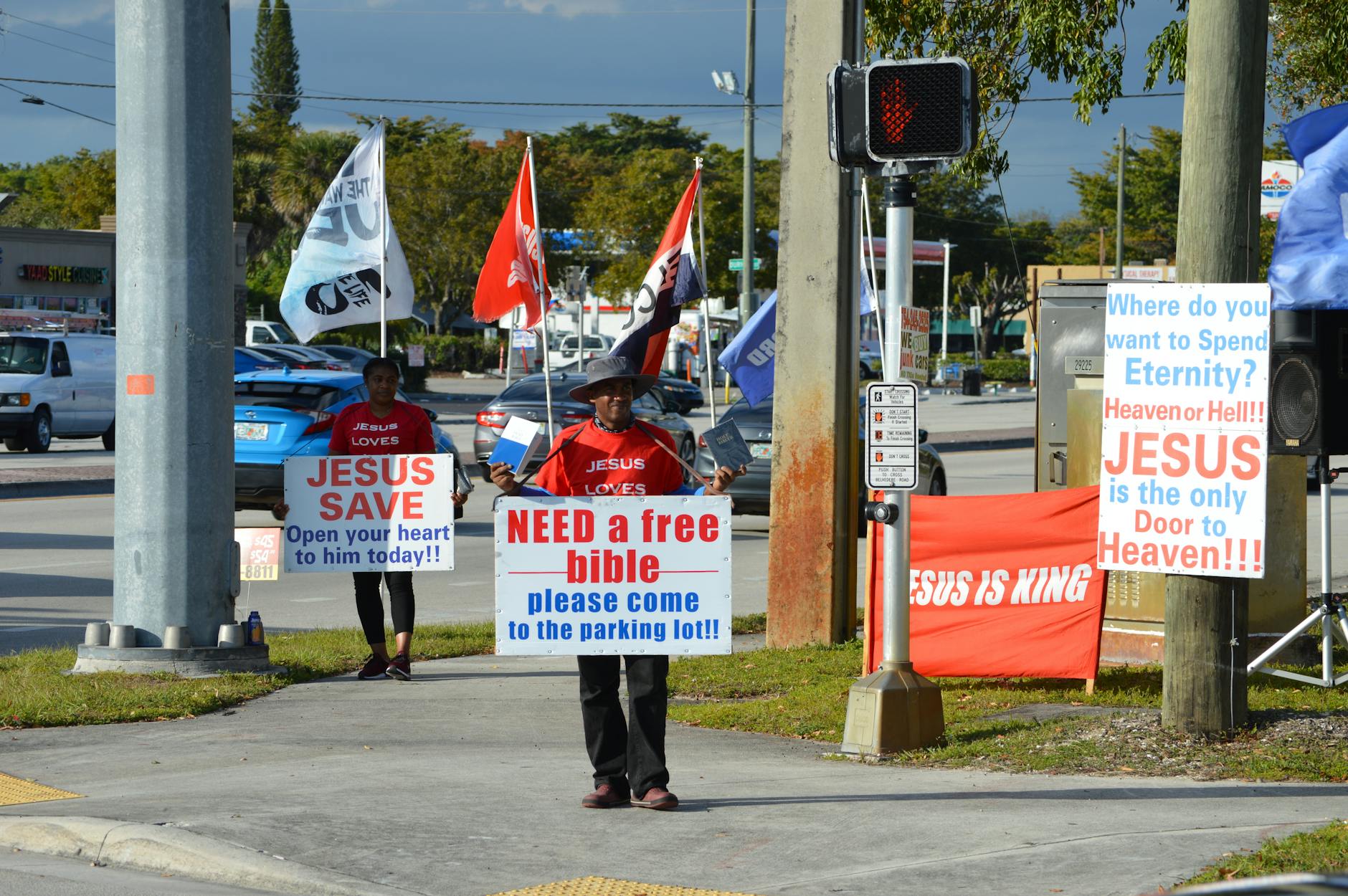
Evangelical Christians have emerged as the most vocal and organized bloc of support for President Trump’s decision to launch joint airstrikes with Israel against Iran’s nuclear facilities on February 28, 2026. While national polling shows broad public disapproval of the strikes, prominent evangelical leaders like Pastor John Hagee and Dr. Robert Jeffress moved quickly to frame the military action as both strategically necessary and theologically significant, rallying millions of followers behind the administration’s decision.
The support is not surprising given that Trump won approximately 80% of white evangelical voters in the 2024 election, and organizations like Christians United for Israel boast roughly 10 million members. But the enthusiasm from the evangelical right stands in stark contrast to public opinion at large — a Reuters/Ipsos poll found only 27% of Americans approved of the strikes, while 43% disapproved. This article examines the theological and political forces driving evangelical support, the polling data showing how isolated that support is nationally, the emerging rift within the MAGA coalition between Christian Zionists and America First isolationists, and what the situation means for Iranian Christians caught in the middle.
Table of Contents
- Why Do Evangelical Christians Support Trump’s Iran Strikes?
- What the Polling Data Actually Shows About American Support
- The MAGA Coalition Crack-Up Over Iran
- The Role of Evangelical Leaders as Political Actors
- The Forgotten Voices — Iranian Christians Under Fire
- The Theological Debate That Is Not Going Away
- Where This Goes From Here
- Conclusion
- Frequently Asked Questions
Why Do Evangelical Christians Support Trump’s Iran Strikes?
The answer lies largely in dispensationalist theology — a framework embraced by tens of millions of American evangelicals that views the modern state of Israel as central to biblical prophecy and the eventual Second Coming of Christ. Under this lens, any military action that protects or strengthens Israel is not merely a geopolitical calculation but a fulfillment of divine will. Some evangelical leaders went so far as to call the February 28 bombing campaign “a foreshadowing” of biblical prophecy, according to reporting from The Nation. This theology has powerful institutional backing. Pastor John Hagee, founder and chairman of Christians United for Israel, wasted no time declaring, “We must stand with Israel today and every day.
Iran’s future as an evil force in the Middle East is now in question.” Days before the strikes, Hagee had told Fox News that he did not believe Trump would “allow himself to be played by Iranian negotiators or American isolationists” — a statement that reads as both prophecy and political pressure. Dr. Robert Jeffress, the senior pastor of First Baptist Church Dallas, personally texted Trump to tell him that “millions of Christians across the country were praying for him” and praised the strikes as “necessary and morally justified.” It is worth noting that this theological framework is not universally accepted within Christianity. Some Christian academics have pushed back against the idea of framing military strikes as a “holy war,” with Premier Christian News reporting that a genuine theological debate has emerged over whether scripture supports the conflation of modern geopolitics with biblical mandate. The difference between these camps is not trivial — it represents a fundamental disagreement about how the Bible should inform foreign policy.

What the Polling Data Actually Shows About American Support
The evangelical enthusiasm creates a misleading impression if taken alone. Nationally, opposition to the strikes is substantial. A Washington Post poll found Americans oppose the airstrikes 52% to 39%. The Reuters/Ipsos poll was even more lopsided, with only 27% approving, 43% disapproving, and 29% unsure. These are not the numbers of a country united behind military action — they are the numbers of a country deeply divided. The partisan breakdown tells a clearer story.
Among Republicans, 55% approved of the strikes, while only 13% disapproved and 32% were unsure. Among Democrats, 74% disapproved. The 32% of Republicans who were unsure is a significant figure — it suggests that even within the president’s own party, the strikes are far from a consensus position. However, if you narrow the lens further to white evangelical voters specifically, the support is almost certainly much higher than the Republican average, given the institutional endorsements from major evangelical organizations and leaders. The gap between evangelical support and broader public opinion carries real political risk for the administration. Military actions that lack majority public approval tend to erode support over time, particularly if the conflict escalates or produces unintended consequences. The administration appears to be betting that its base — anchored by evangelical voters — will hold firm even if the wider electorate does not.
The MAGA Coalition Crack-Up Over Iran
The strikes have exposed a fault line within the MAGA movement that has been simmering for years: the tension between evangelical Christian Zionists who prioritize Israel’s security and America First isolationists who oppose foreign military entanglements. Tucker Carlson, long one of the most influential voices on the populist right, called the strikes “absolutely disgusting and evil” and warned that “this is going to shuffle the deck in a profound way.” Rep. Marjorie Taylor Greene, who has styled herself as one of Trump’s fiercest allies in Congress, was equally blunt: “We voted for America First and ZERO wars” and “this is not what we thought MAGA was supposed to be.” Rep. Thomas Massie struck a similar note.
These are not marginal figures — they represent a significant constituency within the MAGA movement that believed Trump’s populist mandate was fundamentally anti-interventionist. The evangelical wing has, for the moment, won this internal argument. As Baptist News reported, MAGA has coalesced around evangelical support for Israel in the bombing of iran. But the isolationist faction has not disappeared, and the longer any military engagement continues, the louder their objections are likely to become. The question is whether Trump can keep both wings of his coalition satisfied, or whether Iran becomes the issue that forces a reckoning between Christian Zionism and America First nationalism.

The Role of Evangelical Leaders as Political Actors
The speed and coordination with which evangelical leaders rallied behind the strikes is a reminder that these figures function as political actors, not just spiritual ones. Dr. Jeffress did not merely endorse the strikes from the pulpit — he personally texted the President of the United States to relay a message of support. Hagee did not just issue a press release — he had been laying the rhetorical groundwork on Fox News for days beforehand, essentially pre-authorizing military action on behalf of his 10-million-member organization. Defense Secretary Pete Hegseth and Trump himself offered public invocations of God in their statements about the strikes, a signaling strategy aimed directly at the evangelical base.
As The Spectator noted, for evangelicals, Trump’s Iran strike carried a divine dimension that transcended conventional foreign policy debate. This is a two-way relationship: evangelical leaders provide political cover and voter mobilization, and in return, the administration frames its military decisions in language that validates the theological worldview of its most reliable constituency. The tradeoff is that this framing alienates other potential supporters. Americans who do not share dispensationalist theology — including many mainstream Protestants, Catholics, and secular conservatives — may find the invocation of biblical prophecy in the context of bombing a foreign country unsettling rather than reassuring. The administration has chosen depth of support over breadth, banking on intensity of belief to outweigh breadth of appeal.
The Forgotten Voices — Iranian Christians Under Fire
One of the most complicated dimensions of this story involves Iranian Christians themselves. Christianity Today reported that Iranian Christians inside Iran have been praying and even celebrating, hoping the strikes could lead to a free Iran and an end to the theocratic regime that has persecuted them for decades. This is a population that has been largely invisible in the American political debate, despite being directly affected by both Iranian repression and American military action. However, the Foundation for Defense of Democracies has pointed out a painful irony: Iran’s ongoing crackdown on Christians undermines Trump’s own emphasis on international religious freedom.
The administration has made religious liberty a rhetorical priority, yet the regime it is now bombing has been intensifying persecution of Christians, house church leaders, and converts from Islam. If the strikes destabilize but do not topple the Iranian government, the short-term consequence for Iranian Christians could be increased repression rather than liberation. This is a genuine limitation of the evangelical support narrative. The American evangelical leaders celebrating the strikes are largely not accounting for the possibility that military action could make life worse for the very Christians they claim to stand with. The gap between theological conviction in Washington and lived reality in Tehran is vast, and it deserves more honest reckoning than it has received.
📨 Get Free Accountability Coverage Alerts
Free · No spam · Unsubscribe anytime

The Theological Debate That Is Not Going Away
The framing of the Iran strikes as prophetically significant has triggered a counter-reaction from Christian scholars and theologians who reject dispensationalist readings of current events. As Premier Christian News reported, academics have challenged the biblical basis for treating military strikes as holy war or as fulfillment of end-times prophecy. This is not a new debate within Christianity — it stretches back decades — but the Iran strikes have given it fresh urgency and a very concrete focal point.
For ordinary churchgoers, this theological split can be disorienting. When one pastor says the bombing of Iran is God’s will and another says that claim has no scriptural foundation, the disagreement is not just academic — it shapes how millions of people understand their civic responsibilities, their votes, and their moral obligations. The stakes of this internal Christian debate are, in a real sense, a matter of war and peace.
Where This Goes From Here
The evangelical coalition behind the Iran strikes is powerful but not invulnerable. If the military engagement escalates into a prolonged conflict, the America First wing of the MAGA movement will grow louder, and public opinion — already skeptical — could harden further against the administration. The 29% of Americans who told Reuters/Ipsos they were “unsure” about the strikes represent a persuadable middle that both sides will be competing to win over in the weeks ahead.
For evangelical leaders, the Iran strikes have cemented their role as the most influential constituency in Trump’s foreign policy calculus. But influence comes with accountability. If the consequences of the strikes prove more complicated than the initial triumphalism suggests — if Iranian Christians suffer more rather than less, if the conflict drags on, if the prophetic framing proves premature — the credibility of these leaders will be tested in ways that theological certainty alone cannot answer.
Conclusion
Evangelical Christians have provided the strongest and most organized base of support for Trump’s joint airstrikes with Israel against Iran, driven by a combination of dispensationalist theology, institutional mobilization through organizations like CUFI, and a long-standing political alliance with the Trump administration. Leaders like Hagee and Jeffress moved with remarkable speed to frame the strikes in both strategic and biblical terms, offering the kind of unqualified endorsement that the administration clearly anticipated and cultivated. But the broader picture is more complicated. National polls show majority opposition to the strikes.
The MAGA coalition itself is fractured, with prominent figures like Tucker Carlson and Marjorie Taylor Greene breaking sharply from the evangelical line. Iranian Christians face an uncertain future that does not fit neatly into American theological narratives. And a genuine debate within Christianity over whether military action should ever be framed as divine mandate is gaining traction. The evangelical support is real and politically significant — but it exists within a country that is far from convinced.
Frequently Asked Questions
What percentage of Americans support the Iran strikes?
According to a Reuters/Ipsos poll, only 27% of Americans approved of the strikes, while 43% disapproved and 29% were unsure. A Washington Post poll found 52% opposed and 39% in favor.
Why do evangelical Christians support the strikes on Iran?
Many evangelicals subscribe to dispensationalist theology, which holds that Israel’s security is essential to biblical prophecy and the Second Coming of Christ. Leaders like Pastor John Hagee and Dr. Robert Jeffress framed the strikes as both strategically necessary and theologically significant.
Do all Trump supporters back the Iran strikes?
No. The strikes have exposed a rift within the MAGA coalition. Tucker Carlson called them “absolutely disgusting and evil,” and Rep. Marjorie Taylor Greene wrote, “We voted for America First and ZERO wars.” The divide is between evangelical Christian Zionists and America First isolationists.
How are Iranian Christians responding to the strikes?
Christianity Today reported that some Iranian Christians inside Iran have been praying and celebrating, hoping for a free Iran. However, there are concerns that short-term instability could lead to increased persecution by the Iranian regime.
What is Christians United for Israel (CUFI)?
CUFI is a pro-Israel evangelical organization founded by Pastor John Hagee, claiming approximately 10 million members. It is one of the largest and most politically influential evangelical organizations in the United States.
You Might Also Like
- Tucker Carlson Publicly Criticizes Trump’s Decision to Strike Iran
- Who Actually Profits From the Iran War — A Look at the Money
- What Regime Change in Iran Could Actually Look Like Based on History