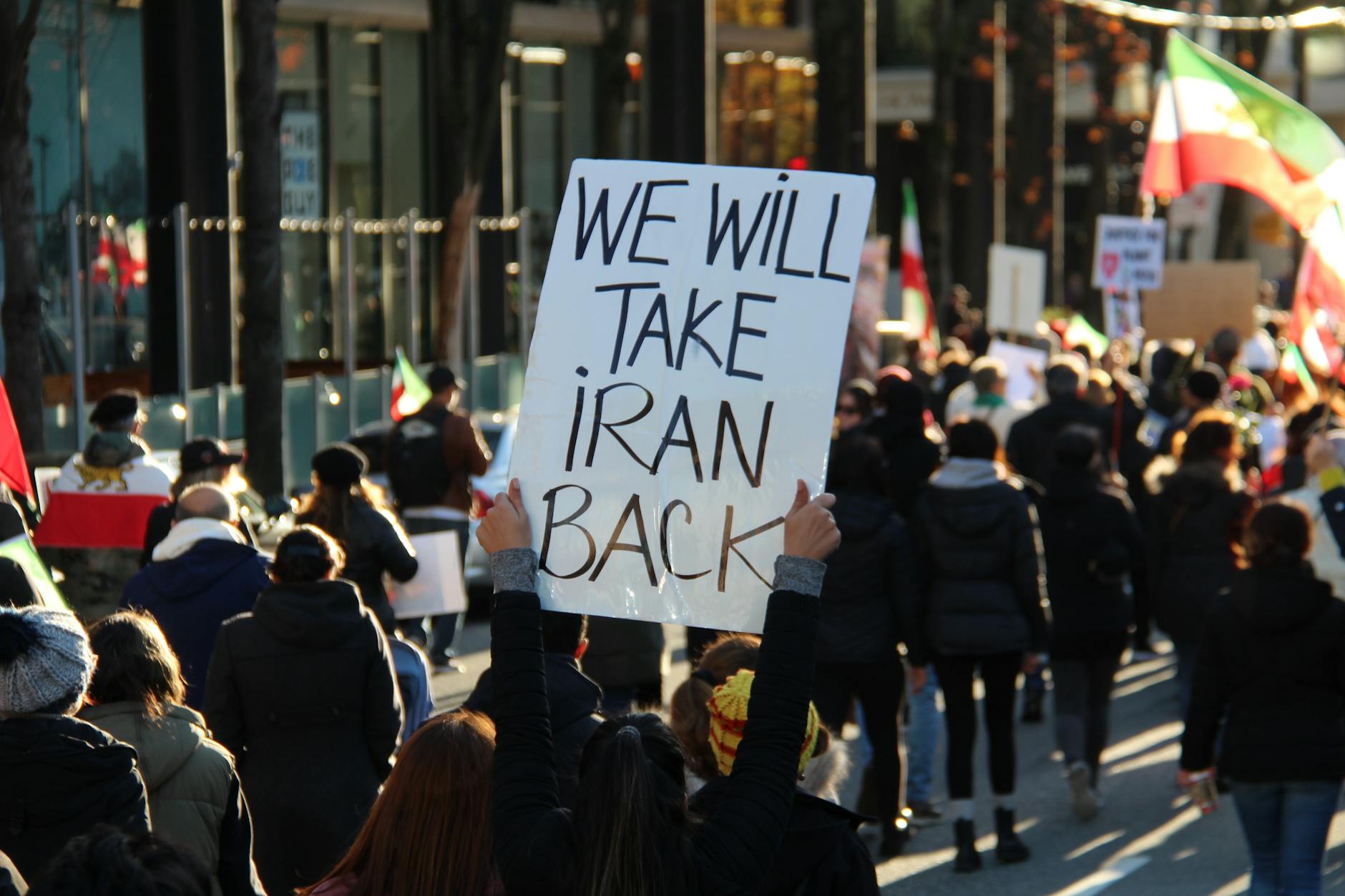
Iran’s right to self-defense under international law is, as a matter of legal text, clearly established. Article 51 of the United Nations Charter explicitly preserves the “inherent right of individual or collective self-defence if an armed attack occurs against a Member of the United Nations.” When the United States and Israel conducted joint strikes on Iranian territory on February 28, 2026 — killing Supreme Leader Ayatollah Ali Khamenei, targeting nuclear sites, and hitting military installations — that armed attack triggered Iran’s Article 51 rights in a way that virtually no serious international law scholar disputes. The legal question was never whether Iran had the right to respond. The question was how it responded, and whether that response stayed within the boundaries the law demands. That distinction matters enormously, and it is where this story gets complicated.
Iran launched retaliatory strikes against 27 U.S. military bases across seven countries and hit Israeli military targets including Tel Nof Airbase and the HaKirya command headquarters in Tel Aviv. But Iran also struck civilian airports in Kuwait and the UAE, and drones hit civilian targets in Dubai, Doha, and Manama — countries whose direct involvement in the initial strikes has not been established. Legal experts at Just Security noted that while Iran’s self-defense right was clearly triggered, Iran exceeded proportionality limits by attacking Gulf state targets and U.S. bases that had no apparent role in the unlawful strikes against Iran. This article examines the full legal picture: what Article 51 actually says, why the initial U.S.-Israeli strikes are widely considered illegal, where Iran’s retaliation crossed legal lines, and what all of this means for the international rules-based order.
Table of Contents
- What Does International Law Actually Say About Iran’s Right to Self-Defense?
- Why Legal Experts Say the U.S.-Israeli Strikes Were Illegal Under the UN Charter
- The Deliberate Targeting of a Head of State and Forced Regime Change
- Where Iran’s Retaliation Crossed Legal Lines
- The Dangerous Precedent of Preventive War
- The Security Council’s Role and Its Limitations
- What This Means for the International Rules-Based Order
- Conclusion
- Frequently Asked Questions
What Does International Law Actually Say About Iran’s Right to Self-Defense?
The legal framework is straightforward in its text and endlessly debated in its application. Article 51 of the UN Charter states that nothing in the Charter “shall impair the inherent right of individual or collective self-defence if an armed attack occurs against a Member of the United Nations, until the Security Council has taken measures necessary to maintain international peace and security.” Iran is a member of the United Nations. An armed attack occurred against its territory on February 28, 2026. The Security Council convened an emergency session that same day at 4 PM EST — called by Bahrain, France, Russia, China, and Colombia — but had not taken measures to maintain peace by the time Iran responded. However, Article 51 is not a blank check. Self-defense under international law is constrained by two well-established principles: necessity and proportionality. Necessity means the use of force must actually be needed to repel or respond to the attack — diplomatic alternatives must be insufficient or unavailable. Proportionality means the defensive response must be proportionate to the threat faced, not an open-ended campaign of destruction.
These principles trace back to the Caroline affair of 1837 and have been consistently affirmed by the International Court of Justice. A state that is attacked has the right to hit back, but it does not have the right to hit anyone, anywhere, with any amount of force it chooses. This is the legal razor’s edge Iran was standing on when it launched its retaliation. It is worth noting what Article 51 does not say. It does not require a state to absorb a first strike and then file a complaint with the Security Council before responding. It does not limit self-defense to states that the attacking power considers legitimate. And it does not contain exceptions for nuclear nonproliferation concerns or regime change objectives. The right is described as “inherent,” which in legal terms means it exists independent of the Charter itself — the Charter merely recognizes it.
Why Legal Experts Say the U.S.-Israeli Strikes Were Illegal Under the UN Charter
Before evaluating Iran’s response, the legality of the triggering event matters. And on this point, the expert consensus is striking in its clarity. Professor Marko Milanovic of the University of Reading, a specialist in public international law, stated plainly: “The strikes are clearly illegal, in that they are a breach of the UN Charter, which prohibits unilateral resort to force between states.” Retired Air Force Lt. Col. Rachel VanLandingham, who served as chief of international law at U.S. Central Command, went further: “Not only does this violate international law in numerous respects, it clearly violates the U.S.
Constitution and the war Powers Resolution.” The Arms Control Association issued a statement calling the strikes “Illegal U.S.-Israel attacks not justifiable on nonproliferation grounds.” Russia described them as “an unprovoked act of armed aggression against a sovereign and independent UN Member State.” China called the operation “brazen” and stated Iran’s sovereignty “must be respected.” UN Secretary-General António Guterres, while stopping short of declaring the strikes illegal in diplomatic language, warned that they risked “igniting a chain of events that nobody can control in the most volatile region of the world.” However, if the U.S. and Israel had been able to demonstrate an imminent threat from Iran — a nuclear weapon about to be deployed, an attack about to be launched — they might have had a narrow legal argument for anticipatory self-defense. But multiple legal experts characterized the February 28 strikes as preventive rather than preemptive. Preventive war, which means striking to prevent a future, non-imminent threat, has no legal basis under international law. The distinction is critical: anticipatory self-defense requires a demonstrable, imminent threat, and experts say that standard was not met. The U.S.-Israeli strikes were, in the assessment of a broad range of international law scholars, an act of aggression — the very thing the UN Charter was designed to prevent.
The Deliberate Targeting of a Head of State and Forced Regime Change
One of the most legally significant aspects of the February 28 strikes was the killing of supreme Leader Ayatollah Ali Khamenei. The deliberate targeting of a head of state during peacetime operations raises profound questions under international law that go beyond the general prohibition on the use of force. The principles of state sovereignty and non-intervention, which form the bedrock of the post-1945 international order, are directly implicated when one state assassinates the leader of another. This was not a battlefield casualty in an ongoing armed conflict — it was a targeted strike during what was, until that moment, a period of tense but non-kinetic hostility. Forcible regime change — which the killing of a supreme leader during a strike campaign targeting leadership facilities strongly suggests — violates foundational principles of the UN Charter.
The Charter’s prohibition on intervention in matters within the domestic jurisdiction of states, combined with the prohibition on the threat or use of force against the territorial integrity or political independence of any state, makes externally imposed regime change through military force illegal regardless of how objectionable the target government may be. The International Court of Justice affirmed this in the Nicaragua case in 1986, ruling that the United States violated international law by supporting the Contras against the Nicaraguan government. For Iran’s self-defense claim, the targeting of Khamenei actually strengthens the legal argument. An armed attack that decapitates a nation’s leadership is about as clear-cut a trigger for self-defense as exists in international law. No reasonable legal interpretation would suggest that a country whose leader was killed in a foreign military strike lacks the right to respond with force. The question, as with everything in this crisis, was always about the nature and scope of the response.

Where Iran’s Retaliation Crossed Legal Lines
Iran’s response was massive in scale. According to the UAE Ministry of Defense, Iran fired 165 ballistic missiles, 2 cruise missiles, and 541 drones. Targets included 27 U.S. military bases across Jordan, Kuwait, Bahrain, Qatar, Iraq, Saudi Arabia, and the UAE, as well as Israeli military targets. Most projectiles were intercepted, but 21 drones hit civilian targets. Iran’s ambassador to the UN stated that the initial airstrikes had killed and injured hundreds of Iranian civilians, calling them “a war crime and a crime against humanity.” That framing was clearly intended to establish the proportionality of a large-scale response. The legal problem for Iran is not that it responded — it is where and how it responded. Striking Israeli military targets like Tel Nof Airbase and the HaKirya command headquarters in Tel Aviv falls squarely within the self-defense framework. Israel participated directly in the strikes that killed Iran’s leader and destroyed its military installations.
Strikes against the actual attacker’s military infrastructure are the textbook definition of a proportionate defensive response. Even strikes against U.S. military assets involved in planning or executing the February 28 attacks have a defensible legal basis under Article 51. But the attacks on Gulf states are a different matter entirely. Legal experts at Just Security noted that strikes on targets in Dubai, Doha, and Manama — as well as civilian airports in Kuwait and the UAE — undermined Iran’s legal position significantly. These Gulf states were not demonstrated to have participated in the strikes on Iran. Attacking countries that hosted U.S. bases but did not authorize or participate in the attack stretches the concept of self-defense past its breaking point. And strikes on civilian infrastructure violate international humanitarian law regardless of the self-defense justification, because the principles of distinction and proportionality in targeting apply independently. Iran had a strong legal hand and overplayed it.
The Dangerous Precedent of Preventive War
The broader danger in this crisis extends well beyond Iran and the Middle East. If the February 28 strikes are accepted as legitimate — if the international community fails to hold the United States and Israel accountable for what experts have called a clear violation of the UN Charter — the precedent undermines the entire prohibition on the use of force that has been the cornerstone of international order since 1945. Any nuclear-armed state could claim the right to strike another nation’s nuclear program based on future risk rather than imminent threat. This is not hypothetical. The distinction between preventive war and preemptive self-defense has been litigated repeatedly in international law precisely because it is the line between a rules-based order and a might-makes-right world. Preventive war — striking because you believe a country might become a threat at some undefined future point — was rejected as a legal basis for the use of force after World War II for good reason.
The Nuremberg Tribunal considered and rejected Germany’s preventive war arguments. The International Court of Justice has consistently held that the use of force requires either Security Council authorization or a genuine self-defense situation. When the United States invaded Iraq in 2003 on the basis of alleged weapons of mass destruction, the legal criticism was fierce and enduring. The February 28 strikes invite the same critique, arguably with even less justification given that no imminent threat has been demonstrated. The warning for the international community is this: if preventive strikes against nuclear programs become normalized, the incentive structure for every nation on earth shifts. Countries will either rush to acquire nuclear weapons as a deterrent or accept permanent vulnerability to states powerful enough to strike preemptively. Neither outcome serves global security.

The Security Council’s Role and Its Limitations
The UN Security Council convened its emergency session within hours of the February 28 strikes, called by an unusual coalition of Bahrain, France, Russia, China, and Colombia. But the structural limitation of the Security Council is well known: the United States holds a veto. Any resolution condemning the strikes or authorizing collective measures against the U.S. and Israel would be blocked.
📨 Get Free Accountability Coverage Alerts
Free · No spam · Unsubscribe anytime
This is the same structural flaw that has paralyzed the Council on issues from Syria to Palestine for decades. Article 51 specifically notes that self-defense rights exist “until the Security Council has taken measures necessary to maintain international peace and security” — and when the attacking state can veto any such measures, that condition may never be met. This creates a legal gray zone that Iran exploited in justifying the duration and scope of its response. If the Security Council cannot act because the aggressor state holds a veto, does the right of self-defense extend indefinitely? International law does not have a clean answer. What it does say, clearly, is that self-defense must still be necessary and proportionate regardless of Security Council action or inaction.
What This Means for the International Rules-Based Order
The February 28 crisis and its aftermath represent one of the most significant tests of the post-World War II international legal order in decades. A permanent member of the Security Council, acting in concert with a close ally, launched strikes on a sovereign nation without Security Council authorization and without a demonstrable imminent threat. The targeted nation invoked its self-defense rights and retaliated at a scale that drew criticism for exceeding legal bounds. Both sides now claim legal justification while most independent legal experts see violations on both sides.
The path forward depends on whether the international community treats these events as a breakdown to be repaired or a new normal to be accepted. If accountability mechanisms — whether through the International Court of Justice, the General Assembly, or diplomatic channels — fail to address the illegality of both the initial strikes and the disproportionate elements of Iran’s response, the message to every government on earth is that international law governs only those too weak to break it. That is not a legal order. It is the absence of one. For Americans watching these events unfold, the question is not abstract: it is whether the legal frameworks their government helped build after 1945 will survive the choices their government is making in 2026.
Conclusion
Iran’s right to self-defense under Article 51 of the UN Charter was unambiguously triggered by the February 28, 2026 U.S.-Israeli strikes on its territory. On this point, the weight of international legal opinion is overwhelming. The strikes that killed Ayatollah Ali Khamenei, targeted nuclear sites, and hit military installations constituted an armed attack against a sovereign UN member state. Multiple experts — including former U.S. military legal officials — have called those strikes illegal under both international law and the U.S. Constitution.
Iran had every legal right to respond with force. But rights have boundaries, and Iran’s retaliation exceeded them. Strikes against Israeli military targets and U.S. assets directly involved in the attack had strong legal grounding. Strikes against Gulf states with no demonstrated role in the aggression, and especially strikes on civilian airports and infrastructure, did not. The result is a situation where both the initial attackers and the defending state face credible allegations of violating international law. For anyone trying to understand these events honestly, the legal picture is not one-sided — it is a cascade of violations that began with an illegal act of aggression and escalated into a regional crisis that tested the limits of every legal principle designed to prevent exactly this kind of catastrophe.
Frequently Asked Questions
Does Article 51 of the UN Charter give Iran an unlimited right to retaliate?
No. Article 51 establishes the right to self-defense, but that right is bounded by the principles of necessity and proportionality. A defending state must use only the force necessary to repel or respond to the attack, and the response must be proportionate to the threat. Striking countries not involved in the original attack or targeting civilian infrastructure exceeds those bounds.
Were the U.S.-Israeli strikes on Iran legal under international law?
According to a broad consensus of international law experts, no. Professor Marko Milanovic called them “clearly illegal” as a breach of the UN Charter’s prohibition on unilateral resort to force. Retired Air Force Lt. Col. Rachel VanLandingham said they violated international law, the U.S. Constitution, and the War Powers Resolution. The Arms Control Association called them illegal and not justifiable on nonproliferation grounds.
What is the difference between preventive war and preemptive self-defense?
Preemptive self-defense involves striking against an imminent, demonstrable threat and is legally contested but has some support in international law. Preventive war means striking to prevent a future, non-imminent threat and has no legal basis under international law. Multiple experts characterized the February 28 strikes as preventive rather than preemptive because no imminent threat from Iran was established.
Can a country legally target another nation’s head of state?
The deliberate targeting of heads of state violates foundational principles of state sovereignty and non-intervention under the UN Charter. Combined with the prohibition on forcible regime change, the killing of Ayatollah Ali Khamenei during the February 28 strikes raises serious violations of international law independent of the broader illegality of the strikes themselves.
Why couldn’t the UN Security Council stop the strikes?
The United States holds a permanent seat on the Security Council with veto power. Any resolution condemning the strikes or authorizing collective measures would be vetoed by the U.S. The Council convened an emergency session on February 28, called by Bahrain, France, Russia, China, and Colombia, but this structural limitation prevents binding action against a permanent member.
Did Iran’s strikes hit civilian targets?
Yes. While most of Iran’s 165 ballistic missiles, 2 cruise missiles, and 541 drones were intercepted, 21 drones hit civilian targets according to the UAE Ministry of Defense. Iran also struck civilian airports in Kuwait and the UAE. These attacks on civilian infrastructure undermine Iran’s self-defense legal position and independently violate international humanitarian law.
You Might Also Like
- Legal Scholars Say Preemptive Strikes Without Imminent Threat Violate International Law
- International Criminal Court Could Investigate Both Sides of the Iran Conflict
- Conservative Media Cannot Agree on Whether Epic Fury Was the Right Call