
While American eyes are fixed on footage of airstrikes lighting up Iranian cities, a constitutional crisis that predates the bombing — and has been dramatically accelerated by it — is unfolding with almost no public scrutiny. The crisis is this: the executive branch has effectively seized the power to wage war, defy court orders, and dismantle congressionally authorized programs, and neither Congress nor the judiciary has mustered the institutional will to stop it. The U.S.-led strikes on Iran, launched on February 28, 2026, without congressional approval and without a publicly presented legal justification, are not an isolated act of executive overreach. They are the latest and most dangerous escalation in a pattern that a Stanford historian has described not as a constitutional crisis but as a “constitutional failure” — the failure of the other branches of government to check presidential power. The bombing itself is staggering in scope.
The U.S. and Israel struck at least nine Iranian cities, including Tehran, killing Iran’s Supreme Leader Ayatollah Ali Khamenei in his compound. American casualties have already been reported. President Trump called the campaign “massive and ongoing,” with the Pentagon planning for several days of sustained attacks. Yet the constitutional dimension of this moment goes far beyond war powers. Before a single bomb fell on Iran, Trump had already defied a federal court order on funding freezes, created the Department of Government Efficiency through executive fiat with no constitutional basis, and watched as Vice President JD Vance publicly declared that “judges aren’t allowed to control the executive’s legitimate power.” This article examines the full scope of the constitutional breakdown — from the war powers fight to the broader erosion of checks and balances — and what, if anything, Congress and the courts can do about it.
Table of Contents
- What Is the Constitutional Crisis Happening Behind the Iran Bombing?
- Why War Powers Resolutions Are Unlikely to Stop the Strikes
- The Pre-Existing Constitutional Breakdown That Made This Possible
- What Congress Could Actually Do — And Why It Probably Will Not
- The Impeachment Question and Its Limitations
- What a “Constitutional Failure” Actually Looks Like
- What Comes Next — And What to Watch For
- Conclusion
- Frequently Asked Questions
What Is the Constitutional Crisis Happening Behind the Iran Bombing?
The most immediate constitutional violation is straightforward: the president launched a major military offensive against a sovereign nation without authorization from Congress. The Constitution vests the power to declare war in Congress, not the White House. The war powers Act of 1973 requires the president to consult with Congress before introducing armed forces into hostilities and to withdraw them within 60 days absent congressional authorization. The Trump administration has done neither. Secretary of State Marco Rubio did not provide a full legal accounting to members of Congress, and the White House has not presented any public legal justification for the strikes. What makes this more than a policy disagreement is the timing.
The GOP-led House and Senate were each set to formally debate and vote on U.S. military action in Iran just days after the strikes began. By launching the attack before those votes could take place, the administration effectively preempted the legislative branch’s ability to weigh in — turning what should have been a deliberative process into a fait accompli. As Congresswoman Ayanna Pressley put it, Trump is “illegally bypassing Congress and starting a war with Iran.” Compare this to the 2011 Libya intervention, where the Obama administration at least attempted to argue (however controversially) that the strikes did not constitute “hostilities” under the War Powers Act because they involved no ground troops and limited risk to American forces. The iran strikes obliterate that precedent: this is a multi-day, multi-city bombing campaign that has already produced American casualties. Legal experts are broadly skeptical that the president has the constitutional authority to wage this kind of prolonged military action without Congress, and no serious legal argument to the contrary has been offered.

Why War Powers Resolutions Are Unlikely to Stop the Strikes
Bipartisan war powers resolutions have been introduced in both chambers. In the House, Representatives Ro Khanna of California and Thomas Massie of Kentucky — a progressive Democrat and a libertarian Republican — have co-sponsored a resolution demanding the withdrawal of U.S. forces from hostilities in Iran. In the Senate, Senators Tim Kaine of Virginia and Rand Paul of Kentucky have introduced a parallel measure. Votes are expected during the week of March 2, and the bipartisan nature of these resolutions reflects genuine cross-ideological alarm about executive overreach on war. However, even supporters acknowledge the limits of what these resolutions can accomplish.
Representative Khanna has publicly estimated the House resolution has only a 40 to 60 percent chance of advancing. And even if both chambers pass their respective resolutions, they are expected to fall well short of the two-thirds majority needed to override a presidential veto. This means the resolutions would be largely symbolic — a formal expression of congressional disapproval that does nothing to actually halt the bombing. This is the deeper problem. The War Powers Act was designed as a check on executive war-making, but in practice it has functioned as little more than a suggestion. No president of either party has ever fully complied with it, and Congress has never successfully used it to force the end of a military operation over a president’s objection. If the resolutions fail to override a veto — which is the near-certain outcome — the precedent set here is devastating: a president can launch a full-scale war against a major regional power, sustain American casualties, and face no binding legal consequence from the legislative branch.
The Pre-Existing Constitutional Breakdown That Made This Possible
The Iran strikes did not emerge from a vacuum. They are the culmination of months of executive branch actions that have systematically tested and exceeded constitutional boundaries. Before the first bomb fell, a federal judge in Rhode Island had already found that the White House defied a court order to unfreeze federal grant and program funds. The administration simply ignored the ruling. The creation of the Department of Government Efficiency, or DOGE, is another example. Established by executive order through the legal fiction of renaming the U.S. Digital Service, DOGE has been used to freeze and eliminate programs that Congress authorized and funded. Legal scholars have argued that DOGE has no constitutional basis to overturn congressional appropriations, which are the most fundamental expression of legislative power.
The executive branch does not get to decide which laws to fund and which to starve — that is Congress’s role under Article I of the Constitution. Yet DOGE has operated with minimal judicial interference and virtually no congressional pushback. Perhaps most alarming was Vice President Vance’s public statement that “judges aren’t allowed to control the executive’s legitimate power.” This is not a fringe legal theory. It is an explicit rejection of judicial review — the principle, established in Marbury v. Madison in 1803, that courts have the authority to determine whether executive actions are constitutional. When the vice president of the United States publicly argues that the judiciary has no authority over the executive branch, and when the executive branch has already demonstrated its willingness to defy court orders, the system of checks and balances is not under threat. It has already failed. A Trump-appointed federal judge has acknowledged as much, stating that the country is in the middle of a constitutional crisis.
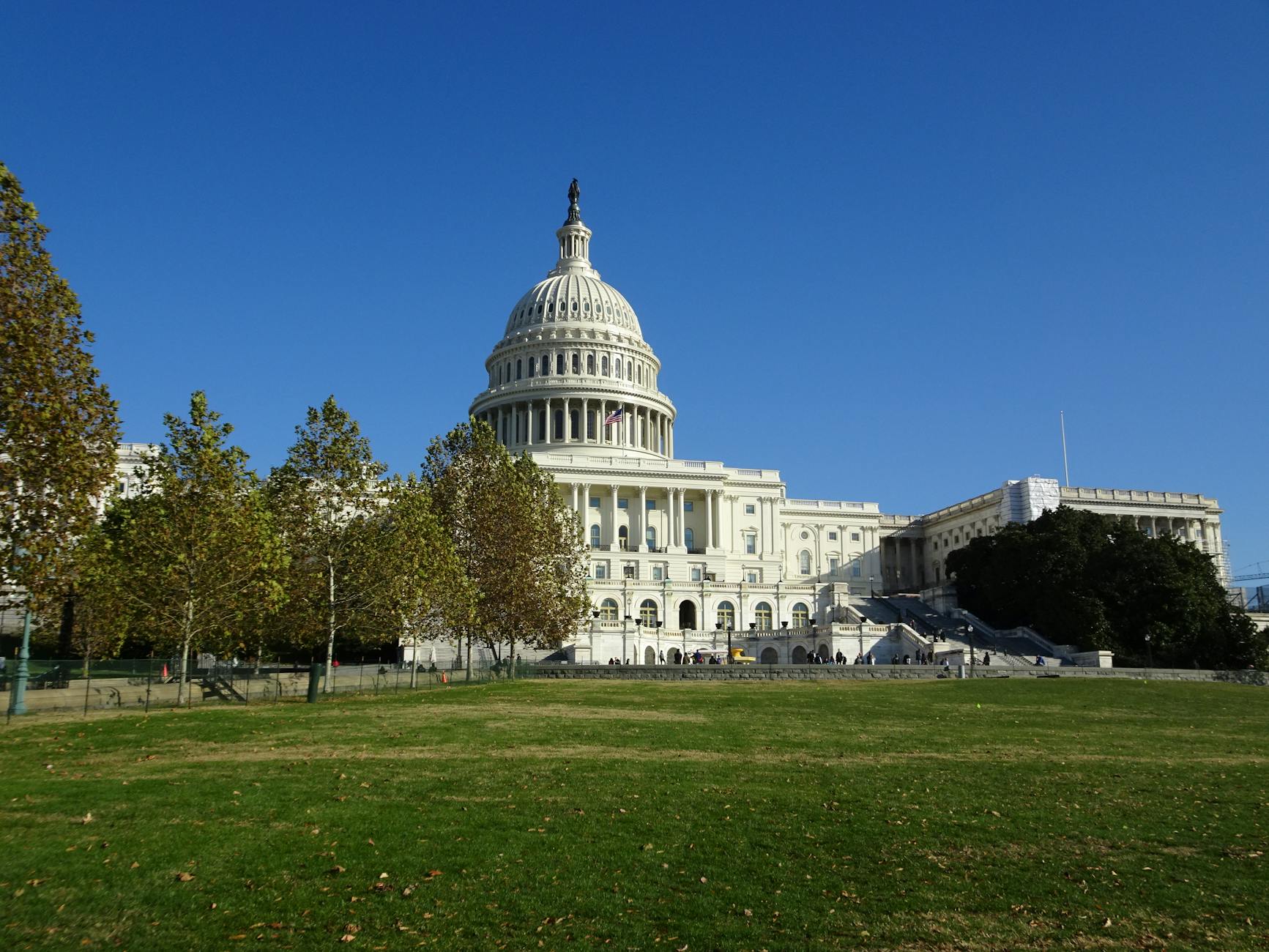
What Congress Could Actually Do — And Why It Probably Will Not
Congress has tools far more powerful than symbolic war powers resolutions. It could refuse to appropriate funds for the Iran military operation. It could hold hearings and subpoena administration officials to provide the legal justification for the strikes. It could initiate impeachment proceedings. It could use the power of the purse to defund DOGE. In theory, the legislative branch has every constitutional mechanism it needs to reassert its authority. The tradeoff is political.
Voting to cut off funding for troops in an active combat zone is political poison — opponents will frame it as abandoning soldiers in the field, regardless of whether the war itself is legal. Impeachment requires not just a majority in the House but a two-thirds vote to convict in the Senate, a threshold that is nearly impossible to reach in a polarized chamber. Even holding aggressive oversight hearings carries risks for members of the president’s own party, who face primary challenges from voters loyal to the administration. This is the bind that constitutional scholars have been warning about for decades. The system of checks and balances depends on each branch being willing to assert its prerogatives, even at political cost. When Congress chooses political safety over constitutional duty — when it allows war powers to atrophy, when it shrugs at defied court orders, when it permits executive agencies to be created by fiat — the constitutional structure does not break all at once. It erodes. The Iran strikes are what full erosion looks like in practice: a massive, ongoing war that no one in Congress voted for, launched by an executive branch that has already demonstrated it will not comply with judicial orders it finds inconvenient.
The Impeachment Question and Its Limitations
Growing calls to impeach President Trump over the unauthorized Iran war have emerged from both advocacy organizations and members of Congress. Common Dreams published an opinion piece arguing Trump should be “impeached and removed from office for illegal war on Iran,” and critics have called him “the most dangerous man on the planet.” The constitutional case for impeachment is not frivolous — launching an unauthorized war is arguably the most serious abuse of executive power imaginable, and the founders explicitly designed impeachment as a remedy for presidents who exceeded their constitutional authority. But impeachment in the current political environment has a critical limitation: it requires 67 Senate votes to convict, and there is no realistic path to that number. The two most recent presidential impeachments — Trump’s own, in 2019 and 2021 — demonstrated that Senate conviction is functionally impossible when the president’s party holds more than 34 seats. Even senators who privately oppose the strikes are unlikely to vote to remove a president from their own party during an active military conflict.
The danger of failed impeachment is also worth considering. An impeachment that passes the House but fails in the Senate does not constrain the president — it arguably emboldens him. It establishes that Congress attempted its most powerful check and the president survived. After the Clinton and first Trump impeachments, both presidents emerged politically strengthened, not weakened. If impeachment is pursued and fails, the result may be a president who is not only waging an unauthorized war but who has been formally acquitted by the Senate of wrongdoing for doing so.

What a “Constitutional Failure” Actually Looks Like
The Stanford historian’s distinction between a “constitutional crisis” and a “constitutional failure” is not academic hair-splitting. A constitutional crisis implies the system is being tested — that the mechanisms of accountability are straining under pressure but still functional. A constitutional failure means those mechanisms have already broken down. The question is not whether the system will hold. It is whether anyone with the institutional power to enforce constitutional limits is willing to use it. Consider the sequence of events: the executive branch defied a court order on federal funding, and nothing happened.
📨 Get Free Accountability Coverage Alerts
Free · No spam · Unsubscribe anytime
DOGE dismantled congressionally authorized programs, and nothing happened. The vice president declared that judges cannot control executive power, and nothing happened. Then the president launched a massive war without congressional approval, and Congress is preparing to pass resolutions that everyone acknowledges will be vetoed and cannot be overridden. At every stage, the constitutional check existed on paper. At every stage, it failed in practice. That is not a crisis. It is a system that has stopped functioning as designed.
What Comes Next — And What to Watch For
The war powers votes expected this week will be revealing, though not in the way most coverage suggests. The question is not whether the resolutions pass — it is how many members of the president’s own party vote for them. If a significant number of Republican members break with the administration on war powers, it could signal the beginning of a broader congressional reassertion of authority. If the votes fall along party lines, with only token Republican support, it confirms that partisan loyalty has fully displaced institutional responsibility.
The courts will also be tested. Legal challenges to the strikes are inevitable, but the administration has already shown its willingness to defy court orders. Whether the judiciary can compel compliance — and whether it even attempts to do so in the context of an active military operation — will determine whether judicial review survives as a functional constraint on executive power. The constitutional structure of the United States is not being debated in a classroom. It is being decided in real time, while bombs fall on Iranian cities and Congress debates resolutions it knows will change nothing.
Conclusion
The constitutional crisis unfolding right now is not a single event — it is a cascading failure of the institutions designed to prevent exactly what is happening. An unauthorized war. Defied court orders. Executive agencies created by fiat to override congressional authority. A vice president who publicly rejects judicial review. Each of these would be a serious constitutional breach on its own. Together, they represent the most significant challenge to the American system of checks and balances in modern history.
And most of it is being drowned out by the sound of airstrikes. What happens in the coming days and weeks will set precedents that last far beyond this administration. If Congress passes war powers resolutions only to have them vetoed and forgotten, the power to wage war will have permanently shifted to the executive branch in practice, whatever the Constitution says on paper. If court orders continue to be defied without consequence, judicial review becomes advisory rather than binding. The institutions exist. The question — the only question that matters — is whether anyone with power will use them. So far, the answer has not been encouraging.
Frequently Asked Questions
Did Congress authorize the U.S. strikes on Iran?
No. The strikes were launched on February 28, 2026, without congressional approval. The House and Senate were each preparing to debate and vote on military action in Iran just days later, but the administration preempted those votes by launching the attack first.
What are the war powers resolutions, and can they stop the bombing?
Bipartisan resolutions have been introduced in both chambers — by Reps. Ro Khanna and Thomas Massie in the House, and Sens. Tim Kaine and Rand Paul in the Senate — demanding withdrawal from hostilities. However, even if passed, they are expected to be vetoed, and supporters do not believe they can muster the two-thirds majority needed to override.
Has the White House provided a legal justification for the strikes?
No. As of early March 2026, the White House has not presented a public legal justification for the military action. Secretary of State Marco Rubio did not provide a full legal accounting to members of Congress.
What is DOGE and why is it part of the constitutional crisis?
The Department of Government Efficiency was created by executive order by renaming the U.S. Digital Service. Legal scholars argue it has no constitutional basis to override programs that Congress authorized and funded, making it an executive usurpation of legislative power over appropriations.
Can Trump be impeached over the Iran strikes?
Impeachment proceedings could be initiated in the House, and the constitutional argument for doing so is substantive. However, conviction requires 67 Senate votes, a threshold that is virtually unattainable in the current political environment.
Has a judge actually said there is a constitutional crisis?
Yes. A Trump-appointed federal judge acknowledged that the country is in the middle of a constitutional crisis, in connection with the administration’s defiance of court orders on federal funding freezes.
You Might Also Like
- Who Fills the Void If Iran’s Regime Collapses — Nobody Has a Real Answer
- The Iran War Could Last Weeks, Months, or Years — Nobody Knows
- Rebuilding Iran Could Cost Trillions of Dollars — And Nobody Is Discussing It Yet