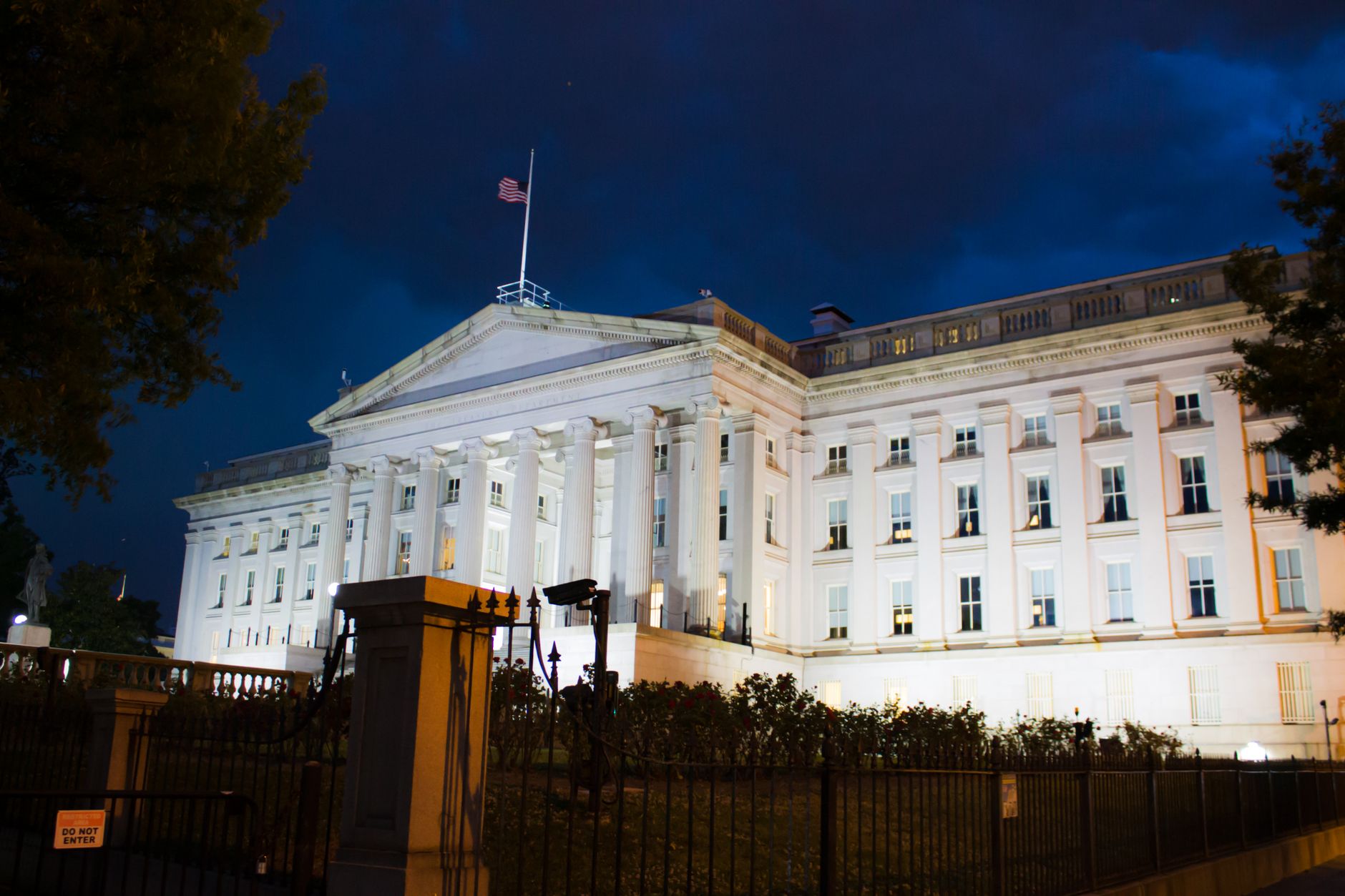
The Impoundment Control Act of 1974 bars a president from simply refusing to spend money Congress has appropriated, and in 2025 the Government Accountability Office (GAO) found that several Trump agencies did exactly that. The White House budget office rejects the findings and calls the law unconstitutional, so the next fight runs through GAO’s power to sue and through the appropriations bills a new Congress would write.
Where it stands: GAO decisions in 2025 found violations at the Transportation Department, the Institute of Museum and Library Services, HHS (Head Start) and the Energy Department, and cleared Interior and DHS in other reviews. Budget director Russ Vought called such findings “non-events with no consequence.” We found no court ruling on the merits of those GAO decisions in our sources as of late October 2026.
What is the Impoundment Control Act?
It is the law Congress passed after funding fights with President Nixon to stop the executive branch from quietly cancelling spending. Impoundment means withholding or delaying money Congress has already approved. The Constitution’s spending rule is short: “No money shall be drawn from the treasury, but in consequence of appropriations made by law.”
The act gives a president two legal routes to spend less. He can propose a deferral, or he can send Congress a rescission request asking it to cancel funds. A rescission takes effect only if Congress acts within a set window: before “the end of the first period of 45 calendar days of continuous session” after the president’s message arrives. If Congress does nothing, the money must be spent.
GAO, a legislative-branch agency founded in 1921, polices the act. Its decisions are legal opinions, not court judgments.
What did GAO find in 2025?
GAO issued a string of decisions, some finding violations and some not:
| Agency and program | GAO conclusion | Reported response |
|---|---|---|
| Transportation (FHWA), EV chargers | Violation (May 2025); $5 billion from the 2021 infrastructure law | DOT: report “shows a complete misunderstanding of the law” |
| Institute of Museum and Library Services | Violation (June 2025) | Not reported in our sources |
| HHS, Head Start | Violation (July 2025); disbursements roughly 65 percent of the prior year’s pace, per GAO | HHS did not send GAO the information it requested; no comment to CBS |
| Energy, Renew America’s Schools | Violation for fiscal 2025 funds; no violation for earlier years | Not reported in our sources |
| Interior | No violation (July 24 decision) | n/a |
| DHS, workforce reductions | No violation | n/a |
On Head Start, CBS quoted GAO’s conclusion: “we conclude that HHS violated the ICA by withholding funds from expenditure.” GAO said it relied on public evidence because the department did not supply what it asked for. In April 2025, Comptroller General Gene Dodaro told lawmakers that GAO had 39 impoundment investigations pending.
These are findings against agencies, not against any individual. GAO decisions name departments and programs.
How has the administration responded?
Directly and dismissively. NPR reported that Vought said the GAO reports were “non-events with no consequence.” He also said: “They are going to call everything an impoundment because they want to grind our work to manage taxpayer dollars effectively to a halt.” Vought has argued that the 1974 law itself is unconstitutional.
Democrats answered on the same terms. Sen. Patty Murray of Washington, the top Democrat on Senate Appropriations, said: “I don’t care about Russ Vought’s personal interpretation of our spending laws; the Constitution is clear, and President Trump simply does not have the power of the purse – Congress does.”
The constitutional question is unsettled. NPR noted the dispute is expected eventually to reach the Supreme Court.
A related transparency fight did reach a judge. OMB took its public apportionment database offline in late March 2025. U.S. District Judge Emmet Sullivan ordered it restored, writing that OMB was “relying on an extravagant and unsupported theory of presidential power.” That ruling was about OMB’s disclosure duty, not about any person’s conduct; we did not verify its appeal status.
Can GAO sue to force the money out?
Yes, on paper. The act says the Comptroller General is “expressly empowered, through attorneys of his own selection, to bring a civil action” in federal court in Washington to make withheld funds available.
📨 Get Free Accountability Coverage Alerts
Free · No spam · Unsubscribe anytime
There is a waiting period. No suit may be filed until “the expiration of 25 calendar days of continuous session of the Congress” after GAO files an explanatory statement with the Speaker and the Senate president.
We did not find, in the sources we reviewed, a report that GAO has filed such a suit over any of the 2025 findings. That is a gap in our sourcing, and we do not assert either way.
What could a Democratic majority do with the Impoundment Control Act in 2027?
The power of the purse is the strongest tool a congressional majority has, because spending bills must pass every year.
- Write tighter appropriations. Spending bills can set deadlines and conditions for disbursing funds. Any such bill still needs a presidential signature or a veto override.
- Refuse rescissions. If a president asks Congress to cancel funds, a majority in either chamber can simply let the 45-day window pass, and the request lapses.
- Order GAO reviews. Under 31 U.S.C. § 717, GAO evaluates programs “when either House of Congress orders an evaluation” or a committee with jurisdiction asks. A House majority alone could direct that work.
- Hold oversight hearings. Committees could call OMB and agency officials to explain specific withholdings.
The limits are real. The Christian Science Monitor noted that even with both chambers, Democrats would face “a 60-vote threshold in the Senate for most legislation” and a veto requiring “a two-thirds majority in both the House and Senate” to override.
Congress has used the formal route before. CBS reported that in 2025 Congress passed “a roughly $9 billion rescissions package,” which it called “the legally appropriate route for undoing congressionally authorized funding.” For how spending power fits each election outcome, read our breakdown of a two-chamber Democratic majority and the scenario hub, what Democrats plan if they win. Spending disputes are among the items logged on our corruption tracker, each with the administration’s reply.
Frequently Asked Questions
What does the Impoundment Control Act do?
The 1974 law requires the executive branch to spend money Congress appropriates. A president can ask Congress to cancel funds through a rescission request, but if Congress does not approve it within 45 days of continuous session, the money must be released.
Did the Trump administration violate the Impoundment Control Act?
GAO found violations in 2025 at the Transportation Department, the Institute of Museum and Library Services, HHS and the Energy Department, and found no violation at Interior and in a DHS review. The White House budget office rejects the findings, and no court has ruled on them in the sources we reviewed.
Can GAO sue the president over impoundment?
The law lets the Comptroller General bring a civil action in federal court in Washington to force release of withheld funds, after a 25-day waiting period following notice to Congress. We found no report that GAO has filed such a suit over the 2025 findings.
Is the Impoundment Control Act constitutional?
Budget director Russ Vought argues it is not. Congress and GAO treat it as binding. The justices have not yet taken up that question.
What could Democrats do about impoundments if they win Congress?
They could write stricter appropriations, let rescission requests lapse, order GAO evaluations and hold hearings. New laws would still need a signature or a two-thirds veto override.
Sources
- 2 U.S. Code Chapter 17B, Impoundment Control — U.S. Government Publishing Office, 2023 edition
- Trump administration violated the law by withholding some Head Start funds, congressional watchdog finds — CBS News, July 23, 2025
- Latest Round of Impoundment Decisions Shows the Importance of the GAO — Taxpayers for Common Sense, August 2025
- GAO finds Trump administration’s second violation of federal spending law — Federal News Network, June 16, 2025
- The White House rejects a watchdog finding that it’s breaking the law over halted funds — NPR via Michigan Public, May 23, 2025
- OMB must make appropriations website public again, judge rules — FedScoop, July 2025
- U.S. Constitution, Article I — Legal Information Institute, Cornell Law School, text of 1787
- 31 U.S. Code § 717 – Evaluating programs and activities of the United States Government — Legal Information Institute, Cornell Law School, current text
- Democrats plan investigations, affordability efforts if they reclaim Congress — Christian Science Monitor, October 15, 2026
This article is news reporting and analysis based on the public sources listed above, as they stood on the dates shown. Where officials, lawmakers or analysts disagree, including on whether an action is lawful, their positions are attributed to them; Donald Trump Class Action is not a court and nothing here is legal advice. Facts in a developing story can change.