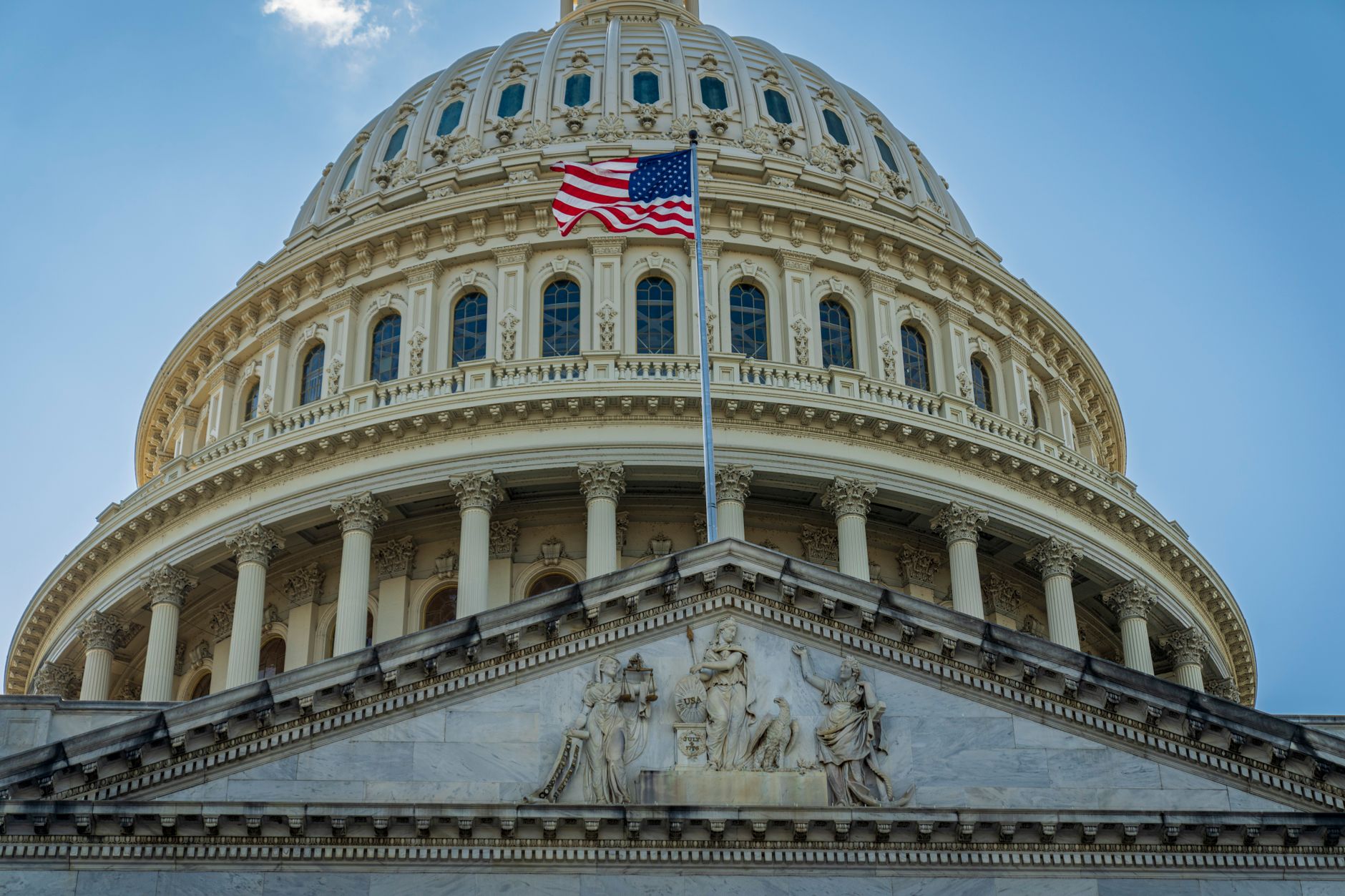
If Democrats win House and Senate control on November 3, they would gain far more than either chamber gives alone: investigations run from both sides of the Capitol, a Senate majority that decides which of President Trump’s nominees get a vote, and the ability to send bills and spending terms to his desk. What they would not gain is the power to override him. Most bills would still need 60 Senate votes, a veto would still need two-thirds of both chambers to beat, and an impeachment conviction would still require two-thirds of the senators present.
The White House rejects the premise of the investigations Senate Democrats want. When five senior Senate Democrats called for crypto probes this summer, spokesperson Anna Kelly called it “the same, tired narrative that Democrats have pushed against President Trump, his family, and his administration for a decade,” adding: “There are no conflicts of interest.”
Where it stands: Both chambers have Republican majorities until the new Congress convenes in January 2027. NewsNation reported on October 19 that its partner Decision Desk HQ “gives Democrats a 77% chance of winning the House and a 56% shot at taking the Senate.” Those are a forecaster’s odds, not ours; this page explains what a two-chamber majority could and could not do, and what Senate Democrats have actually said.
What changes if Democrats win House and Senate together?
Two sets of gavels instead of one. The Christian Science Monitor noted that a majority “in either chamber” brings the ability to investigate the administration, so a sweep would mean Senate committees issuing subpoenas alongside House ones. The bigger shift is legislative: with both chambers, Democrats would no longer need Republican leaders’ permission to bring a bill to a vote.
| Power | House only | House and Senate |
|---|---|---|
| Committee subpoenas | House committees | Both chambers’ committees |
| Confirm or block nominees | No role | Senate majority sets the pace |
| Pass a bill through Congress | No | Yes, but most bills need 60 Senate votes |
| Make a bill law over Trump’s objection | No | Only with two-thirds of each chamber |
| Impeach | Yes, by simple majority | Yes, by simple majority |
| Convict at an impeachment trial | No | Still two-thirds of senators present |
| Spending bills and riders | Can refuse to pass | Can write the terms, subject to veto |
For the House half of that picture, see what a House majority alone would change.
What would a Democratic Senate investigate?
The clearest signal is a joint statement from July. Sens. Elizabeth Warren, Richard Blumenthal, Gary Peters, Dick Durbin and Ron Wyden asked their Republican counterparts to hold hearings on the national security questions raised by Trump’s crypto holdings. Bloomberg Government reported that the five “serve as the top Democrats for the Senate panels on banking, investigations, homeland security, the judiciary, and finance, respectively.” Who would actually chair those panels in 2027 has not been announced.
Blumenthal, the top Democrat on the Permanent Subcommittee on Investigations, described his approach to Bloomberg Government: “there is certainly a need for reform and the way to achieve it is to have hearings and spotlight the potential wrongdoing.” For the Republican side, a Senate Judiciary Committee spokesperson pointed to a letter in which Chair Chuck Grassley said he has “consistently held the same approach to my oversight during administrations of both political parties.”
Senate Democrats have also tested whether the White House would cooperate. The Monitor reported that ten Democrats led by Sen. Adam Schiff wrote in August asking the White House to commit to “current and future congressional inquiries,” and had received no answer, according to Schiff’s office.
How would a Democratic Senate handle Trump’s nominees?
The Senate’s power of advice and consent covers judges, ambassadors, U.S. attorneys and Cabinet replacements. Under a Democratic majority, the majority leader would decide which nominations reach the floor. The Senate’s page on nominations notes that “the vast majority are routinely confirmed, while a small but sometimes highly visible number of nominees fail to receive action or are rejected.” That second category is where a Democratic majority would have leverage.
What bills could reach Trump’s desk, and what stops them?
Democrats have filed anti-corruption bills that a Republican Congress has not moved. Senate Minority Leader Chuck Schumer introduced a bill this summer to create an Anti-Corruption Bureau, which Fox News Digital described as “a new agency that would have subpoena power and could investigate the Trump administration even once Trump leaves office.” The Washington Post reported, per Fox, that it would reach back to Jan. 20, 2025 and set a 10-year statute of limitations. Sen. Jeff Merkley’s End Crypto Corruption Act of 2025, S. 1668, would bar the president, vice president, members of Congress and Senate-confirmed officials “from issuing, sponsoring, or endorsing certain financial instruments.” It was placed on the Senate calendar in May 2025 and has not passed.
Passing Congress is not the finish line. The Monitor summed up the arithmetic: “Even if Democrats win both chambers, they’ll be faced with a 60-vote threshold in the Senate for most legislation. And Mr. Trump can veto laws, which would force Congress to muster a two-thirds majority in both the House and Senate.” More reform proposals are collected in our guide to presidential corruption reforms.
📨 Get Free Accountability Coverage Alerts
Free · No spam · Unsubscribe anytime
Could Democrats use spending bills as leverage?
Yes, though the veto still applies. Annual spending bills and debt-limit increases have to pass for the government to keep running. The Monitor reported that Democrats “could try to slip in provisions that defund immigration enforcement or require the administration to spend money Congress has set aside.” The president can still veto such a bill, which turns the fight into a negotiation rather than a guaranteed result.
Congress also has a watchdog for withheld money. Under the Impoundment Control Act, the Government Accountability Office (GAO), Congress’s audit agency, can go to federal court in Washington “to require such budget authority to be made available for obligation.” In July 2025, GAO concluded that “HHS violated the ICA by withholding funds from expenditure” in the Head Start program. Those tools are covered in our explainer on the Impoundment Control Act.
Does a Senate majority make removal by impeachment possible?
Not by itself. The House would still bring the charges and the Senate would still hold the trial. The Constitution says “no Person shall be convicted without the Concurrence of two thirds of the Members present.” One detail changes with a majority: if an official were convicted, the Constitution Annotated notes that Senate practice has been to “require a simple majority vote to disqualify an individual from holding future office,” though it adds that it is “unclear what justifies this result beyond historical practice.”
Nor has Senate leadership pressed for it. Truthout reported in June that “Senate Democratic leaders have downplayed calls for impeaching Trump,” as House leaders have. Every scenario is laid out side by side in our guide to Democrats’ post-election plans.
Frequently Asked Questions
What can Democrats do if they win both the House and Senate?
They would run committees in both chambers, control which nominees get Senate votes and be able to pass bills through Congress. Bills would still face the 60-vote Senate threshold for most legislation and a possible presidential veto.
Can a Democratic Congress override Trump’s veto?
Only with a two-thirds vote in both the House and the Senate. A simple majority in each chamber is not enough.
Could a Democratic Senate block Trump nominees?
A Senate majority decides which nominations reach a vote and can reject nominees. The Senate notes that most nominees are routinely confirmed, while a small number fail to receive action or are rejected.
Would a Democratic Senate convict Trump if he were impeached?
Conviction requires two-thirds of senators present, not a simple majority. Senate Democratic leaders have downplayed calls for impeachment.
Has Senate leadership published an investigations plan?
We found no published Senate majority investigations plan from Schumer. Senate Democrats have issued joint statements, letters and bills, including a call for crypto hearings and Schumer’s Anti-Corruption Bureau bill.
Sources
- Democrats plan investigations, affordability efforts if they reclaim Congress — Christian Science Monitor, October 15, 2026
- Top Senate Democrats Call for Probes Into Trump Crypto Earnings — Bloomberg Government, July 2026
- Democrats Raring to Probe Trump Crypto Ties if They Win Midterms — Bloomberg Government (via Bloomberg Law), August 2026
- Sen. Chuck Schumer unveils anti-corruption agency aimed at Trump, future presidents — Fox News Digital, July 2026
- S. 1668, End Crypto Corruption Act of 2025 (Placed on Calendar) — U.S. Government Publishing Office, May 2025
- Jeffries Says Dems Aren’t Thinking About Trump Impeachment “At This Moment” — Truthout, June 2, 2026
- About Nominations — U.S. Senate, accessed October 2026
- The Constitution of the United States: A Transcription — National Archives, text of 1787 Constitution
- Judgment in Cases of Impeachment: Doctrine and Practice — Constitution Annotated (CRS), via Legal Information Institute, accessed October 2026
- 2 U.S.C. Chapter 17B, Impoundment Control — U.S. Government Publishing Office, 2023 edition
- Trump administration violated the law by withholding some Head Start funds, congressional watchdog finds — CBS News, July 23, 2025
- Voters worry about corruption but many don’t trust either party to address it — NewsNation, October 2026
This article is news reporting and analysis based on the public sources listed above, as they stood on the dates shown. Where officials, lawmakers or analysts disagree, including on whether an action is lawful, their positions are attributed to them; Donald Trump Class Action is not a court and nothing here is legal advice. Facts in a developing story can change.