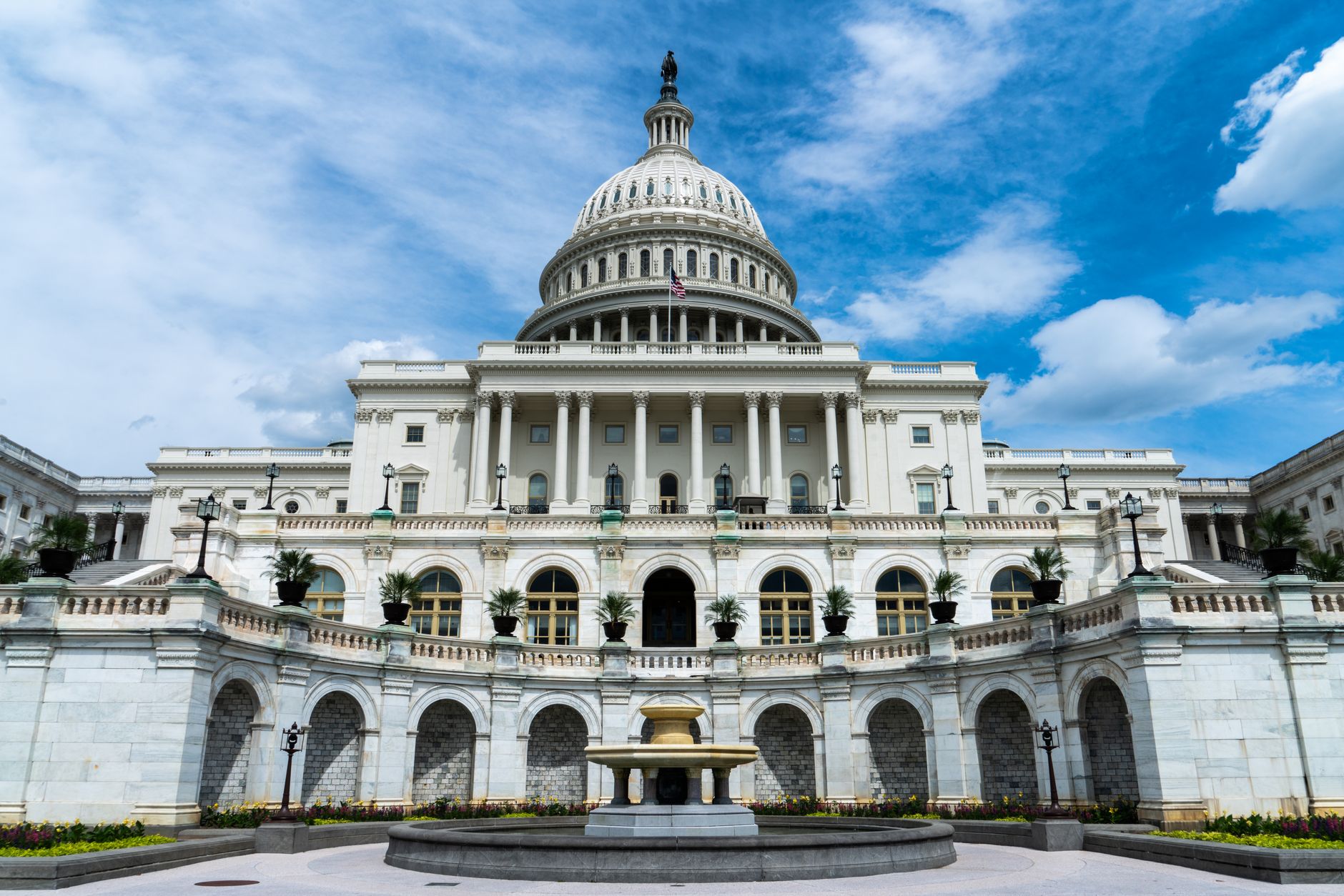
If Democrats win Senate only, with Republicans keeping the House on November 3, the new majority would control the Senate floor, its committees and the confirmation of President Trump’s nominees. It could not open an impeachment, which belongs to the House, and every bill it passed would still need the Republican House and the president’s signature.
The White House has dismissed the investigations Senate Democrats are asking for. After five top Senate Democrats called for crypto hearings, spokesperson Anna Kelly called the request “the same, tired narrative that Democrats have pushed against President Trump, his family, and his administration for a decade” and said: “There are no conflicts of interest.”
Where it stands: Decision Desk HQ, which partners with NewsNation, “gives Democrats a 77% chance of winning the House and a 56% shot at taking the Senate,” NewsNation reported on October 19. Those odds belong to the forecaster. They mean a Senate-only result is one of several possible splits, not a projection. Republicans control both chambers until January 2027.
If Democrats win Senate only, what do they control?
Three things: the floor schedule, the committee gavels and the confirmation calendar. As the Christian Science Monitor pointed out, winning “either chamber” opens up the power to investigate the administration, and the Associated Press observed in September that “any congressional committee can launch an investigation at any time.” A Senate chair can hold hearings, demand records and call witnesses without needing the House.
The limit is just as clear. Matt Green, a Catholic University politics professor, told the Monitor: “The reality is, when you are the majority party in one half of one third of the national government, there’s not a whole lot you can do.” His point applies to either chamber on its own.
How could a Democratic Senate use confirmations?
Confirmations are the Senate’s own power. The Constitution says the president nominates and, “by and with the Advice and Consent of the Senate,” appoints judges, ambassadors and “all other Officers of the United States.” A Democratic majority leader would decide which nominations reach a vote, and Democratic chairs would decide which get committee hearings.
That matters most for posts that turn over: federal judgeships, U.S. attorney slots and any Cabinet replacements in the last two years of the term. The Senate’s nominations page says most nominees are routinely confirmed, while “a small but sometimes highly visible number of nominees fail to receive action or are rejected by the Senate.” A Senate-only majority would decide how large that second group gets.
| Lever | Senate-only majority | Needs the House? |
|---|---|---|
| Hearings and subpoenas by Senate committees | Yes | No |
| Confirm, delay or reject nominees | Yes | No |
| Start an impeachment | No | Yes: the House has “the sole Power of Impeachment” |
| Hold an impeachment trial | Only if the House impeaches | Yes |
| Pass a law | Senate passage only | Yes, plus the president’s signature |
What could Senate investigators look at?
The Senate’s Permanent Subcommittee on Investigations is the obvious vehicle. Its top Democrat, Sen. Richard Blumenthal, has already used the minority’s limited tools. In May 2025, Decrypt reported that he wrote to World Liberty Financial, the Trump family’s crypto venture, saying it was under inquiry over possible violations of ethics rules and the Constitution’s foreign emoluments clause. The company’s lawyers replied that the inquiry contained “inaccuracies and fundamentally flawed inferences,” and wrote that the company “has exercised rigorous diligence to ensure compliance with applicable legal and regulatory obligations at every stage.”
In July, Blumenthal joined Sens. Elizabeth Warren, Gary Peters, Dick Durbin and Ron Wyden in asking the Republican majority to investigate Trump’s crypto ventures. In the minority, that was a request. In the majority, Democrats would control the agendas of the committees those senators now serve on, though no chair assignments for 2027 have been announced.
Another opening came from a Republican. In September, Sen. John Curtis of Utah asked the Judiciary Committee to subpoena Donald Trump Jr. over his business dealings, after reports that a Russian businessman helped pay for a celebration following his wedding. Durbin backed him: “For the Committee to ignore this matter is to run the risk of being complicit in a coverup.” On the family’s side, Bettina Trump called the host a “dear friend,” and the president said the money would be paid back. A committee spokesperson did not say whether the panel would investigate.
What have Senate Democrats said they would do?
Less than House Democrats. No Senate majority investigations agenda from Minority Leader Chuck Schumer turned up in our research, in contrast with the detailed agendas from House committee leaders. What exists is a set of individual moves:
📨 Get Free Accountability Coverage Alerts
Free · No spam · Unsubscribe anytime
- Watchdog requests. On October 6, The Hill reported that Schumer asked two government watchdogs to investigate and preserve records on taxpayer-funded TV ads that portray Trump favorably. The Hill called the moves “mostly messaging signals.”
- Legislation. Schumer’s bill would create an Anti-Corruption Bureau, “a new agency that would have subpoena power,” per Fox News Digital. With a Republican House, it could pass the Senate and stall there.
- Cooperation pledges. Ten Democrats led by Sen. Adam Schiff asked the White House in August to promise cooperation with congressional inquiries, and got no reply, according to the Monitor.
On impeachment, Truthout reported in June that “Senate Democratic leaders have downplayed calls for impeaching Trump.” Under a Senate-only result, the question would not reach them unless the Republican House impeached someone.
What can’t a Senate-only majority do?
It cannot start the process that removes officials. The Constitution gives the House “the sole Power of Impeachment,” and the Senate “the sole Power to try all Impeachments.” Without House articles, there is nothing to try. It also cannot make law alone: a bill passed by a Democratic Senate would go to a Republican House that sets its own agenda.
House-led subpoena threats, letters to contractors and the “day one” plans described by House Democrats all depend on winning the House. For that scenario, see what changes if Democrats win the House; for a sweep, see both chambers. All four scenarios are mapped in our hub on Democrats’ plans, and the items Democrats cite are logged on the Trump corruption tracker.
Frequently Asked Questions
What happens if Democrats win the Senate but not the House?
Democrats would control Senate committees, the Senate floor and confirmations. The Republican House would still control impeachment and whether Senate-passed bills get a House vote.
Can the Senate impeach Trump?
No. The Constitution gives the House the sole power of impeachment. The Senate only holds the trial after the House impeaches.
Can a Democratic Senate block Trump’s nominees?
A majority decides which nominations reach a committee hearing and a floor vote, and can reject nominees. Most nominees are routinely confirmed, according to the Senate.
Can Senate committees subpoena Trump officials?
Senate committees can investigate and issue subpoenas without the House. Enforcing a subpoena against a resisting executive branch can lead to court fights.
What has Chuck Schumer promised to investigate?
He has asked watchdogs to look at taxpayer-funded ads and introduced a bill for an Anti-Corruption Bureau. No full majority investigations agenda from Senate leadership turned up in our research.
Sources
- The Constitution of the United States: A Transcription — National Archives, text of 1787 Constitution
- About Nominations — U.S. Senate, accessed October 2026
- Top Senate Democrats Call for Probes Into Trump Crypto Earnings — Bloomberg Government, July 2026
- Senator Slams Trump’s World Liberty Financial Over ‘Seriously Inadequate’ Response to Inquiry — Decrypt, May 2025
- GOP senator calls for probe of Trump Jr. after wedding party bankrolled by Russian oligarch — Associated Press via Anchorage Daily News, September 22, 2026
- Schumer alleges illegal coordination between Trump, PAC on ads — The Hill, October 6, 2026
- Sen. Chuck Schumer unveils anti-corruption agency aimed at Trump, future presidents — Fox News Digital, July 2026
- Democrats plan investigations, affordability efforts if they reclaim Congress — Christian Science Monitor, October 15, 2026
- Jeffries Says Dems Aren’t Thinking About Trump Impeachment “At This Moment” — Truthout, June 2, 2026
- Voters worry about corruption but many don’t trust either party to address it — NewsNation, October 2026
This article is news reporting and analysis based on the public sources listed above, as they stood on the dates shown. Where officials, lawmakers or analysts disagree, including on whether an action is lawful, their positions are attributed to them; Donald Trump Class Action is not a court and nothing here is legal advice. Facts in a developing story can change.