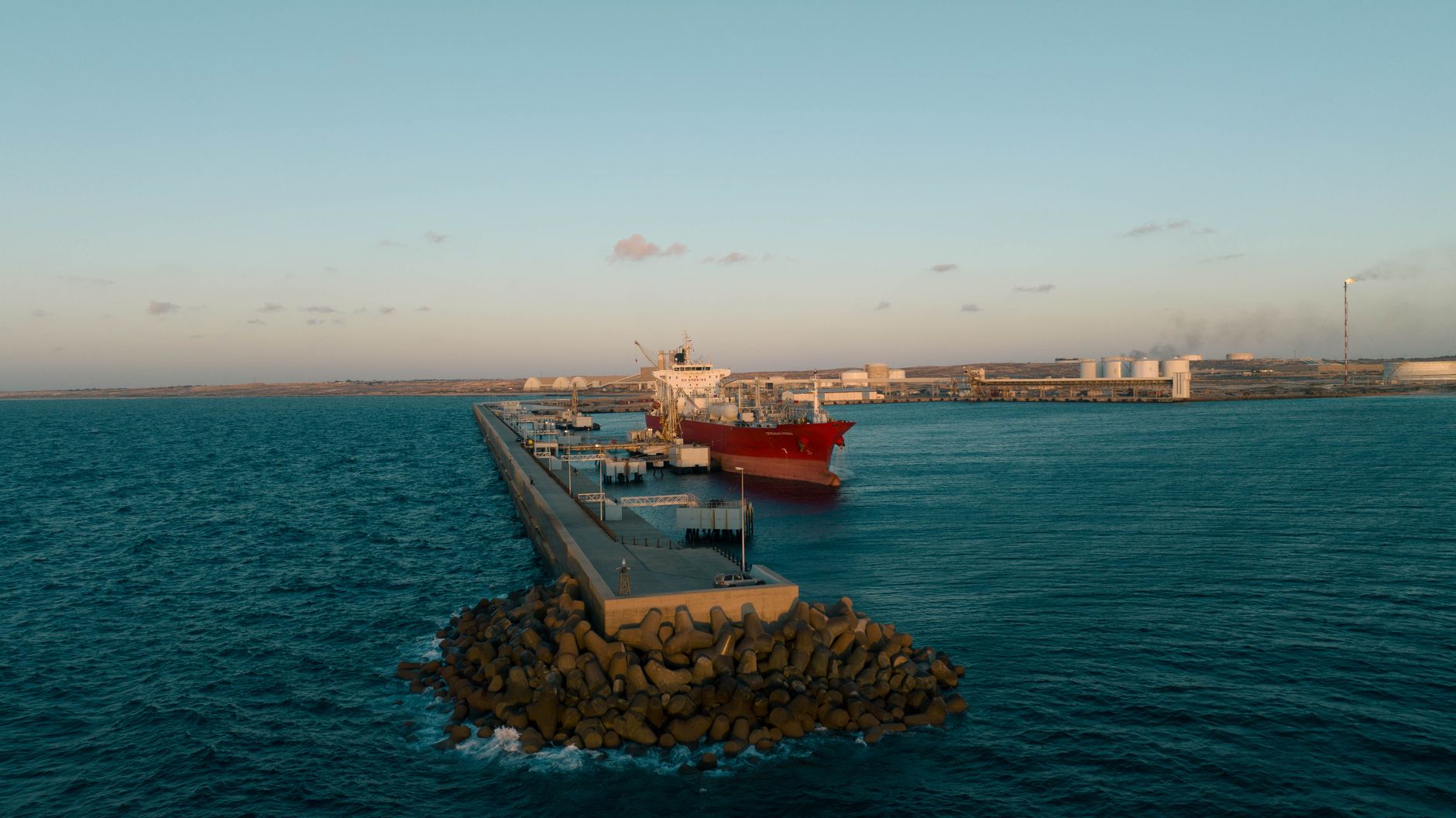
The United States is the world’s largest exporter of liquefied natural gas, and the US LNG exports Russian suppliers compete against kept growing: the Energy Information Administration reported in July 2026 that U.S. shipments rose 26% to 15.1 Bcf/d in 2025. Since October 23, the Polar LNG reports have raised a different question for the industry, which is what it would mean for a Russian-built plant to become part of that export business.
Where it stands: Joel Riddle, the former chief executive of Polar LNG, told the Financial Times he quit because he believed Novatek “was financing and ultimately controlling the strategic direction of the company.” He framed his objection in industry terms: “as a patriot I feel this needs to be developed using US technology and funded by US investors, not a Russian company.”
Riddle’s claims are disputed by every company involved. In Polar LNG’s words he is a “disgruntled employee” who was terminated, and the company says “Development activities are being pursued in full compliance with applicable US laws.” Novatek has said both governments would have to approve the project and that its role was never conditional on sanctions being eased. Tech Wave, the Abu Dhabi holding company above Polar LNG, said in comments reported by the FT that Novatek has no ownership interest in it. According to Business Standard, “No US authority has publicly established that the alleged financing constituted a sanctions violation.” Details are in our main report.
The US LNG exports Russian suppliers compete with
The EIA’s numbers show how far ahead the U.S. has moved. It reported that the country exported 11.9 Bcf/d in 2024, “remaining the world’s largest LNG exporter,” and that Russia has ranked fourth among exporters since 2019, just ahead of Malaysia. In 2025, the agency said, U.S. shipments made up 26% of global LNG exports, up from 21% a year earlier, and the U.S., Qatar and Australia together supplied 63%.
Russia moved the other way. By the EIA’s count, Russia’s LNG shipments dropped 8% in 2025, more in volume than any other exporter’s, a decline the agency linked to EU sanctions. Preliminary LSEG data reported by Reuters showed a smaller decline, 2.5 percent, to 31.3 million tonnes. The two measures use different data and units.
The EIA expects U.S. growth to continue. It forecasts U.S. LNG exports of 17.4 Bcf/d in 2026 and 18.6 Bcf/d in 2027. It also reported that Qatar’s exports have dropped in 2026 because the Strait of Hormuz has been shut since late February, cutting off about 20% of global LNG supply.
| Measure | United States | Russia |
|---|---|---|
| Global rank (EIA) | Largest exporter | Fourth since 2019 |
| 2025 change (EIA) | Up 26% | Down 8% |
| 2025 volume | 15.1 Bcf/d (EIA) | 31.3 million tonnes (LSEG) |
| Top Asian buyers | Japan, South Korea, India, China | China, Japan, South Korea |
| Status in the EU | EU purchase pledge (White House) | Being banned by 2027 |
Europe: the market the two have fought over
Europe buys from both. The EIA reported that European countries raised LNG imports by 29% in 2025, more than any other region. Over the same years, Russia’s share of EU LNG imports fell to 14 percent in the second quarter of 2025 from 22 percent in early 2021, according to Eurostat figures cited by Reuters.
Policy on both sides of the Atlantic has pushed in one direction. The White House said in its July 2025 fact sheet on the EU trade deal that the bloc would buy “$750 billion of U.S. energy exports through 2028,” which it said would “reduce European reliance on adversarial sources.” Under the EU’s 19th sanctions package, the European Commission says, long-term contracts for Russian LNG must stop delivering into the bloc from 1 January 2027, and the Commission counts Russian gas at 12% of EU imports in 2025, compared with 45% when the war began.
The same companies sometimes sit on both sides. Reuters reported that France’s TotalEnergies holds a 20 percent stake in Novatek’s Yamal LNG and takes about four million tonnes a year from it. In February 2026, Sen. Dan Sullivan and Rep. Nick Begich welcomed a TotalEnergies letter of intent to buy two million tonnes a year from Glenfarne’s Alaska LNG project.
Asia and the Alaska pitch
Alaska’s selling point is distance to Asia. gCaptain reported that a voyage from Alaska to Japan can cover as little as 3,600 nautical miles, compared with more than 10,000 from the U.S. Gulf Coast. In 2024, the EIA said, Asia took 33% of U.S. LNG exports, with Japan, South Korea, India and China the largest buyers. Russia’s biggest Asian customers in early 2025 were China, Japan and South Korea, according to a Reuters factbox.
Glenfarne says it has preliminary buyers. According to Begich’s office, the developer had 13 of the 16 MTPA it intends to contract covered by preliminary agreements with JERA, Tokyo Gas, CPC, PTT, POSCO and TotalEnergies. Sullivan said the project could “help our allies, and strengthen our country’s national security.” How Polar LNG differs from Glenfarne’s plan is covered in our comparison of the two North Slope projects, and the administration’s push on Asian buyers is in our report on Japan, Korea and Alaska LNG.
📨 Get Free Accountability Coverage Alerts
Free · No spam · Unsubscribe anytime
Why Russian technology in a U.S. plant draws objections
Polar LNG’s plan, as Business Standard summarized the FT, includes repurposing a partly built Novatek facility from Russia and moving it to Alaska. gCaptain has described the equipment in question as hardware stranded by the sanctions on Novatek’s Arctic LNG 2. Polar LNG has applied to Treasury for a license; that process is walked through in our explainer on Polar LNG’s OFAC application.
The concerns on record so far come from three directions. The first is Riddle’s: that a strategic U.S. project should be built with U.S. technology and money. The second is policy history. The Oxford Institute for Energy Studies wrote in 2024 that the U.S. had stated publicly its aim to “kill the project,” meaning Arctic LNG 2, and argued that U.S. export-oriented LNG projects “would be beneficiaries” of a tighter market. The third is engineering: gCaptain reported that industry specialists are unsure whether the Russian-built modules could be adapted without major redesign, and that ice-class carriers built by South Korea’s Hanwha remain undeliverable because of sanctions.
The idea of technology trade also cuts the other way. In August 2025, Reuters reported, citing four sources, that officials had discussed Russia buying U.S. equipment for its LNG projects, and one source said the U.S. aim was to steer Moscow toward American rather than Chinese technology.
As of October 26, coverage reviewed for this article contained no public statement from a U.S. LNG exporter or industry trade group about Polar LNG. What the record does contain is the EIA’s measure of the U.S. lead, the EU’s dated ban on Russian LNG, and Riddle’s stated objection to Russian technology in an Alaska export plant. For the Russian side of the ledger, see our look at Russian LNG revenue and the war budget.
Frequently Asked Questions
Is the United States the largest LNG exporter?
Yes. The U.S. Energy Information Administration reported that the U.S. was the world’s largest LNG exporter in 2024 and that U.S. exports rose 26% to 15.1 Bcf/d in 2025, about 26% of the global total.
Where does Russia rank among LNG exporters?
The EIA says Russia has been the fourth-largest LNG exporter since 2019. Its 2025 data showed Russian shipments down 8%, a bigger volume drop than any other exporter recorded.
Is Europe still buying Russian LNG?
Some. Eurostat figures cited by Reuters put Russia’s share of EU LNG imports at 14 percent in the second quarter of 2025. The EU’s ban on Russian LNG under long-term contracts takes effect on 1 January 2027, according to the European Commission.
Why does Polar LNG’s former CEO object to Russian technology?
Joel Riddle told the Financial Times that a strategic Alaska LNG project should be built with U.S. technology and funded by U.S. investors, not a Russian company. Polar LNG disputes his account and says it complies with U.S. law.
Sources
- Global liquefied natural gas trade volumes reached record high in 2025 — U.S. Energy Information Administration, July 14, 2026
- The United States remained the world’s largest liquefied natural gas exporter in 2024 — U.S. Energy Information Administration, March 27, 2025
- Fact Sheet: The United States and European Union Reach Massive Trade Deal — The White House, July 28, 2025
- REPowerEU – phase out of Russian energy imports — European Commission, accessed October 26, 2026
- FACTBOX | Where and how much Russia is exporting its LNG — Reuters (via Baird Maritime), September 19, 2025
- Russian LNG exports dip in 2025 as sanctions squeeze logistics — Reuters (via Baird Maritime), December 30, 2025
- Sullivan, Begich Welcome TotalEnergies to Alaska LNG Coalition — Office of Rep. Nick Begich, February 26, 2026
- Arctic LNG 2: The litmus test for sanctions — Oxford Institute for Energy Studies, October 2024
- US and Russian Officials Discussed Energy Deals Alongside Latest Ukraine Peace Talks — Reuters (via gCaptain), August 26, 2025
- How Sanctioned Russian Arctic LNG Hardware Could Find a Second Life in Alaska’s ‘Polar LNG’ Project — gCaptain, March 30, 2026
- Former CEO: Russian Firm Backed Alaska Gas Venture — Newsmax (via Yahoo News), October 24, 2026
- Top executives quit $25 bn US gas project over alleged Russian control — Business Standard, October 25, 2026
This article is news reporting and analysis based on the public sources listed above, as they stood on the dates shown. Where officials, lawmakers or analysts disagree, including on whether an action is lawful, their positions are attributed to them; Donald Trump Class Action is not a court and nothing here is legal advice. Facts in a developing story can change.