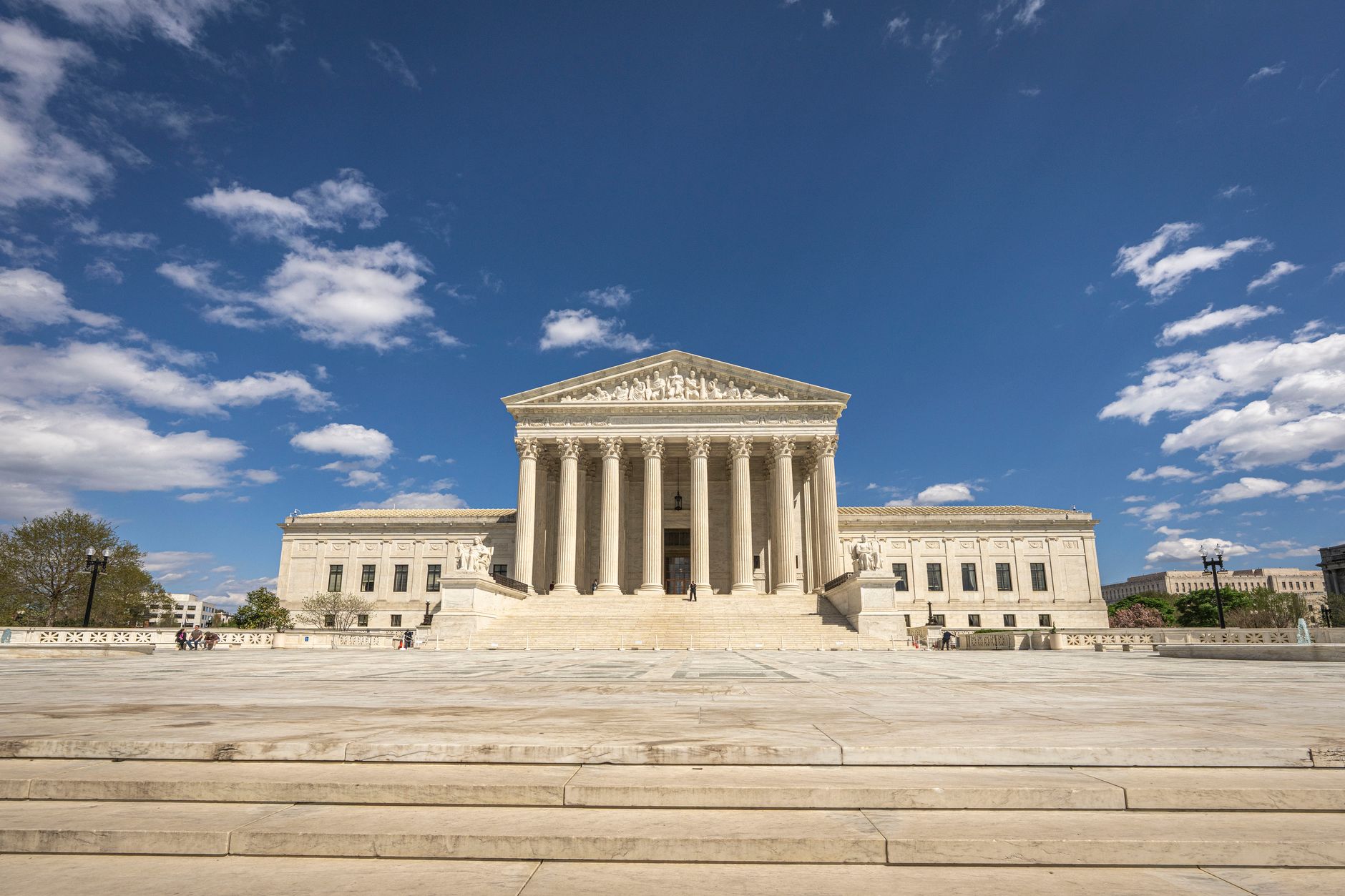
The Supreme Court ruled on June 25, 2026, that federal courts have almost no power to review a Department of Homeland Security decision ending Temporary Protected Status (TPS). The 6–3 decision in Mullin v. Dahlia Doe, consolidated with Trump v.
Miot, cleared the way for the Trump administration to terminate TPS for Haiti and Syria. TPS is a designation that lets nationals of countries facing war, disaster, or similar crises live and work in the United States without facing deportation. The ruling does not end the program outright, but it removes the main legal tool migrants used to fight a termination in court, according to the ACLU of Northern California's case page.
Table of Contents
- What the Court Actually Decided
- Who Loses Protection, and When
- How the Case Reached the Supreme Court
- Why the Case Is Named Mullin, Not Noem
- What Happens Next for Venezuela and Other Countries
- Frequently Asked Questions
What the Court Actually Decided
The majority held that the statute governing TPS largely bars judicial review of the DHS Secretary's non-constitutional decisions to end a country's protected status. Justice Samuel Alito wrote the opinion, joined in full by Chief Justice Roberts and Justices Thomas and Kavanaugh, with Justices Gorsuch and Barrett joining all but one section, according to Hoodline's coverage. Justice Kagan dissented, joined by Justices Sotomayor and Jackson.
The practical effect is narrow but decisive: once DHS cites a policy reason for ending TPS, migrants generally cannot ask a federal judge to second-guess that reason. The Court did leave one narrow door open. It held that a Haitian plaintiff's equal-protection claim against the termination remains technically reviewable, though the majority signaled it will likely fail because the administration's stated rationale was unrelated to race, per SCOTUSblog. That distinction matters for anyone considering a legal challenge: a claim framed around DHS's policy judgment is now effectively foreclosed, while a claim framed around constitutional discrimination still gets a hearing, even if the odds of winning it are long.
Who Loses Protection, and When
The ruling lets the administration strip TPS from roughly 350,000 Haitian nationals and about 6,100 Syrian nationals, ending both their work authorization and their protection from removal, according to Hoodline. Losing TPS means losing the employment authorization document that lets a person work legally, and losing the shield that previously kept removal proceedings on hold.
For someone in this position, the immediate practical questions are about work eligibility and removal risk, not about the merits of the underlying policy debate. An employer verifying work authorization through Form I-9 would see that status lapse once DHS's termination date takes effect. Anyone affected should confirm their specific termination date and any wind-down period directly with DHS or an immigration attorney, since those dates are set by agency notice rather than by the Court's opinion itself.
How the Case Reached the Supreme Court
The administration did not wait for an appeals court to finish its work. The Solicitor General asked the Supreme Court to take the case before judgment in March 2026, just five days after the D.C. Circuit denied a stay of the Haiti termination, according to Jurist.
The Court granted expedited review and heard oral argument on April 29, 2026. This was not the Court's first move on TPS during the Trump administration. It twice intervened on Venezuela's TPS through its emergency docket before reaching this merits decision: a May 19, 2025 stay of a preliminary injunction, and an October 3, 2025 stay in Noem v. National TPS Alliance that applied specifically "to the Venezuela vacatur and Venezuela termination," expressly leaving Haiti's status untouched at that point, according to Cornell's Legal Information Institute. Those earlier emergency orders explain why Venezuela's TPS litigation and Haiti's TPS litigation ran on separate tracks for over a year before the June 2026 ruling resolved the broader legal question governing both.
📨 Get Free Accountability Coverage Alerts
Free · No spam · Unsubscribe anytime
Why the Case Is Named Mullin, Not Noem
Readers tracking this litigation may notice the case caption changed partway through. Kristi Noem was replaced as DHS Secretary by then-Senator Markwayne Mullin, effective March 31, 2026, according to ABC7 News.
Because TPS termination lawsuits name the sitting DHS Secretary as the defendant in their official capacity, every case filed or amended after that date carries Mullin's name instead of Noem's, even though the underlying policy and legal arguments are unchanged. This naming convention is a procedural artifact, not a sign that the legal theory shifted. Anyone searching case law on this topic should check both names to find the full history of a single dispute.
What Happens Next for Venezuela and Other Countries
A separate, still-pending petition, Mullin v. National TPS Alliance (No. 26-48), asks the Court to grant, vacate, and remand a Ninth Circuit ruling covering Venezuela's TPS and a partial Haiti vacatur in light of the June 25 decision. That petition was distributed for the Court's September 28, 2026 conference, according to the U.S.
Supreme Court's own docket. The June ruling's reach extends well beyond Haiti and Syria. TPS overall covers roughly 1.3 million people from more than a dozen countries as of mid-2026, and the near-total bar on judicial review of termination decisions now sets the governing legal standard for all of those designations, not just the two directly decided, according to a WJLA fact-check report. Anyone from a TPS-designated country watching for their own status should track DHS's Federal Register notices for their specific country rather than assume this ruling changes their timeline directly — the legal standard is now set, but each country's termination still requires its own agency action.
- Haitian and Syrian nationals: termination cleared directly by the June 25 ruling.
- Venezuelan nationals: status still moving through the pending No. 26-48 petition.
- Nationals of other TPS countries: no direct ruling yet, but any future termination challenge faces the same judicial-review bar this case established.
Frequently Asked Questions
Does this ruling end Temporary Protected Status completely?
No. It applies directly to Haiti and Syria terminations and sets the legal standard — a near-total bar on judicial review of DHS's termination decisions — that will govern challenges involving other TPS countries, according to WJLA's fact-check report.
Can anyone still sue over a TPS termination after this ruling?
A claim based on DHS's policy rationale is largely foreclosed, but the Court left open that a constitutional equal-protection claim remains technically reviewable, even though the majority indicated such a claim would likely fail on the facts here, per SCOTUSblog.
Why do some filings in this litigation say "Noem" and others say "Mullin"?
Kristi Noem was replaced as DHS Secretary by Markwayne Mullin effective March 31, 2026, and TPS lawsuits name the sitting Secretary in an official capacity, according to ABC7 News.
You Might Also Like
- Supreme Court and the Barbara v. Trump Birthright Citizenship Class Action
- How the Supreme Court’s IEEPA Tariff Ruling Shapes Trump Trade Policy
- Why Trump Tariffs and Retail Consumer Claims Is Back in Federal Court