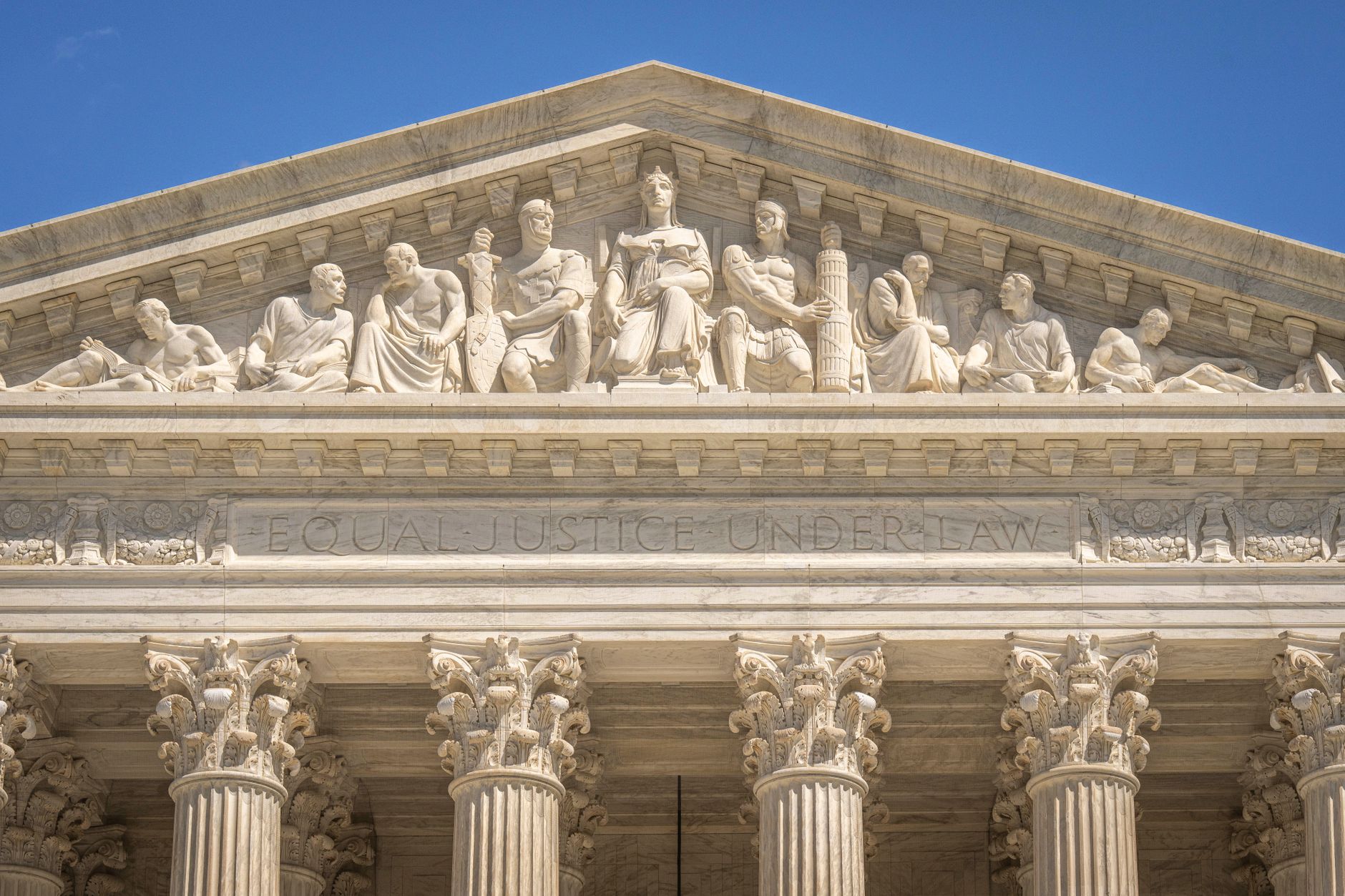
The Supreme Court ruled on June 30, 2026, that children born on U.S. soil to parents who are unlawfully or temporarily present remain citizens at birth under the Fourteenth Amendment. The 6-3 decision in Trump v.
Barbara struck down Executive Order 14160, the Trump administration's attempt to end birthright citizenship for those children, and left the nationwide class of affected newborns protected going forward. The ruling closed out a case that began as a class action filed under pseudonyms in a federal district court and ended as one of the most closely watched constitutional disputes of the term. Here's how the case moved through the courts, what the justices decided, and what it means for families affected by the executive order.
Official resources:
- Read the official notice from Baileyglasser — Use this primary source to verify the official announcement.
- Read the original report from Everycrsreport — Use this primary source to review the complete report.
Table of Contents
- How the case started and reached the Supreme Court
- What the Supreme Court actually decided
- Where the justices split
- Who the ruling protects and what it means going forward
- Frequently Asked Questions
How the case started and reached the Supreme Court
Three pseudonymous plaintiffs — identified only as "Barbara," "Sarah" and "Matthew" — filed a nationwide class-action complaint on June 27, 2025, in the U.S. District Court for the District of New Hampshire, challenging Executive Order 14160 on behalf of children covered by it. The filing came three days after the Supreme Court's decision in Trump v. CASA, Inc., which held 6-3 that nationwide injunctions issued by individual district judges likely exceed federal courts' equitable authority, but which also left class-wide injunctive relief available as an alternative path to broad relief.
That timing mattered. The CASA ruling had effectively told litigants that if they wanted protection reaching beyond the named plaintiffs, they needed to seek certification of a formal class rather than rely on a single judge's nationwide order. The Barbara plaintiffs did exactly that, asking the court to certify a class covering every child who would be denied citizenship recognition under the executive order. On July 10, 2025, Judge Joseph Laplante provisionally certified a nationwide class under Federal Rule of Civil Procedure 23(a) and (b)(2), covering children subject to the order, and issued a preliminary injunction blocking its enforcement. He stayed his own order for seven days to let the government appeal, setting up the path to the Supreme Court.
What the Supreme Court actually decided
The case reached the justices as Trump v. Barbara, No. 25-365, asking whether Executive Order 14160 is constitutional under the Fourteenth Amendment's Citizenship Clause and consistent with the federal citizenship statute, 8 U.S.C. § 1401(a). The Supreme Court heard oral argument on April 1, 2026, with Solicitor General D. John Sauer arguing for the government and ACLU National Legal Director Cecillia Wang arguing for the plaintiff class.
President Trump attended the argument in person — reportedly the first sitting president to attend a Supreme Court oral argument. On June 30, 2026, the Court ruled 6-3 that children born in the United States to parents who are unlawfully or temporarily present are citizens at birth under the Fourteenth Amendment. The ruling affirmed the lower court's judgment invalidating Executive Order 14160, meaning the order cannot be enforced anywhere in the country. Chief Justice Roberts wrote the majority opinion, joined by Justices Sotomayor, Kagan, Barrett and Jackson. The opinion grounded the holding in the common-law principle of jus soli — citizenship based on place of birth — and in the Court's 1898 precedent, United States v. Wong Kim Ark, which had already established that principle for children of noncitizen parents legally present in the country.
📨 Get Free Accountability Coverage Alerts
Free · No spam · Unsubscribe anytime
Where the justices split
Not every justice in the majority agreed on the reasoning. Justice Kavanaugh concurred in the judgment — meaning he agreed the executive order was unlawful and could not stand — but reached that conclusion through the statute rather than the Constitution directly, finding that 8 U.S.C. § 1401(a) already guarantees the citizenship the order tried to deny.
Justices Thomas and Alito dissented. Their position was that the Fourteenth Amendment does not automatically extend citizenship to children of parents who lack permanent allegiance to the United States, rejecting the majority's reading of the Citizenship Clause. Reporting on the full dissenting lineup is not entirely consistent — accounts differ on whether Justice Gorsuch joined Thomas's dissent or filed a separate opinion of his own. Readers who need the exact vote breakdown beyond the 6-3 judgment should check the official slip opinion rather than secondary summaries.
Who the ruling protects and what it means going forward
The decision protects birthright citizenship for children born in the U.S. to noncitizen parents — including those present unlawfully or on temporary visas. The ACLU, which led the case alongside the NAACP Legal Defense Fund, Asian Law Caucus and Democracy Defenders Fund, estimated the ruling protects roughly 150,000 children born annually in the United States to noncitizen parents. Because the Court affirmed a class-wide injunction rather than merely ruling for the three named plaintiffs, the protection applies to the entire certified class — every child covered by Executive Order 14160's terms, not just Barbara, Sarah and Matthew.
That class-action structure is what gave the ruling its nationwide reach even after Trump v. CASA narrowed district courts' ability to issue nationwide injunctions on their own. For families with a child born in the U.S. after the executive order took effect, or who feared a child's citizenship status might be challenged under it, the ruling means Executive Order 14160 cannot be enforced against them anywhere in the country. Anyone who received paperwork, a passport denial, or a Social Security Administration determination citing the executive order should keep records of that communication, since the ruling establishes grounds to have such determinations reversed.
Frequently Asked Questions
Does the ruling apply only to the three named plaintiffs?
No. Judge Laplante certified a nationwide class under Rule 23(b)(2), and the Supreme Court affirmed that class-wide judgment, so the protection covers every child the executive order targeted, not just Barbara, Sarah and Matthew.
Is Executive Order 14160 still in effect anywhere?
No. The Supreme Court's June 30, 2026 ruling affirmed the lower court's judgment invalidating the order, so it cannot be enforced in any jurisdiction.
You Might Also Like
- How the Supreme Court’s IEEPA Tariff Ruling Shapes Trump Trade Policy
- Is a Class Action Possible Over Trump Retail Tariff Price Hikes?
- Why Trump Tariffs and Retail Consumer Claims Is Back in Federal Court