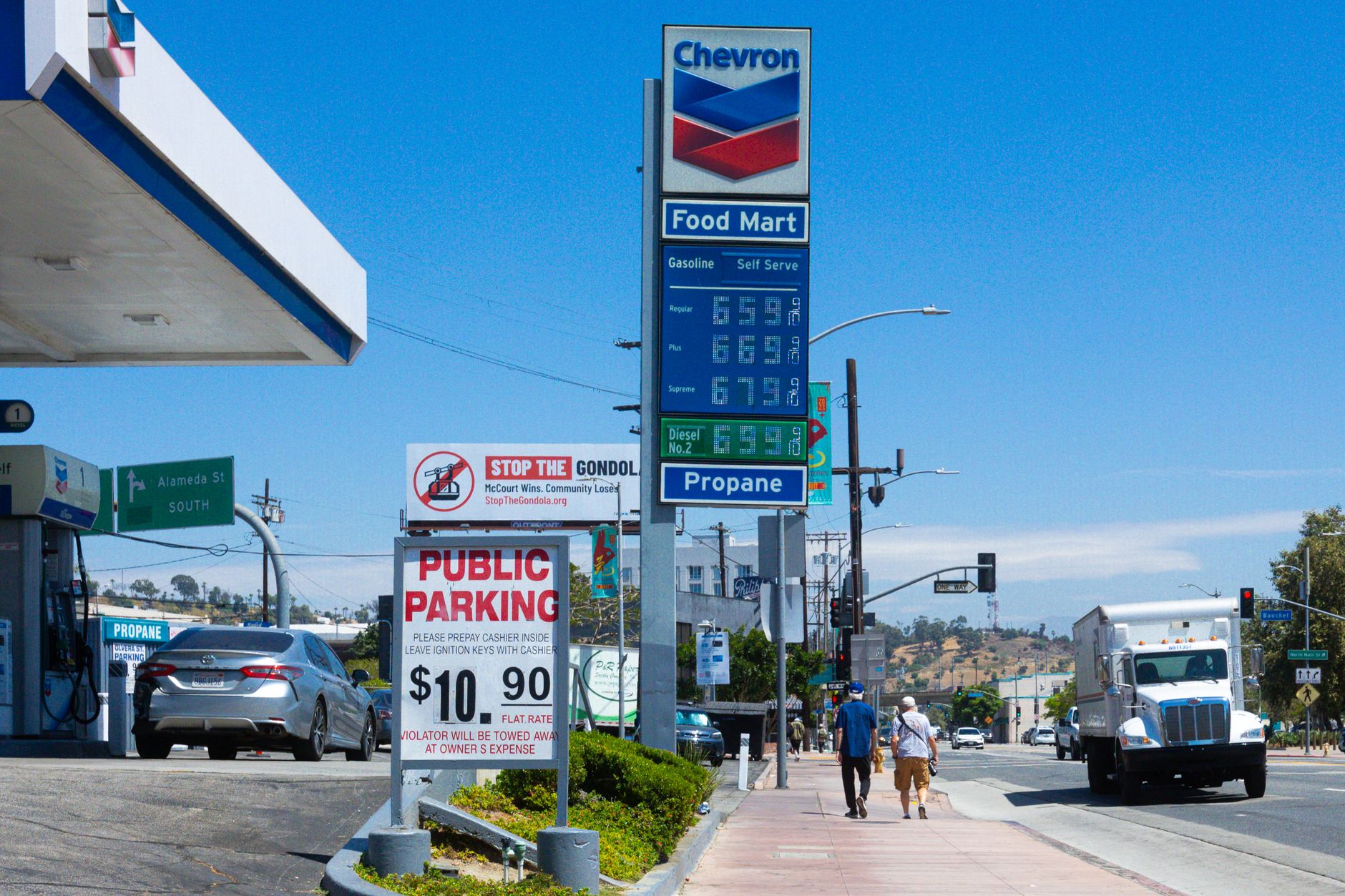
President Trump announced on Friday, Oct. 9, that Vladimir Putin had agreed to send Russian diesel onto the world market, and he promised American drivers that diesel would be coming down “IN RECORD NUMBERS, AND FAST!” Four days on, the arithmetic behind his Russian diesel fuel prices promise, as energy analysts and the government’s own data lay it out, points the other way.
Where it stands: AAA’s national diesel average read $6.2787 a gallon on Tuesday, Oct. 13, above the $6.23 that AP cited from AAA when the deal was unveiled. Traders, meanwhile, bid diesel futures 5% higher by Tuesday lunchtime, NBC News found, taking them to their highest in weeks.
The question is not whether a few Russian tankers would add supply somewhere. They would. It is whether the amount Trump described is large enough to matter against what the U.S. and the world burn every day, and whether Russia can ship it at all. On both counts, the people who track this market for a living are skeptical.
What Trump promised
According to AP, Trump’s Truth Social post laid out four stages. An opening batch above 300,000 tons would be followed by half a million in November, then 1 million tons more, and finally 3 million tons “within a short period of time.” Those numbers exist only in Trump’s post. The Kremlin’s own readout of the call confirmed Russia’s “readiness to supply oil and oil products” but gave no volumes. What Treasury actually signed that afternoon, and what remains a claim, is laid out in our explainer on the Russian diesel deal.
The volume math, by CNBC’s count
CNBC turned tons into barrels with S&P Global Platts’ rule of thumb, roughly 7.45 barrels to each metric ton, and then set the result against federal and international demand figures. We have not recalculated anything; the comparisons below are CNBC’s, NBC’s and Al Jazeera’s sources, as published.
| Measure | Figure | Who said it |
|---|---|---|
| First tranche | About 2.24 million barrels; about 2% of U.S. demand if spread over a month | CNBC |
| Whole promised schedule | 35.76 million barrels (from 4.8 million metric tons); roughly 10 days of American use | CNBC |
| Same total vs. the world | Slightly more than one day of global demand | CNBC |
| U.S. diesel demand | 3.65 million bpd, week ended Oct. 2 | EIA, via CNBC |
| World diesel demand | More than 28 million bpd | IEA, via CNBC |
| Wholesale price effect | $1 to $2 a barrel off wholesale (Europe, Gulf Coast) | Goldman Sachs, via CNBC |
NBC News, running its own numbers on the first 300,000 tons, put it at less diesel than the country uses in a single day. Both outlets land in the same place: on the most generous reading, the full schedule covers under two weeks of American consumption, spread over months.
Russian diesel fuel prices promise vs. what analysts expect
Goldman Sachs’ estimate is the most concrete one on the record. In a Monday note reported by CNBC, the bank sized the likely hit to wholesale prices in Europe and on the Gulf Coast at $1 to $2 a barrel, for the cargoes due in October and November. That is a wholesale barrel price, not a pump price, and Goldman added that Russian refinery outages make extra output hard to come by.
Analysts quoted by name were blunter:
- Neil Atkinson, formerly the IEA’s head of oil markets, told CNBC: “It does not even touch the sides — it is very, very small.” To Al Jazeera he said the tonnage would not “move the needle very much” against U.S. use of about 3.7 million barrels a day.
- Daniel Hynes of ANZ told CNBC: “The volumes really are going to do very little over the medium to longer term.”
- Chris Beauchamp of IG Group told Al Jazeera that even if some cargoes leave Russia, “it is only a short-term solution given the globe’s daily consumption of diesel is around 30 million barrels.”
- Michelle Wiese Bockmann of Windward told Al Jazeera she was “not sure how effective” the U.S. license would be at bringing in enough fuel to change the domestic price.
- Lipow Oil Associates president Andy Lipow said, per CNBC, that traders see the agreement as little more than a verbal intervention meant to show consumers that Trump is acting.
What diesel prices and futures did after Oct. 9
If the deal had changed traders’ expectations, futures would have kept falling. They dipped, then turned. NBC reported a 4% drop on Friday, with futures still up more than 110% since January. By Monday NBC said that small drop had been fully erased; CNBC described Monday’s close as roughly a cent lower. On Tuesday NBC had futures up 5%.
| Date | U.S. average diesel | Reported by |
|---|---|---|
| Sept. 22 | $6.52, a record | AP via NPR, citing AAA |
| Week of Oct. 5 | $6.199 | EIA, via FleetOwner |
| Oct. 9 (deal day) | $6.23 | AP via NPR, citing AAA |
| Oct. 10 | $6.20 | Al Jazeera, citing AAA |
| Oct. 12 | $6.26 | NBC News, citing AAA |
| Oct. 13 | $6.28 ($6.2787 on AAA’s page) | CNBC; AAA |
CNBC put Tuesday’s average 72% above the same point last year. Gulf Oil’s Tom Kloza, quoted by NBC, read the futures rally as the market “clearly not believing that Russian oil is on the way.” GasBuddy’s Patrick De Haan wrote that “$6/gal diesel may be here to stay for now.”
Why the pump price barely moves
Even a real wholesale dip takes time to show up on a station sign. The Energy Information Administration said in its October outlook that cheaper wholesale margins “will not immediately translate into lower retail prices,” and it forecast that retail distillate would stay above $6/gal through October before easing gradually.
The bigger reason is scale. The IEA reported that combined Gulf and Russian exports of diesel and gasoil in August ran 1.6 mb/d below February’s level. Goldman, via CNBC, counts seaborne diesel exports down 1.4 million barrels per day from a year earlier. Set beside holes that size, a schedule CNBC sizes at about ten days of U.S. demand in total is small, and it would arrive in pieces over months. The forces that actually drove prices up this year are covered in our report on why diesel prices are so high in 2026.
📨 Get Free Accountability Coverage Alerts
Free · No spam · Unsubscribe anytime
The U.S. already exports diesel
Lipow’s argument, as CNBC carried it, is that a country shipping out more diesel than it takes in “does not need Russian supply.” Federal data agree. In Table 4a of its October outlook, EIA lists 2026 U.S. distillate net imports at -1.33, in millions of barrels a day; the minus sign means the country ships out more than it brings in. Al Jazeera described the U.S. as the world’s largest diesel exporter.
That leaves one indirect channel. Kpler analysts, cited by CNBC, said Russian fuel could take some heat out of the bidding for American shipments in Brazil and Turkey. That would loosen the export pull on American supply at the margin. No analyst we found has put a pump-price figure on that effect.
Can Russia even deliver the diesel?
Russia has barred its own diesel exports since July because Ukrainian drone strikes on its refineries left it short at home, AP reported, and the IEA says Russian diesel output has dropped about 30%. Ship-tracking tells the same story: Bockmann, the Windward analyst, gave Al Jazeera Vortexa’s count of Russian diesel and gas exports, a mere 190,000 barrels per day last quarter versus 850,000 in the opening months of 2026. The IEA’s September report went further, saying Russia’s product exports had come to a near-halt after Ukraine stepped up its attacks.
Moscow says that is changing. Deputy Prime Minister Alexander Novak told Tass that Russia was “immediately starting to lift restrictions on diesel exports ahead of schedule.” Atkinson told Al Jazeera that in the short term he struggles to see how Russia could deliver the promised volumes “other than at the expense of its domestic market.” Which claims in the announcement hold up is the subject of our claim-by-claim fact check, and the election timing is covered in our look at diesel and the midterms.
None of the reports we reviewed through Oct. 13 documented a single cargo of Russian diesel loading for the U.S. under the new license.
Frequently Asked Questions
Will Russian diesel lower gas and diesel prices in the U.S.?
Analysts quoted by CNBC, NBC and Al Jazeera expect little effect. Goldman Sachs put the wholesale impact of the first Russian cargoes at $1 to $2 a barrel, and the national diesel average went up, not down, in the four days after the announcement.
How much diesel did Trump say Russia would supply?
Trump wrote of four tranches, starting above 300,000 tons and ending with 3 million tons, with half a million in November and 1 million tons in between. CNBC converted the full 4.8 million metric tons to 35.76 million barrels. No U.S. or Russian document confirms the figures.
How many days of U.S. diesel demand is the Russian deal?
By CNBC’s math, the whole schedule equals roughly 10 days of what Americans use, and a bit over a single day of worldwide consumption. NBC News said the first 300,000 tons is less than the U.S. uses in one day.
What is the national average price of diesel now?
AAA showed $6.2787 a gallon on Oct. 13. When Trump posted his announcement, AP had the AAA figure at $6.23. The all-time high, $6.52, came in September.
Does the U.S. need to import diesel?
Not on net. Andy Lipow told CNBC the country sells more diesel overseas than it brings in, and EIA forecasts negative distillate net imports for 2026, meaning exports exceed imports.
Sources
- Trump’s diesel deal with Russia equals less than two weeks of U.S. demand — CNBC, October 13, 2026
- Trump says U.S. to get diesel from Russia, relaxing pressure on Moscow to ease prices before midterms — NPR (The Associated Press), October 9, 2026
- US Lifts Sanctions on Russian Diesel for Six Months After Trump-Putin Call — Ship & Bunker, October 9, 2026
- Trump says Putin will release diesel fuel into global market — NBC News, October 9, 2026
- Energy prices rise after Trump’s ‘energy ceasefire’ fails — NBC News, October 12, 2026
- Diesel futures signal higher prices to come, despite Trump moves — NBC News, October 13, 2026
- Why is US turning to Russia for diesel despite sanctions? — Al Jazeera, October 10, 2026
- Diesel prices fall as experts weigh impact of Trump’s fuel order for trucking — FleetOwner, October 7, 2026
- AAA Fuel Prices — AAA, Price as of 10/13/26
- Short-Term Energy Outlook (Petroleum Products) — U.S. Energy Information Administration, October 2026 STEO (released October 6, 2026)
- Short-Term Energy Outlook, October 2026 (Table 4a) — U.S. Energy Information Administration, October 2026
- Oil Market Report – September 2026 — International Energy Agency, September 2026
- Oil little changed as traders assess Russian supply prospects — CNBC, October 13, 2026
This article is news reporting and analysis based on the public sources listed above, as they stood on the dates shown. Where officials, lawmakers or analysts disagree, including on whether an action is lawful, their positions are attributed to them; Donald Trump Class Action is not a court and nothing here is legal advice. Facts in a developing story can change.