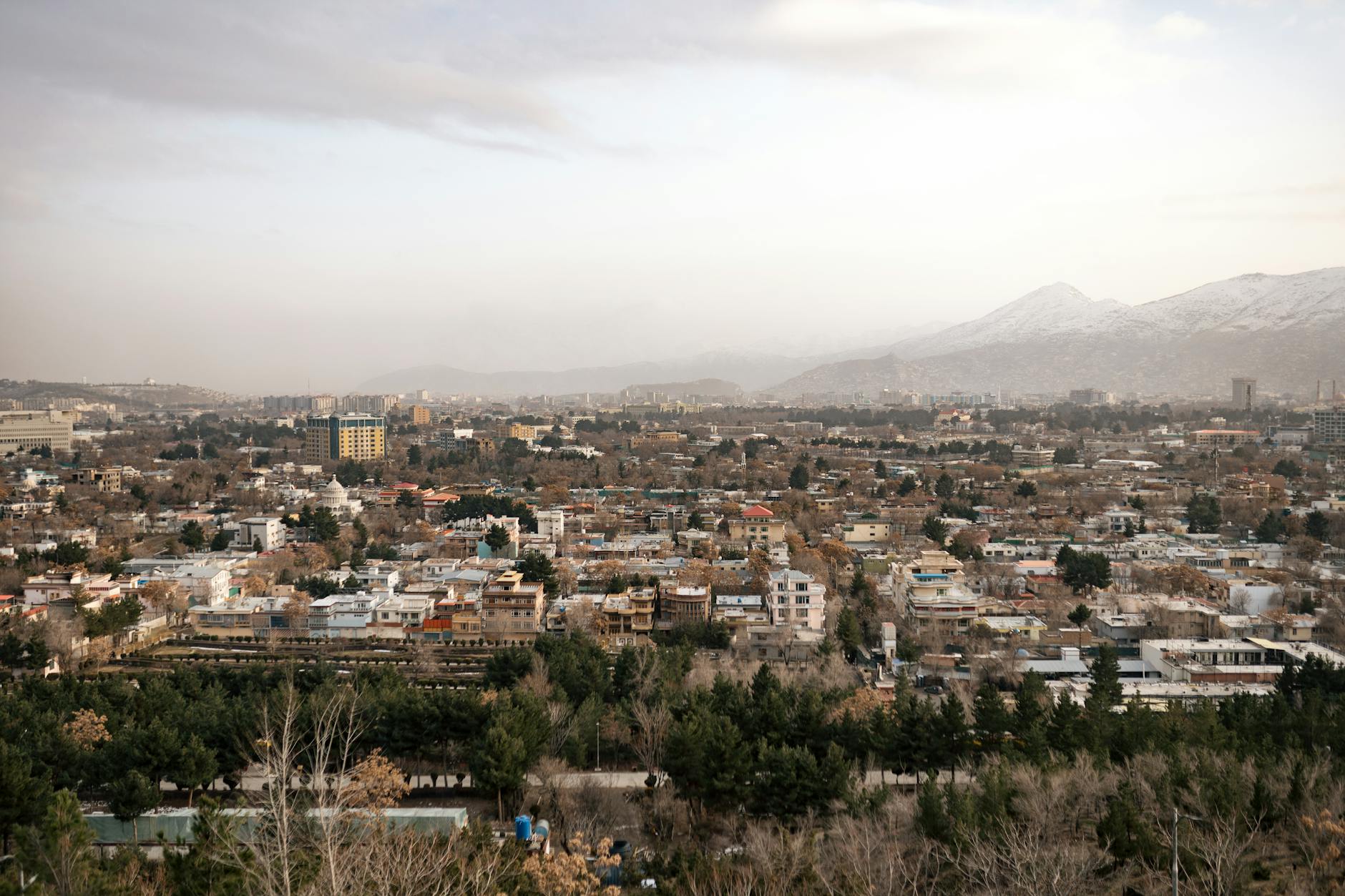
Afghanistan’s Taliban government has formally condemned the joint U.S.-Israeli military strikes on Iran that began on February 28, 2026, calling on both sides to peacefully resolve their differences while expressing support for Tehran. The Taliban’s chief spokesperson, Zabihullah Mujahid, had already signaled weeks earlier that Afghans would be “prepared to cooperate and support the Iranian people” if Washington attacked Iran — though he carefully stopped short of promising direct military involvement. The condemnation places the Taliban in an awkward diplomatic position, denouncing American aggression against its western neighbor while simultaneously fighting a full-scale war against Pakistan on its eastern border. The situation across the Middle East and Central Asia has deteriorated rapidly.
The U.S. and Israel struck more than 1,000 targets inside Iran over two days, destroying nuclear sites, military installations, and IRGC command centers. Iranian state media confirmed on March 1 that Supreme Leader Ali Khamenei was killed in the strikes, prompting Iran to declare 40 days of mourning and launch retaliatory missiles and drones at Israel, the UAE, Qatar, Kuwait, Bahrain, Jordan, and Saudi Arabia. This article examines the Taliban’s calculated response, the constraints shaping its position, and what this means for the broader geopolitical landscape in the region.
Table of Contents
- Why Did the Taliban Condemn the U.S. Strikes on Its Neighbor Iran?
- The Taliban’s Pre-War Warning and Its Limits
- Pakistan’s War on Afghanistan and the Two-Front Problem
- What the Taliban’s Response Means for U.S.-Afghan Relations
- Regional Fallout and the Risk of Wider Escalation
- The Taliban’s Bid for International Legitimacy
- What Comes Next for Afghanistan Between Two Wars
- Conclusion
- Frequently Asked Questions
Why Did the Taliban Condemn the U.S. Strikes on Its Neighbor Iran?
The Taliban’s condemnation of the U.S.-Israeli strikes on Iran follows a consistent pattern. When Israel struck Iran in June 2025, Mujahid issued a statement calling those actions a “flagrant violation of the core tenets of international law.” The February 2026 response carries the same language and logic — the Taliban views strikes on a sovereign nation as illegitimate under international norms, regardless of the justification offered by Washington or Jerusalem. This is not a new diplomatic posture for Kabul under Taliban rule; it reflects the group’s broader effort to position itself as a legitimate government that respects sovereignty principles, even as many countries refuse to formally recognize its authority. There is also a practical dimension. Iran shares a 572-mile border with Afghanistan, and the two countries maintain complex but functional relations involving trade, water rights, and refugee management. Millions of Afghan refugees live in Iran.
The Taliban cannot afford to stay silent when its most significant western neighbor is under sustained military bombardment — doing so would undermine its standing with Iran and risk destabilizing an already fragile relationship. By comparison, when the U.S. withdrew from Afghanistan in 2021, Iran was one of the few countries that maintained diplomatic engagement with the incoming Taliban government. The Taliban’s response, however, was notably measured. Rather than issuing fiery threats or pledging military solidarity, the statement called for peaceful resolution and expressed general support for the Iranian people. This diplomatic hedging reflects the reality that the Taliban has no interest in a direct confrontation with the United States, which still holds significant leverage over Afghanistan through frozen assets, sanctions, and humanitarian aid channels.
The Taliban’s Pre-War Warning and Its Limits
Two weeks before the strikes began, Mujahid gave an interview to iran‘s Pashto-language radio service on February 15, 2026, in which he stated that Afghans would be prepared to cooperate with and support the Iranian people if the U.S. attacked Iran and Tehran requested assistance. This statement attracted significant international attention, with some analysts interpreting it as a pledge of military alliance. However, the actual language was far more cautious than the headlines suggested. Mujahid clarified that cooperation would mean “sympathy and possible cooperation” if specifically requested by Iran — not an automatic entry into a retaliatory war against the united states. This distinction matters enormously. The Taliban controls a country with no air force to speak of, no navy, and limited conventional military capability. Its strength lies in insurgent warfare within Afghan terrain, not in projecting power across international borders.
Any promise of military support against the combined forces of the U.S. and Israel would be hollow, and the Taliban leadership knows it. There is a further limitation worth noting. Even if the Taliban wanted to offer meaningful military support to Iran, its ability to do so in late February 2026 was effectively zero. During the exact same period that the U.S. and Israel were striking Iran, Pakistan had declared “open war” on the Taliban, with Pakistani warplanes bombing Kabul and Kandahar. The Taliban was conducting large-scale offensive operations along the Durand Line — its eastern border with Pakistan. Fighting a two-front conflict against both Pakistan and the United States would be strategically suicidal, and the Taliban’s measured language reflects that calculation.
Pakistan’s War on Afghanistan and the Two-Front Problem
The timing of events in late February 2026 created a geopolitical situation with no modern precedent. On February 26-28, Pakistan escalated its long-simmering border dispute with Afghanistan into open warfare, with Pakistani warplanes striking targets in Kabul and Kandahar — Afghanistan’s two largest cities. The Taliban responded with ground offensives along the disputed Durand Line. Meanwhile, roughly 600 miles to the west, the United States and Israel were launching the largest military operation in the Middle East in decades against Iran. Afghanistan found itself squeezed between two simultaneous conflicts on opposite borders. Iran and the European Union both urged Pakistan and Afghanistan to pursue dialogue amid the deadly border clashes, but the fighting continued.
For the Taliban government, the Pakistan conflict was the immediate existential threat — Pakistani airstrikes were hitting Afghan population centers, while the Iran strikes, though alarming, were not directly targeting Afghan territory. This reality shaped the Taliban’s diplomatic response: strong words of condemnation for the attacks on Iran, but no concrete action, because the Taliban’s limited military resources were already fully committed to its eastern front. The two-front dynamic also reveals a broader vulnerability in the Taliban’s position. Despite controlling Afghanistan for nearly five years, the group has not been able to translate military dominance into genuine security. The country remains internationally isolated, economically dependent on humanitarian aid, and now faces simultaneous military pressure from two nuclear-armed states on either side of its borders.

What the Taliban’s Response Means for U.S.-Afghan Relations
The Taliban’s condemnation of U.S. strikes on Iran adds another layer of friction to an already deeply strained relationship with Washington. The United States has not recognized the Taliban government, maintains sanctions on senior Taliban officials, and continues to hold billions of dollars in frozen Afghan central bank reserves. The Taliban, for its part, has repeatedly demanded the return of those assets and has accused Washington of economic warfare against the Afghan people. However, the Taliban’s response to the Iran strikes was notably less aggressive than what some observers expected. Compare it to Iran’s own retaliation — launching missiles and drones at multiple countries including Israel, the UAE, and Saudi Arabia — and the Taliban’s call for “peaceful resolution” looks almost conciliatory.
This suggests that despite the heated rhetoric, the Taliban leadership remains pragmatic about the power imbalance with the United States. Burning bridges with Washington carries real costs: potential loss of humanitarian aid channels, further tightening of sanctions, and the possibility of renewed U.S. military attention toward Afghanistan. The tradeoff for the Taliban is between maintaining its relationship with Iran — an important economic partner and neighbor — and avoiding direct confrontation with the United States. For now, the group appears to be threading the needle by offering rhetorical support to Iran without taking any actions that would provoke an American response. Whether that balance holds will depend on how the broader conflict evolves and whether Iran asks its neighbors for something more than sympathetic press statements.
Regional Fallout and the Risk of Wider Escalation
The scale of the U.S.-Israeli operation against Iran has created cascading instability across the region. Iran’s retaliatory strikes targeted not just Israel but also the UAE, Qatar, Kuwait, Bahrain, Jordan, and Saudi Arabia — countries that host American military assets. This widening of the conflict zone means that virtually every country in the Middle East and Central Asia is now calculating its exposure to further escalation. For Afghanistan, the primary risk is indirect. If the Iran conflict escalates further, it could disrupt trade routes, increase refugee flows, and create new security vacuums along Afghanistan’s western border.
Iran has historically been a destination for Afghan economic migrants and refugees; a prolonged conflict could reverse that flow, sending displaced Iranians into an Afghanistan that already cannot feed its own population without international aid. The Taliban government has no institutional capacity to absorb a refugee crisis on its western border while fighting a war on its eastern one. There is also the question of non-state actors. The IRGC has maintained relationships with various Afghan Shia militias, some of which fought in Syria on behalf of the Assad government. If Iran’s conventional military capacity is degraded — and over 1,000 targets destroyed suggests significant degradation — Tehran may lean more heavily on proxy networks, potentially including groups operating in or near Afghan territory. This is a scenario the Taliban would view with alarm, as it would challenge their monopoly on armed force within Afghanistan.
📨 Get Free Accountability Coverage Alerts
Free · No spam · Unsubscribe anytime
The Taliban’s Bid for International Legitimacy
The Taliban’s response to the Iran strikes is part of a broader pattern of attempting to act like a normal government on the world stage. By issuing formal condemnations, calling for peaceful resolution, and invoking international law, the Taliban is borrowing the language and posture of established nation-states. This is deliberate.
The group has been seeking international recognition since taking power in August 2021 and views participation in diplomatic discourse as a pathway to that recognition. The irony is difficult to miss. A government that came to power through armed insurgency, that restricts women’s access to education and employment, and that harbors concerns about its own human rights record is now positioning itself as a defender of sovereignty and international norms. But diplomacy has never required moral consistency, and the Taliban’s statements on Iran — however self-serving — align with the positions taken by many other governments, including Russia, China, and several Central Asian states that have condemned the strikes.
What Comes Next for Afghanistan Between Two Wars
The coming weeks will test the Taliban’s ability to manage simultaneous crises on both borders. The Pakistan conflict shows no signs of de-escalation, and the aftermath of the Iran strikes — including the power vacuum created by Khamenei’s death — could produce unpredictable shifts in Iranian foreign policy that directly affect Afghanistan. A new Iranian leadership structure may seek to test or renegotiate its relationship with the Taliban, particularly on water rights from the Helmand River, which has been a persistent source of tension.
For the broader region, the Taliban’s response is a reminder that the consequences of the U.S.-Israeli strikes on Iran extend far beyond the immediate battlefield. Every neighboring country is recalculating its alliances and vulnerabilities, and Afghanistan — one of the poorest and most isolated nations on earth — has fewer options than most. The Taliban’s call for peaceful resolution may be sincere or it may be performative, but either way, it reflects a government that understands it cannot afford another war.
Conclusion
The Taliban’s condemnation of the U.S.-Israeli strikes on Iran represents a careful balancing act by a government under extraordinary pressure. Facing open war with Pakistan on its eastern border, the Taliban chose to express solidarity with Iran through diplomatic language rather than military commitment. Zabihullah Mujahid’s earlier offer of “cooperation and support” was deliberately vague, leaving room for the Taliban to claim solidarity without actually committing resources it does not have to a conflict it cannot win.
The situation across Afghanistan’s borders remains deeply unstable. With Khamenei dead, Iran’s retaliatory strikes hitting multiple Gulf states, and Pakistani warplanes bombing Afghan cities, the Taliban government faces a strategic environment with no good options. Its response to the Iran strikes — measured condemnation paired with calls for peace — may be the most rational policy available to a regime that controls a landlocked, impoverished country surrounded by escalating conflicts. Whether that restraint holds will depend on events largely beyond Kabul’s control.
Frequently Asked Questions
Did the Taliban declare war on the United States after the Iran strikes?
No. The Taliban condemned the strikes and called for peaceful resolution, but did not declare war or commit to military action against the U.S. Zabihullah Mujahid’s earlier statement offered possible cooperation with Iran only if requested, and explicitly did not constitute an automatic entry into conflict.
Why did the Taliban support Iran despite their historical differences?
The Taliban and Iran share a 572-mile border and maintain complex but functional relations involving trade, refugees, and water rights. Despite sectarian differences — the Taliban is Sunni, Iran is Shia — the two governments have pragmatic reasons to cooperate, and the Taliban views U.S. strikes on a neighbor as a sovereignty issue.
Was the Taliban able to provide military help to Iran?
Effectively, no. During the exact period of the U.S.-Israeli strikes on Iran (February 28 – March 1), the Taliban was fighting a full-scale war with Pakistan, which had declared open war and was bombing Kabul and Kandahar. The Taliban had no military capacity to spare for a second front.
How did other countries respond to the strikes on Iran?
Iran retaliated by launching missiles and drones at Israel, the UAE, Qatar, Kuwait, Bahrain, Jordan, and Saudi Arabia. Iran and the EU both urged Pakistan and Afghanistan to pursue dialogue on their separate conflict. Multiple governments, including Russia and China, condemned the strikes.
What happened to Iran’s Supreme Leader Khamenei?
Iranian state media confirmed on March 1, 2026, that Supreme Leader Ali Khamenei was killed in the U.S.-Israeli strikes. Iran declared 40 days of national mourning.
You Might Also Like
- Iran Releases Its Own Footage Claiming Successful Retaliation Against U.S. and Israel
- UK Weighs Whether to Support U.S. Action in Iran
- U.S. Reportedly Using AI-Assisted Targeting Systems in Iran for the First Time