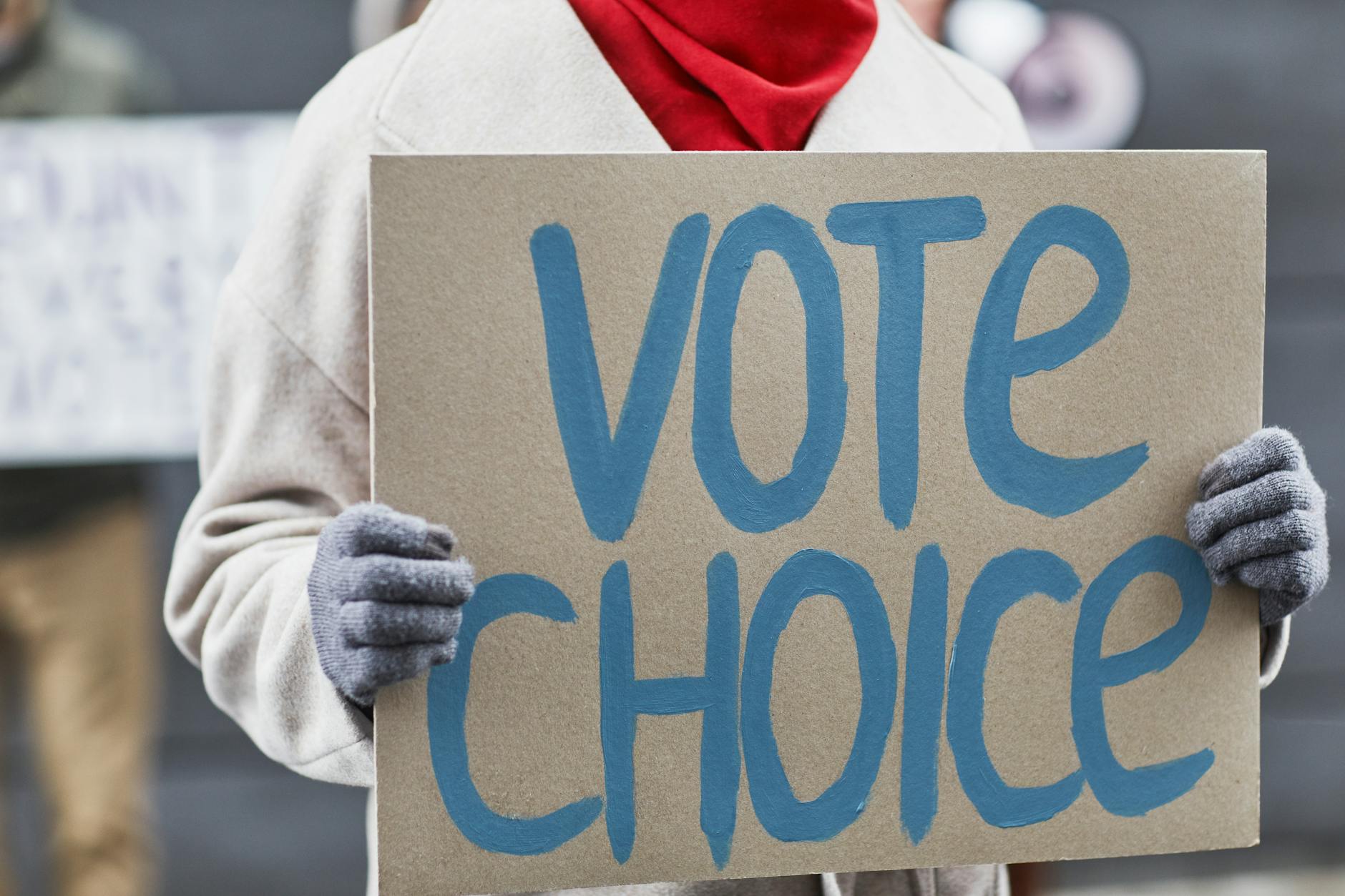
Homeowners who want to display political signs often find themselves in direct conflict with their homeowners associations, which frequently have covenants restricting yard signage. The core issue is this: your HOA’s restrictions on political speech may violate your First Amendment rights, yet challenging them in court is expensive and uncertain. In 2022, a Virginia homeowner was fined by their HOA for displaying a Trump campaign sign, leading to a lawsuit that exposed how many HOAs across the country enforce sign restrictions without legal authority to do so.
The tension between HOA rules and political expression has intensified dramatically during election cycles. Homeowners who live in HOA communities may discover that their governing documents prohibit signs altogether, limit sign size and duration, or require prior approval before any yard displays—rules that HOAs argue are necessary to maintain property values and community aesthetics. However, courts have increasingly recognized that political speech is protected, and HOA restrictions on political signs face heightened legal scrutiny that ordinary commercial or decorative sign restrictions do not.
Table of Contents
- Can Your HOA Actually Restrict Your Political Signs?
- The Real Costs of HOA Enforcement
- State Laws That Protect Political Signs
- What You Should Do If Your HOA Threatens You Over a Political Sign
- The Constitutional Issues That Courts Are Still Debating
- Real-World Examples of HOA Sign Disputes
- The Future of HOA Sign Restrictions
- Conclusion
Can Your HOA Actually Restrict Your Political Signs?
The legal landscape for political signs is more complicated than most hoa documents suggest. The First Amendment protects political speech from government censorship, but HOAs are private entities, which creates a gray zone. However, several states have passed laws specifically protecting residents’ rights to display political signs, and federal courts have ruled that even private HOAs cannot completely ban political expression without violating residents’ constitutional rights. For example, in 2020, a California court found that an HOA’s blanket prohibition on all yard signs—including political signs—was likely unenforceable as an unconstitutional restriction on speech.
That said, HOAs retain significant power. Many courts have held that HOAs can impose reasonable time, place, and manner restrictions on signs, such as requiring signs to be removed 30 days after an election or limiting their size to reasonable dimensions. The key distinction is whether the restriction targets political speech specifically or applies neutrally to all signs. An HOA rule that says “no yard signs over 2 feet by 3 feet” is generally enforceable against political signs, whereas a rule that says “no political signs” is increasingly indefensible in court. Understanding this distinction is critical before you face a fine or enforcement action.

The Real Costs of HOA Enforcement
When an HOA decides to enforce sign restrictions against political displays, the financial and emotional burden falls entirely on the homeowner. HOAs often start with warning letters, then proceed to fines that accumulate daily—some HOAs impose $50 to $100 per day in fines for sign violations. If you refuse to pay or remove the sign, the HOA can place a lien on your property, damage your credit score, and even foreclose on your home in extreme cases. Many homeowners are shocked to learn that an HOA can pursue foreclosure over a few thousand dollars in accumulated fines related to a political sign, yet this has happened in multiple jurisdictions.
A crucial limitation is that pursuing a legal defense against an HOA is prohibitively expensive for most people. Hiring an attorney to fight a sign restriction in court typically costs $5,000 to $25,000 or more, depending on the complexity and jurisdiction. For many homeowners, this means accepting the HOA’s position even when they believe it violates their rights, simply because fighting back costs more than the fines themselves. This power imbalance has led to a chilling effect where many homeowners self-censor their political expression rather than risk legal and financial consequences. The warning here is significant: if you decide to display a political sign against HOA rules, be prepared for a prolonged conflict that may require legal representation.
State Laws That Protect Political Signs
Recognizing the constitutional tensions at play, several states have enacted laws that specifically protect homeowners’ rights to display political signs in HOA communities. California passed legislation in 2017 that prohibits HOAs from banning or restricting political signs except during a 45-day period before an election and 7 days after. Texas passed a similar law that prevents HOAs from restricting signs expressing political views, with exceptions only for signs that are unsafe or obscene. Nevada, Colorado, and other states have followed suit, though the specifics vary.
However, these state laws have created a patchwork of protections that varies dramatically depending on where you live. A homeowner in California with a political sign receives significantly more legal protection than a homeowner in a state with no such law. Additionally, even where state laws exist, many HOAs continue to enforce their restrictions and hope homeowners won’t challenge them in court. This means that having a state law on your side doesn’t automatically prevent an HOA from threatening fines—you may still need to be willing to fight the restriction to actually exercise the protection the law provides. The example of Texas is instructive: despite the state law, HOA conflicts over political signs continue because enforcement and compliance remain inconsistent.

What You Should Do If Your HOA Threatens You Over a Political Sign
If your HOA sends you a notice about a political sign, your first step is to research whether your state has laws protecting political signs and what specific protections they provide. Many state and local bar associations have free or low-cost resources explaining HOA law in your jurisdiction. Read your HOA’s governing documents carefully—sometimes the documents contain ambiguous language that could be interpreted in your favor, and you may be able to argue that political signs are not actually prohibited, only restricted. Some HOAs have never updated their rules to account for legal changes, which can work in your favor if you can demonstrate that their enforcement contradicts current state law. Next, consider whether you want to negotiate with your HOA board directly.
Some boards are open to making exceptions for political signs during election periods or are willing to clarify their rules in light of recent legal developments. A letter from an attorney explaining the legal risks of enforcing a sign ban can sometimes convince an HOA to back down without requiring you to go to court. However, this approach carries a tradeoff: it signals that you’re willing to fight, which some HOAs view as a challenge and respond to with escalated enforcement. Other homeowners choose to quietly display their sign and accept that they may face fines, calculating that the personal statement is worth the potential cost. Neither approach is objectively correct, but the decision should be informed by your financial situation and how important the sign is to you.
📨 Get Free Accountability Coverage Alerts
Free · No spam · Unsubscribe anytime
The Constitutional Issues That Courts Are Still Debating
Despite the growth of state protections, federal courts continue to grapple with whether HOAs can restrict political signs under the First Amendment. The cases are split. Some courts have held that HOAs can impose content-neutral restrictions (such as size limits) but cannot ban political signs outright. Other courts have been more deferential to HOA rules, reasoning that homeowners voluntarily join HOAs and accept their restrictions. A critical warning is that the law in this area is still evolving, and a court ruling that protects you in one state may not apply elsewhere.
Furthermore, recent Supreme Court precedent on free speech and property rights has not directly addressed political signs in HOA communities, leaving the law uncertain. Additionally, some legal scholars argue that HOAs function as quasi-governmental entities and therefore should be held to stricter constitutional standards, while others contend that HOAs are private organizations with legitimate interests in aesthetic uniformity and property value preservation. This fundamental disagreement means that your chances of winning a lawsuit against your HOA over a political sign depend heavily on the specific judge, the jurisdiction, and the exact language of your HOA’s rules. One homeowner who won her case in court in 2021 warned that the outcome was not certain even at the trial level, and the HOA could have appealed. The limitation is that without clear legal precedent in your circuit or state, even a well-founded constitutional argument is a risky gamble.

Real-World Examples of HOA Sign Disputes
A homeowner in Colorado in 2020 faced fines of $100 per day for displaying a campaign sign during the election season. Her HOA’s rules stated that all yard signs were prohibited except for real estate signs. After receiving $1,500 in fines over two weeks, she contacted the Colorado attorney general’s office, which sent the HOA a letter explaining the state law protecting political signs. The HOA backed down and stopped enforcing fines, but not before the homeowner had suffered significant stress and financial liability. In this case, knowing about the state law and being willing to involve the attorney general made the difference.
Another example involved a Florida homeowner whose HOA banned all signs including political signs. The homeowner challenged the rule in court and won at the trial level, with the judge ruling that the blanket ban was unconstitutionally vague and could not be applied to political speech. However, the HOA appealed and the appellate court sent the case back to trial, requiring the homeowner to spend additional legal fees defending her position. Five years later, the case remained unresolved. This example illustrates the long-term financial and emotional toll of litigation against an HOA, even when you believe the law is on your side.
The Future of HOA Sign Restrictions
As political polarization has intensified and election cycles have become more contentious, more states are likely to enact laws protecting political signs. Additionally, higher-profile cases and increased media attention are gradually shifting the legal landscape in favor of homeowner rights. Some HOAs have proactively updated their governing documents to explicitly allow political signs during certain periods, recognizing that attempting to enforce a ban is costly and increasingly indefensible. However, the vast majority of HOAs still maintain restrictive language, and many board members are either unaware of legal changes or reluctant to give up their enforcement authority.
Looking forward, the intersection of property rights, free speech, and HOA governance will likely become a more prominent legal issue. Legislators in more states will probably follow the lead of California and Texas in protecting political expression. However, this process is slow, and in the meantime, homeowners in states without such protections remain vulnerable. The most important development would be greater clarity from state supreme courts and federal appellate courts about whether HOAs can constitutionally enforce blanket sign bans against political speech, but such clarity may take years or decades to develop.
Conclusion
Homeowners who want to display political signs often discover that their HOA’s governing documents restrict or prohibit yard signage, and enforcing these restrictions is a significant source of conflict in residential communities. The legal protections available to homeowners vary dramatically by state and jurisdiction, with some states providing explicit protections for political speech and others leaving homeowners vulnerable to HOA enforcement. Challenging an HOA restriction is expensive, emotionally draining, and legally uncertain, which means many homeowners choose self-censorship rather than face potential fines and litigation.
If you are considering displaying a political sign, your first step is to understand your state’s laws and your specific HOA’s governing documents. Research whether your state has protections for political signs, consult your HOA’s rules carefully, and consider whether negotiation with your HOA board is possible. If you decide to challenge your HOA’s restriction, be prepared for the possibility of litigation and its associated costs. The broader issue is that HOAs wield significant power over homeowners’ constitutional rights, and this power remains largely unregulated in most states.
You Might Also Like
- Homeowners Say Their Yard Signs Are Free Speech, HOA Says They Broke the Rules
- HOA Political Sign Rule Backfires After Homeowners Fight Back
- Couple Fights HOA After Being Ordered to Remove Political Signs