Yes, homeowners have been attacked by strangers over yard flags. In documented cases across the United States, homeowners displaying political or cultural flags have been physically assaulted, and in some instances, the attackers faced criminal charges including hate crimes. On July 4, 2018, Jeff Good of Boynton Beach, Florida, was punched in the face by a driver who objected to a Trump flag on his property. When Good resisted the attacker’s demand to remove it, the driver drove away with Good’s arm trapped in the car, dragging him approximately 30 feet down the street.
More recently, in February 2024, Aleksandr Binyaminov of Hewlett, New York, was brutally assaulted when a man attacked him over Israeli and pro-Israel flags on his property, resulting in a black eye, bruising, and a chokehold. These incidents are not isolated anomalies but part of a pattern of flag-related confrontations that have escalated in recent years. The attackers in these cases were motivated by political or ideological opposition to what the flags represented. What makes these cases noteworthy from a legal and safety perspective is that they illustrate a gap between homeowners’ First Amendment rights to display flags on their own property and their vulnerability to physical violence from strangers who disagree with those messages.
Table of Contents
- When Do Yard Flags Lead to Confrontations?
- The Legal Protection Homeowners Have vs. Reality
- Documented Cases and Attack Patterns
- What Safety Measures Can Homeowners Take?
- The Role of Hate Crimes and Assault Laws
- What Homeowners Should Do If Attacked
- The Broader Context of Political Polarization and Safety
- Conclusion
When Do Yard Flags Lead to Confrontations?
Yard flag confrontations typically occur when neighbors or passing strangers take issue with the political, cultural, or ideological message displayed by the flag. In the Boynton Beach case, the confrontation began when a driver saw the Trump flag and initiated a verbal dispute with Good. What distinguishes these cases from mere arguments is the rapid escalation to physical violence. The confrontation often starts with a verbal challenge—demanding the flag be removed—and then turns violent when the homeowner refuses.
In the Hewlett case, the perpetrator didn’t simply argue with Binyaminov; he stole the flags and then attacked him when confronted about the theft. The risk of confrontation varies significantly depending on the flag’s message, the neighborhood’s demographics, and prevailing political tensions. A homeowner displaying a Trump flag in a politically divided community faces different risks than one in a homogeneous area. Similarly, flags representing religious or national identity (like the Israeli flag in the Hewlett case) may draw negative attention in neighborhoods with communities holding opposing political views. What matters legally is that the homeowner’s right to display a flag on private property does not depend on the neighborhood’s political composition, but the practical safety risk does increase in polarized environments.
The Legal Protection Homeowners Have vs. Reality
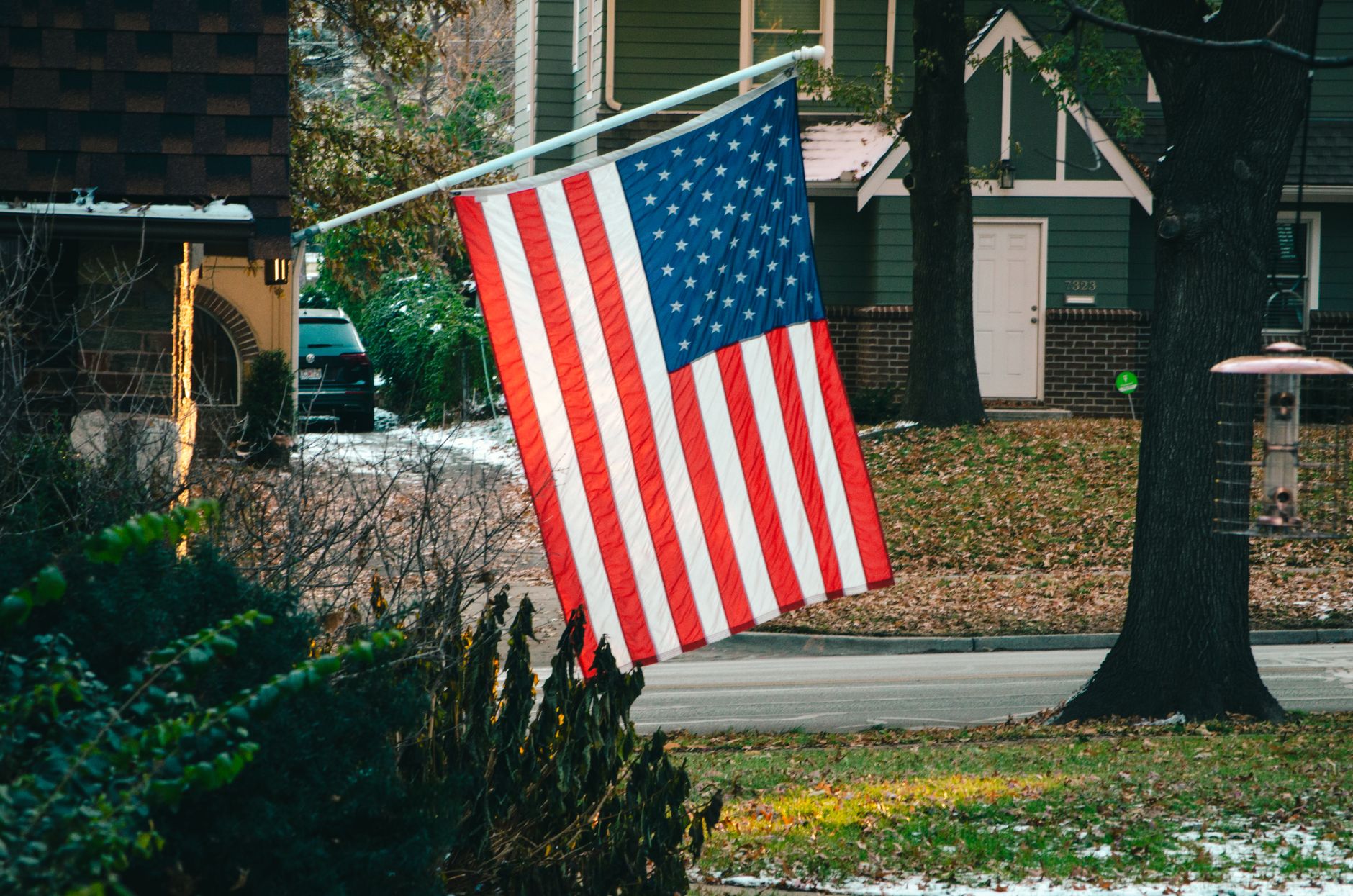
The First Amendment protects a homeowner‘s right to display flags on their own property, provided the flag is not obscene or part of a scheme to harass neighbors through numerous flags or intimidating displays. In theory, this means homeowners cannot be criminally charged simply for displaying a political flag. However, this legal protection does not prevent strangers from committing assault or vandalism against the homeowner or the flag itself. The law protects the right to display the flag; it does not protect against third-party violence triggered by the flag’s message.
In the Hewlett case, the perpetrator—Bechir Lehbeib, 26 years old—was charged with three hate crimes: robbery, assault, and criminal mischief. He was held on $50,000 bail after making antisemitic threats. This case demonstrates that while homeowners have the legal right to display flags, attackers can face serious criminal consequences. However, the limitation here is enforcement: in the Boynton Beach case from 2018, no arrest was reported in available sources, meaning the attacker potentially evaded accountability despite committing a serious assault with eyewitnesses and a description of his vehicle.
Documented Cases and Attack Patterns
The Boynton Beach attack on July 4, 2018, followed a specific pattern common to flag-related assaults: escalation during politically charged events. Independence Day is a patriotic holiday when flag displays are particularly common, making it a flashpoint for confrontations in polarized communities. The attacker in that case was described as an older white male in a small silver 2-door car. When Good refused to remove his flag, the attacker punched him, and when Good attempted to defend himself, the driver dragged him with the car. Good suffered bumps and bruises, though the incident could have resulted in far more serious injury or death had the circumstances been slightly different.
The Hewlett case in February 2024 reveals a different pattern: targeted theft combined with violence. The perpetrator, Lehbeib, didn’t simply argue; he stole both the Israeli-American flag and the “We Stand with Israel” flag from Binyaminov’s property. When Binyaminov came out to confront him about the theft, Lehbeib punched Binyaminov in the face, placed him in a chokehold, and headbutted him. Significantly, Lehbeib had entered the United States illegally through the Arizona border in November 2023, just three months before the attack. He made explicit antisemitic threats, stating “I’m from Palestine, you Jews are killing Palestinians” and “kill all the Jews.” This case illustrates that flag-related attacks can be connected to broader ideological conflicts and that the perpetrators are not always known to the community.

What Safety Measures Can Homeowners Take?
Homeowners who want to display flags should consider several practical safety measures. First, install outdoor security cameras that record activity on the property and in the surrounding area. This serves both as a deterrent and as evidence if a confrontation occurs. Second, ensure that flags are secure and difficult to steal—using heavy-duty flag poles and clips rather than flags that can be easily pulled down.
Third, consider the visibility and prominence of the flag; while there is no legal obligation to hide a flag, a flag that is less immediately obvious to passing strangers may reduce the likelihood of attracting confrontational individuals. The tradeoff with these measures is that excessive security precautions can change the character of the home, making it feel fortified rather than welcoming. Additionally, cameras do not prevent attacks in the moment; they only document them. In the Boynton Beach case, even an eyewitness account and vehicle description did not apparently lead to an arrest, suggesting that documentation alone may not result in prosecution without sustained investigative effort. Homeowners must also consider that in some cases, simply avoiding the display of a controversial flag might eliminate the risk entirely, but this comes at the cost of exercising their First Amendment right.
📨 Get Free Accountability Coverage Alerts
Free · No spam · Unsubscribe anytime
The Role of Hate Crimes and Assault Laws
When a flag-related confrontation becomes violent, the legal framework shifts from property rights to criminal assault and potentially hate crimes. In the Hewlett case, the charges included hate crimes because the attack was motivated by the victim’s religion and the flags’ pro-Israel message. Hate crime statutes in many states increase penalties when an assault or other crime is motivated by bias based on race, religion, ethnicity, national origin, sexual orientation, or gender identity. Proving a hate crime requires demonstrating that the perpetrator’s bias motivated the crime, not merely that bias existed.
A significant limitation in prosecuting these cases is that many assaults over flags may not meet the legal definition of a hate crime if the motivation is purely political rather than based on a protected class. For example, attacking someone over a Trump flag might be prosecuted as simple assault, not a hate crime, even if the perpetrator was motivated by their hatred of Trump supporters as a political group. The Hewlett case succeeded as a hate crime prosecution because the flag represented a religious identity (Israeli/Jewish), which is a protected class under hate crime law. Additionally, the burden of proof in criminal cases is high, requiring proof “beyond a reasonable doubt,” which means that without clear statements by the perpetrator about their bias (as Lehbeib made), proving the hate crime element can be challenging.

What Homeowners Should Do If Attacked
If a homeowner is physically attacked over a yard flag, the immediate steps are to prioritize personal safety, call law enforcement, and seek medical attention if injured. Document the attacker’s appearance, vehicle, and any statements they make. Provide this information to police and request that they investigate both assault and any applicable hate crime charges.
Follow up with the police department to ensure the case is being investigated; in some jurisdictions, minor assaults may not receive the same investigative resources as other crimes. In the Boynton Beach case, Good did exactly what he should have done—he documented the incident and reported it—yet no arrest was reported, suggesting either that the investigation was unsuccessful or that the case was deprioritized. In the Hewlett case, the prompt identification and arrest of Lehbeib may have resulted from multiple factors: the incident occurring in a suburb with active law enforcement, eyewitness information, security cameras, and the severity and explicit nature of the hate speech involved. Homeowners should also consider consulting with an attorney about civil remedies, including a civil lawsuit against the attacker for damages, which requires a lower standard of proof than criminal prosecution.
The Broader Context of Political Polarization and Safety
The rise in flag-related confrontations reflects broader tensions in American society around political polarization, immigration, and cultural identity. As political divisions have deepened, homeowners’ displays of flags have become more visible markers of political affiliation or cultural identity, and some individuals have responded with hostility rather than peaceful disagreement. The gap between legal protections and physical safety has widened: homeowners have greater First Amendment rights than ever to display flags, yet face increasing risks of confrontation in highly polarized communities.
Looking forward, this trend raises important questions about how communities can coexist when fundamental political and cultural disagreements are so visibly expressed in residential spaces. Some communities have developed informal norms of tolerance for diverse flag displays; others have experienced increasing tensions. The challenge for law enforcement is balancing First Amendment protections with the obligation to prevent and prosecute violent crimes. The challenge for homeowners is deciding how visibly to express their political or cultural identity while remaining safe on their own property.
Conclusion
Homeowners displaying yard flags have been attacked by strangers in multiple documented cases, including a July 2018 assault in Boynton Beach, Florida, and a February 2024 hate crime assault in Hewlett, New York. While the First Amendment legally protects homeowners’ rights to display flags on their property, this legal right does not prevent physical violence from strangers who disagree with the flag’s message.
Homeowners who choose to display flags should be aware of the potential for confrontation, take practical safety measures like installing cameras, and understand the legal remedies available if they are assaulted. If attacked over a flag display, homeowners should prioritize their safety, contact law enforcement, document the incident, and follow up with authorities to ensure the case is investigated. The broader question of how to maintain civil coexistence in politically and culturally diverse communities remains unresolved, requiring both individual caution and collective commitment to the principle that disagreement, however strong, does not justify violence.
You Might Also Like
- Homeowner Says Political Flag Led to Attack in His Own Yard
- Man Claims Trump Flag Made Him a Target During Holiday Attack
- Trump Flag in Yard Sparks Alleged Assault, Homeowner Says