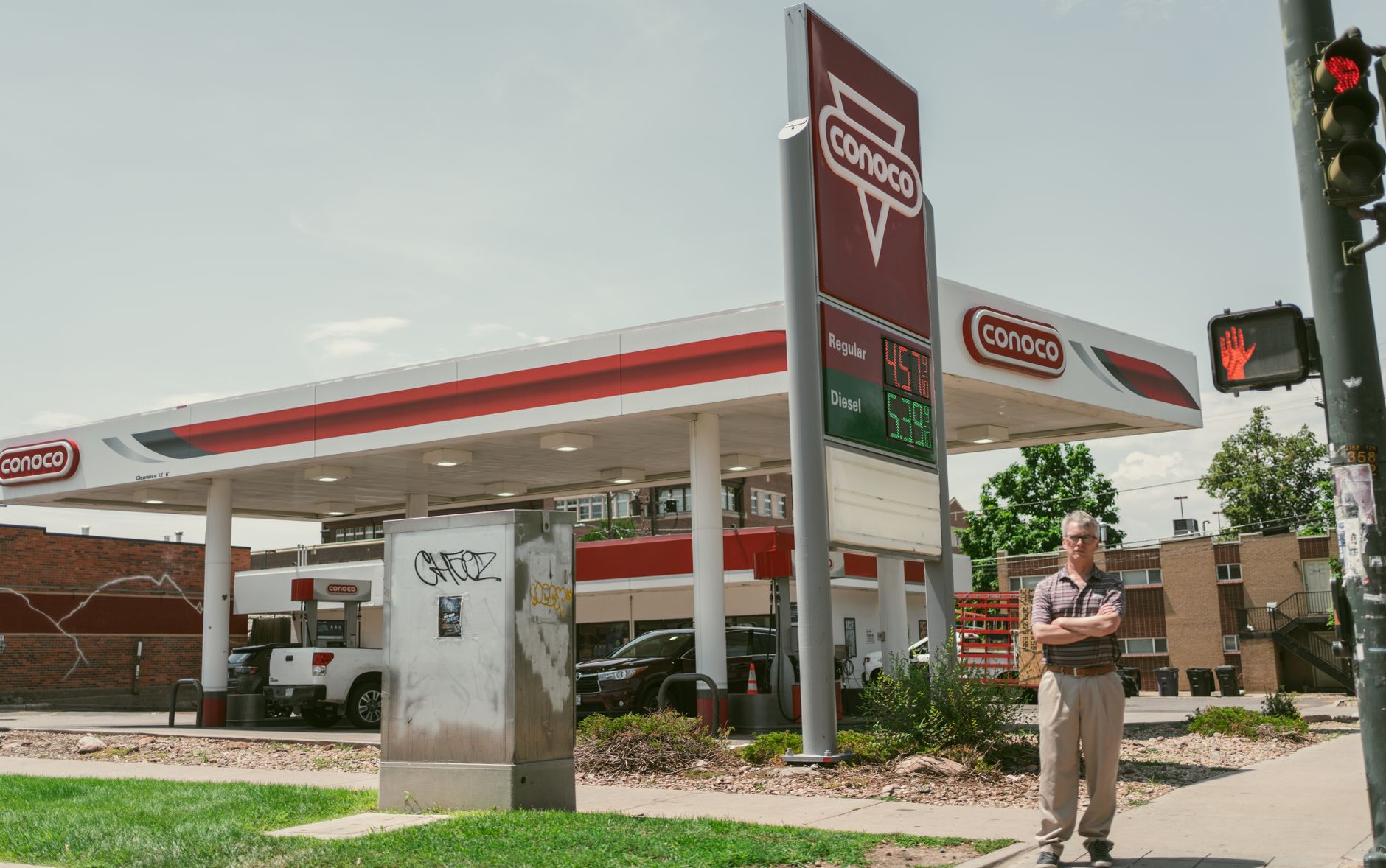
Hurricane season could significantly impact gas prices in 2026, but current forecasts suggest a below-normal Atlantic season may spare consumers from the worst disruptions. The question isn’t whether hurricanes affect fuel costs—they absolutely do—but whether this particular hurricane season will materialize aggressively enough to override projections showing the national average gas price dropping to $2.97 per gallon, the lowest level since 2020. A major hurricane disrupting Gulf Coast refineries or offshore crude production could send prices spiking 25 to 30 cents per gallon almost overnight, erasing months of price relief.
However, meteorologists expect El Niño conditions to suppress hurricane formation through 2026, potentially resulting in only 8 to 13 named storms instead of the typical 12 to 14, which would reduce but not eliminate the risk of fuel price disruption. The real dynamic at play involves competing forces: a weakening hurricane season due to atmospheric conditions working in consumers’ favor, balanced against the inherent volatility of oil markets where a single unexpected storm can override broader forecasts. Understanding how these factors interact is essential for anyone tracking fuel costs or concerned about how energy prices ripple through the broader economy and consumer finances.
Table of Contents
- Will Gas Price Predictions Hold If Hurricane Season Stays Quiet?
- How Atlantic Hurricane Formation Actually Impacts Crude Oil and Refining Capacity
- El Niño’s Emerging Role in Suppressing 2026 Hurricane Development
- What One Major Hurricane Could Cost Consumers at the Gas Pump
- Why 2026 Fuel Prices Will Remain Volatile Beyond Hurricane Risk
- Are There Actionable Ways for Consumers to Mitigate Fuel Price Risk?
- Looking Beyond 2026: How Climate Change Could Reshape Hurricane-Fuel Price Dynamics
- Conclusion
Will Gas Price Predictions Hold If Hurricane Season Stays Quiet?
gasBuddy’s 2026 fuel price outlook predicts substantial relief compared to 2025, projecting the national average at $2.97 per gallon for the year—down from $3.10 in 2025 and marking the lowest annual average since 2020. These projections assume relatively normal market conditions: typical seasonal demand patterns, routine refinery maintenance, and no major supply disruptions. Diesel prices, currently sitting at $3.78 per gallon as of May 2026, are expected to remain elevated relative to gasoline but follow a similar downward trajectory. During summer months, when gasoline refineries undergo seasonal maintenance transitions, prices may briefly climb into the low $3.20s per gallon, but this temporary spike is built into baseline forecasts.
The critical assumption underlying these projections is that the Atlantic hurricane season will behave as forecasted—below normal. If that assumption holds, the predicted price declines have a strong likelihood of materializing. However, this creates a false sense of stability: even in a below-normal season, a single major hurricane can devastate specific offshore platforms or coastal refineries, causing the localized disruptions that translate into 20 to 40 cent per gallon price spikes at the pump. The meteorological data supports optimism, but market optimism doesn’t account for tail-risk events that, while statistically less likely, carry outsized impact when they occur.
How Atlantic Hurricane Formation Actually Impacts Crude Oil and Refining Capacity
The Gulf of Mexico produces roughly 17 percent of U.S. crude oil and houses 45 percent of domestic refining capacity, making it geographically concentrated in the nation’s most active hurricane zone. When a major hurricane approaches—defined as Category 3 or stronger—oil companies evacuate offshore platforms and shut down production, sometimes losing 1.5 million barrels per day of crude output. This isn’t a minor hiccup; for perspective, the United States consumes roughly 21 million barrels per day, meaning a major hurricane disruption removes about 7 percent of daily supply from the market.
Refinery disruptions compound the problem: coastal refineries in Louisiana and Texas must shut down operations or reduce capacity during hurricane approach and recovery, further constraining fuel supply when demand remains normal or elevated. The price mechanism operates with brutal efficiency: when supply suddenly contracts while demand stays constant, prices spike immediately. Analysts at the Convenience Industry show that gas prices can rise 25 to 30 cents per gallon from a single major hurricane event, with immediate spikes of 20 to 40 cents possible during the acute disruption window. A critical limitation in hurricane impact forecasting is that severity matters less than location—a major hurricane tracking toward the Louisiana coast causes far more economic damage than an equivalent storm that misses oil infrastructure. This means even in a below-normal season, two or three properly positioned hurricanes could offset months of supply abundance elsewhere.
El Niño’s Emerging Role in Suppressing 2026 Hurricane Development
The National Oceanic and Atmospheric Administration and AccuWeather both forecast a below-normal 2026 Atlantic hurricane season, predicting 8 to 13 named storms, 4 to 7 hurricanes, and 2 to 4 major hurricanes—well below the 30-year average of 12 named storms. This suppression is primarily driven by El Niño conditions developing in the Pacific Ocean. El Niño warm-water patterns increase wind shear over the Atlantic basin, making it harder for tropical depressions to organize into sustained hurricanes. The mechanism is straightforward: stronger wind shear tears apart developing storms by shearing the top off the convection column, preventing the warm core from establishing itself. This effect persists throughout the Atlantic basin from June through November, the peak hurricane season months.
However, the scientific literature on El Niño hurricane suppression comes with an important caveat: the relationship is statistically robust but not deterministic. Even in strong El Niño years, isolated major hurricanes develop, sometimes in unexpected locations. The 2015 Atlantic season, for example, occurred during a very strong El Niño and produced well below normal activity—supporting the theory—but the 2009 season showed moderate activity despite El Niño conditions. This means the 8-to-13 forecast for 2026 should be understood as a probability distribution, not a ceiling. Consumers and businesses shouldn’t interpret a below-normal forecast as permission to ignore hurricane risk entirely; instead, they should recognize that the odds have shifted but not disappeared.

What One Major Hurricane Could Cost Consumers at the Gas Pump
To understand the concrete impact, consider Hurricane Ida in 2021, which made landfall near Port Fourchon, Louisiana—the hub of Gulf of Mexico oil operations. The storm took offline approximately 1.7 million barrels per day of crude production and shut several major refineries simultaneously. Within days, crude oil prices jumped roughly 10 percent, and retail gas prices rose from approximately $3.18 per gallon to $3.50 per gallon across the Gulf Coast region, with prices in some areas near refineries climbing even faster. For a typical household driving 15,000 miles per year in a vehicle averaging 25 miles per gallon, this 32-cent per gallon increase equated to an extra $192 in annual fuel costs—money diverted from groceries, healthcare, or other household needs.
The disruption extended beyond the acute price spike. Refineries require weeks or even months to fully restart after storm damage, meaning supply constraints persist long after the meteorological threat passes. For consumers locked into variable-rate fuel expenses—including small business owners, trucking companies, and ride-sharing drivers—even a temporary spike creates budget stress. During the 2021 recovery, prices remained elevated for approximately six weeks, imposing cumulative cost increases that far exceeded the immediate post-storm spike. This example illustrates why even a below-normal hurricane season forecast doesn’t eliminate fuel price risk; the entire $2.97 average for 2026 becomes irrelevant for someone paying $3.60 per gallon for three consecutive months due to a single storm.
📨 Get Free Accountability Coverage Alerts
Free · No spam · Unsubscribe anytime
Why 2026 Fuel Prices Will Remain Volatile Beyond Hurricane Risk
Forecasters explicitly acknowledge that 2026 fuel prices are expected to remain volatile, driven by seasonal demand shifts, refinery maintenance schedules, hurricane season, and geopolitical risks. Seasonal volatility alone—the predictable fluctuation between winter and summer driving seasons—typically causes 40 to 60 cent per gallon swings even in calm years. Summer gasoline contains more expensive boutique blends to reduce emissions, while winter blends cost less to produce, automatically pushing summer prices higher. Additionally, a significant refinery closure for maintenance, which happens annually in the industry, can reduce capacity and push prices upward for weeks until operations resume. Geopolitical risks add another volatility layer.
Tensions in the Middle East, sanctions on oil-producing nations, or supply chain disruptions at foreign ports can shift global crude prices within hours. The U.S. oil market, while domestic-production focused, remains interconnected with global crude pricing through Brent crude benchmarks and international trade dynamics. A limitation in the GasBuddy forecast is that it assumes geopolitical conditions remain relatively stable; any major shift in global supply would require reforecasting. This means consumers should view the $2.97 average projection as a baseline scenario dependent on certain assumptions holding true, not as a guaranteed price floor. The volatility warning is particularly important for families on tight budgets and businesses with thin margins.

Are There Actionable Ways for Consumers to Mitigate Fuel Price Risk?
Individual consumers have limited direct mechanisms to hedge fuel price volatility, but several strategies can reduce exposure. Purchasing fuel-efficient vehicles eliminates a portion of price risk through reduced consumption—a vehicle averaging 35 miles per gallon versus 25 miles per gallon saves approximately $300 per year at current prices, providing a buffer against unexpected spikes. Some credit cards offer cash back on fuel purchases, effectively discounting fuel by 2 to 5 percent; while modest, these savings compound over months of higher prices. Carpooling, remote work arrangements, and consolidating trips reduce aggregate fuel consumption.
For businesses and consumers tracking fuel costs strategically, monitoring NOAA’s hurricane forecasts and understanding how they interact with crude oil futures prices provides information advantage. When hurricane season forecasts change—becoming more aggressive after initial predictions—crude prices typically spike in anticipation, offering a signal that fuel price spikes may be coming. Some fleet operators and municipalities purchase fuel in advance during low-price windows to lock in costs before expected seasonal increases or disruptions. However, these tactics require capital, carry execution risk, and aren’t available to all consumers. For most households, the practical approach is maintaining awareness of price trends and adjusting driving patterns modestly when prices spike.
Looking Beyond 2026: How Climate Change Could Reshape Hurricane-Fuel Price Dynamics
Climate scientists project that Atlantic hurricane intensity, rather than frequency, may increase over coming decades as ocean temperatures warm. This carries troubling implications for fuel markets: a 2030s season with the same number of storms as 2026 but with stronger average intensity would pose greater risks to Gulf Coast oil infrastructure. A Category 5 hurricane, which is capable of near-total destruction of exposed infrastructure, produces different economic consequences than a Category 3 event affecting the same location. Current hurricane forecasting models, including NOAA’s outlook for 2026, don’t explicitly account for long-term climate trends altering storm behavior; forecasts remain based on historical patterns that may not hold if climate baselines shift.
The 2026 season represents a near-term window where favorable conditions—El Niño suppression and below-normal forecast—may deliver relief on fuel prices. However, consumers and policymakers should view this as a temporary advantage rather than a permanent shift. Energy independence efforts, refinery resilience investments, and offshore platform hardening become increasingly valuable if future hurricane seasons deliver higher-intensity storms even at lower frequencies. For now, the outlook favors lower average fuel prices in 2026, but that average conceals the tail risk that even one properly positioned hurricane could derail projections entirely.
Conclusion
Gas price predictions for 2026 show the national average declining to $2.97 per gallon, the lowest since 2020, assuming normal market conditions and a below-normal Atlantic hurricane season. The meteorological forecast supports this optimism: El Niño conditions are expected to suppress hurricane formation, reducing the probability of the major infrastructure-disrupting storms that typically drive fuel price spikes. However, these projections carry conditional risk that consumers should understand clearly: a single major hurricane disrupting Gulf Coast refineries or offshore production could temporarily spike prices 25 to 40 cents per gallon, wiping out months of projected savings and imposing real economic pain on households and businesses.
The practical takeaway is that 2026 likely offers price relief relative to 2025, but volatility remains embedded in fuel markets as a permanent feature. Consumers should interpret gas price forecasts as baseline scenarios dependent on stated assumptions, not guarantees. Monitoring hurricane season forecasts, maintaining fuel-efficient driving habits, and building modest flexibility into transportation budgets provide pragmatic approaches to managing this inherent uncertainty. The interaction between hurricane season and fuel prices illustrates a broader truth about energy markets: major economic impacts depend not on average conditions but on the specific tail risks—rare, severe events—that can overwhelm statistical predictions.
You Might Also Like
- Gas Price Predictions: Could Fuel Costs Drop by Fall 2026?
- Gas Price Predictions: What OPEC Could Mean for Drivers
- Gas Price Predictions: Summer Travel Season May Bring Price Spikes