
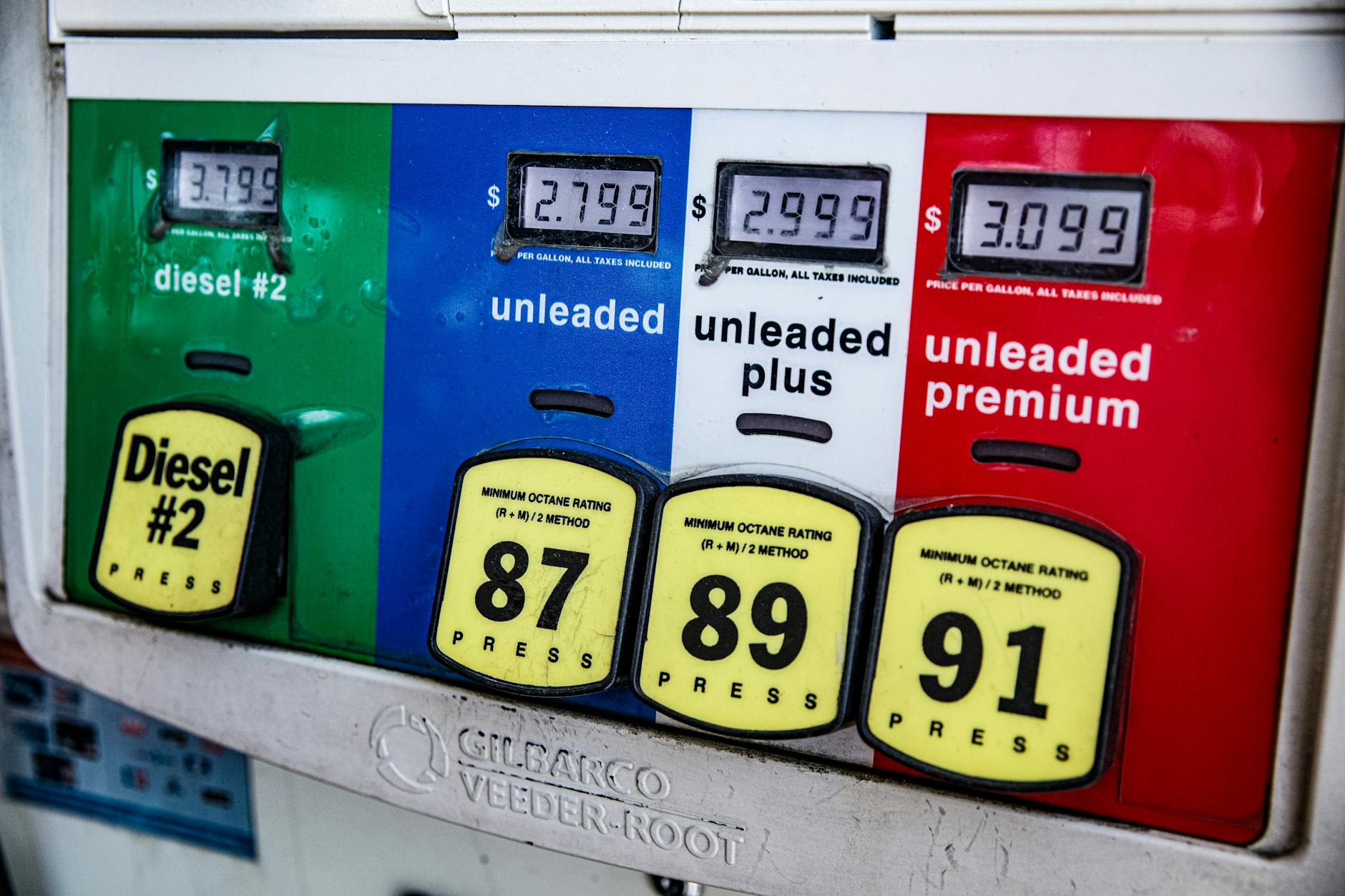
Analysts are sounding alarms about potential gasoline supply shortages as prices climb toward four-year highs in May 2026. The U.S. retail gasoline average has reached $4.48 per gallon—a 50% increase compared to pre-conflict pricing levels—while futures have climbed above $3.60 per gallon, approaching the $3.75 peak touched on May 4. These price surges reflect genuine supply concerns tied to geopolitical disruptions that have fundamentally disrupted global oil markets, not temporary market fluctuations or seasonal adjustments.
The core problem driving these warnings is straightforward: Iran’s closure of the Strait of Hormuz in February 2026 cut off approximately 20% of worldwide oil supply overnight. When one of the world’s most critical energy chokepoints goes dark, the ripple effects cascade globally. Middle East energy exports stalled beginning in early March, forcing global oil inventories to drop at a record pace of roughly 4 million barrels per day. This isn’t speculation—it’s the observable reality reshaping energy markets and household budgets across America.
Table of Contents
- Why Gas Prices Are Surging and What Supply Problems Concern Analysts
- The Iran-Hormuz Disruption and Global Oil Inventory Crisis
- Why California Faces Extreme Gas Price Pressures
- How Global Supply Disruptions Drive Retail Prices at the Pump
- Warnings About Potential Price Escalation and Shortage Risks
- U.S. Gasoline Stocks Under Pressure Despite Increased Production
- Future Outlook and Ongoing Concerns
- Conclusion
Why Gas Prices Are Surging and What Supply Problems Concern Analysts
The mechanics behind current price increases are rooted in the supply-demand physics that have governed petroleum markets for over a century. When a major source of global oil is suddenly removed from circulation, prices rise—and they rise sharply. As of May 18, 2026, gasoline sits at $3.72 per gallon, up 19.42% over the past month and 73.81% year-over-year. These aren’t marginal changes; they represent a fundamental reshaping of what Americans pay at the pump. Energy analysts and major research institutions including Brookings have warned that crude oil prices could reach $150 per barrel if current shipping disruptions and supply constraints persist. This threshold has serious implications for consumer fuel costs.
To put that in perspective, when crude traded in the $100+ per barrel range during previous crises, gas prices nationally pushed toward $5 per gallon in many regions. Current conditions show that risks have escalated again. The supply problems analysts emphasize aren’t limited to crude oil alone. Diesel and jet fuel shortages across Europe and Asia are forcing international refineries to shift processing capacity away from gasoline production. This means that even as crude becomes scarcer, the refineries that convert it into usable gasoline are operating under new constraints. The compounding effect—less crude available and fewer refineries optimized for gasoline output—explains why warnings about supply problems have intensified.
The Iran-Hormuz Disruption and Global Oil Inventory Crisis
Iran’s February 2026 closure of the Strait of Hormuz represents one of the most consequential energy supply disruptions in recent decades. The Strait normally handles roughly 20% of worldwide oil supply, making it the single most critical maritime energy chokepoint globally. When a nation closes this passageway, it’s not a minor bottleneck—it’s the functional equivalent of removing one-fifth of the planet’s oil production from available markets. The consequence has been a historic drawdown of global oil inventories. According to data from the U.S. Energy Information Administration (EIA), inventories are decreasing at approximately 4 million barrels per day. To understand the scale: that’s equivalent to removing the entire daily oil production of Kuwait from available supply, every single day, with no replacement. Since early May, this drawdown has continued despite increased U.S.
production, signaling that global demand continues to exceed available supply. The limitation here is stark—the U.S. cannot increase domestic production fast enough to offset the Hormuz closure, making America dependent on finding alternative sources or accepting tighter supplies. This inventory crisis creates a dangerous dynamic. The longer the Strait remains closed, the more depleted global reserves become, and the higher prices climb to ration limited supplies to users who can afford them. middle east energy exports have stalled since early March, meaning that other major producers in the region—Saudi Arabia, the UAE, Iraq—cannot export at normal volumes either. Even countries that aren’t directly blocked by the Strait are constrained by regional logistics breakdowns. Analysts warn that this creates a fragile situation where even minor disruptions could trigger sharp price spikes.
Why California Faces Extreme Gas Price Pressures
California presents a microcosm of broader supply vulnerabilities, but with an acute local dimension. The state currently has only 4 to 6 weeks of gasoline and diesel supply remaining, according to energy analysts tracking inventory levels. Californians are already paying $6.13 per gallon on average, which is 36% higher than the national average. This gap reflects both state-specific environmental regulations that limit refinery output and California’s geographic isolation from major fuel pipelines that serve the rest of the country. The regional nature of California’s fuel supply creates a dangerous feedback loop. Most of California’s gasoline and diesel come from a small number of in-state refineries, and those refineries operate under environmental constraints that limit the volume they can process.
When global supplies tighten, California’s isolation becomes a liability. The state cannot easily import additional supplies from Texas or other major refining centers because those supplies must travel long distances and often cannot bypass California’s fuel specification requirements. This means California experiences price shocks more severely than other regions. The warning here is direct: if the global supply crisis deepens, California could move from the current supply status of “4-6 weeks remaining” to genuine shortage conditions where consumers face fuel rationing or temporary unavailability. Even now, high prices are functioning as a rationing mechanism—some consumers defer driving or switch to public transportation to reduce fuel costs. But prices alone cannot solve a shortage; they can only make fuel more expensive for those who must purchase it.

How Global Supply Disruptions Drive Retail Prices at the Pump
The connection between global oil markets and the price you pay at the pump is direct but often misunderstood. Gasoline futures contracts trade on expectations about future supply and demand. When analysts warn that inventories are dropping at 4 million barrels per day and that the Strait of Hormuz remains closed, futures prices rise—which immediately flows into retail prices. Retailers adjust their wholesale prices daily based on futures, so disruptions at the global level translate into household expenses in real time. The comparison is instructive: in May 2024, the U.S.
retail gasoline average was approximately $3.00 per gallon. In May 2026, it sits at $4.48 per gallon. That represents a $1.48 per gallon increase, or roughly $22 more per tank on a typical 15-gallon fill-up. For a household filling up twice weekly, that’s an additional $88 per week in fuel costs—or roughly $4,600 per year. This illustrates the economic magnitude of supply crisis for American consumers. The tradeoff is unavoidable: either consumers pay higher prices, or they reduce driving and alter behavior—both outcomes represent economic strain.
📨 Get Free Accountability Coverage Alerts
Free · No spam · Unsubscribe anytime
Warnings About Potential Price Escalation and Shortage Risks
Energy analysts have explicitly warned that crude oil could reach $150 per barrel if the Strait of Hormuz remains closed and disruptions continue. The current situation is not stable equilibrium; it’s an actively deteriorating dynamic where inventories decline daily and supplies tighten. If crude reaches $150 per barrel, historical precedent suggests that retail gasoline could approach or exceed $5.50 per gallon in many U.S. regions, with California potentially seeing $8-9 per gallon. The limitation of current policy responses is evident: the U.S. Strategic Petroleum Reserve can release oil to dampen prices in the short term, but it is not infinite. Every barrel released today is unavailable tomorrow. Increasing domestic production takes months or years, not weeks.
Alternative sources like non-OPEC producers are already operating at or near capacity. These constraints mean that the tools available to address the supply crisis are fundamentally limited. The warning from analysts is that complacency is dangerous—the current situation can deteriorate faster than policy responses can address it. Additionally, diesel and jet fuel shortages in other regions are creating secondary effects on the U.S. energy market. When European and Asian refineries reduce gasoline output to prioritize diesel and jet fuel, global gasoline becomes scarcer. This scarcity is transmitted to the U.S. market through price signals, making American gasoline more expensive even if domestic supplies remain adequate. The United States is not insulated from global energy crises; it is deeply integrated into them.

U.S. Gasoline Stocks Under Pressure Despite Increased Production
The most telling indicator of supply stress is the behavior of U.S. gasoline inventories themselves. According to EIA data, U.S. gasoline stocks sank for 13 consecutive weeks through early May despite increased domestic production. This paradox—production is up but inventories are down—reveals the depth of global demand.
American refineries are operating at high capacity, yet supplies are still insufficient to meet global demand and maintain stable inventory levels. This pattern indicates that demand destruction hasn’t occurred at the necessary scale. When prices rise, some consumers reduce driving or shift to public transportation, but not enough to balance supply. Europe and Asia continue to compete for available supplies, bidding prices higher. American refineries must choose between serving domestic demand and selling to higher-paying international buyers. These market dynamics push prices upward and inventory levels downward, creating the conditions for further price escalation.
Future Outlook and Ongoing Concerns
The path forward depends heavily on geopolitical developments and whether the Strait of Hormuz reopens. Current analyst projections suggest that if disruptions continue through summer 2026, global inventories will face critical depletion sometime in late summer or early fall. This timeline creates urgency for policymakers and consumers alike. Summer is traditionally peak driving season in the U.S., meaning that any supply crisis will intersect with elevated demand—a combination that historically produces the highest fuel prices.
Energy markets are forward-looking, meaning that current prices already reflect expectations about future supply and demand. Analysts are warning not because conditions are optimized but because they see downside risks escalating. If the geopolitical situation deteriorates further, or if unexpected disruptions occur in other producing regions, prices could accelerate beyond current projections. Conversely, if the Strait reopens or new supplies come online, prices could moderate. The uncertainty itself is the key risk factor.
Conclusion
Gas prices have surged to near four-year highs as a direct consequence of the Iranian closure of the Strait of Hormuz in February 2026, which cut off approximately 20% of worldwide oil supply. The warning from analysts is grounded in observable facts: global oil inventories are declining at approximately 4 million barrels per day, U.S. gasoline stocks have fallen for 13 consecutive weeks despite increased production, and California has only 4-6 weeks of supply remaining. These aren’t speculative concerns—they are the current reality reshaping energy markets.
Consumers and policymakers should understand that the supply problems analysts emphasize could deteriorate further. Crude oil reaching $150 per barrel is not a worst-case fantasy; it is a plausible outcome if current disruptions persist. The U.S. can respond with Strategic Petroleum Reserve releases and increased domestic production, but these tools have limits. Ultimately, the duration and resolution of the geopolitical crisis driving the Strait closure will determine whether current high prices represent a temporary shock or a sustained new reality for American consumers and the economy.
You Might Also Like
- Gas Prices Today: What Analysts Are Saying About Summer Fuel Costs
- Gas Prices Today: Why Americans Are Talking About Gas Again
- Gas Prices Today: Analysts Predict Volatile Summer Fuel Costs