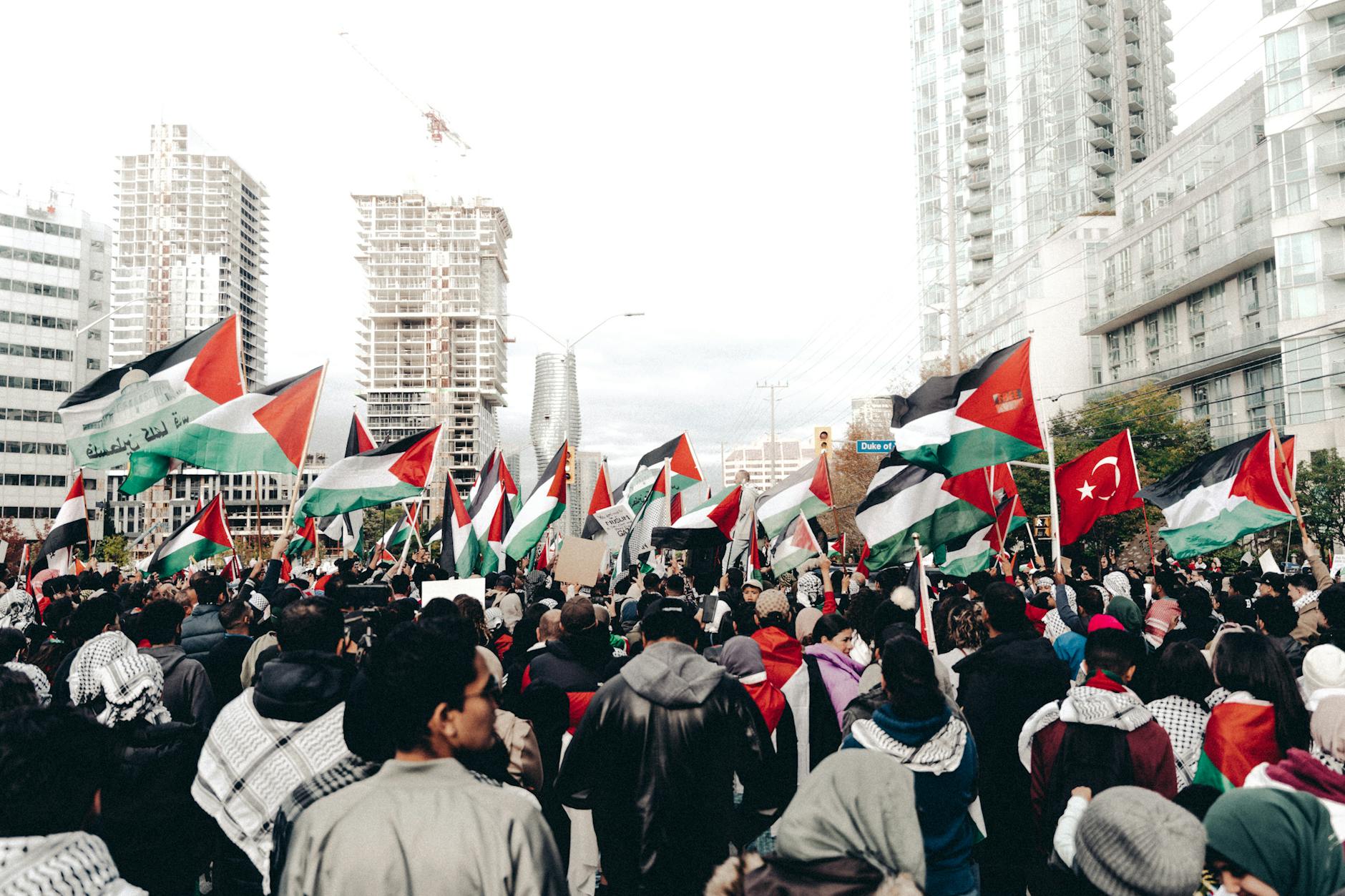
Cities are becoming political battlegrounds because they have become concentrations of economic power, cultural influence, and voting strength that both major parties are fighting to control. Over the past decade, the partisan gap between urban and rural America has widened dramatically, with Democrats dominating major city centers while Republicans control surrounding areas and smaller cities. This geographic polarization has turned municipal elections, city council decisions, and local policy into proxies for national political conflicts—from housing and law enforcement to education and business regulation.
The fight over cities matters because whoever controls a city often controls broader regional policy, sets cultural trends that ripple nationally, and commands substantial voting blocs. Cities like New York, Los Angeles, Chicago, Phoenix, and Austin have become laboratories where parties test political strategies, push policy agendas, and compete for demographic groups they need nationally. A single mayoral race in a major city can attract national donor money, national media coverage, and national political figures because the stakes extend far beyond local pothole repair.
Table of Contents
- How Did Cities Become Partisan Strongholds?
- The Federal-Local Conflict and Its Dangers
- How Crime and Public Order Became Partisan Urban Battlegrounds
- Housing Costs and the Political Blame Game in Cities
- The Business Regulatory Battleground and Corporate Flight
- Education Wars and School Board Takeovers
- The Economic Impact: Who Benefits and Who Doesn’t
- The Future of Cities in a Polarized America
- Conclusion
How Did Cities Become Partisan Strongholds?
The transformation of cities into political strongholds happened gradually but accelerated after the 2008 financial crisis. Young, college-educated voters and minority communities concentrated in urban centers began voting overwhelmingly Democratic, while older, white working-class voters moved to suburbs and exurbs. By 2020, the Democratic vote share in America’s largest cities had reached historic highs—Biden won 67% of votes in the nation’s 50 largest cities, compared to 37% of votes in rural areas. This wasn’t inevitable; in the 1960s and 1970s, cities had much more mixed partisan representation.
Technology accelerated this shift. High-wage tech jobs concentrated in specific metros (San Francisco, Seattle, Austin, New York), drawing young college graduates who lean Democratic. Meanwhile, manufacturing jobs declined in older industrial cities, reducing working-class Republican representation. Additionally, immigration patterns shifted; immigrants and children of immigrants vote Democratic at much higher rates, and they settle primarily in cities. The result is that America’s largest cities have become Democratic supermajorities, while exurban counties have become Republican supermajorities.
The Federal-Local Conflict and Its Dangers
This partisan concentration has created a dangerous misalignment between what cities want and what republican-controlled state legislatures allow. When voters in a Democratic city pass laws or elect officials that state legislatures disapprove of, conflict erupts. Florida’s Republican legislature has threatened to strip voting power from Democratic-controlled cities. Texas republicans have restricted how much property tax Austin can levy. Arizona passed laws making it harder for Phoenix to control its own water supply.
These aren’t theoretical disputes—they affect whether cities can fund schools, police, and infrastructure. The real warning here is that partisan state control of cities undermines local accountability. When a city council is accountable to local voters but state legislators can override their decisions, residents lose meaningful power—and when Republicans control a Democratic city’s state (or vice versa), the gridlock deepens. This arrangement also creates opportunities for graft; state legislators can use their veto power over city decisions to extract donations, favors, or support for state-level candidates. Cities that do not match their state’s partisan makeup become laboratories for this kind of control.
How Crime and Public Order Became Partisan Urban Battlegrounds
Crime policy has emerged as the sharpest urban battleground, with Republicans attacking Democratic mayors for “soft on crime” policies while democrats claim Republican-dominated areas have higher violent crime rates. The 2020 George Floyd protests and resulting calls to “defund the police” provided Republicans with a powerful electoral weapon against Democratic cities. Mayors in New York, Los Angeles, Philadelphia, and Portland faced enormous pressure as both violent crime and property crime increased in parts of their cities during 2020-2022. The reality is more complex than either side admits.
Homicides did spike dramatically in many Democratic-led cities beginning in 2020, but they also spiked in Republican-led cities and counties. Dallas, Houston, and Jacksonville saw murder increases comparable to Chicago’s. However, the perception stuck: Democratic cities became associated with disorder, and Democratic mayors paid the price in elections. San Francisco’s progressive mayor faced a successful recall in 2022, driven partly by crimes against tourists and businesses. This misalignment between reality and perception—where all cities struggled with crime but only Democratic ones faced massive voter backlash—shows how urban politics have become nationalized and weaponized.
Housing Costs and the Political Blame Game in Cities
Housing policy reveals how cities have become partisan proxy wars where local decisions generate national political consequences. Progressive cities like San Francisco and New York imposed strict zoning laws, regulated landlords heavily, and restricted housing supply out of environmental and tenant-protection concerns. The result was housing that became completely unaffordable for ordinary workers, doctors, and teachers. Young, lower-income voters who should be Democratic constituencies can’t afford to live in Democratic cities—so they leave or never arrive.
Meanwhile, Democratic politicians blamed Republican state governments and federal policy for housing costs, while Republicans blamed Democratic zoning and regulation. Both have a point: restrictive zoning is a city/local decision, but state policy (like California’s Prop 13) prevents cities from adapting. The practical outcome is that Democratic cities have become expensive, less diverse economically, and increasingly dominated by older homeowners who block new housing to protect their property values. Republicans have weaponized this by pointing to Democratic cities’ housing crises as proof that progressive governance doesn’t work. The tradeoff is cruel: cities that want tenant protections and environmental review get expensive housing; cities that want affordable housing have to reduce regulations and worker protections.
The Business Regulatory Battleground and Corporate Flight
Cities have also become battlegrounds over business regulation and tax policy. Democratic cities have imposed higher minimum wages, stricter environmental rules, stricter workplace regulations, and higher business taxes. Supporters argue these protect workers; critics argue they cause businesses to leave. San Francisco lost corporate headquarters to Austin and other tech hubs partly due to regulation and tax policy.
📨 Get Free Accountability Coverage Alerts
Free · No spam · Unsubscribe anytime
New York has seen similar corporate relocations, though the 2022-2023 exodus was smaller than predicted. The limitation here is that causation is unclear. Are businesses leaving Democratic cities because of regulation, or because other cities offer cheaper real estate, lower taxes, and less congestion? Tesla moved to Texas partly for regulatory relief but also because land and labor were cheaper. Meanwhile, many major corporations remain headquartered in expensive, regulated Democratic cities because that’s where talent is concentrated. The warning is that as cities become more partisan, they’re more likely to impose economically damaging regulations as political statements, not just good policy—and businesses fleeing high-tax Democratic cities then become Republican talking points about urban failure, even when the corporations themselves pursue contradictory policies elsewhere.

Education Wars and School Board Takeovers
School boards and education policy have become one of the most heated urban battlegrounds, with Republicans organizing to take control of school boards in Democratic cities and impose curriculum changes. Issues like parental rights, LGBTQ+ inclusion, racial curriculum, and pandemic school closures generated enormous partisan conflict. In school board meetings across America, Republicans and Democrats showed up in unprecedented numbers to fight over what children should be taught.
This is significant because city schools serve as forcing mechanisms for broader culture war conflicts. A local decision about whether gender-identity support is offered in schools becomes a national issue; debates over curriculum become proxies for fundamentally different views of what America is. The warning is that school boards, which were once technical bodies handling budgets and hiring, have become openly partisan political offices where the stakes are framed as existential—children’s safety, or parental rights, depending on your perspective. Neither side is entirely wrong, but the politicization means these decisions get made in the worst possible environment: through partisan passion rather than evidence.
The Economic Impact: Who Benefits and Who Doesn’t
The partisan warfare over cities has real economic consequences. Democratic cities have higher living costs, higher taxes, and stricter regulations, which pushes out lower-income residents and reduces diversity. Republican-leaning exurbs and small cities offer cheaper housing but often fewer jobs and lower wages. Workers and families with choices move toward whichever aligns with their politics and economics; workers without choices get left behind.
A teacher might avoid San Francisco because housing costs a month’s salary per room, but also might avoid a low-tax Texas town because wages are lower and schools are under-funded. The comparison is stark: San Francisco’s homelessness crisis, partly driven by housing costs and partly by mental health and drug policy decisions, has become a symbol of progressive governance failure. Meanwhile, rural homelessness is largely invisible but exists at similar or higher rates per capita. Yet one becomes a national scandal and the other doesn’t, because cities are where problems get media attention and political weaponization.
The Future of Cities in a Polarized America
As cities become more explicitly partisan strongholds, the question is whether American federalism can survive this arrangement. State legislatures increasingly restrict city powers, cities increasingly defy state laws, and both sides treat each other as adversaries rather than partners. The only durable solution is either de-escalation (which seems unlikely) or structural reform: giving cities genuine autonomy, reducing state interference, and accepting that cities will operate differently from surrounding areas. Some states are moving toward this (giving cities stronger home rule powers), while others are moving toward greater state control.
The forward-looking reality is that cities will remain politically divided because they’re economically, demographically, and culturally different from surrounding areas. That’s not a problem that political compromise can solve—it’s a structural fact. The problem is that neither political party has accepted that cities will be run differently, and both keep trying to control each other’s territory. That conflict will continue intensifying until either one party dominates completely, or cities and states find a way to coexist with genuine autonomy.
Conclusion
Cities have become political battlegrounds because they are now geographic, economic, and demographic strongholds where one party dominates overwhelmingly, making them valuable prizes for national political parties. The concentration of Democratic voters in major cities and Republican voters in surrounding areas has collapsed the moderate middle and turned local issues—crime, housing, education, business regulation—into national partisan proxy wars. This politicization makes worse policy in every domain: crime policy that’s designed to score political points rather than reduce violence, housing policy that protects old residents over new ones, education policy driven by cultural warfare rather than evidence.
The path forward requires accepting that cities operate differently than surrounding areas and that this difference is partly structural, not just partisan. Federal policy can address some of this through infrastructure funding, housing policy, and crime prevention that don’t hinge on whether cities are run by Democrats or Republicans. But locally, this conflict will persist as long as both parties treat cities as territory to be captured rather than as legitimate expressions of how people in those areas want to live.
You Might Also Like
- Why Housing Costs Are Becoming a Political Crisis
- Why Podcasts Are Replacing Cable News
- Why Blue Collar Workers Are Leaving the Left