
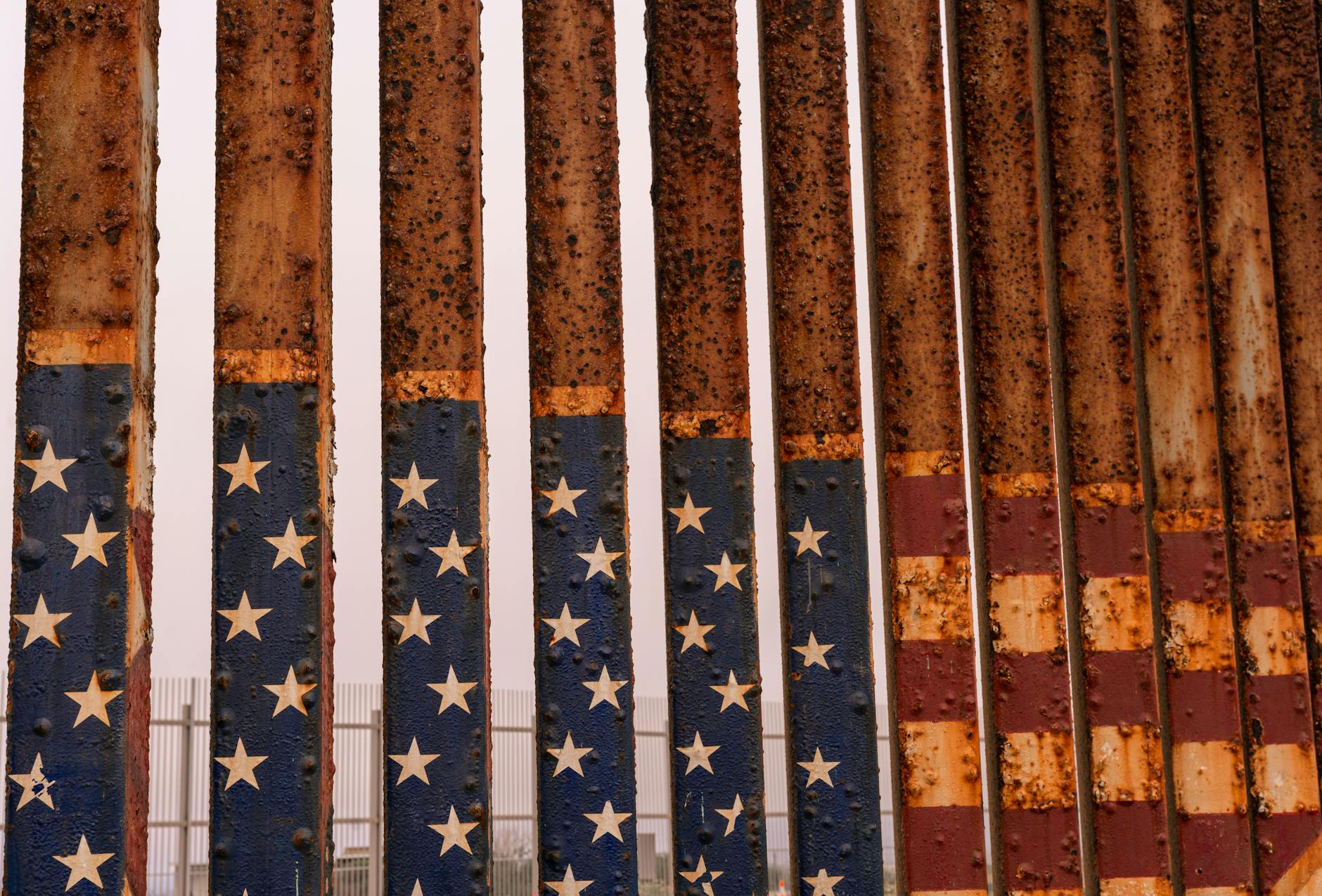
Standing in Mexico and observing the United States’ wealth gap feels surreal because the inequality is so visibly stratified, so openly unequal, that it appears almost theatrical in its extremes. From the perspective of someone in Mexico—a country that has its own profound wealth disparities—the American version feels different in kind, not just degree. The United States claims to be the world’s wealthiest nation, yet it has allowed the gap between the richest and poorest Americans to expand to levels not seen since the Gilded Age, while simultaneously tightening border policies and trade restrictions that directly affect cross-border workers and economies. A factory worker in Monterrey might see images of American homelessness alongside photos of Manhattan penthouses and recognize that the U.S.
inequality is not about scarcity—it’s about policy choices and wealth concentration enforced by law. What makes this perspective valuable is that it strips away the American narrative that wealth inequality is inevitable. In Mexico, people understand what actual resource scarcity looks like, yet they also see how political decisions—trade agreements, tariffs, labor policies—reshape who benefits and who suffers. The wealth gap you observe from Mexico reveals that American inequality is not a natural outcome of capitalism but a deliberately constructed system where policy decisions, tax structures, and regulatory frameworks have been deliberately shaped to favor capital accumulation for the already wealthy. This matters for understanding current policy debates because the Trump administration’s approach to tariffs, immigration, and corporate taxation all directly impact this wealth distribution—and the cross-border visibility makes the consequences harder to ignore.
Table of Contents
- What Does the Wealth Gap Look Like When You Remove the American Narrative?
- The Policy Architecture Behind the Visible Inequality
- Cross-Border Consequences and the Migration Pressure Valve
- Why the Perspective From Mexico Matters for American Policy Decisions
- The Limits of Addressing Inequality Without International Coordination
- Wealth Concentration in the Time of Digital Platforms and Global Supply Chains
- The Future of the Wealth Gap in an Era of Reshoring and Trade War
- Conclusion
What Does the Wealth Gap Look Like When You Remove the American Narrative?
When viewed from outside the United States, the American wealth gap loses the softening language that dominates domestic political discourse. americans often frame inequality as a matter of “opportunity” or “hard work,” but from Mexico’s vantage point, the structural barriers are transparent. The top 1 percent of Americans now holds more wealth than the entire middle class, while simultaneously, policies have been implemented to restrict the very immigration that historically allowed workers from poorer countries to access higher wages and build family wealth. The contradiction is glaring: a nation that built much of its wealth through immigrant labor and westward expansion now actively blocks the same pathway for others, effectively locking in advantage for those already positioned within the system. The Mexico-to-U.S.
migration pattern reveals how the wealth gap functions as a global mechanism. Mexican workers—many of them highly educated professionals—cross borders specifically because of wage differentials that exist not because of productivity differences but because of policy decisions. A software engineer in Mexico City might earn one-tenth what an American counterpart makes, not because of inferior skills but because of institutional differences, currency dynamics, and labor market regulations. This wage gap is often framed as “natural market function,” but it’s actually the result of decades of policy choices regarding trade, education funding, and labor standards. When those same workers are then restricted from permanently residing in the U.S. through immigration policy, the wealth gap becomes a deliberately maintained feature rather than an accident.

The Policy Architecture Behind the Visible Inequality
The wealth gap doesn’t exist in isolation—it’s built on a foundation of specific policy choices that have been made and reinforced over decades. Tax policy has shifted dramatically since the 1980s, with corporate tax rates declining, capital gains rates dropping below wage-tax rates, and loopholes proliferating that primarily benefit the wealthy. The Trump administration continued and accelerated this trend, cutting corporate tax rates from 35 percent to 21 percent while simultaneously raising taxes on middle-class families through changes to the standard deduction and state and local tax caps. From Mexico, where government revenue shortfalls directly translate to visible infrastructure decay and reduced services, the american choice to cut taxes on corporations while maintaining deficits appears almost deliberately destructive. But the policy architecture extends beyond taxation.
Labor policy has systematically weakened union power, reduced worker bargaining strength, and allowed wage stagnation even as productivity increased. Meanwhile, housing policy has been captured by investors and developers in ways that have made homeownership—historically the primary wealth-building mechanism for American families—impossible for younger and lower-income workers. Healthcare policy ties access to employment, creating another binding constraint that reduces worker mobility and bargaining power. When you observe these policies from Mexico, where universal healthcare exists (albeit imperfectly) and housing remains more affordable relative to income, the American system appears not inevitable but chosen. The limitation here is that American policymakers often lack this external perspective, treating current arrangements as natural rather than recognizing them as policy decisions that could be changed.
Cross-Border Consequences and the Migration Pressure Valve
The wealth gap creates direct pressure on mexico and other countries through migration. When economic opportunity is concentrated in one nation and blocked by policy from being fully accessible to outsiders, the result is desperation, family separation, and human trafficking that serves as a pressure valve for inequality. The Trump administration’s approach to addressing this—through tariffs and border restrictions—treats migration as primarily a security issue rather than an economic one, missing the root cause. When tariffs are imposed on Mexican goods, it reduces job opportunities in Mexico, which increases pressure to migrate, which the administration then addresses through stricter border enforcement. This creates a policy contradiction that becomes obvious when viewed from Mexico: the U.S. is simultaneously making Mexico poorer while making it harder for Mexicans to access the wealth accumulation mechanisms available in the U.S.
A specific example: The maquiladora industry in northern Mexico (manufacturing for export to the U.S.) is directly dependent on stable trade relationships. When tariffs are raised or threatened, investment moves, factories close, and workers are laid off. These same workers then attempt to cross the border seeking the higher wages that are only available north of the border because of structural inequality. From Mexico, this appears as the U.S. actively maintaining the conditions that drive migration while simultaneously punishing people for migrating. The comparison is worth making explicit: in an integrated North American economy, this level of inequality should not be possible to maintain through border policy alone. It requires active policy maintenance—tariffs, immigration restrictions, visa limitations—to keep the gap in place.
Why the Perspective From Mexico Matters for American Policy Decisions
From Mexico, the American wealth gap appears not as an economic problem to be solved but as a geopolitical tool being maintained. This perspective is valuable for Americans because it reveals the intentionality in policy choices that are often presented as inevitable. When tariffs are imposed, they don’t just affect trade—they affect wage dynamics, employment patterns, and the incentive structure around migration. When immigration is restricted, it’s not just a border security measure; it’s a mechanism for maintaining labor market segmentation and wage suppression for working-class Americans competing with potential migrants. The comparison here is crucial: countries that have high immigration often have stronger unions, higher wages, and less inequality because they cannot rely on labor scarcity to suppress wages; they must offer genuinely better conditions.
The practical consequence of viewing the wealth gap from Mexico is recognizing that American inequality is not separate from international policy but deeply intertwined with it. Trade policy, immigration policy, and tax policy are not neutral mechanisms; they actively shape wealth distribution both within the U.S. and globally. A Mexican perspective also highlights the winner and losers of current arrangements: large multinational corporations benefit from low-wage labor in Mexico while being able to sell products at premium prices in the U.S., American consumers benefit from cheap goods, but Mexican workers and American working-class workers are squeezed. Understanding this tradeoff is essential for recognizing that “fixing” American inequality requires changing not just internal policy but the entire structure of cross-border economic relationships.
📨 Get Free Accountability Coverage Alerts
Free · No spam · Unsubscribe anytime
The Limits of Addressing Inequality Without International Coordination
One significant limitation that becomes apparent from Mexico is that wealth gap reduction is nearly impossible without international coordination. If the U.S. raises labor standards or wages without coordinating with major trading partners, capital and manufacturing simply relocate. If the U.S. raises corporate taxes without international tax coordination, corporations incorporate in lower-tax jurisdictions. If the U.S.
restricts immigration without addressing root causes in Mexico and Central America, migration pressure actually increases because the relative wage gap widens. The warning here is that single-nation approaches to inequality reduction are often self-defeating—they may appear to help in the short term but often fail because the economic system is globally integrated. The current policy environment presents a particularly stark illustration of this limitation. The Trump administration’s tariff approach assumes that reshoring manufacturing and restricting immigration will reduce American inequality, but observers in Mexico see this as likely to fail because it doesn’t address the fundamental drivers of wage suppression: capital mobility, corporate power, and the ability to exploit wage differentials across borders. Without coordinated international standards on labor, taxation, and environmental regulation, individual tariffs simply relocate production to other low-wage countries. From Mexico’s perspective, having been through multiple rounds of tariffs, trade agreements, and policy experiments, the pattern is clear: policy that works is policy that genuinely changes the bargaining power of workers, which requires either raising wages across borders or dramatically restricting capital mobility.

Wealth Concentration in the Time of Digital Platforms and Global Supply Chains
The modern wealth gap has a technological dimension that becomes even more apparent when observed from Mexico. American tech companies—Amazon, Microsoft, Google, Apple—have created unprecedented levels of wealth concentration because they operate in a winner-take-most market where network effects and data advantage compound existing advantages. These companies employ far fewer people per dollar of revenue than traditional manufacturing, meaning that in the U.S., they generate enormous wealth while creating relatively few jobs. From Mexico, where similar technology platforms are accessed but where the wealth concentration happens entirely outside the country, the mechanism is visible: American policy allows these tech giants to extract value globally while paying minimal taxes and creating negligible spillover benefits.
A specific example: Amazon collects sales tax from Mexico-based sellers and takes a percentage, aggregating billions in value from Mexican commerce, but this wealth remains in the United States and is inaccessible to Mexican workers or communities. Meanwhile, American consumers and Amazon shareholders benefit from the company’s market dominance. The policy that enables this is intellectual property law, platform immunity rules, and tax treaties that allow profits to be shifted to low-tax jurisdictions. From Mexico, where intellectual property protections are weaker and platform regulation is less developed, the asymmetry is obvious: developing countries participate in the American tech economy but cannot capture the wealth generated because of policy structures that favor incumbent developed-nation companies.
The Future of the Wealth Gap in an Era of Reshoring and Trade War
Looking forward, the Trump administration’s reshoring agenda and trade war represent an attempt to address American inequality by reversing globalization. From Mexico’s perspective, this appears likely to fail because it doesn’t address the root causes of inequality—concentrated capital ownership, declining worker bargaining power, and policy capture by wealthy interests. If manufacturing is reshored to the U.S., it will be highly automated, creating relatively few jobs. If tariffs are raised without coordinated international action, production will simply move to other countries, potentially benefiting competitors like Vietnam or Indonesia while harming Mexico’s economy.
The wealth gap, from this vantage point, will likely persist or worsen unless addressed through direct policy intervention: stronger labor standards, higher taxes on capital, and genuine international coordination. The Mexico perspective also illuminates what actually works for reducing inequality: countries that have done well at limiting wealth concentration have done so through strong labor movements, high marginal tax rates, universal services, and wealth taxes. These countries are primarily in Europe, and they achieve this through consistent policy choices and political will. There’s no escaping the requirement that reducing inequality requires confronting concentrated wealth directly. From Mexico, where inequality remains profound despite decades of trade liberalization and foreign investment, the lesson is clear: globalization does not automatically lift all boats, and without deliberate policy choices favoring worker power and wealth distribution, integration into the global economy simply exposes workers to competition while concentrating benefits among those already wealthy.
Conclusion
Watching the American wealth gap from Mexico provides clarity that domestic American discourse often obscures: the inequality is not accidental, inevitable, or the result of neutral market forces. It is the result of specific policy choices made and maintained by those with the power to change them. Tax policy, labor policy, immigration policy, and trade policy have all been deliberately shaped to concentrate wealth, and these choices become obvious when observed from a country where the mechanisms are visible and the consequences of those policies ripple across borders.
Understanding this perspective is essential for Americans recognizing that inequality reduction is possible—it requires changing policies, not waiting for hypothetical future growth to trickle down. The path forward requires recognizing that the wealth gap is not a problem that will solve itself and that cross-border policy choices are central to understanding and addressing it. Whether through adjustments to trade policy, immigration reform, taxation, or labor standards, the choices that American policymakers make will determine whether inequality continues to widen or begins to reverse. From Mexico, where the consequences of American policy choices are immediate and visible, the imperative is clear: the current system is not working for ordinary workers, and it will not change without deliberate political action to shift power and resources away from concentrated wealth toward workers and communities.
You Might Also Like
- Mexico Looks Like Heaven Compared to the Life Expectancy Drop
- Tired of Plastic Pollution? Why Nicaragua Looks Like the Way Out
- The South Africa Retirement Visa That’s Saving Americans From Medicare Hell