
During her Senate confirmation hearing on February 26, 2026, Dr. Casey Means — Donald Trump’s nominee for Surgeon General — told lawmakers that “science is never settled” when pressed about unfounded links between autism and vaccines. She refused to broadly encourage parents to vaccinate their children against measles, the flu, or whooping cough. That same day, by grim coincidence, marked exactly one year since an unvaccinated six-year-old girl in Lubbock, Texas became the first child to die in the state’s devastating 2025 measles outbreak. A second child, an eight-year-old, would die weeks later.
Neither had underlying health conditions. Both were unvaccinated. The collision of these two facts — a Surgeon General nominee hedging on settled vaccine science while children die of a preventable disease — captures one of the most consequential public health failures playing out in real time across the United States. Texas recorded 762 confirmed measles cases in 2025, the state’s largest outbreak since 1992. Nationally, the CDC has already confirmed 1,362 measles cases across 31 states in 2026, with 14 new outbreaks reported as of March 12. This article examines Means’s confirmation testimony and its contradictions, the human toll of the Texas outbreak, the broader national measles crisis, and what the administration’s vaccine skepticism means for families trying to protect their children.
Table of Contents
- What Did Trump’s Surgeon General Pick Mean by “Science Is Never Settled” — and Why Are Measles Deaths Rising in Texas?
- The Two Texas Measles Deaths That Defined the 2025 Outbreak
- Texas’s 762-Case Outbreak and the National Measles Crisis
- What Parents Should Know About the MMR Vaccine Right Now
- The Political Problem With “Just Asking Questions” About Vaccines
- South Carolina’s Outbreak Is Now Larger Than Texas’s
- Where This Is Headed
- Conclusion
- Frequently Asked Questions
What Did Trump’s Surgeon General Pick Mean by “Science Is Never Settled” — and Why Are Measles Deaths Rising in Texas?
When Senate HELP Committee Chair Bill Cassidy — himself a physician — asked Means directly whether she would encourage mothers to get their children the MMR vaccine, she deflected. Cassidy cited measles deaths in the South. Means would not give a clear yes. The phrase “science is never settled” is technically true in the most abstract philosophical sense — scientific understanding evolves. But in the context of the MMR vaccine, which has been in widespread use since 1971 and has undergone decades of rigorous study confirming its safety and efficacy, the statement functions as something else entirely.
It provides rhetorical cover for vaccine hesitancy at the exact moment the nation’s top public health communicator should be providing clarity. What makes Means’s testimony particularly notable is what came after. In written responses submitted to the committee following the hearing, she said she believes people should take the measles shot. This directly contradicted her in-person testimony, where she stopped short of recommending it. The gap between what she was willing to say on camera and what she committed to on paper raises a straightforward question: if you believe people should get vaccinated against measles, why wouldn’t you say so when millions of Americans are watching and a senator is asking you point-blank? The practical consequences of that kind of ambiguity are not hypothetical. In Lubbock, Texas, they are documented in death certificates.

The Two Texas Measles Deaths That Defined the 2025 Outbreak
On February 26, 2025, an unvaccinated six-year-old girl died of measles in Lubbock, Texas. She had been sick for three weeks. She was placed on a ventilator. She died of pneumonia — a common and well-documented complication of measles in young children. She had no underlying health conditions. There was nothing medically unusual about her except that she had not received the MMR vaccine. The Texas Department of State Health Services confirmed her death as the first fatality in the state’s outbreak. Five weeks later, on April 3, 2025, an unvaccinated eight-year-old girl died in the same city.
The cause of death was listed as “measles pulmonary failure.” Like the first child, she had no underlying health conditions. She was a school-aged child who had not been vaccinated. Two healthy children, dead from a disease that the United States effectively eliminated through routine childhood vaccination decades ago. However, it is important to note that these deaths did not occur in a vacuum. They happened in a community where vaccination rates had dropped below the threshold needed to maintain herd immunity. Measles is extraordinarily contagious — one infected person can spread it to 90 percent of unvaccinated people they come in close contact with. When vaccination coverage falls in a school or community, the virus does not negotiate. It simply spreads to whoever is vulnerable, and the youngest and most immunocompromised bear the worst of it.
Texas’s 762-Case Outbreak and the National Measles Crisis
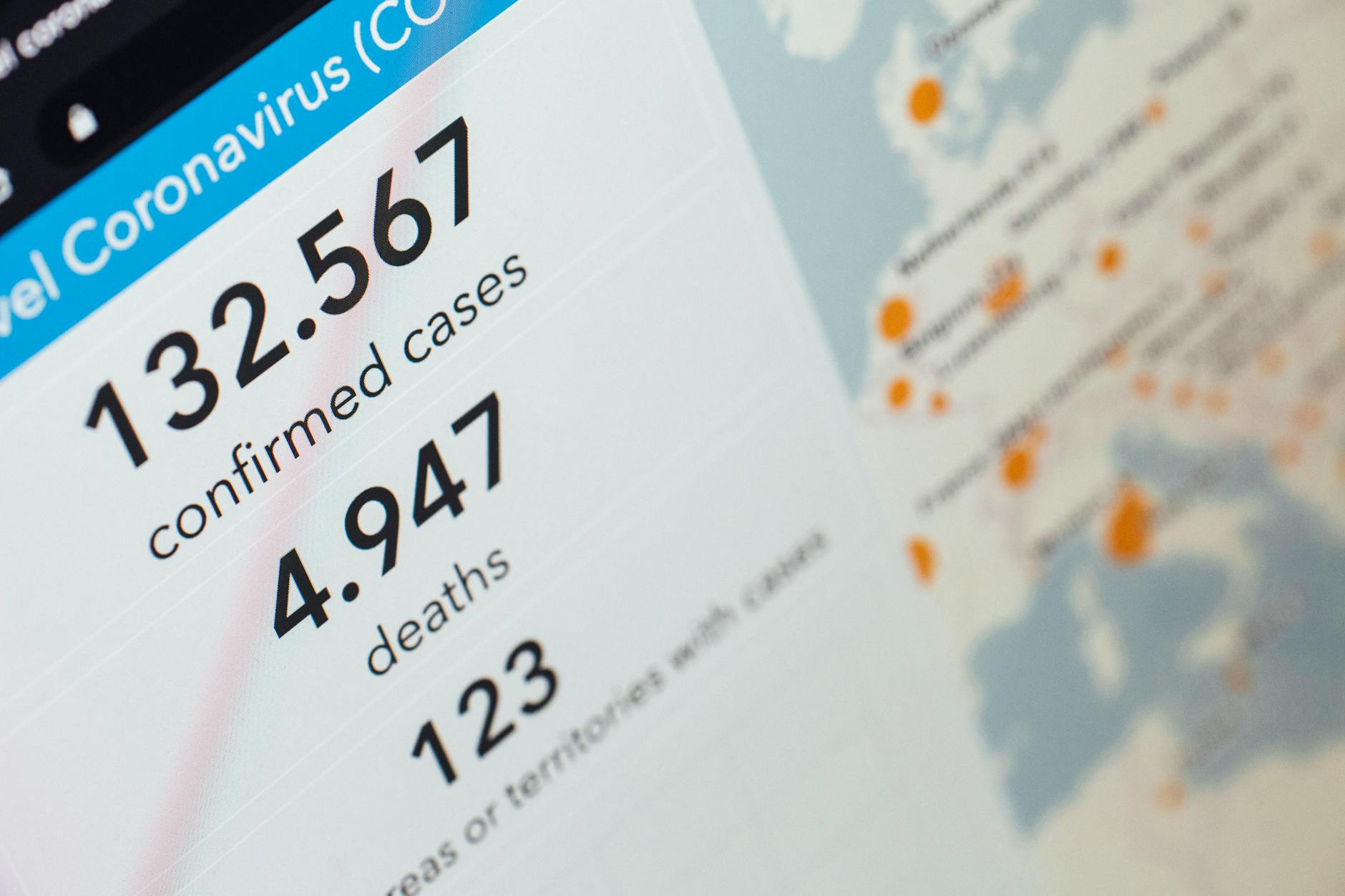
Texas’s 2025 measles outbreak ultimately reached 762 confirmed cases before it was declared over in August 2025 — the largest number the state had seen since 1992. The outbreak was concentrated in West Texas, particularly around Lubbock and the surrounding counties, areas where vaccination rates among school-aged children had been declining for years. The pattern is consistent with what epidemiologists have warned about repeatedly: as exemption rates climb and vaccination coverage drops below roughly 95 percent, outbreaks become inevitable. But Texas was only the beginning. Nationally, 2025 was a record-breaking year for measles in the United States. And 2026 is on track to be worse. As of March 12, 2026, the CDC has confirmed 1,362 measles cases across 31 states, with 14 new outbreaks reported.
South Carolina’s ongoing outbreak alone has grown to nearly 1,000 cases, surpassing the entire West Texas outbreak in scale. These are not isolated incidents. They represent a systemic erosion of the vaccination infrastructure that kept measles at bay for a generation. For context, the United States declared measles eliminated in 2000, meaning it was no longer continuously transmitted within the country. What we are seeing now is not a failure of the vaccine. The MMR vaccine remains approximately 97 percent effective with two doses. This is a failure of vaccine uptake, driven by misinformation, political signaling, and the absence of clear public health leadership at the federal level.
What Parents Should Know About the MMR Vaccine Right Now
The MMR vaccine is recommended by the CDC at 12 to 15 months for the first dose and 4 to 6 years for the second dose. Two doses provide approximately 97 percent protection against measles. One dose provides about 93 percent protection. The vaccine has been in use for over 50 years, and hundreds of millions of doses have been administered worldwide. The most common side effects are soreness at the injection site and mild fever. Serious adverse reactions are exceptionally rare. Parents weighing the tradeoff should consider what the alternative looks like. Measles is not a mild childhood illness.
It causes high fever, rash, cough, and conjunctivitis. In roughly one out of every 1,000 cases, it causes encephalitis — swelling of the brain — which can lead to permanent brain damage. Pneumonia is the most common cause of measles death in young children, as both Lubbock cases demonstrated. Before the vaccine was introduced in 1963, measles killed roughly 400 to 500 Americans per year, hospitalized 48,000, and caused encephalitis in about 1,000. The disease did not become less dangerous. We simply stopped exposing children to it. The comparison is stark: a well-studied, highly effective vaccine with minimal side effects on one side, and a highly contagious virus that kills healthy children on the other. When the nation’s nominee for Surgeon General cannot clearly articulate this in a public hearing, the information gap falls to parents, pediatricians, and local health departments to fill.
The Political Problem With “Just Asking Questions” About Vaccines
The Trump administration has faced sustained criticism for casting doubt on a variety of vaccines and for its response to measles outbreaks in South Carolina and Texas. The “science is never settled” framing fits into a broader rhetorical strategy sometimes called “just asking questions” — posing skepticism as intellectual curiosity rather than as a policy position with real-world consequences. The limitation of this approach becomes apparent when you trace the chain of influence from a Senate confirmation hearing to a parent’s decision at a pediatrician’s office. Public health messaging depends on trust and clarity. When the person nominated to be the nation’s doctor signals uncertainty about vaccines that the entire medical establishment considers safe and effective, it does not spark healthy scientific debate. It gives vaccine-hesitant parents permission to delay or skip vaccinations.
And in communities where vaccination rates are already borderline, that permission can tip the balance from containment to outbreak. The six-year-old and eight-year-old in Lubbock did not die because the science was unsettled. They died because they were unvaccinated against a disease for which a safe, effective vaccine has existed for more than half a century. It is worth noting that even Means herself, in her written follow-up responses, acknowledged that people should get the measles vaccine. The problem is that the written response to a Senate committee does not reach the same audience as a televised hearing. The equivocation is what gets amplified. The quiet correction rarely catches up.
📨 Get Free Accountability Coverage Alerts
Free · No spam · Unsubscribe anytime

South Carolina’s Outbreak Is Now Larger Than Texas’s
South Carolina’s 2026 measles outbreak has grown to nearly 1,000 cases, making it larger than the entire 2025 West Texas outbreak that killed two children. The state has become the new epicenter of the national measles crisis, and the trajectory suggests the numbers will continue to climb before the outbreak is contained.
Like Texas, South Carolina has seen declining vaccination rates in certain communities, particularly in areas where religious or philosophical exemptions to school vaccine requirements are common. The pattern repeats because the underlying conditions — low vaccination coverage plus introduction of the virus — produce the same result every time.
Where This Is Headed
Experts have said plainly that 2026 is on track to continue the trend set by 2025’s record-breaking measles numbers. With 1,362 confirmed cases across 31 states just in the first weeks of 2026 and 14 active outbreaks, the United States is experiencing a measles resurgence not seen in decades. The question is no longer whether outbreaks will happen but how large they will get and how many children will die before the political calculus shifts.
If Casey Means is confirmed as Surgeon General, she will be the public face of American public health at a moment when the country desperately needs someone willing to say, clearly and without caveat, that parents should vaccinate their children against measles. Her written statement suggests she knows this. Whether she is willing to say it out loud, on the record, when it counts — that remains an open question with life-or-death stakes.
Conclusion
Two healthy children are dead in Lubbock, Texas. They died of a disease that a two-dose vaccine prevents with 97 percent efficacy. They died unvaccinated, during the largest measles outbreak Texas had seen in over three decades — an outbreak that has since been dwarfed by South Carolina’s. Meanwhile, the person nominated to serve as the nation’s top public health official told senators that “science is never settled” and would not clearly recommend the MMR vaccine during her televised confirmation hearing. The facts here are not complicated.
The MMR vaccine works. Measles kills unvaccinated children. The United States is experiencing a measles resurgence driven by declining vaccination rates. Parents deserve a Surgeon General who will state these facts without hedging, without the caveat of philosophical ambiguity, and without waiting for a written follow-up to say what should have been said on camera. The science on measles vaccination is, in fact, settled. The two children buried in Lubbock are proof of what happens when leaders pretend otherwise.
Frequently Asked Questions
Is the MMR vaccine safe for children?
Yes. The MMR vaccine has been in use for over 50 years, with hundreds of millions of doses administered worldwide. The most common side effects are soreness at the injection site and mild fever. Serious adverse reactions are exceptionally rare. The CDC recommends the first dose at 12 to 15 months and the second at 4 to 6 years of age.
How effective is the measles vaccine?
Two doses of the MMR vaccine are approximately 97 percent effective at preventing measles. A single dose provides about 93 percent protection. No vaccine is 100 percent effective, but at 97 percent efficacy with two doses, the MMR vaccine is among the most effective vaccines ever developed.
How many measles cases have there been in the U.S. in 2026?
As of March 12, 2026, the CDC has confirmed 1,362 measles cases across 31 states, with 14 new outbreaks reported. South Carolina’s ongoing outbreak accounts for nearly 1,000 of those cases. Experts say 2026 is on pace to match or exceed 2025’s record-breaking numbers.
Did Casey Means eventually say people should get vaccinated for measles?
In written responses submitted after her Senate confirmation hearing, Means said she believes people should take the measles shot. However, during her televised hearing on February 26, 2026, she refused to broadly encourage parents to vaccinate their children and said “science is never settled” when asked about vaccine safety.
How contagious is measles?
Measles is one of the most contagious diseases known. An infected person can spread it to up to 90 percent of unvaccinated people they come in close contact with. The virus can linger in the air for up to two hours after an infected person has left a room. This is why high vaccination coverage — roughly 95 percent — is needed to prevent outbreaks.
You Might Also Like
- The Christmas Shopping Season Is 10 Months Away — But Supply Chain Planners Are Already Worried
- Trump’s America: 6 Justices Against Him, $130 Billion in Tariff Revenue Struck Down…Supreme Court Decision
- Trump Raises Global Tariff to 15% “Effective Immediately” Today