
The Trump administration has laid out four non-negotiable demands for any deal with Iran: no nuclear weapons capability, no ballistic missile program, no funding or arming of proxy militias across the Middle East, and no threatening naval presence in the Persian Gulf. These objectives, articulated repeatedly by senior officials including Secretary of State Marco Rubio and National Security Advisor Mike Waltz, represent a significant escalation from the 2015 JCPOA framework, which focused almost exclusively on nuclear enrichment. The administration’s position is that the original Iran deal was fatally flawed because it left three of these four threats completely unaddressed. Whether these demands constitute a serious negotiating position or an ultimatum designed to be rejected depends on whom you ask.
Critics argue that bundling all four objectives together makes diplomacy nearly impossible, since Iran views its missile program and regional influence as non-negotiable sovereign rights entirely separate from the nuclear question. Supporters counter that addressing nuclear capability in isolation, as the Obama-era deal attempted, simply allowed Iran to redirect resources into missiles and proxy networks. This article breaks down each of the four objectives, examines what leverage the U.S. actually holds, and assesses which demands Iran might realistically concede and which ones could torpedo negotiations entirely.
Table of Contents
- What Are Trump’s Four Demands and Why Does Iran Reject Them as a Package?
- The Nuclear Dimension — How Close Is Iran and What Would “No Nukes” Actually Require?
- Ballistic Missiles — Iran’s Deterrent and the Region’s Flashpoint
- Proxy Networks — Can Washington Actually Force Tehran to Cut Ties?
- Naval Confrontation in the Gulf — The Forgotten Objective With the Most Risk
- The Sanctions Lever and Its Diminishing Returns
- Where Negotiations Go From Here
- Conclusion
- Frequently Asked Questions
What Are Trump’s Four Demands and Why Does Iran Reject Them as a Package?
The “four no’s” framework emerged from a fundamental critique of the JCPOA. That 2015 agreement lifted sanctions in exchange for iran capping uranium enrichment at 3.67 percent and reducing its centrifuge stockpile. But it said nothing about Iran’s ballistic missile development, nothing about its financial and military support for Hezbollah, the Houthis, and Shia militias in Iraq, and nothing about its naval operations that periodically harass commercial shipping and U.S. warships in the Strait of Hormuz. Trump officials point to the years between 2016 and 2020, when Iran was technically in compliance with the nuclear deal while simultaneously expanding its missile arsenal and deepening its entrenchment in Syria and Yemen, as proof that a narrow agreement is worse than no agreement. Iran’s counterargument is straightforward and not without logic.
Tehran maintains that its missile program is a conventional defensive capability that every sovereign nation possesses, particularly one surrounded by U.S. military bases and hostile neighbors with advanced Western-supplied air forces. On proxies, Iran frames its relationships with groups like Hezbollah and the Houthis as legitimate alliances, no different in principle from U.S. partnerships with israel or Saudi Arabia. The naval issue is perhaps the most sensitive domestically, since Iran’s Persian Gulf coastline is its primary economic lifeline for oil exports, and any agreement restricting its own naval activity in its own territorial waters would be politically radioactive for any Iranian government. This mismatch between what Washington demands and what Tehran considers even remotely negotiable is the core problem.
The Nuclear Dimension — How Close Is Iran and What Would “No Nukes” Actually Require?
By early 2026, Iran’s nuclear program has advanced well beyond where it stood under the JCPOA. international Atomic Energy Agency reports indicate Iran has enriched uranium to 60 percent purity, a short technical step from the 90 percent weapons-grade threshold, and has accumulated enough enriched material for multiple warheads if further processed. Iran’s breakout time, the period needed to produce enough fissile material for a single weapon, has shrunk from roughly a year under the JCPOA to an estimated few weeks. This reality shapes every other aspect of negotiations, because Iran’s proximity to a bomb gives it leverage it did not have a decade ago. The administration’s “no nukes” demand goes further than the JCPOA ever did.
Officials have indicated they want Iran to dismantle advanced centrifuges, not merely disconnect them, and to ship enriched uranium out of the country permanently rather than capping stockpiles. However, if Iran has already mastered the technical knowledge to enrich at high levels, no inspection regime can erase that expertise. This is the fundamental limitation of any nonproliferation agreement: you can remove hardware and material, but you cannot uninvent physics. North Korea demonstrated this reality clearly. A realistic outcome might involve stringent monitoring, reduced enrichment capacity, and confidence-building measures rather than the total elimination the administration’s rhetoric implies. The gap between the stated objective and what verification can actually achieve is something the administration has not publicly reconciled.
Ballistic Missiles — Iran’s Deterrent and the Region’s Flashpoint
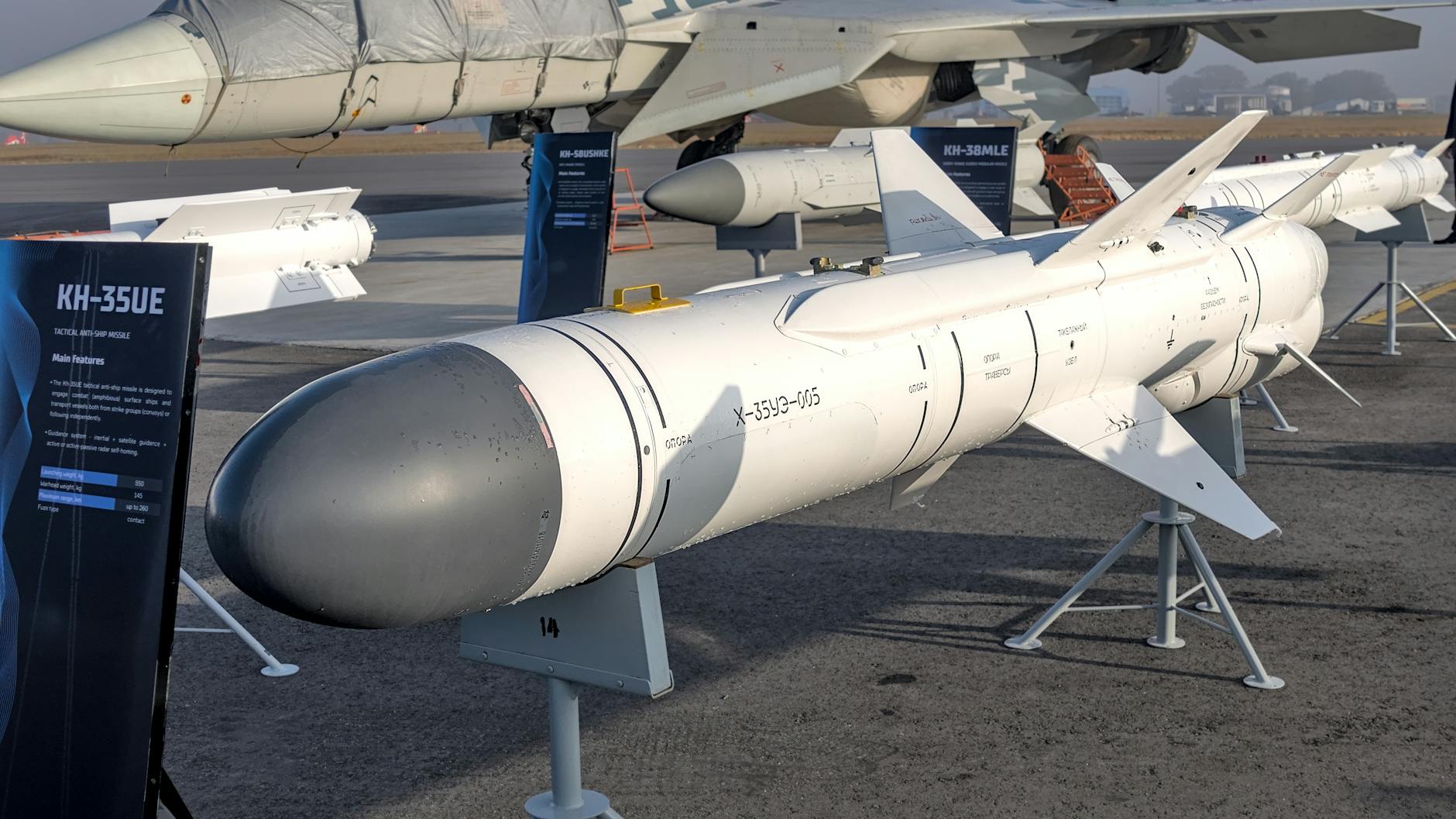
Iran’s ballistic missile arsenal is arguably the most advanced in the Middle East, with systems capable of reaching Israel, Saudi Arabia, and U.S. bases across the region. The Shahab-3 and its successor, the Emad, can deliver a payload over 2,000 kilometers. More concerning to military planners, Iran has developed solid-fuel missiles that can be launched with minimal preparation time, making them harder to detect and preempt. Iran demonstrated the operational capability of these systems in its April 2024 direct strike on Israel, the first ever, which involved over 300 drones and missiles. While most were intercepted, the sheer volume exposed the cost asymmetry: Iran’s missiles are cheap to produce while missile defense interceptors are extraordinarily expensive.
Demanding that Iran surrender its missile program faces a specific practical problem that distinguishes it from the nuclear issue. Nuclear programs require specialized facilities, rare materials, and visible infrastructure that satellites and inspectors can monitor. Missile production, by contrast, uses dual-use technology that overlaps heavily with Iran’s civilian space program and conventional military manufacturing. Iran has successfully launched satellites into orbit, and the same rocket motors and guidance systems serve both purposes. Any agreement restricting missiles would need to somehow distinguish between permitted space launch vehicles and prohibited ballistic missiles, a technical distinction that is genuinely difficult to enforce. Pakistan and India, for comparison, developed their missile programs partly under the cover of civilian space research, and no international agreement has ever successfully rolled back a country’s established ballistic missile capability through negotiation alone.
Proxy Networks — Can Washington Actually Force Tehran to Cut Ties?
The proxy demand may be the most difficult of the four to verify or enforce. Iran’s relationships with armed groups across the Middle East operate through the Islamic Revolutionary Guard Corps’ Quds Force and involve cash transfers, weapons shipments, training, and strategic coordination that span decades and multiple countries. Hezbollah in Lebanon, Hamas in Gaza, the Houthis in Yemen, Popular Mobilization Forces in Iraq, and various Shia militias in Syria all receive varying degrees of Iranian support. The Trump administration wants Iran to sever these connections entirely. The tradeoff here is significant. Even if Iran agreed on paper to end proxy support, verification would be nearly impossible.
Unlike nuclear facilities, which have physical signatures, financial transfers and arms shipments can be routed through dozens of intermediaries. Iran could comply with the letter of an agreement while maintaining influence through political rather than military channels. Moreover, some of these proxy relationships have developed their own internal momentum. Hezbollah, for instance, operates a parallel state infrastructure in Lebanon with hospitals, schools, and a political party holding parliamentary seats. It is not simply an Iranian puppet that can be switched off from Tehran. The Houthis control most of Yemen’s populated territory and have their own domestic political legitimacy regardless of Iranian backing. Demanding that Iran cut ties assumes a level of centralized control that overstates Tehran’s actual influence over groups that have independent identities and local support bases.
Naval Confrontation in the Gulf — The Forgotten Objective With the Most Risk
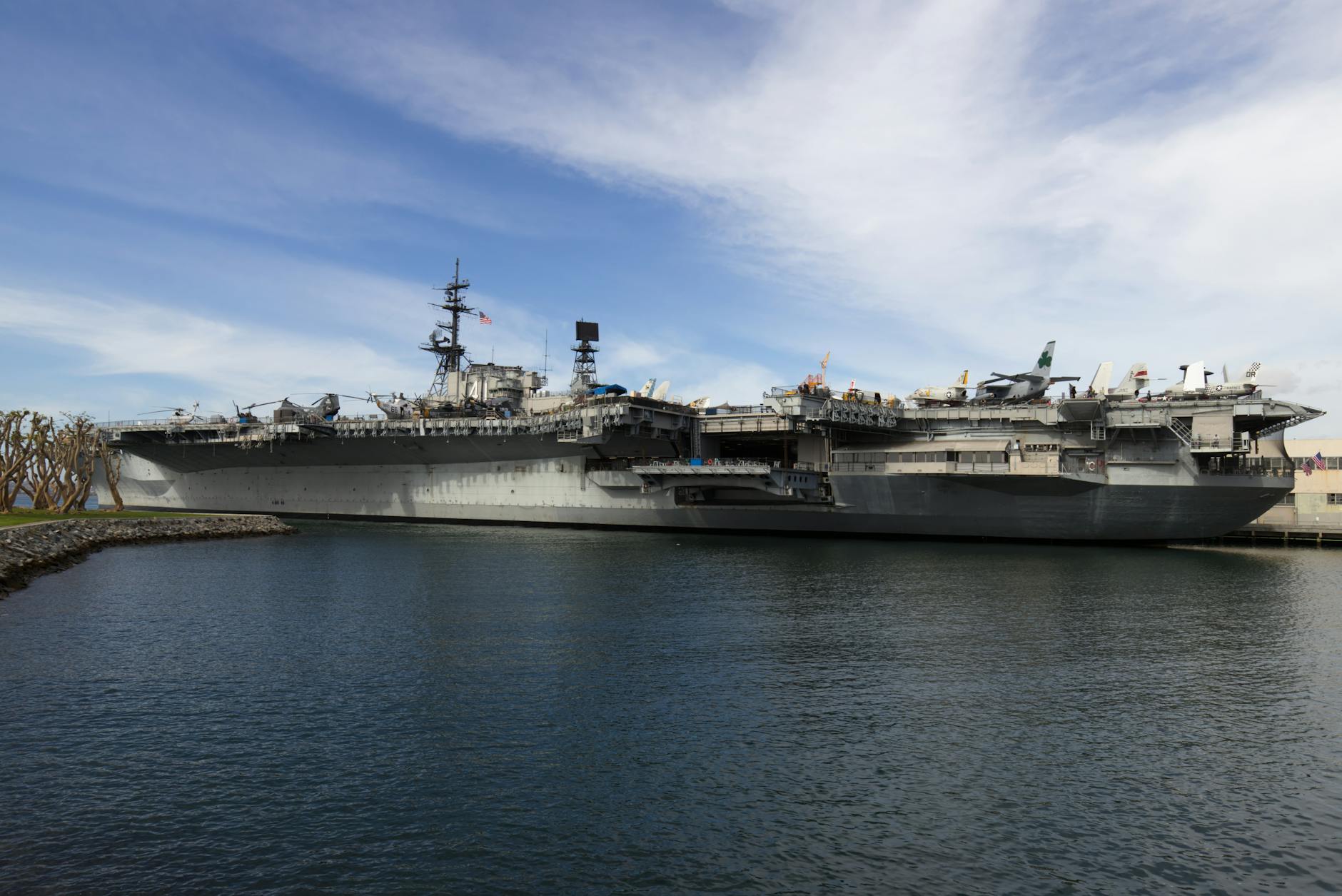
The fourth demand, curtailing Iran’s naval presence in the Persian Gulf and Strait of Hormuz, gets the least public attention but carries perhaps the highest risk of direct military confrontation. The Strait of Hormuz is a 21-mile-wide chokepoint through which roughly 20 percent of the world’s oil passes daily. Iran’s coastline forms the strait’s northern boundary, and its navy and IRGC Naval Forces regularly conduct operations there. Incidents involving Iranian fast boats approaching U.S. warships, seizures of commercial tankers, and mine-laying have occurred repeatedly over the past several years. The limitation of this demand is geographic and legal.
Under international law, Iran has sovereignty over its territorial waters and the right to maintain a navy. The Strait of Hormuz is governed by the UN Convention on the Law of the Sea’s transit passage provisions, which guarantee free navigation but also recognize coastal state rights. Asking Iran to withdraw naval forces from its own coastline is qualitatively different from asking it to stop enriching uranium or funding militias abroad. It would be roughly equivalent to another country demanding the U.S. Navy withdraw from the Gulf of Mexico. No Iranian government, regardless of its political orientation, could agree to such a demand without facing a domestic legitimacy crisis. This objective may serve more as a bargaining chip to be traded away during negotiations than as a realistic endpoint, but the administration has not signaled any willingness to prioritize among the four demands.
📨 Get Free Accountability Coverage Alerts
Free · No spam · Unsubscribe anytime
The Sanctions Lever and Its Diminishing Returns
The primary enforcement mechanism for all four objectives is economic sanctions, and the Trump administration has intensified them considerably. Secondary sanctions targeting countries that purchase Iranian oil, particularly aimed at Chinese refiners, have been expanded. Financial institutions facilitating Iranian transactions face exclusion from the U.S.
dollar system. However, Iran has spent years building sanctions-evasion infrastructure, including ship-to-ship oil transfers, cryptocurrency transactions, and barter arrangements with willing partners. China continues to import roughly 1.5 million barrels per day of Iranian crude despite sanctions, often through relabeling schemes that make enforcement difficult. The effectiveness of sanctions as a coercive tool has arguably peaked, meaning the administration may need to consider whether maximum pressure actually produces the concessions it demands or whether it simply entrenches Iranian resistance.
Where Negotiations Go From Here
The most likely near-term trajectory is a prolonged stalemate punctuated by backchannels. Several intermediaries, including Oman and Qatar, have facilitated quiet contacts between Washington and Tehran.
The possibility of a narrow initial agreement addressing only the nuclear issue, with missiles and proxies deferred to subsequent rounds, has been floated by European diplomats, though the Trump administration has publicly rejected any phased approach. The administration’s insistence on an all-or-nothing framework raises the stakes considerably: if talks collapse, the alternatives narrow to either accepting a nuclear-threshold Iran or considering military options, neither of which has broad public or congressional support. The coming months will test whether the four objectives are genuine red lines or opening positions in a negotiation that both sides need but neither can publicly admit wanting.
Conclusion
Trump’s four objectives for Iran, eliminating its nuclear capability, dismantling its missile program, severing proxy relationships, and restricting its naval operations, represent the most ambitious Iran policy framework any U.S. administration has articulated. Each demand addresses a genuine security concern, but bundling all four together creates a negotiating dynamic where partial success may be impossible and total success is almost certainly unachievable through diplomacy alone. The gap between stated objectives and realistic outcomes is the defining tension of this approach.
For those tracking U.S. foreign policy and government accountability, the key question is not whether these objectives are desirable but whether the administration has a credible strategy for achieving them without either a military confrontation or an indefinite stalemate that leaves Iran’s nuclear program advancing unchecked. The historical record of maximum pressure campaigns, from North Korea to Venezuela, suggests that escalating demands without flexible negotiating room tends to produce entrenchment rather than capitulation. What ultimately emerges from this framework will say as much about the limits of American leverage as it does about Iranian intentions.
Frequently Asked Questions
Has Iran agreed to any negotiations with the Trump administration?
As of early 2026, there have been indirect contacts through intermediaries including Oman, but no formal direct negotiations have been announced. Both sides have signaled conditional willingness to talk while publicly maintaining maximalist positions.
How is this different from the 2015 Iran nuclear deal?
The JCPOA addressed only nuclear enrichment and related sanctions. Trump’s framework adds three additional demands: ending the ballistic missile program, cutting off proxy militias, and restricting naval operations. This makes it substantially broader and, critics argue, substantially harder to achieve.
Could the U.S. military destroy Iran’s nuclear program?
Military analysts generally assess that airstrikes could delay but not permanently eliminate Iran’s nuclear capability. Key facilities like the Fordow enrichment plant are buried deep underground in hardened mountain bunkers, and Iran could rebuild centrifuge capacity within a few years. A military strike would also likely trigger retaliatory attacks across the region.
What role does Congress play in Iran policy?
Congress controls sanctions legislation and would need to approve any formal treaty. The Iran Nuclear Agreement Review Act requires the president to submit any nuclear agreement to Congress for a review period. Congressional skepticism toward Iran deals crosses party lines, which is both an obstacle to diplomacy and a source of leverage for the administration in claiming its hands are tied.
Why does Iran’s missile program matter if there is a nuclear deal?
A missile capable of carrying a nuclear warhead is only half the equation, but it becomes the critical delivery mechanism if Iran ever achieves weapons capability. Even without nuclear warheads, Iran’s conventional missiles threaten regional allies and U.S. bases, which is why the administration insists the two issues cannot be separated.
You Might Also Like
- U.S. Sinks Iranian Navy Corvette at Chabahar Port
- Trump Warns Iran: Hit Us Again and You’ll Face “A Force That Has Never Been Seen Before”
- U.S. Uses Low-Cost Attack Drones in Combat for the First Time Ever