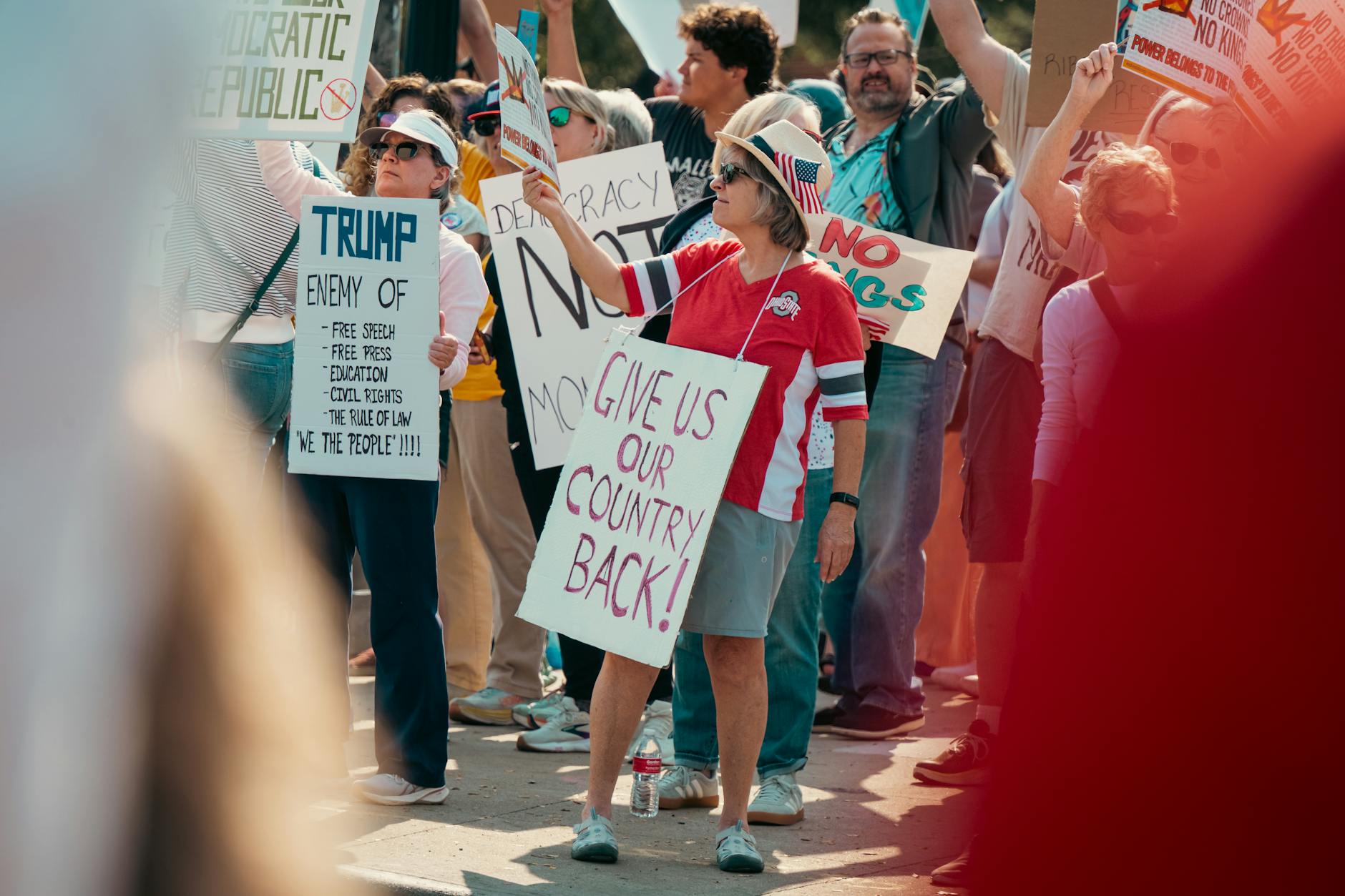
Political violence in America has reached levels not seen in a generation. In the first six months of 2025, more than 150 politically motivated attacks were recorded across the country, nearly double the figure from the same period in 2024. The broader picture is even more alarming: over 520 incidents of terrorism and targeted violence occurred in that same window, a roughly 40 percent increase year over year, according to data tracked by the Princeton Bridging Divides Initiative and the National Consortium for the Study of Terrorism and Responses to Terrorism (START). Mass-casualty attacks surged by 187.5 percent, jumping from 8 events in the first half of 2024 to 23 in 2025. These are not abstract numbers. They represent shootings, arsons, assassination attempts, and killings that have left elected officials dead, public figures gunned down, and communities across the political spectrum living in fear.
The violence has not discriminated by ideology, though its sources have shifted in ways that complicate familiar narratives. A June 2025 report from the Center for Strategic and International Studies found that, for the first time in more than 30 years, left-wing terrorist attacks outnumbered far-right attacks in a given period — though the sample size was small and the finding has been challenged by analysts at NPR and Just Security. Meanwhile, the deadliest individual incidents, including the assassination of conservative activist Charlie Kirk and the targeted shooting of Minnesota Democratic legislators, underscore that no political affiliation offers protection from this crisis. Eighty-five percent of Americans now say politically motivated violence is increasing, according to Pew Research polling from October 2025, and 87 percent agree it is a serious problem. This article examines the full scope of political violence in America during 2025 — the major incidents, the data behind the surge, the ideological dynamics, the threats facing public officials at every level of government, the public’s growing tolerance for political force, and the Trump administration’s controversial response. The facts are drawn from verified reporting and academic research, and the picture they paint is one that should concern every American regardless of where they fall on the political spectrum.
Table of Contents
- How Bad Has Political Violence in America Become During 2025?
- The Deadliest Attacks — From the Minnesota Legislator Shootings to the Assassination of Charlie Kirk
- The Ideological Shift — Are Left-Wing Attacks Really Outpacing the Far Right?
- Threats Against Public Officials — The Crisis at Every Level of Government
- Public Opinion and the Normalization of Political Force
- Trump’s Response — Antifa Designation and NSPM-7
- Where Political Violence in America Goes From Here
- Conclusion
- Frequently Asked Questions
How Bad Has Political Violence in America Become During 2025?
The numbers tell a story of rapid escalation. Targeted violence grew by more than 34.5 percent from 2024 to 2025, according to START data compiled at the University of Maryland. The Princeton Bridging Divides Initiative, which tracks political violence and threats against officials with granular detail, recorded the 187.5 percent spike in mass-casualty events that has become one of the most cited statistics of the year. To put this in perspective, the United States went from averaging roughly one mass-casualty political attack per month in early 2024 to nearly four per month in the same stretch of 2025. This is not a marginal uptick. It is a structural shift in how political conflict manifests in American life. What makes 2025 distinct from prior years is both the volume and the variety of attacks. The incidents range from lone-wolf shootings to coordinated arson, from targeted assassinations to plots uncovered before they could be carried out.
In April, an arson attack struck the residence of Pennsylvania Governor Josh Shapiro, with the suspect subsequently charged with attempted murder, terrorism, and aggravated arson. In May, two staffers at the Israeli embassy in Washington, D.C., were fatally shot. In June, an anti-Zionist fire attack struck in Colorado. Each of these incidents occurred within a political context that made them something more than ordinary criminal acts — they were carried out with ideological motivation, against targets chosen for their political identity or associations. The acceleration has been felt most acutely at the local level, where officials who once considered themselves insulated from the national temperature have found themselves in the crosshairs. Princeton BDI recorded more than 80 incidents targeting local officials in September 2025 alone, a 280 percent increase from August. School board members, city council representatives, and county clerks — people who entered public service to manage zoning disputes and library budgets — are now calculating personal risk before attending public meetings. The violence is no longer confined to Washington or high-profile national figures. It has seeped into the fabric of civic life in communities across the country.

The Deadliest Attacks — From the Minnesota Legislator Shootings to the Assassination of Charlie Kirk
Two incidents in 2025 stand out for their severity and their impact on the national psyche. On June 14, a gunman targeted Minnesota Democratic legislators in coordinated attacks at their homes. State Representative Melissa Hortman and her husband Mark were killed at their residence in Brooklyn Park. State Senator John Hoffman and his wife Yvette were critically wounded at their home in Champlin. The suspect, 57-year-old Vance Luther Boelter, was captured the following day. When investigators searched his belongings, they found a hit list containing nearly 70 names, including abortion providers and Democratic politicians. The attack was methodical, premeditated, and carried out against people in their own homes — a chilling escalation that shattered any remaining illusion that holding state-level office was a relatively low-risk form of public service.
Less than three months later, on September 10, Charlie Kirk — the founder of Turning Point USA and one of the most prominent figures in the conservative media ecosystem — was shot in the neck while speaking at Utah Valley University in Orem, Utah. Kirk died from his injuries. The shooter, 22-year-old Tyler James Robinson, surrendered to authorities the following day and was charged with aggravated murder on September 16, with prosecutors seeking the death penalty. Kirk’s assassination sent shockwaves through the political right and prompted an immediate national conversation about whether the country’s rhetoric had crossed a threshold from which there was no easy return. However, it is important to resist the temptation to treat these incidents as isolated tragedies rather than data points in a larger pattern. The Minnesota shootings and Kirk’s assassination were the most visible manifestations of a trend that also includes dozens of less-publicized attacks, threats, and plots. The May shooting of Israeli embassy staffers, the arson at Governor Shapiro’s home, and the Colorado fire attack all reflect the same underlying dynamic: a growing willingness among radicalized individuals to translate political grievance into lethal action. The distinction between a foiled plot and a successful assassination is often a matter of luck, timing, or the competence of the attacker — not a meaningful difference in intent.
The Ideological Shift — Are Left-Wing Attacks Really Outpacing the Far Right?
One of the most debated findings of 2025 came from the Center for Strategic and International Studies, whose July report concluded that left-wing terrorist attacks had outnumbered far-right attacks for the first time in more than three decades. Through July 4, 2025, CSIS documented five left-wing plots or attacks compared to one right-wing attack. The right-wing incident resulted in two fatalities; the left-wing incidents resulted in none. The finding was immediately seized upon by political commentators on the right as evidence that the threat landscape had fundamentally shifted, and by some on the left as a misleading statistical artifact. The critics have a point worth taking seriously. NPR and Just Security challenged the CSIS methodology, arguing that five incidents constitute far too small a sample to support sweeping trend conclusions. And the historical context is stark: since 2016, left-wing extremists carried out 41 attacks compared to 152 from the far right, according to CSIS’s own data. Left-wing violence killed 13 people over the prior decade, while right-wing attacks killed 112 and jihadist attacks killed 82.
A single six-month snapshot in which left-wing attacks outnumbered right-wing attacks by five to one does not erase nearly a decade of data showing the far right as the dominant domestic terror threat. It may, however, signal an emerging trend that warrants monitoring — particularly given the political conditions that have radicalized individuals on both ends of the spectrum. What the ideological debate can obscure is the more fundamental point: americans are being killed and threatened by politically motivated attackers regardless of where those attackers fall on the spectrum. The Minnesota shooter targeted Democrats. Kirk’s assassin targeted a conservative icon. The arsonist who attacked Governor Shapiro’s home targeted a Democratic governor. The embassy shooting involved a different set of motivations entirely. The ideological scorecard matters for understanding radicalization pipelines and tailoring law enforcement responses, but for the communities and families affected, the bullet does not carry a party affiliation.

Threats Against Public Officials — The Crisis at Every Level of Government
The violence that makes headlines represents only the visible peak of a much larger crisis. U.S. Capitol Police reported a 58 percent rise in threats against members of Congress during 2025, continuing a trend that has been building since the January 6, 2021, attack on the Capitol. But the surge in threats extends well beyond Washington. The Princeton Bridging Divides Initiative’s tracking of local-level incidents — the 80-plus cases in September alone, representing that 280 percent monthly increase — suggests that the normalization of political threats has reached every tier of American government. The downstream effects are measurable and deeply corrosive to democratic governance. A Q3 2025 survey found that 75 percent of local officials say they are less willing to engage in political activities due to hostility concerns.
This is not a statistic about feelings; it is a statistic about the functioning of representative government. When three out of four local officials pull back from engagement because they fear for their safety or their families’ safety, the pool of people willing to serve in public office shrinks. The people who remain are disproportionately those who can afford private security, those who have no families to worry about, or those who are themselves comfortable with confrontation — none of which produces a governing class that looks like the communities it is meant to represent. The tradeoff is becoming painfully clear: either the country finds ways to protect public servants from politically motivated threats, or it accepts a future in which public service is restricted to those willing to treat it as a high-risk occupation. Enhanced security for elected officials costs money and raises questions about the accessibility of democratic representation. But the alternative — a steady exodus of capable, moderate individuals from public life — carries costs that are harder to quantify but no less real. The threat environment is reshaping who is willing to govern, and by extension, how America is governed.
Public Opinion and the Normalization of Political Force
Perhaps the most disturbing dimension of the 2025 crisis is not what people are doing but what they are willing to say they support. A May 2025 survey from the Chicago Project on Security and Threats found that approximately 40 percent of Democrats supported the use of force to remove Trump from the presidency, while roughly 25 percent of Republicans supported using the military to stop anti-Trump protests. Both figures more than doubled since Fall 2024. These are not fringe positions held by a handful of extremists. They represent the views of tens of millions of Americans who have concluded that the normal mechanisms of democratic politics are insufficient to address what they perceive as existential threats. The normalization is self-reinforcing. Each major act of political violence confirms for some segment of the population that their opponents are dangerous and that extraordinary measures are justified.
Kirk’s assassination hardened views on the right about left-wing radicalism. The Minnesota shootings deepened fears on the left about right-wing extremism and gun violence. The 87 percent of Americans who told YouGov in September 2025 that political violence is a problem exist alongside the substantial minorities on both sides who view some forms of political force as acceptable. This is not a contradiction so much as a reflection of a country that broadly recognizes the danger but cannot agree on its source or its solution. The warning here is that public opinion is a lagging indicator of societal breakdown but a leading indicator of future violence. When large percentages of a population express willingness to support force as a political tool, the conditions are set for more individuals at the margins to act on those sentiments. The gap between saying “force is justified” in a survey and committing an act of political violence is smaller than most people assume, and it shrinks further in an information environment saturated with dehumanizing rhetoric about political opponents.
📨 Get Free Accountability Coverage Alerts
Free · No spam · Unsubscribe anytime
Trump’s Response — Antifa Designation and NSPM-7
The Trump administration’s response to the 2025 violence wave came in two executive actions in late September. On September 22, Trump signed an executive order designating Antifa as a domestic terrorist organization. Three days later, on September 25, he issued National Security Presidential Memorandum 7 (NSPM-7), titled “Countering Domestic Terrorism and Organized Political Violence,” which directed the National Joint Terrorism Task Force to investigate and prosecute networks behind political violence. The order identifies “anti-Americanism, anti-capitalism, and anti-Christianity” as potential red flags for domestic terrorism.
The response drew immediate criticism from the Brennan Center for Justice, civil liberties organizations, and a number of lawmakers who warned that the directive could criminalize dissent and expand surveillance of political opposition. The concern is not abstract. Defining ideological viewpoints — anti-capitalism, for instance — as red flags for terrorism investigation creates a framework in which lawful political expression can trigger law enforcement scrutiny. Whether that framework is used judiciously or abused depends entirely on the discretion of the officials implementing it, and history offers ample examples of both outcomes. The question is whether a government response calibrated primarily around one end of the ideological spectrum can effectively address a crisis that, by the data, is emanating from multiple directions.
Where Political Violence in America Goes From Here
The trajectory heading into 2026 offers little basis for optimism. The structural conditions driving political violence — deep partisan polarization, widespread distrust in institutions, an information ecosystem that rewards outrage, and easy access to weapons — remain firmly in place. The 2026 midterm elections will introduce another cycle of high-stakes political competition, which historically correlates with spikes in threats and incidents. If the first half of 2025 represented a doubling of politically motivated attacks compared to 2024, the question is whether the second half of the year and beyond will see stabilization or further acceleration.
What the data from 2025 makes clear is that political violence is no longer an aberration in American politics — it is a feature. The country has not experienced this level of sustained, ideologically motivated attack activity since the domestic terrorism wave of the early 1970s, and the current crisis is unfolding in a media and technology environment that amplifies grievance and accelerates radicalization far more efficiently than anything available half a century ago. Addressing it will require interventions that go beyond law enforcement — including efforts to rebuild institutional trust, reduce the rhetorical temperature of political discourse, and create off-ramps for individuals on the path to radicalization. Whether the political will exists to pursue those interventions, particularly in an environment where each side views the other as the primary threat, remains the central unanswered question.
Conclusion
The 2025 political violence crisis is defined by numbers that should be unacceptable in any functioning democracy: 150-plus politically motivated attacks in six months, a 187.5 percent increase in mass-casualty events, a 58 percent rise in threats against members of Congress, and 75 percent of local officials pulling back from public engagement due to safety concerns. The violence has claimed lives across the political spectrum — from Democratic state legislators murdered in their homes to a conservative media figure assassinated on a college campus. The ideological breakdown matters for understanding radicalization patterns, but the aggregate picture is one of a country where political disagreement is increasingly resolved through force rather than deliberation. The path forward requires honest reckoning with uncomfortable facts on all sides.
The historical dominance of far-right violence does not excuse the emergence of left-wing attacks. The Trump administration’s executive actions on domestic terrorism address a real problem but do so in ways that civil liberties experts warn could be weaponized against lawful dissent. And the public opinion data — with large minorities on both sides endorsing the use of force for political ends — suggests that the crisis extends far beyond the individuals who pull triggers or light fires. It resides in a political culture that has lost the capacity to disagree without dehumanizing, and that treats democratic norms as obstacles rather than safeguards. Until that culture changes, the numbers will continue to climb.
Frequently Asked Questions
How many politically motivated attacks occurred in the first half of 2025?
More than 150 politically motivated attacks were recorded in the first six months of 2025, nearly double the figure from the same period in 2024. The broader category of terrorism and targeted violence incidents exceeded 520, representing a roughly 40 percent increase year over year.
Is left-wing or right-wing violence a bigger threat in 2025?
According to CSIS, 2025 marks the first time in over 30 years that left-wing attacks outnumbered far-right attacks in a given period — five left-wing plots or attacks versus one right-wing attack through July 4, 2025. However, NPR and Just Security have challenged this finding, noting the small sample size. Historical data since 2016 still shows far-right attacks outnumbering left-wing attacks by roughly four to one (152 versus 41).
What was NSPM-7 and why is it controversial?
National Security Presidential Memorandum 7, signed by Trump on September 25, 2025, directs the National Joint Terrorism Task Force to investigate and prosecute domestic terrorism networks. It identifies “anti-Americanism, anti-capitalism, and anti-Christianity” as potential red flags. Critics, including the Brennan Center for Justice, warn it could be used to criminalize political dissent and expand surveillance of opposition movements.
What percentage of Americans support the use of political force?
A May 2025 survey from the Chicago Project on Security and Threats found that approximately 40 percent of Democrats supported the use of force to remove Trump from the presidency, while about 25 percent of Republicans supported using the military to stop anti-Trump protests. Both figures more than doubled from Fall 2024 levels.
How are threats against elected officials changing?
U.S. Capitol Police reported a 58 percent rise in threats against members of Congress in 2025. At the local level, Princeton BDI recorded over 80 incidents targeting local officials in September 2025 alone — a 280 percent increase from August. Seventy-five percent of local officials say they are less willing to engage in political activities due to hostility concerns.
You Might Also Like
- Trump’s America: Senate Vote on Proving Citizenship Before Voting Begins
- Trump’s America: Day 11 of the DHS Shutdown Crisis
- Wendy’s Is Closing Hundreds of Restaurants Nationwide