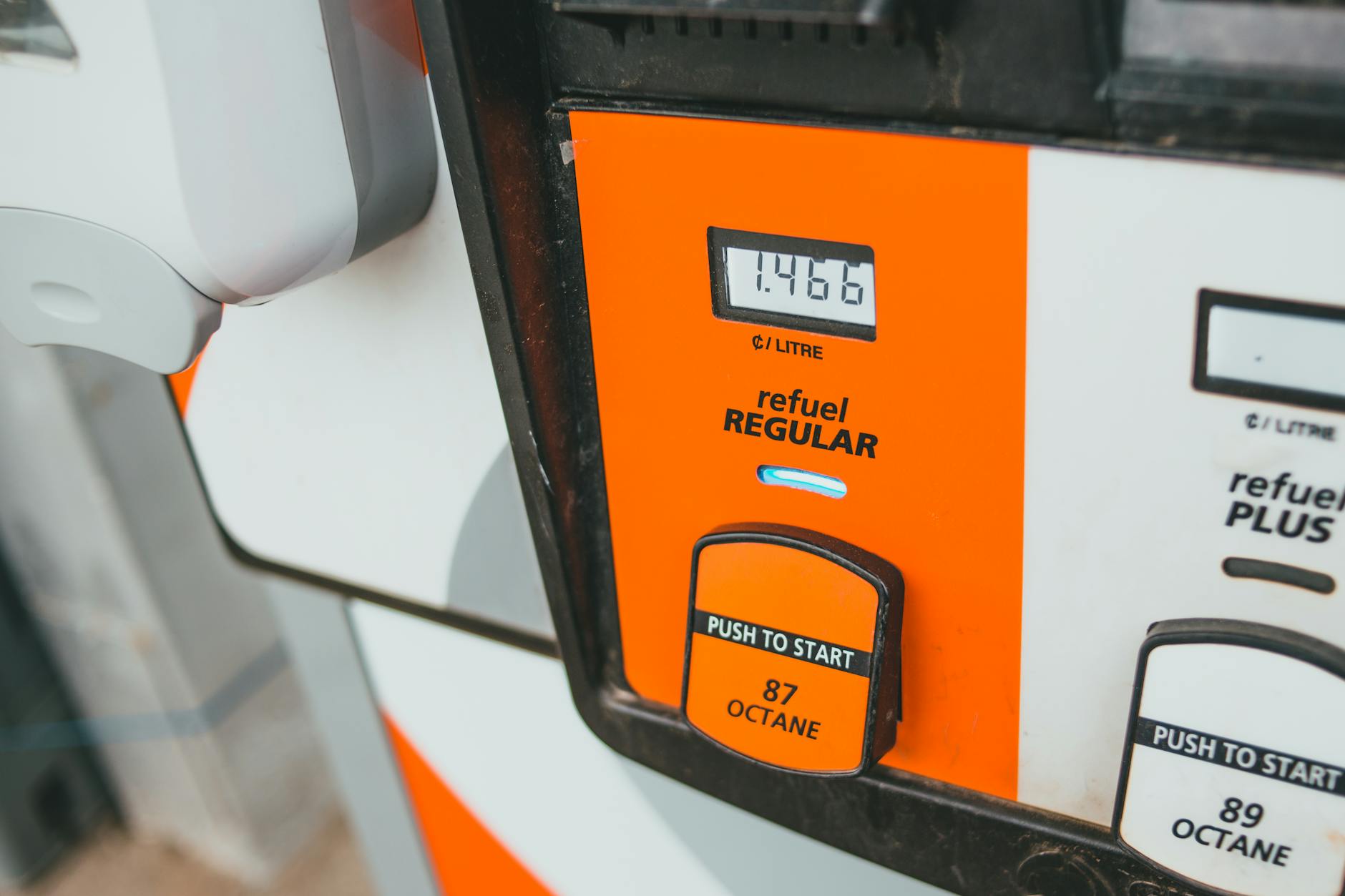
President Trump’s claim that gas prices have fallen to $1.99 a gallon is, to put it plainly, false. When he made the claim repeatedly throughout 2025 and again during his 2026 State of the Union address, the national average hovered around $2.86 to $2.92 per gallon — nearly a full dollar higher than what he told the American public. According to GasBuddy’s head of petroleum analysis Patrick De Haan, only about 28 gas stations out of roughly 150,000 tracked nationwide were actually selling gas below $2 during the relevant period. That is 0.018 percent of all U.S. stations.
Not a single state had an average price below $2.00. The gap between the presidential podium and the gas pump has only grown wider since then. As of March 19, 2026, the AAA national average sits at approximately $3.84 per gallon, driven sharply upward by the U.S.-Israel joint strikes against Iran in late February and the subsequent closure of the Strait of Hormuz. WTI crude oil has spiked to around $119 per barrel. For millions of Americans filling up their tanks each week, the $1.99 promise feels less like a forecast and more like a fantasy. This article breaks down exactly where Trump’s $1.99 figure comes from, why the RBOB futures contract he appears to be referencing has nothing to do with what you pay at the pump, what gas prices actually look like across the country today, and what experts say about where prices are headed through 2027.
Table of Contents
- How Did Trump Claim Gas Is $1.99 When the Actual Average Was $2.92?
- What Does 28 Out of 150,000 Stations Really Tell Us About Gas Prices?
- How the Iran Conflict Sent Gas Prices to $3.84 and Climbing
- RBOB Futures vs. Pump Prices — Why the Numbers Never Matched
- Why Gas Price Promises From Any President Deserve Skepticism
- What Fact-Checkers and Analysts Actually Found
- Where Gas Prices Are Headed Through 2027
- Conclusion
- Frequently Asked Questions
How Did Trump Claim Gas Is $1.99 When the Actual Average Was $2.92?
The discrepancy between trump‘s $1.99 claim and reality is not a matter of rounding or regional variation — it is a fundamentally different number. At various points throughout 2025, Trump stated that gas had hit $1.99 in “three,” “four,” or even “five” states. In July 2025, when he claimed five states were at $1.99, GasBuddy could not find a single station in the entire country selling gas below $2.26. The lowest state average at that time was Mississippi at approximately $2.71 per gallon. During his February 2026 State of the Union address, Trump told Congress that gas was “below $2.30 a gallon in most states, and in some places $1.99.” Fact-checkers subsequently found only four to seven individual stations across Oklahoma, Kansas, and Texas anywhere near $1.99 — not entire states, but a handful of pumps scattered across three states. The explanation appears to lie in a commodity price that most Americans have never heard of. According to FactCheck.org, Trump officials pointed to RBOB futures contract prices, which traded between $1.96 and $1.99 per gallon during the relevant periods.
RBOB — Reformulated Blendstock for Oxygenate Blending — is an unfinished gasoline commodity traded on futures markets. It is not the retail pump price. It does not include federal and state taxes, transportation costs, blending additives, or the retailer’s margin. Using RBOB to claim gas costs $1.99 is like pointing to the wholesale price of wheat and telling people bread costs fifty cents a loaf. The last time any state average actually fell below $2 per gallon was January 2021, when COVID-era demand collapse temporarily cratered prices. That was a moment of economic crisis, not a policy achievement. PolitiFact currently rates Trump’s promise to get gas below $2 per gallon as “Stalled.”.

What Does 28 Out of 150,000 Stations Really Tell Us About Gas Prices?
When Patrick De Haan ran the numbers for GasBuddy, the result was striking in its specificity. Across an entire week when Trump was making his $1.99 claims, an average of just 28 stations out of approximately 150,000 tracked were selling gas below $2. To put that in perspective, you would have better odds finding a four-leaf clover in your backyard than finding a sub-$2 gas station on a random road trip. Those 28 stations represent 0.018 percent of the market — a statistical rounding error that the President presented as a national trend. The stations selling gas that cheaply were almost certainly loss leaders or tribal stations with tax exemptions, not reflections of broader market conditions.
Some gas stations, particularly those attached to grocery stores or membership clubs, occasionally drop prices below cost to drive foot traffic. However, if you planned a road trip specifically to fill up at one of those 28 stations, the gas you burned driving there would likely cost more than what you saved. The lowest state average during the State of the Union period was Oklahoma at approximately $2.37 per gallon — still 38 cents above Trump’s claim. This matters because policy claims based on statistical outliers are misleading regardless of which party makes them. A president pointing to 28 out of 150,000 stations as evidence of a fulfilled promise is like a school superintendent pointing to two students with perfect scores as proof that the entire district is excelling. The average is the average for a reason — it reflects what the typical American actually experiences.
How the Iran Conflict Sent Gas Prices to $3.84 and Climbing
Whatever ground gas prices had gained in early 2025 has been obliterated by geopolitical reality. On February 28, 2026, U.S.-Israel joint military strikes against Iran triggered a chain of events that sent energy markets into a spiral. Iran’s closure of the Strait of Hormuz — the narrow waterway through which roughly 20 percent of the world’s oil passes daily — immediately disrupted global supply chains. WTI crude oil surged to approximately $119 per barrel, and the pain hit American gas pumps within weeks. As of March 19, 2026, the AAA national average stands at approximately $3.84 per gallon, up roughly $0.86 from pre-conflict levels of about $2.98.
California leads the nation at approximately $5.53 per gallon, while Kansas holds the lowest average at around $3.15. According to Fortune, analysts project that gas prices will remain above $3 per gallon until at least 2027, meaning the $1.99 promise is not just stalled — it is moving in the wrong direction. The speed of this price increase underscores a fundamental limitation of presidential gas price promises. No president, regardless of party, controls global oil markets, OPEC production decisions, or the geopolitical conflicts that can send crude prices skyrocketing overnight. Domestic drilling policies can influence long-term supply trends, but they cannot override the immediate shock of a major oil transit chokepoint being shut down.
RBOB Futures vs. Pump Prices — Why the Numbers Never Matched
Understanding why Trump’s numbers were wrong requires understanding the difference between commodity futures and retail prices. The RBOB futures contract is a wholesale benchmark for unfinished gasoline traded on the New York Mercantile Exchange. When Trump officials cited RBOB prices of $1.96 to $1.99 per gallon as evidence for the $1.99 claim, they were comparing apples to apple pie — one is a raw ingredient, the other is the finished product you actually buy. Between the RBOB price and what you pay at the pump, several costs are added. Federal excise tax adds 18.4 cents per gallon.
State taxes vary widely, from around 10 cents in Alaska to over 68 cents in California. Then there are transportation costs from refinery to station, blending costs to meet regional fuel specifications, credit card processing fees, and the station’s own operating margin. By the time all of these are factored in, a $1.99 RBOB price typically translates to somewhere between $2.70 and $3.50 at the pump depending on the state. The tradeoff for consumers is this: even when wholesale prices drop significantly, retail prices tend to follow slowly and incompletely. The phenomenon is sometimes called “rockets and feathers” — prices shoot up like a rocket when crude rises but float down like a feather when crude falls. This asymmetry means that even in the best-case scenario for wholesale prices, the $1.99 retail promise was always going to be extraordinarily difficult to deliver.
Why Gas Price Promises From Any President Deserve Skepticism
Presidential candidates and sitting presidents have been promising cheaper gas for decades, and the track record across both parties is dismal. The core problem is that the U.S. president has extremely limited tools to influence retail gas prices in the short term. The Strategic Petroleum Reserve can be tapped for temporary relief, drilling permits can be accelerated on federal land, and regulations can be adjusted — but none of these moves can overcome the fundamental reality that oil is a globally traded commodity whose price is set by international supply and demand. A key limitation voters should understand is that domestic production is already near record levels. The United States produces more crude oil than any country in the world. Yet gas prices remain well above $2 because American oil companies sell on a global market.
Producing more domestically does not automatically mean cheaper gas at home if global demand is high or if supply disruptions occur elsewhere. The Iran crisis is a textbook example — record U.S. production could not prevent a price spike caused by a foreign chokepoint closure. There is also the refinery bottleneck. The U.S. has not built a major new refinery since the 1970s, and several have closed or converted to biofuels in recent years. Even if crude oil were cheap, limited refining capacity creates a ceiling on how much finished gasoline can reach the market. Any serious plan to achieve $1.99 gas would need to address refining capacity, which is a multi-year, multi-billion-dollar infrastructure challenge that no president has been willing to tackle.

What Fact-Checkers and Analysts Actually Found
The fact-checking record on Trump’s gas price claims is extensive and consistent across outlets. CNN documented the $1.99 claim as false in both its July 2025 analysis and its February 2026 State of the Union fact check. FactCheck.org traced the likely source of the claim to RBOB futures prices, noting the critical distinction between wholesale commodity prices and retail pump prices.
📨 Get Free Accountability Coverage Alerts
Free · No spam · Unsubscribe anytime
PBS’s fact-check of the State of the Union flagged the gas price claim alongside other economic assertions. CBS News examined the broader consumer price picture, including gas and groceries, and found the $1.99 figure unsupported by retail data. PolitiFact, which tracks presidential promises through its MAGA Meter, currently rates the sub-$2 gas promise as “Stalled.” Given that the national average has since surged to $3.84 and analysts do not expect prices below $3 until 2027 at the earliest, a rating downgrade seems likely if conditions do not change.
Where Gas Prices Are Headed Through 2027
The outlook is not encouraging for drivers hoping for relief. Fortune reported on March 18, 2026, that analysts expect U.S. gas prices to remain above $3 per gallon through at least 2027. The Iran conflict shows no signs of rapid resolution, and even if the Strait of Hormuz were reopened tomorrow, the disruption to global supply chains and futures markets would take months to fully unwind.
There are scenarios where prices could drop more quickly — a ceasefire, a significant global economic slowdown reducing demand, or a warm winter reducing energy competition between heating oil and gasoline. But there are also scenarios where prices climb further, including an expanded conflict in the Middle East or additional sanctions disrupting Russian oil exports. For now, the $1.99 promise remains not just unfulfilled but further from reality than at any point since it was made. The gap between the claim and the pump price is no longer a dollar — it is nearly two.
Conclusion
President Trump’s repeated claim that gas prices hit $1.99 a gallon was contradicted by every independent data source that tracked actual pump prices. The national average was roughly a dollar higher than his stated figure, only 28 out of 150,000 stations were below $2, no state average came close, and the apparent source of the number — RBOB futures — represents a wholesale commodity, not what Americans pay at the pump. These are not matters of interpretation or political spin.
They are straightforward, verifiable facts. Today, with gas at $3.84 and climbing in the wake of the Iran conflict, the $1.99 promise looks less achievable than ever. Consumers should be skeptical of any politician’s gas price promises, track actual prices through resources like AAA and GasBuddy, and plan household budgets based on what the data says rather than what any podium speech claims. The distance between political rhetoric and the price on the pump sign has rarely been wider.
Frequently Asked Questions
Did gas prices ever actually reach $1.99 anywhere in the U.S. during Trump’s current term?
Only at a tiny handful of individual stations. GasBuddy found roughly 28 out of 150,000 tracked stations below $2 during the period of Trump’s claims, representing just 0.018 percent of all stations. No state average came close to $1.99.
Where did Trump get the $1.99 number?
According to FactCheck.org, Trump officials pointed to RBOB futures contract prices, which traded between $1.96 and $1.99 per gallon. RBOB is an unfinished wholesale gasoline commodity and does not reflect retail pump prices, which include taxes, transportation, blending, and retailer margins.
When was the last time a state average was actually below $2 per gallon?
According to GasBuddy analyst Patrick De Haan, the last time any state average fell below $2 per gallon was January 2021, during the COVID-19 pandemic when demand had collapsed.
Why are gas prices so high right now in March 2026?
The U.S.-Israel joint strikes against Iran on February 28, 2026, and Iran’s subsequent closure of the Strait of Hormuz disrupted global oil supply. WTI crude surged to approximately $119 per barrel, pushing the national gas average to about $3.84, up roughly $0.86 from pre-conflict levels.
Will gas prices come back down to $2 anytime soon?
Analysts say no. Fortune reported that gas prices are expected to remain above $3 per gallon through at least 2027. PolitiFact rates Trump’s sub-$2 gas promise as “Stalled.”
Can any president actually control gas prices?
Presidents have limited tools — the Strategic Petroleum Reserve, drilling permits, and regulatory adjustments — but oil is a globally traded commodity. Record U.S. production has not prevented price spikes caused by international events like the Iran conflict. No president of either party has reliable control over retail gas prices.
You Might Also Like
- Trump Said the Economy Was “Dead” and Is Now “Roaring.”…90% of His Tariff Costs Landing on American Families
- Trump Said “I Could Destroy the Country”…Called It “Terrifying” Power
- Trump Raises Global Tariffs to 15% After Supreme Court Strikes Down Prior Order