
Iran’s so-called “Axis of Resistance,” a network of armed proxy groups and allied governments stretching from Lebanon to Yemen, is now in the most precarious position it has faced since Tehran began constructing it in the early 1980s. The collapse of the Assad regime in Syria in late 2024, the severe degradation of Hezbollah’s leadership and military infrastructure by Israeli operations, and Hamas’s devastating losses in Gaza have collectively shattered the strategic corridor that Iran spent four decades and tens of billions of dollars building. What was once a formidable arc of influence allowing Tehran to project power from the Persian Gulf to the Mediterranean has fractured into disconnected, weakened nodes struggling for survival rather than expansion. This unraveling carries significant implications for U.S.
foreign policy, particularly under the Trump administration, which has reimposed maximum pressure sanctions on Iran and signaled a willingness to let Israel operate with minimal restraint against Iranian proxies. For American taxpayers and voters trying to understand where their policy interests lie, the crisis within Iran’s proxy network raises hard questions about whether this moment represents a genuine opportunity to reshape the Middle East or simply a prelude to new, more unpredictable forms of instability. This article examines how Iran built the Axis of Resistance, why it is crumbling now, what has happened to each major component, and what the consequences may be for U.S. interests and regional security.
Table of Contents
- How Did Iran Build the “Axis of Resistance” Over Four Decades?
- Why Is the Axis of Resistance Facing Collapse Now?
- What Has Happened to Hezbollah After the 2024 War?
- How Is the Trump Administration Responding to Iran’s Weakened Position?
- Can Iran Rebuild Its Proxy Network or Will It Pursue New Strategies?
- What Does This Mean for Iraq and the Remaining Proxy Forces?
- What Comes Next for the Middle East Without a Functioning Axis of Resistance?
- Conclusion
- Frequently Asked Questions
How Did Iran Build the “Axis of Resistance” Over Four Decades?
The project began almost immediately after the 1979 Islamic Revolution, when Ayatollah Khomeini’s government established the Islamic Revolutionary Guard Corps and its external operations arm, the Quds Force, with an explicit mandate to export the revolution. The first and most successful investment was Hezbollah, created in Lebanon’s Bekaa Valley in 1982 with direct IRGC guidance and funding during the chaos of the Lebanese Civil War and Israeli invasion. By the early 2000s, Hezbollah had grown into the most heavily armed non-state actor in the world, with an estimated arsenal of over 150,000 rockets and missiles, a seat in Lebanon’s parliament, and a sprawling social services network that functioned as a parallel state. iran‘s network expanded significantly after the 2003 U.S. invasion of Iraq, which removed Saddam Hussein and inadvertently handed Tehran enormous influence over Iraq’s shia-majority political landscape. The Quds Force, under General Qasem Soleimani, cultivated dozens of Iraqi Shia militias, many of which were later formalized into the Popular Mobilization Forces. The Syrian civil war starting in 2011 provided another opening: Iran deployed thousands of IRGC advisors and militia fighters to prop up Bashar al-Assad’s regime, turning Syria into a critical land bridge connecting Tehran to Hezbollah in Lebanon.
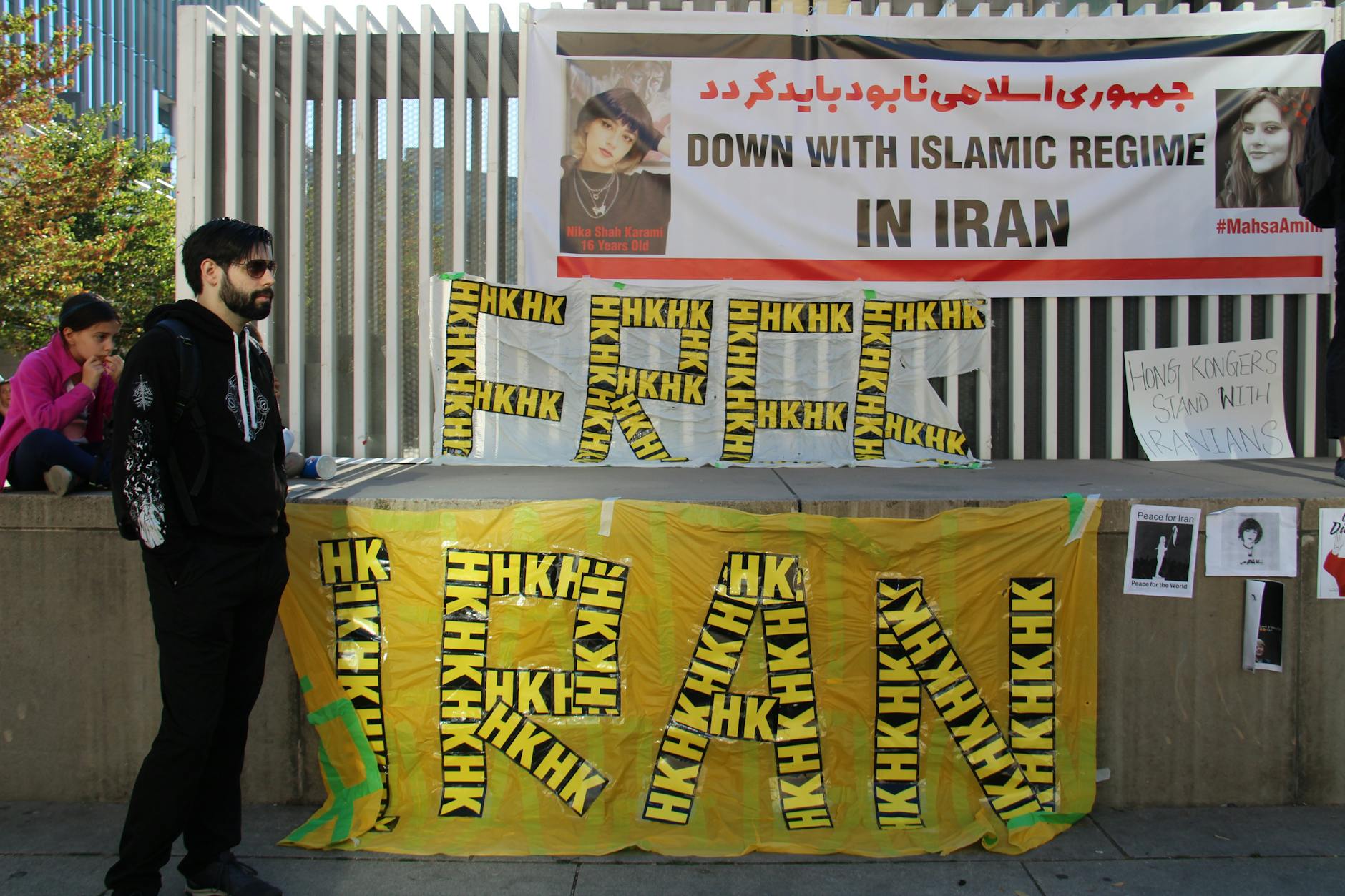
Meanwhile, Iran deepened its support for Hamas and Palestinian Islamic Jihad in Gaza, and beginning around 2014, dramatically increased its backing of the Houthi movement in Yemen. At its peak, this network gave Iran the ability to threaten Israel on multiple fronts, disrupt global shipping through the Strait of Hormuz and the Red Sea, and hold U.S. military bases in the region at risk, all while maintaining plausible deniability. The cost of this enterprise was staggering. Estimates from U.S. intelligence and independent analysts suggest Iran spent between $600 million and $800 million per year on Hezbollah alone, with total annual expenditures across all proxies exceeding $1.5 billion to $2 billion in peak years. This spending continued even as ordinary Iranians faced severe economic hardship under international sanctions, a tension that fueled repeated waves of domestic protest, including the massive 2022 uprising following the death of Mahsa Amini.

Why Is the Axis of Resistance Facing Collapse Now?
The most immediate cause is the series of Israeli military operations that began after Hamas’s October 7, 2023, attack on southern Israel. That assault, which killed roughly 1,200 Israelis and took over 250 hostages, triggered a ferocious Israeli response in Gaza that has killed tens of thousands of Palestinians and destroyed much of Hamas’s governing and military infrastructure. But the consequences extended far beyond Gaza. Israel’s campaign expanded to target hezbollah directly in Lebanon in September 2024, beginning with the dramatic pager and walkie-talkie explosions that wounded thousands of operatives, followed by the assassination of Hezbollah’s longtime leader Hassan Nasrallah in a massive airstrike on Beirut’s southern suburbs. However, it would be a mistake to attribute the crisis solely to Israeli military action. The fall of the Assad regime in December 2024, when a rapid offensive led by Hayat Tahrir al-Sham swept through Aleppo, Hama, and finally Damascus, eliminated the geographic linchpin of the entire network. Syria was the land corridor through which Iranian weapons, advisors, and funds flowed to Hezbollah.
Without a friendly government in Damascus, that supply line is severed. Iran reportedly attempted to airlift support to Assad in his final days but was unable to reverse the military situation. Russia, Assad’s other major backer, was too consumed by its war in Ukraine to intervene meaningfully. The speed of the collapse stunned even Western intelligence agencies, suggesting that Iran’s network was far more brittle than its fearsome reputation implied. There is an important caveat: weakened does not mean eliminated. The houthis in Yemen continue to fire missiles and drones at commercial shipping and at Israel, and Iraqi Shia militias remain deeply embedded in Iraq’s security forces and political system. Iran retains its ballistic missile program and its nuclear enrichment capabilities. The Axis of Resistance may be fractured, but its remnants are still capable of causing significant harm, particularly if Tehran decides to escalate in desperation rather than accept a diminished position.
What Has Happened to Hezbollah After the 2024 War?
Hezbollah’s losses in 2024 were arguably the most consequential blow to Iran’s entire regional project. Beyond Nasrallah, Israel killed or captured much of Hezbollah’s senior military council, including commanders who had spent decades building the organization’s operational capabilities. The Israeli air campaign destroyed significant portions of Hezbollah’s rocket and missile stockpiles, particularly precision-guided munitions that Iran had spent years smuggling into Lebanon through the now-severed Syrian corridor. A ceasefire agreement reached in November 2024 required Hezbollah to withdraw its forces north of the Litani River and allowed the Lebanese Armed Forces and UNIFIL to deploy in southern Lebanon, conditions that Hezbollah had resisted for nearly two decades. The political consequences within Lebanon have been equally dramatic. Hezbollah’s aura of military invincibility, carefully cultivated since its 2006 war with Israel, has been shattered.
Lebanese political factions that had been intimidated into acquiescence for years have begun to push back more openly. In January 2025, Lebanon elected a new president, Joseph Aoun, the former army commander, in a process that notably did not require Hezbollah’s approval in the way previous presidential selections had. The organization still exists as a political party and retains significant support within Lebanon’s Shia community, but its capacity to function as Iran’s primary deterrent against Israel has been fundamentally degraded. For Iran, the damage goes beyond military metrics. Hezbollah was the crown jewel of the Axis of Resistance, the proof of concept that justified the entire proxy strategy. Its humiliation calls into question the basic logic of Iran’s regional approach and has emboldened voices within Iran’s own political establishment who have long argued that the massive expenditure on foreign proxies was a waste of resources that should have been invested domestically.

How Is the Trump Administration Responding to Iran’s Weakened Position?
The Trump administration has framed Iran’s setbacks as vindication of the maximum pressure approach and has moved to intensify economic sanctions. In early 2025, the administration reimposed and expanded sanctions targeting Iran’s oil exports, including more aggressive enforcement against Chinese refineries purchasing Iranian crude, which had been a significant sanctions evasion channel. The stated goal is to drive Iran’s oil revenue as close to zero as possible, a strategy that the first Trump administration pursued between 2018 and 2020 with partial success. There is a genuine policy debate about whether to use this moment of Iranian weakness to push for a new nuclear agreement or to simply try to maximize pressure until the regime changes its behavior or collapses. Hawks within the administration and in Congress argue that Iran’s proxy losses make this the ideal time to demand not just nuclear concessions but also an end to ballistic missile development and support for terrorism, a “bigger deal” approach. Skeptics, including some former Trump administration officials, warn that cornering a weakened but still nuclear-capable regime could provoke exactly the kind of desperate escalation that the proxy strategy was originally designed to enable, specifically, a sprint toward a nuclear weapon as the ultimate insurance policy.
The tradeoff is real and consequential. Iran’s nuclear program has advanced significantly since the U.S. withdrew from the JCPOA in 2018. Iran now enriches uranium to 60 percent purity, just a short technical step from weapons-grade, and has accumulated enough enriched material for multiple warheads if further processed. The International Atomic Energy Agency has reported diminishing access to Iranian facilities. The question for U.S. policymakers is whether a weakened Iran is more likely to negotiate away this capability or more likely to cling to it as its last remaining source of strategic leverage.
Can Iran Rebuild Its Proxy Network or Will It Pursue New Strategies?
Iran’s leadership faces a genuinely difficult strategic choice. Rebuilding the Axis of Resistance to anything resembling its former capabilities would take years, cost billions of dollars Iran may not have under tightened sanctions, and require either recapturing influence in Syria, which appears unlikely under current conditions, or finding alternative supply routes to rearm Hezbollah and other frontline groups. There are warning signs that Iran may instead double down on its nuclear program as a substitute for the conventional deterrence that its proxies once provided. Supreme Leader Khamenei has publicly signaled a willingness to revisit Iran’s nuclear doctrine, and in late 2024, several senior IRGC commanders made thinly veiled references to reconsidering the fatwa against nuclear weapons.
This does not mean Iran has decided to build a bomb, but it does mean the internal debate is more active than at any point since the program’s existence was publicly revealed in 2002. For the United States, this represents a serious limitation of the “let the proxies collapse” approach: if the proxies were a substitute for nuclear weapons, removing them may accelerate rather than prevent proliferation. Iran also retains asymmetric options that do not depend on the traditional proxy structure. Cyberattacks against critical infrastructure, assassination plots targeting dissidents abroad, and the use of criminal networks for sanctions evasion all remain within Tehran’s toolkit. The Houthis, who are geographically distant from Israel and difficult to target, continue to demonstrate that even a single surviving proxy can impose significant costs on global commerce and Western military resources.
What Does This Mean for Iraq and the Remaining Proxy Forces?
Iraq represents the most ambiguous case in the Axis of Resistance’s crisis. Unlike Syria, where the allied regime fell, Iraq’s government remains in place and maintains close relations with both Iran and the United States. Iranian-backed militias within the Popular Mobilization Forces still number in the tens of thousands and are legally integrated into Iraq’s security apparatus. They control significant economic assets, including border crossings, and wield political influence through allied parties in parliament. The Trump administration’s approach to Iraq will be a critical test of whether the U.S.
📨 Get Free Accountability Coverage Alerts
Free · No spam · Unsubscribe anytime
can exploit Iran’s moment of weakness without destabilizing a country where American forces still maintain a presence. Pushing too hard to sideline Iranian-allied factions risks reigniting the militia attacks against U.S. bases that punctuated the 2020-2024 period. Pushing too gently risks allowing Iran to consolidate its one remaining major foothold. Iraqi Prime Minister Mohammed Shia al-Sudani has attempted to walk this line by gradually negotiating a drawdown of the U.S. military mission while keeping channels open to both Washington and Tehran, but the arrangement is inherently fragile.
What Comes Next for the Middle East Without a Functioning Axis of Resistance?
The partial collapse of Iran’s proxy network does not automatically translate into regional stability. History suggests that power vacuums in the Middle East are filled quickly and often violently. In Syria, the new government faces the monumental task of rebuilding a country devastated by thirteen years of civil war while managing competing interests from Turkey, Kurdish forces, remnants of ISIS, and various rebel factions with incompatible visions for the state. In Lebanon, the absence of Hezbollah’s dominant military role creates space for political reform but also for renewed sectarian competition.
The broader question is whether the Trump administration will treat Iran’s weakened position as a strategic opportunity requiring active diplomatic engagement or as a problem that is solving itself. The latter assumption carries real risks. Iran has historically responded to perceived existential threats not with capitulation but with escalation, whether through its nuclear program, terrorist attacks abroad, or support for spoiler groups. The next two years will likely determine whether the unraveling of the Axis of Resistance leads to a more stable Middle East or simply a more unpredictable one.
Conclusion
Iran’s Axis of Resistance, the product of four decades of investment, ideological commitment, and strategic patience, is facing a crisis unlike anything in its history. The fall of Assad’s Syria, the decimation of Hezbollah’s leadership and arsenal, Hamas’s devastation in Gaza, and continued international pressure have collectively shattered the network’s coherence. What remains are isolated nodes, some still dangerous, particularly the Houthis and Iraqi militias, but none capable of projecting the kind of coordinated, multi-front threat that defined the Axis at its peak.
For American policymakers and the public, the critical question is not whether Iran has been weakened but what comes next. Maximum pressure sanctions, Israeli military operations, and the internal contradictions of the proxy model have created a moment of genuine strategic opportunity. But opportunity without a coherent plan risks producing outcomes, whether Iranian nuclear breakout, regional power vacuums, or new forms of asymmetric violence, that could prove worse than the status quo the Axis of Resistance maintained. The coming months will test whether Washington can convert tactical wins into durable strategic gains, or whether, as has happened before in the Middle East, the destruction of one threat simply clears the ground for the next.
Frequently Asked Questions
What exactly is the “Axis of Resistance”?
It is an informal network of state and non-state actors allied with Iran, united by opposition to Israel and U.S. influence in the Middle East. The primary members have included Hezbollah in Lebanon, the Assad regime in Syria, Hamas and Palestinian Islamic Jihad in Gaza, various Shia militias in Iraq, and the Houthi movement in Yemen. Iran provides funding, weapons, training, and strategic coordination through the IRGC’s Quds Force.
How much has Iran spent on its proxy network?
Precise figures are difficult to verify, but U.S. government estimates and independent analysts have placed Iran’s annual spending on Hezbollah alone at $600 million to $800 million. Total annual expenditures across all proxies, including groups in Iraq, Syria, Yemen, and Gaza, have been estimated at $1.5 billion to $2 billion during peak years, though the figure has likely fluctuated with Iran’s oil revenues and sanctions pressure.
Is Hezbollah finished as a military force?
No, but it has been severely degraded. Hezbollah lost much of its senior leadership, significant portions of its rocket and missile arsenal, and its aura of invincibility during the 2024 conflict with Israel. It remains a political force in Lebanon and retains fighters and weapons, but its capacity to function as Iran’s primary deterrent against Israel has been fundamentally diminished, and rebuilding will be extremely difficult without the Syrian supply corridor.
Could Iran build a nuclear weapon now?
Iran has the technical capability to enrich uranium to weapons-grade levels relatively quickly, given its current stockpile of 60 percent enriched material. However, building a deliverable nuclear weapon involves additional steps, including weaponization and miniaturization for a missile warhead, that would likely take additional time. The IAEA has reported reduced monitoring access, making precise assessments more difficult. The loss of Iran’s proxy deterrent has intensified debate within Iran about whether to pursue this option.
How does this affect oil prices and the global economy?
The situation creates competing pressures. Tighter sanctions on Iranian oil exports could remove up to 1.5 million barrels per day from global markets, pushing prices higher. However, Houthi attacks on Red Sea shipping have already increased shipping costs and insurance premiums, adding inflationary pressure to global trade. A broader regional conflict or Iranian attempt to close the Strait of Hormuz, through which roughly 20 percent of the world’s oil passes, would cause severe economic disruption.
What is the U.S. military presence in the region?
The United States maintains approximately 2,500 troops in Iraq, 900 in Syria, and significant naval assets in the Persian Gulf and Red Sea. U.S. bases in Iraq and Syria have been targets of militia rocket and drone attacks, particularly during periods of escalation. The Trump administration is negotiating the terms of continued U.S. military presence in Iraq while conducting strikes against Houthi targets in Yemen to protect commercial shipping.
You Might Also Like
- International Inspectors Say Iran Could Have Built a Bomb Within Weeks Before the Strikes
- Without Khamenei There Is No Clear Successor — Iran’s Political System Is in Crisis
- Trump Bet His Entire Foreign Policy Legacy on Bombing Iran — The Stakes Could Not Be Higher