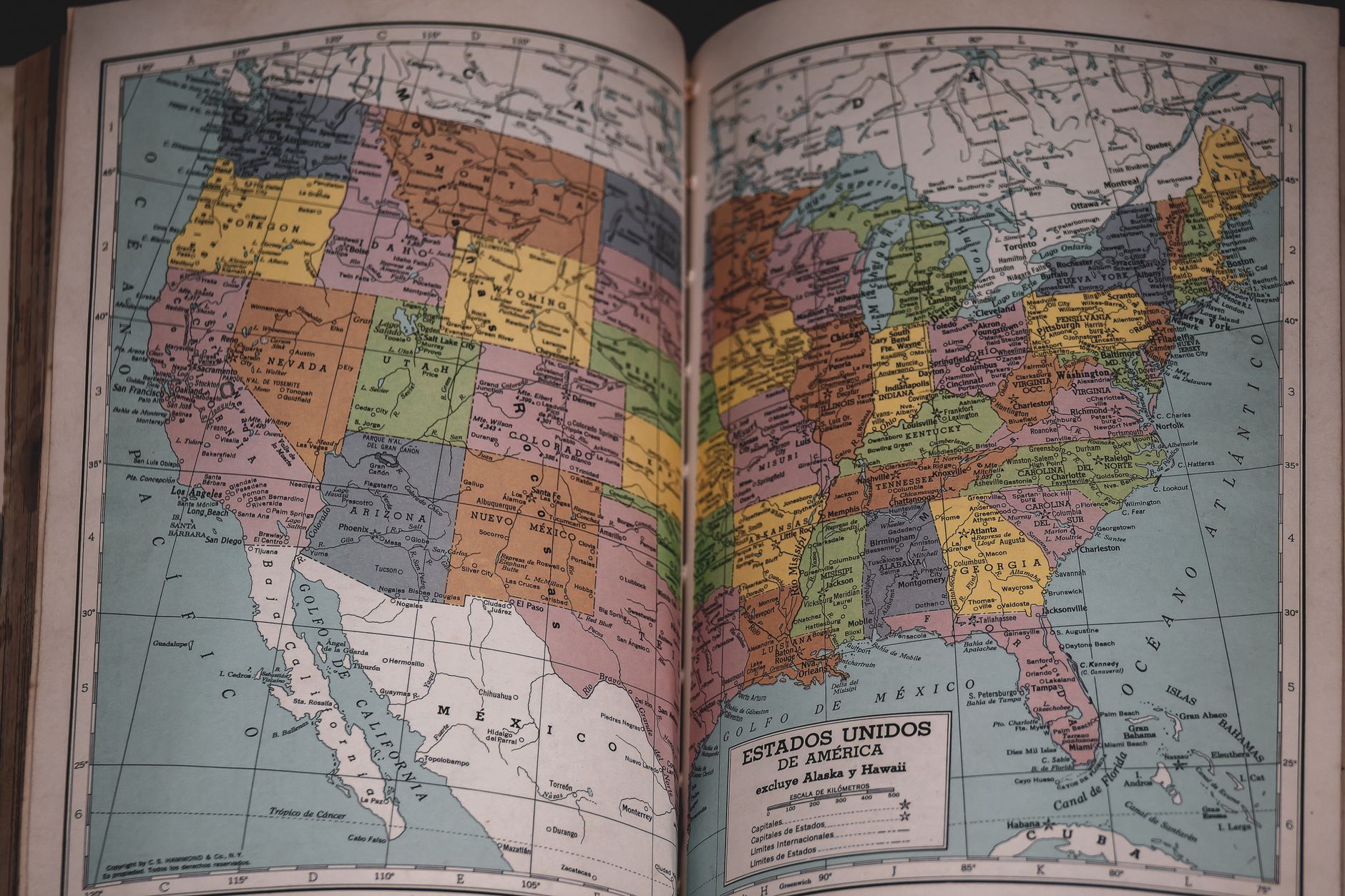
The list of swing states 2026 voters are settling on Tuesday, Nov. 3, is longer than in a presidential year, because the Senate and the House are being fought on different maps. Senate control turns mostly on states President Trump carried, from Ohio and Texas to Alaska and Kansas; House control turns on a few dozen districts packed into California, New York, Pennsylvania and a handful of Midwestern states.
Where it stands: At about 4:45 p.m. ET on Tuesday, every polling place in the country is still open and no votes have been reported. On the Election Day live page carried by PBS News, PBS News put the math this way: “Democrats must flip four seats in the Senate and three seats in the House to wrest control of the chambers from Republicans.” No race has been called, and this guide makes no forecast.
Which swing states 2026 Senate control depends on
Seven states hold the Senate races the Cook Political Report rated Toss Up in NPR’s Oct. 30 rundown: Michigan, Ohio, Maine, Texas, Iowa, Alaska and Kansas. Only Michigan, an open seat because Democrat Gary Peters is retiring, belongs to the Democrats; the other six are Republican seats. On Monday, Nov. 2, Cook announced that “the Michigan Senate race moves from Toss Up to Lean Democrat,” The Hill reported.
The starting line comes from the Senate itself. The senate.gov roster lists the “Majority Party: Republicans (53 seats),” with Democrats at 45 seats and independents at 2. A 50-50 chamber stays Republican because Vice President JD Vance breaks ties, which is why NPR wrote that “Democrats need to flip a net of four seats held by Republicans to win control of the Senate.”
The Democratic list grew over the cycle. The AP’s live page said that “Originally, Democrats believed they only had a narrow path to the majority, and their plan required flipping seats in Alaska, Ohio, Maine and North Carolina,” and that the party now also sees openings in Texas, Kansas and Iowa. The reverse pressure is on Michigan: NPR wrote that Republicans’ targets are “principally in Michigan, but also New Hampshire and Minnesota.” Both of those were rated Lean D.
Swing states at a glance: Senate, House and poll closing times
The table pairs each state’s Senate contest with the House districts that the AP’s pre-election state guides singled out, plus when the last polls close there tonight. Ratings are Cook’s, as listed by NPR on Oct. 30; a rating describes a race as one analyst saw it on that date, not an outcome.
| State | Senate race (Cook, via NPR Oct. 30) | House districts AP is watching | Polls close (ET) |
|---|---|---|---|
| Michigan | Open D seat: El-Sayed (D) vs. Rogers (R), Lean D (Cook, Nov. 2; was Toss Up) | 4th, 7th, 10th | 8 p.m.; last at 9 p.m. |
| Ohio | Husted (R) vs. Brown (D), Toss Up | 7th, 9th | 7:30 p.m. |
| Maine | Collins (R) vs. Jackson (D), Toss Up | 2nd (open) | 8 p.m. |
| Texas | Open R seat: Paxton (R) vs. Talarico (D), Toss Up | 15th, 34th | 8 p.m.; last at 9 p.m. |
| Iowa | Open R seat: Hinson (R) vs. Turek (D), Toss Up | 1st, 2nd (open), 3rd | 9 p.m. |
| Alaska | Sullivan (R) vs. Peltola (D), Toss Up | None flagged | Midnight; one site at 1 a.m. |
| Kansas | Marshall (R) vs. Hamilton (D), Toss Up | None flagged | 8 p.m.; last at 9 p.m. |
| North Carolina | Open R seat: Cooper (D) vs. Whatley (R), Likely D | None flagged | 7:30 p.m. |
| New Hampshire | Open D seat: Pappas (D) vs. Sununu (R), Lean D | None flagged | 7, 7:30 or 8 p.m., by town |
| Minnesota | Open D seat: Flanagan (D) vs. Tafoya (R), Lean D | None flagged | 9 p.m. |
| California | No Senate race | 22nd, 48th | 11 p.m. |
| New York | No Senate race | 3rd, 4th, 17th | 9 p.m. |
| Pennsylvania | No Senate race | 7th, 8th, 10th | 8 p.m. |
Closing times come from the AP’s state-by-state “What to expect” guides published Oct. 30. States that span two time zones get two times. The Michigan guide, for example, gives the closing time as “8 p.m. local time, which is 8 p.m. and 9 p.m. ET,” because part of the Upper Peninsula runs on Central time, and says the AP will not call a statewide race there before the 9 p.m. ET closing.
Which states hold the tightest House districts?
The House map is spread across more states, but the closest districts cluster in a few of them. In its Oct. 23 update, cited by The Hill, Cook counted 17 House seats as pure toss-ups, with Republicans favored in 198.
- California: Under the map voters approved in a November 2025 referendum, the AP’s California guide said the new districts “could net Democrats an additional five seats.” It singled out Republican Rep. David Valadao’s 22nd District and the open 48th, where Rep. Darrell Issa is retiring.
- New York: The AP pointed to the 3rd and 4th on Long Island, both held by Democrats, and the Hudson Valley’s 17th, held by Republican Rep. Mike Lawler.
- Pennsylvania: Three Republican-held seats, the 7th, 8th and 10th. The AP noted that Trump ran ahead of the House Republicans in all three in 2024.
- Michigan, Iowa and Ohio: Michigan’s 4th, 7th and open 10th; Iowa’s 1st and 3rd, plus the 2nd, left open by Rep. Ashley Hinson’s Senate run; and Ohio’s 7th and 9th, where the AP said mid-decade redistricting has made some races more competitive.
- Texas: The 34th, held by Democratic Rep. Vicente Gonzalez, and the 15th, held by Republican Rep. Monica De La Cruz, both in districts redrawn in 2025 to favor Republicans.
The AP’s live page added a demographic layer: “The path to a U.S. House majority runs through heavily Latino districts in states such as Arizona, California, Colorado, Florida and Texas.” A fuller district-by-district view is on our House battleground states page.
Which states overlap both fights?
Four states carry a closely rated Senate race and at least one House district the AP flagged: Michigan, Ohio, Iowa and Texas, with Maine as a fifth through its open 2nd District. That overlap matters for turnout, since the same voters fill in both contests, and for timing, since a slow count in one state delays both answers.
Ohio is a good example of the stakes on one ballot. The AP’s Ohio guide lists a Senate special election, all 15 House seats and the governor’s race. It also notes that recounts there are automatic below 0.25% of the vote in statewide races and 0.5% in House races. In Iowa, Hinson’s move to the Senate race against Democrat Josh Turek opened up the 2nd District.
When will the swing states report results?
It depends on poll closings and on counting rules, and closings in these states stretch from 7 p.m. ET in some New Hampshire towns to 1 a.m. ET in Alaska. North Carolina and Ohio shut their polls at 7:30 p.m. ET; Maine and Pennsylvania at 8 p.m.; Michigan, Texas and Kansas finish at 9 p.m., the same hour as Iowa, Minnesota and New York; California closes at 11 p.m. ET.
📨 Get Free Accountability Coverage Alerts
Free · No spam · Unsubscribe anytime
Alaska is last. The AP’s Alaska guide says its polls close “at 8 p.m. local time, which is midnight and 1 a.m. ET,” the later time covering one Aleutian Islands polling place. Alaska also tends to post most in-person votes on election night and to release the bulk of mail ballots in the days after.
Two of the Senate toss-ups can run past election night for a separate reason. Alaska uses ranked choice voting if no candidate reaches a majority. In Maine, the AP said the Senate race falls under ranked choice rules even with two names on the ballot, “because of declared write-in candidates.” State-level detail is on our Michigan Senate race and Maine Senate race pages.
Who is running in the swing-state Senate races?
In Texas, the AP described the matchup as “Democratic state Rep. James Talarico and Republican Ken Paxton,” the attorney general who beat Sen. John Cornyn in a runoff. In Kansas, Methodist pastor Adam Hamilton (D) is challenging Sen. Roger Marshall. North Carolina’s open seat pits former Gov. Roy Cooper (D) against Michael Whatley (R), who led the RNC and has Trump’s endorsement.
The two Democratic-held seats that Republicans are targeting outside Michigan are also open. In New Hampshire, Rep. Chris Pappas (D) faces former Sen. John E. Sununu (R) for Jeanne Shaheen’s seat; in Minnesota, Lt. Gov. Peggy Flanagan (D) faces Michele Tafoya (R) for Tina Smith’s. Our 2026 Senate races overview covers every competitive seat, including Georgia, South Carolina, Nebraska and Mississippi.
Calls will come from the AP as each state’s count allows, and they will be logged on our live 2026 midterm results page. Voting in the first two swing states, Ohio and North Carolina, ends at 7:30 p.m. ET on Nov. 3, 2026.
Frequently Asked Questions
What are the swing states in the 2026 midterms?
On the Senate side, the races Cook rated Toss Up as of Oct. 30: Michigan, Ohio, Maine, Texas, Iowa, Alaska and Kansas. Cook moved Michigan to Lean Democrat on Nov. 2. Add Lean or Likely seats in North Carolina, New Hampshire and Minnesota. For the House, AP pre-election guides point to clusters of close districts in California, New York, Pennsylvania, Michigan, Iowa, Ohio and Texas.
How many seats do Democrats need to flip in 2026?
Four in the Senate and three in the House, according to the AP on Election Day. Republicans hold 53 Senate seats, and a 50-50 tie would leave Vice President JD Vance with the deciding vote.
Which swing state closes its polls first?
Among the states in this guide, Ohio and North Carolina are first to finish voting, at 7:30 p.m. ET. Some New Hampshire towns close at 7 p.m. ET. Alaska is last: most of the state closes at midnight ET and one Aleutian Islands polling place at 1 a.m. ET.
Why might some swing states take days to call?
Maine and Alaska use ranked choice voting for their federal races, which can add a later tabulation round if no one wins a majority, and Alaska releases most of its mail ballots in the days after the election.
Has any swing state been called yet?
No. This guide was written on Election Day before polls closed, and no votes had been reported. Each AP call goes onto our live results page as it happens.
Sources
- Michigan Senate race shifts to ‘lean Democrat’ in final Cook Political Report rating — The Hill, November 2, 2026
- Senators of the 119th Congress — U.S. Senate (senate.gov), roster as accessed November 3, 2026
- Here are the Senate races to watch ahead of Election Day — NPR (Domenico Montanaro), via WUNC, October 30, 2026 (corrected November 2, 2026)
- Live Updates: Midterm voters go to the polls on Election Day — PBS News (Associated Press), November 3, 2026
- Cook Political Report shifts 19 House seats in Democrats’ favor — The Hill, October 23, 2026
- What to expect in Michigan on Election Day — The Associated Press (via Michigan Public), October 30, 2026
- AP Decision Notes: What to expect in Ohio on Election Day — The Associated Press (via La Nacion), October 30, 2026
- AP Decision Notes: What to expect in Texas on Election Day — The Associated Press (via La Nacion), October 30, 2026
- AP Decision Notes: What to expect in Iowa on Election Day — The Associated Press (via La Nacion), October 30, 2026
- AP Decision Notes: What to expect in Maine on Election Day — The Associated Press (via La Nacion), October 30, 2026
- AP Decision Notes: What to expect in Alaska on Election Day — The Associated Press (via La Nacion), October 30, 2026
- AP Decision Notes: What to expect in Kansas on Election Day — The Associated Press (via La Nacion), October 30, 2026
- AP Decision Notes: What to expect in North Carolina on Election Day — The Associated Press (via La Nacion), October 30, 2026
- AP Decision Notes: What to expect in New Hampshire on Election Day — The Associated Press (via La Nacion), October 30, 2026
- AP Decision Notes: What to expect in Minnesota on Election Day — The Associated Press (via La Nacion), October 30, 2026
- AP Decision Notes: What to expect in California on Election Day — The Associated Press (via La Nacion), October 30, 2026
- AP Decision Notes: What to expect in New York on Election Day — The Associated Press (via La Nacion), October 30, 2026
- AP Decision Notes: What to expect in Pennsylvania on Election Day — The Associated Press (via La Nacion), October 30, 2026
This article is news reporting and analysis based on the public sources listed above, as they stood on the dates shown. Where officials, lawmakers or analysts disagree, including on whether an action is lawful, their positions are attributed to them; Donald Trump Class Action is not a court and nothing here is legal advice. Facts in a developing story can change.