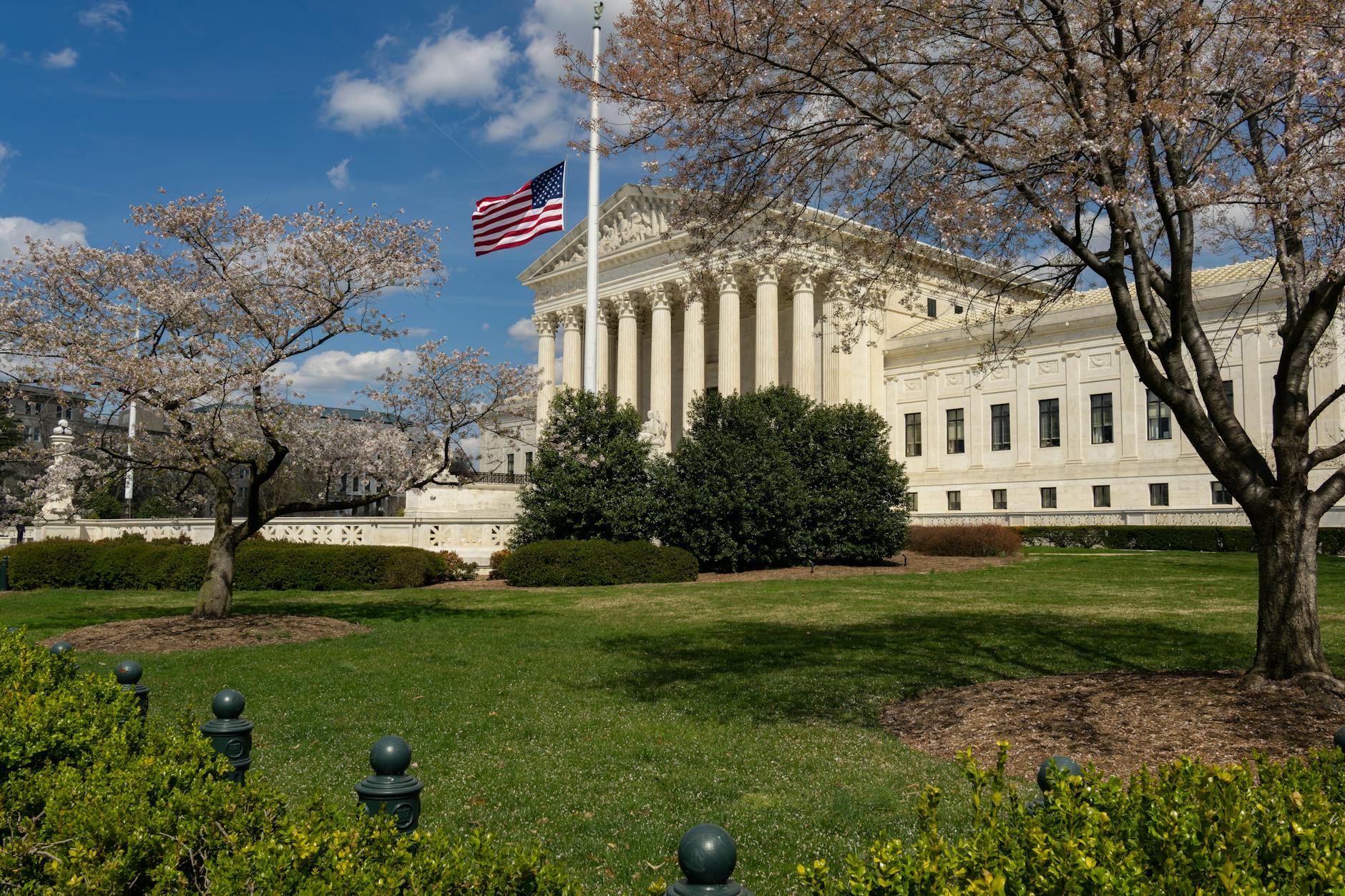
On February 20, 2026, the Supreme Court struck down President Trump’s tariff regime in a 6-3 decision, ruling that the International Emergency Economic Powers Act does not give the president authority to impose tariffs. The immediate question on everyone’s mind: what happens to the estimated $175 billion already collected? The short answer is that corporations — not consumers — are first in line to get that money back. Treasury Secretary Scott Bessent himself called tariff refunds “the ultimate corporate welfare” and bluntly predicted, “I got a feeling the American people won’t see it.” That $175 billion figure, estimated by the Penn Wharton Budget Model through January 2026, works out to roughly $1,300 per U.S. household.
But here is the cruel math: while you paid higher prices on everything from groceries to tires to electronics, there is no mechanism for you to trace those inflated costs back to specific tariff charges and file for a refund. Companies like FedEx, Costco, and Toyota are already suing to recover what they paid at the border. Consumers who absorbed those costs downstream are, for now, out of luck. This article breaks down the ruling itself, who stands to benefit from refunds, what companies are doing, and whether there is any realistic path for everyday Americans to see a dime.
Table of Contents
- Why Did the Supreme Court Strike Down $175 Billion in Tariffs — and Who Gets Refunds?
- Consumers Paid the Tariffs but Have No Clear Path to Refunds
- Which Companies Are Already Suing for Tariff Refunds?
- What Would Direct Consumer Refunds Actually Look Like?
- The DOJ Delay and the Risk That Refunds Never Materialize
- FedEx Sets a Standard Most Companies Will Not Follow
- What This Ruling Means for Future Trade Policy
- Conclusion
- Frequently Asked Questions
Why Did the Supreme Court Strike Down $175 Billion in Tariffs — and Who Gets Refunds?
The ruling, written by Chief Justice Roberts and joined by Justices Gorsuch, Barrett, Sotomayor, Kagan, and Jackson, was unusually direct. Roberts wrote that the administration’s claimed authority rested on two words in IEEPA — “regulate” and “importation” — but that “those words cannot bear such weight.” The statute, Roberts noted, “contains no reference to tariffs or duties.” Justices Thomas, Alito, and Kavanaugh dissented, but the 6-3 margin left no ambiguity about where the Court stood. The ruling also invoked the major questions doctrine, in a section joined by Roberts, Gorsuch, and Barrett, reinforcing the principle that executive agencies cannot claim sweeping economic authority without clear congressional authorization. This is significant because it sets a high bar for any future president attempting to use emergency powers to reshape trade policy unilaterally. The tariffs had been in effect since February 2025, when they were first imposed on China, then expanded to Canada and Mexico in March 2025, and broadened to nearly all trading partners under “reciprocal” tariff orders in April 2025.
Over that year, U.S. Customs and Border Protection reported collecting approximately $133.5 billion through mid-December 2025, with IEEPA collections running at roughly $500 million per day. But here is what the Court did not do: it did not order refunds. Instead, the Supreme Court remanded the refund question to the U.S. Court of International Trade to determine how and whether refunds would be issued. That distinction matters enormously, because it means the refund process is nowhere close to settled — and the structure of who gets money back will almost certainly favor the importers of record, not the people who ultimately paid higher prices.

Consumers Paid the Tariffs but Have No Clear Path to Refunds
CNN reported it plainly: “You paid for tariffs — but you won’t get a slice of tariff refunds.” This is the fundamental unfairness at the center of the refund debate. Tariffs are technically paid by the importing company when goods cross the border. Those companies then pass the cost along — to distributors, to retailers, and ultimately to consumers. But the legal relationship exists between the importer and U.S. Customs. Consumers are not parties to that transaction and have no standing to file a claim. Consider a practical example. When tariffs raised the cost of imported tires by 25 percent, Yokohama Tire paid that duty at the port.
Yokohama then raised wholesale prices, and your local tire shop raised retail prices. You paid an extra $40 per tire. But there is no receipt linking your purchase to a specific tariff payment. Even if Yokohama recovers its tariff costs through a refund, there is no legal requirement that the company pass those savings to you — unless it voluntarily chooses to do so. However, if you are a small business that directly imported goods and paid tariffs to Customs, you may have a legitimate refund claim. Businesses that were the “importer of record” have documentation tying their payments directly to the now-invalidated tariffs. The limitation is that even these businesses face uncertainty, because as of March 1, 2026, no refund process has been established by regulators or courts. The DOJ sought a four-month delay on tariff refunds after missing a court deadline, signaling that the administration is in no hurry to return the money.
Which Companies Are Already Suing for Tariff Refunds?
FedEx moved first. On February 23, 2026 — just three days after the ruling — FedEx filed suit for a full refund and made a notable pledge that set it apart from most other corporate claimants: “If refunds are issued to FedEx, we will issue refunds to the shippers and consumers who originally bore those charges.” That commitment is voluntary and, as of now, essentially unique among major filers. The list of companies suing for refunds reads like a cross-section of the American economy. It includes Costco, Toyota, Goodyear, Columbia Sportswear, Barnes & Noble, Logitech, Marathon Petroleum, Revlon, L’Oréal, Peloton, Dole, J. Crew, GoPro, Bath & Body Works, Steve Madden, Crocs, Xerox, Yeti, Kohl’s, Bumble Bee, Kawasaki, Yokohama Tire, and EssilorLuxottica.
Bloomberg reported that over 1,000 firms had been seeking refunds even before the Supreme Court ruling came down. The flood of litigation is expected to overwhelm the Court of International Trade, which typically handles a far smaller caseload. What is conspicuously absent from nearly all of these filings is any commitment to pass refunds along to consumers. FedEx’s pledge is the exception, not the rule. When Costco recovers millions in tariff payments on imported goods, will it lower prices retroactively or issue credits to members? Nothing in the legal process requires it. This is what Bessent meant by “the ultimate corporate welfare” — companies recover their costs, shareholders benefit, and the consumer who paid $8 more for a case of imported olive oil gets nothing.

What Would Direct Consumer Refunds Actually Look Like?
Senate Democrats sent a letter to Treasury Secretary Bessent on February 27, 2026, demanding that tariff refunds begin “immediately” and that refunds reach consumers, not just corporations. Some Democrats have called for direct payments of $1,700 per household — a figure slightly higher than Penn Wharton’s $1,300 average estimate, presumably accounting for continued collections through February. The comparison between corporate refunds and consumer refunds reveals a stark tradeoff. Corporate refunds are administratively straightforward: Customs has records of every tariff payment, tied to specific importers and specific shipments. Writing checks to importers of record is a solved problem.
Consumer refunds, by contrast, would require either a complex claims process — where households somehow document that they paid inflated prices on tariffed goods — or a flat per-household payment that ignores the reality that wealthier households with higher consumption bore more of the tariff cost in absolute dollars, while lower-income households bore more of it as a share of income. A flat $1,300-to-$1,700 payment to every household would function essentially like a stimulus check. It would be simple to administer but imprecise. A means-tested or consumption-based refund would be more equitable but practically impossible to implement. Neither approach has gained traction with the current administration, and the Republican-controlled House has shown no interest in appropriating funds for consumer refund payments.
The DOJ Delay and the Risk That Refunds Never Materialize
The Department of Justice’s request for a four-month delay on tariff refunds is a warning sign that should not be ignored. The government has strong institutional incentives to slow-walk this process. That $175 billion has already been spent — it went into general revenue and was used to offset budget deficits. Refunding it would blow a hole in the federal budget at a time when the administration is already grappling with revenue shortfalls from its tax cut extensions. There is a real scenario in which refunds are delayed, litigated, appealed, and ultimately reduced to a fraction of what was collected. The Court of International Trade must first establish a process.
Then individual companies must file claims with supporting documentation. Then the government will likely challenge the scope of refunds, arguing about interest calculations, administrative costs, and which specific tariff actions fall under the ruling. This could take years. For consumers, the timeline is even worse — any legislative effort to create direct refund payments would require an act of Congress, which is unlikely to pass a divided government. The limitation here is fundamental: courts move slowly, and the government has every incentive to delay. If you are a consumer hoping to see refund money, the honest assessment is that it is unlikely to happen through any existing legal channel. The only realistic path would be congressional action to authorize direct payments, and that would require political will that does not currently exist.

FedEx Sets a Standard Most Companies Will Not Follow
FedEx’s public commitment to pass refunds through to shippers and consumers deserves closer scrutiny, because it highlights what responsible corporate behavior looks like — and how rare it is. FedEx operates as a middleman: it imports goods on behalf of customers, pays tariffs as the importer of record, and passes those costs to shippers. Its pledge to reverse those charges if it recovers refunds is logically consistent and operationally feasible because FedEx has detailed records of which customers paid which surcharges.
📨 Get Free Accountability Coverage Alerts
Free · No spam · Unsubscribe anytime
Most other companies in the refund queue do not have that clean a paper trail running downstream to consumers. When Goodyear recovers tariff payments on imported rubber, it would need to trace the cost impact through its manufacturing process, to wholesale pricing, to retail pricing, and then to individual tire purchasers. That is not going to happen. The most consumers can realistically hope for is that competitive pressure leads companies to lower prices going forward — but that is a different thing from a refund for what you already overpaid.
What This Ruling Means for Future Trade Policy
The Supreme Court’s decision does more than unwind one set of tariffs. By invoking the major questions doctrine, the Court signaled that presidents cannot use vague emergency statutes to impose sweeping economic policies that Congress never specifically authorized. Any future president who wants to impose broad tariffs will need to go through Congress — a slower, messier process, but one the Constitution arguably intended.
The immediate economic impact is also significant. With IEEPA tariffs invalidated, import costs should begin dropping, which could ease inflationary pressure on consumer goods over the coming months. But “should” is doing heavy lifting in that sentence. Companies that raised prices during the tariff period may not lower them quickly or fully, a phenomenon economists call “sticky prices.” The tariffs may be gone, but their impact on your grocery bill, your car payment, and your household budget will linger for some time.
Conclusion
The Supreme Court got the constitutional question right: the president cannot unilaterally impose tariffs under an emergency powers statute that never mentions tariffs. But the ruling exposes a deeper problem. The $175 billion collected over the past year came out of consumers’ pockets, passed through corporate supply chains, and landed in the federal treasury. Now the refund process is structured to send that money back to corporations — the middlemen — with no guarantee that any of it reaches the people who actually paid higher prices. If you are a consumer, the practical takeaway is sobering.
Watch whether companies that receive refunds actually lower prices. Pay attention to which retailers follow FedEx’s lead and commit to passing refunds through. Support legislative efforts to create direct consumer refund payments if that matters to you. And understand that the system, as currently designed, treats tariff refunds as a corporate accounting matter, not a consumer protection issue. The $1,300 per household that was collected in your name is not coming back to you unless something changes.
Frequently Asked Questions
Will I get a tariff refund as a consumer?
Almost certainly not through the current legal process. Refunds will go to the companies that paid tariffs at the border — the importers of record. There is no established mechanism for consumer refunds, and the administration has shown no interest in creating one. The only path to direct consumer payments would be an act of Congress.
How much were tariffs costing the average household?
The Penn Wharton Budget Model estimates the cumulative IEEPA tariff collections through January 2026 equal roughly $1,300 per U.S. household. Senate Democrats have cited a figure of $1,700 per household, which may account for additional collections through February 2026.
Which companies have promised to pass tariff refunds to consumers?
FedEx is the only major company that has publicly committed to passing refunds to its shippers and end customers. Most other companies filing for refunds — including Costco, Toyota, Goodyear, and dozens more — have made no such commitment.
When will tariff refunds actually be paid out?
No timeline has been established. The Supreme Court remanded the refund question to the Court of International Trade, the DOJ has sought a four-month delay, and the administrative process for processing claims has not been created. Realistically, corporate refunds could take months to years. Consumer refunds through legislation are even more uncertain.
Are the tariffs gone for good?
The IEEPA-based tariffs are struck down, but Congress could pass new tariff legislation if it chose to. The ruling does not prevent tariffs — it prevents the president from imposing them unilaterally under IEEPA. Any future tariffs would need clear congressional authorization.
Can I sue for a tariff refund as an individual?
You would need to have been the importer of record — the entity that directly paid the tariff to U.S. Customs. If you are a small business that imported goods directly, you may have a claim. If you are an individual consumer who simply paid higher retail prices, you do not have standing to file a refund claim under the current legal framework.
You Might Also Like
- Trump’s Bill Cuts $186 Billion From Food Stamps…2.4 Million Lose Their Benefits
- Republican “Big Beautiful Bill” Would Slash $880 Billion From Medicaid
- Juries Awarded $289M, $332M, $2.1B…Bayer Settling 170,000 Lawsuits for $7.25 Billion Total