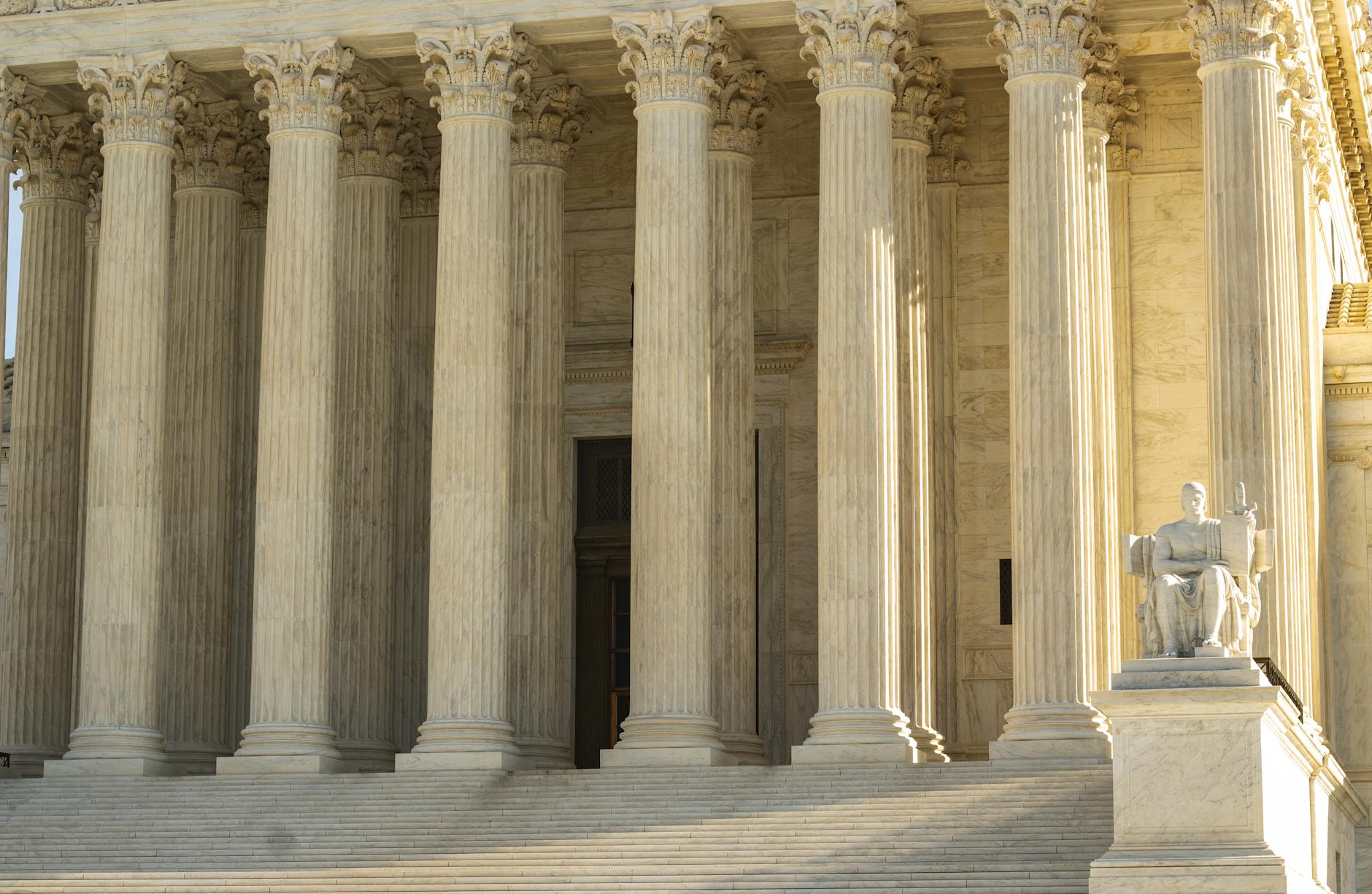
The viral claim is partly true, mostly misleading, and worth unpacking carefully. Yes, the Supreme Court did strike down President Trump’s tariffs as unlawful in a landmark 6-3 ruling on February 20, 2026. Yes, the estimated refund liability sits around $175 billion. But no, Costco has not “already applied” refunds to customer prices — because no importer has actually received a single dollar back yet. The refund system is still being built, and the legal battles over who gets what are just getting started. If you saw a headline suggesting you’re about to get a check or that Costco already lowered prices because of this ruling, that’s not what happened. The Supreme Court’s decision in *Learning Resources, Inc.
v. Trump* is genuinely historic. Chief Justice John Roberts, writing for the majority, held that President Trump lacked the authority to impose sweeping tariffs under the International Emergency Economic Powers Act (IEEPA), a statute designed for national security emergencies that never mentions tariffs or duties. The ruling has triggered what the Penn Wharton Budget Model estimates could be approximately $175 billion in refund obligations — the largest single-event refund in U.S. government history. But the refunds go to importers, not consumers. And as of March 2026, the system to process those refunds is still under construction. This article breaks down what the Court actually ruled, what the $175 billion figure means, what Costco is really doing, and what consumers should realistically expect.
Table of Contents
- Did the Supreme Court Actually Declare Trump’s Tariffs Unlawful?
- Where Does the $175 Billion Refund Estimate Come From, and Who Actually Gets the Money?
- What Is CBP Actually Doing to Process Tariff Refunds?
- What Is Costco Actually Doing About the Tariff Ruling?
- The Class-Action Lawsuit Against Costco and the “Double Recovery” Problem
- How Over 2,000 Companies Followed Costco’s Legal Playbook
- What Happens Next and What Consumers Should Watch For
- Conclusion
- Frequently Asked Questions
Did the Supreme Court Actually Declare Trump’s Tariffs Unlawful?
Yes, and it wasn’t close. On February 20, 2026, the supreme court ruled 6-3 in *Learning Resources, Inc. v. Trump*, 607 U.S. ___ (2026), that President Trump’s use of IEEPA to impose broad tariffs was unconstitutional. Chief Justice Roberts wrote the majority opinion, concluding that IEEPA’s enumerated list of presidential powers contains no mention of tariffs or duties. Roberts stated plainly: “In light of the breadth, history, and constitutional context of that asserted authority, he must identify clear congressional authorization to exercise it.” The Court found that Congress would have expressly included tariff authority in the statute if it had intended to grant it.
Justices Clarence Thomas, Samuel Alito, and Brett Kavanaugh dissented. The dissent argued for a broader reading of executive emergency powers, but the majority wasn’t persuaded. The ruling effectively invalidated the legal basis for tariffs that had been collected from hundreds of thousands of businesses over months. For context, consider how unusual this is: the Supreme Court doesn’t often strike down a sitting president’s core economic policy. The last comparable disruption to trade policy by the judiciary was arguably the steel seizure case in 1952, and even that didn’t involve a potential $175 billion in refunds. The practical impact was immediate. Over 330,000 importers of record — companies that paid duties on goods entering the United States — suddenly had a legal basis to demand their money back. But as with most Supreme Court rulings, the opinion told the government what it couldn’t do without spelling out exactly what should happen next.
Where Does the $175 Billion Refund Estimate Come From, and Who Actually Gets the Money?
The $175 billion figure comes from the Penn Wharton Budget Model at the University of Pennsylvania, which calculated the total refund liability based on tariffs collected under the now-invalidated IEEPA authority. CNN’s reporting put the number slightly lower, at approximately $166 billion collected from over 330,000 importers of record. Either way, we’re talking about the largest single-event refund in U.S. government history, and the federal budget will feel it. Here’s the critical nuance that most viral posts leave out: refunds go to importers, not directly to consumers. If you personally bought a washing machine that cost more because of tariffs, you don’t get a refund check from the government. The company that imported that washing machine — or the components to build it — is the one entitled to a refund of the duties it paid at the border.
Whether that company passes those savings along to customers is a separate question entirely, and one that’s already generating lawsuits. However, if you’re an importer or run a business that paid IEEPA tariffs directly, your situation is different. You may have a legitimate claim. But even then, there’s a major limitation: the Supreme Court did not order the $175 billion refund. It struck down the tariffs. The mechanics of who gets refunded, when, and how much are being fought out in lower courts and through U.S. Customs and Border Protection. No refund timeline has been guaranteed, and the process could take months or longer depending on how quickly CBP’s systems come online.
What Is CBP Actually Doing to Process Tariff Refunds?
U.S. Customs and Border Protection is building the refund infrastructure essentially from scratch. On March 6, 2026, CBP formally requested a 45-day extension to update the ACE (Automated Commercial Environment) system, which is the platform that processes customs transactions. The agency acknowledged that its existing systems were never designed to handle refunds at this scale. CBP is developing a new system called CAPE — claims and Processing Engine — specifically for this purpose.
According to a progress report dated March 11, 2026, the Claim Portal is approximately 70% complete, the Refund component is around 60% complete, and the Review/Liquidation component sits at about 40% complete. CBP has said the process will require minimal submission from importers once CAPE is operational, which suggests they’re trying to automate as much as possible rather than requiring each of the 330,000-plus importers to file complex paperwork. To put this in perspective, imagine the IRS announcing it needed to build a brand-new refund system in 45 days to pay back $175 billion to hundreds of thousands of businesses. That’s roughly what CBP is attempting. The timeline is ambitious, the system is incomplete, and there are no guarantees it will launch on schedule. Importers who are counting on quick refunds should temper their expectations and monitor updates from CBP and their customs brokers closely.

What Is Costco Actually Doing About the Tariff Ruling?
Costco has been more proactive than most companies, but not in the way viral posts suggest. Back in December 2025 — before the Supreme Court even ruled — Costco filed a preliminary lawsuit to preserve its right to tariff refunds before U.S. Customs could liquidate the collected amounts. “Liquidation” in customs parlance means finalizing a duty assessment, after which refunds become much harder to obtain. Costco’s preemptive legal strategy was smart enough that over 2,000 other companies imitated it. But here’s what Costco has not done: it has not “already applied” refunds to customer prices.
As of March 2026, no importer in the country has received tariff refunds because the system to issue them doesn’t exist yet. Costco CEO Ron Vachris has said publicly that if Costco receives refunds, the company plans to lower prices and enhance value for customers. That’s a forward-looking promise, not a description of something that’s already happened. The distinction matters because social media posts framing this as a done deal are misleading consumers into thinking price drops have already occurred. The tradeoff for consumers is this: companies like Costco that file early and aggressively may eventually be in a stronger position to receive refunds and pass savings along. But companies that didn’t take preemptive legal action may face a harder road. Whether any of those savings actually reach consumers depends entirely on competitive pressure, corporate goodwill, and the outcome of lawsuits now being filed against companies like Costco itself.
The Class-Action Lawsuit Against Costco and the “Double Recovery” Problem
On March 11, 2026, Costco member Matthew Stockov of Illinois filed a class-action lawsuit against Costco, arguing that if the retailer receives tariff refunds without distributing them to consumers, it amounts to “double recovery.” The theory goes like this: Costco raised prices to offset the tariffs, customers paid those higher prices, and now if Costco gets the tariff money back from the government but doesn’t lower prices or issue refunds to members, it effectively collected the tariff cost twice — once from consumers and once from the government. This lawsuit highlights a real gap in the legal framework. The Supreme Court’s ruling creates a right of refund for importers, but there’s no corresponding legal mechanism that automatically forces businesses to pass those refunds through to the end consumer. Whether Stockov’s class action has legal merit is an open question.
Courts will have to decide whether Costco (and companies like it) have a legal obligation to share refunds with customers, or whether the relationship between importer and consumer is governed purely by market dynamics. The warning for consumers is straightforward: don’t assume you’re entitled to a refund just because the Supreme Court struck down the tariffs. The legal chain runs from the government to the importer. The chain from the importer to you is a different legal question, and the Stockov lawsuit is one of the first attempts to establish that link. If you’re a Costco member or a customer of any major retailer, watch these lawsuits carefully — but don’t spend money you haven’t received yet.
How Over 2,000 Companies Followed Costco’s Legal Playbook
Costco’s December 2025 lawsuit wasn’t just aggressive — it created a template. When other importers saw Costco move to protect its refund claims before customs entries were liquidated, over 2,000 companies filed similar protective actions. This wave of preemptive litigation is historically unusual in trade law. Typically, importers wait for a ruling and then file claims.
📨 Get Free Accountability Coverage Alerts
Free · No spam · Unsubscribe anytime
Costco’s approach flipped that sequence, and the companies that followed suit may now be in a better position to receive refunds once CBP’s CAPE system goes live. For smaller importers who didn’t file protective lawsuits, the situation is murkier. CBP has indicated the refund process will require minimal submissions, which suggests even latecomers may have a path to recovery. But customs law is full of procedural deadlines and liquidation windows, and businesses that missed those windows may find their claims are more complicated — or barred entirely.
What Happens Next and What Consumers Should Watch For
The next 45 to 90 days are critical. If CBP completes the CAPE system on schedule, the first refunds to importers could begin flowing in late April or May 2026. But “could” is doing a lot of work in that sentence. Government IT projects routinely run over schedule, and this one involves processing claims from over 330,000 entities totaling somewhere between $166 billion and $175 billion. Lower courts are also still sorting out procedural questions about the refund process, and the administration has not signaled whether it will seek any legislative workaround.
For consumers, the real question isn’t whether tariffs were struck down — they were. It’s whether businesses will pass refunds along, and whether courts will compel them to if they don’t. The Stockov class action against Costco is the first major test case, but it won’t be the last. If you want to stay informed, watch for updates from CBP on the CAPE system’s launch, follow the Costco class action as it develops, and be skeptical of any social media post claiming you’re owed money directly from the government. The refund pipeline is real, but it runs through businesses first — and right now, that pipeline is still under construction.
Conclusion
The Supreme Court’s 6-3 ruling in *Learning Resources, Inc. v. Trump* is genuinely historic. The Court definitively held that President Trump lacked authority to impose tariffs under IEEPA, potentially triggering the largest government refund event in American history. The $175 billion estimate from Penn Wharton is credible, and CBP is actively building the system to process those refunds. Costco’s preemptive legal strategy was smart and widely copied.
But the viral framing — that $175 billion has been refunded and Costco already applied it — is wrong on the timeline and misleading on the mechanics. No refunds have been issued yet. Costco hasn’t lowered prices based on refunds it hasn’t received. And consumers aren’t directly in line for government checks. The real story is still unfolding in federal courts, in CBP’s IT systems, and in class-action lawsuits that will determine whether businesses are legally required to share those refunds with the people who ultimately paid the higher prices. Stay skeptical, stay informed, and don’t believe anyone who tells you the money is already in your account.
Frequently Asked Questions
Am I entitled to a direct refund from the government because of the Supreme Court tariff ruling?
No. The refunds are owed to importers of record — the businesses that paid tariff duties to U.S. Customs. Consumers who paid higher prices at retail are not directly entitled to government refunds. Whether businesses pass those savings along is a separate legal and market question.
Has Costco already lowered prices because of tariff refunds?
No. As of March 2026, no importer has received tariff refunds because CBP’s refund system (CAPE) is still being built. Costco CEO Ron Vachris has said the company plans to lower prices if it receives refunds, but that hasn’t happened yet.
How much money is being refunded and when will it happen?
The Penn Wharton Budget Model estimates approximately $175 billion in total refund liability, while CNN reported a figure closer to $166 billion. CBP requested a 45-day extension as of March 6, 2026, to build its refund processing system. No firm date for the first refunds has been announced.
What was the Supreme Court case that struck down the tariffs?
The case is *Learning Resources, Inc. v. Trump*, 607 U.S. ___ (2026), decided on February 20, 2026. Chief Justice Roberts wrote the 6-3 majority opinion. Justices Thomas, Alito, and Kavanaugh dissented.
Can I join the class-action lawsuit against Costco?
A class-action lawsuit was filed on March 11, 2026, by Costco member Matthew Stockov in Illinois, alleging Costco would receive “double recovery” if it keeps tariff refunds without passing them to consumers. If the case is certified as a class action, eligible Costco members may be able to participate, but the lawsuit is in its earliest stages.
What should businesses that paid IEEPA tariffs do right now?
Monitor CBP announcements about the CAPE refund system. If you haven’t already filed a protective claim or lawsuit to preserve your refund rights, consult a customs attorney immediately — liquidation deadlines and procedural windows may affect your ability to recover funds.
You Might Also Like
- Companies Paid Tens of Billions in Tariffs the Supreme Court Just Struck Down Entirely
- Hours After Supreme Court Struck Down Tariffs, Trump Signed New 10% Global Tariff Order
- Trump’s Own Attorneys Told Supreme Court Section 122 Has “No Clear Application”