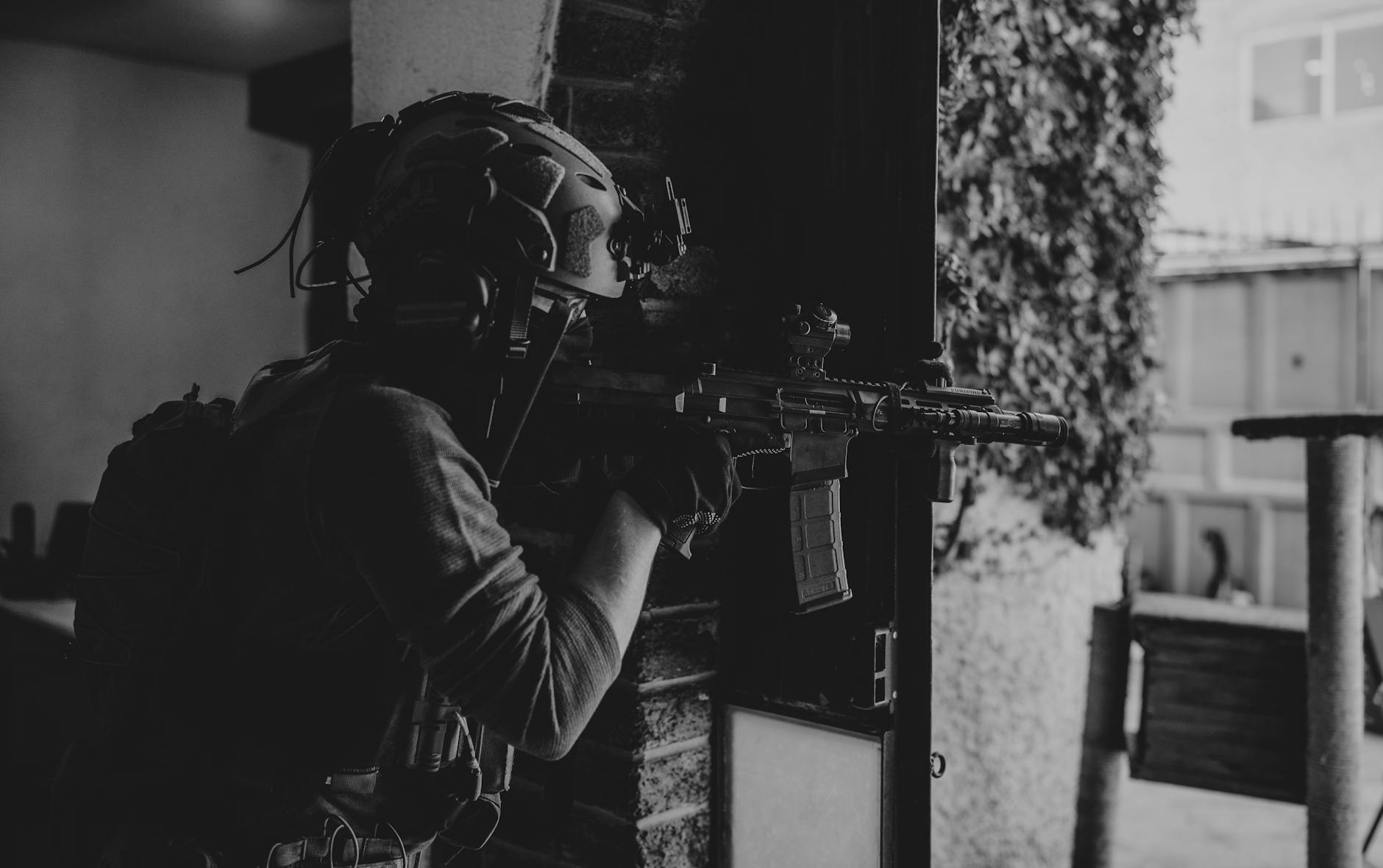
Yes, multiple credible reports confirm that US and allied special operations forces have been positioned near — and possibly inside — Iran’s borders as part of the broader military campaign that began in late February 2026. According to Axios and Fortune, reporting on March 8, 2026, the United States and Israel are actively discussing sending special forces into Iran to secure the country’s stockpile of highly enriched uranium. Officials involved in those discussions have stressed that any such operations would be limited and targeted, carried out by small special forces units rather than a large-scale ground invasion.
The positioning of these forces follows weeks of escalating military action. US and Israeli airstrikes against Iran began around February 28, 2026, and the question of ground operations has dominated national security debates ever since. The 82nd Airborne Division has made movements that drew immediate speculation about next steps, as reported by the Washington Post on March 6, 2026. President Trump himself, speaking aboard Air Force One, declined to rule out ground troops, saying they would be used only “for a very good reason” and adding: “We wouldn’t do it now, maybe later.” This article examines the reported special operations positioning in detail, including what we know about US and Israeli commando activity, the specific nuclear objectives driving these missions, the serious risks involved, regional actors like Azerbaijan, and the broader implications for American foreign policy.
Table of Contents
- What Do We Actually Know About Special Operations Forces Positioned Near Iran’s Borders?
- Why Enriched Uranium Is Driving the Special Forces Discussion
- The 82nd Airborne and Conventional Force Movements
- Regional Actors and the Azerbaijan Factor
- The Gap Between Political Rhetoric and Operational Reality
- What Israeli Commando Disclosures Reveal
- What Comes Next and Why It Matters
- Conclusion
- Frequently Asked Questions
What Do We Actually Know About Special Operations Forces Positioned Near Iran’s Borders?
The clearest public reporting comes from several major outlets, all converging on the same basic picture. Semafor reported on March 7, 2026, that Trump’s active options for Iran specifically include a special operations raid on nuclear sites. The following day, Axios broke the story that US and Israeli officials were in discussions about deploying special forces to secure Iran’s enriched uranium stockpile. These are not vague contingency plans sitting in a pentagon filing cabinet — these are live operational discussions happening at the highest levels of both governments. On the Israeli side, the picture is even more striking. Israeli Air Force Commander Maj. Gen.
Tomer Bar stated publicly that “fighters from the Air Force’s special units are currently carrying out extraordinary missions that could ignite the imagination.” Defense analysts interpreted this as a potential reference to operatives from Israel’s elite Shaldag unit already operating on Iranian soil. IDF Chief of Staff Lt. Gen. Eyal Zamir went further, disclosing that ground commando forces — not only Mossad intelligence operatives — had conducted covert operations inside Iran during the conflict, as reported by Ynet News. Earlier indicators had also surfaced. As far back as January 8, 2026, The Week reported that US Special Ops personnel were spotted training at a UK airbase with Osprey tiltrotor aircraft, raising speculation about Iran-related preparations well before the strikes began. That kind of advance training timeline is consistent with how the US military prepares for high-stakes special operations missions.

Why Enriched Uranium Is Driving the Special Forces Discussion
The central objective behind the reported special operations planning is iran‘s stockpile of highly enriched uranium. This is not about territorial control or regime change in the traditional sense — it is about physically locating and securing nuclear material that US and Israeli officials believe poses an unacceptable proliferation risk. The logic is straightforward: airstrikes can destroy above-ground facilities, but they cannot guarantee the neutralization of uranium stockpiles that may be stored in hardened underground sites or dispersed across multiple locations. However, this is where the mission becomes enormously complicated. ABC News reported that a “large US special ops force” would be needed on the ground to actually seize Iran’s uranium, suggesting the scale of any such operation would be far more significant than the “small, targeted units” framing that officials have publicly emphasized.
There is an inherent tension between the political messaging — limited operations, no ground invasion — and the operational reality of securing a nuclear program that Iran has spent decades dispersing and fortifying. Former Defense Secretary Mark Esper put it bluntly in comments reported by The Hill: sending special forces to find enriched uranium in Iran would be a “very perilous” mission. Esper, who served under Trump during his first term, has direct experience with the complexities of military operations in the Middle East. His warning carries particular weight because it comes from someone who understands both the political dynamics of the Trump administration and the operational realities on the ground. If the uranium is not where intelligence says it is, or if it has been moved, small teams operating deep inside hostile territory face catastrophic risk.
The 82nd Airborne and Conventional Force Movements
While special operations forces get the headlines, conventional military movements have also drawn significant attention. The Washington Post reported on March 6, 2026, that the 82nd Airborne Division had made deployments that invited speculation about the next phase of operations in Iran. The 82nd Airborne is one of the US military’s primary rapid-deployment forces, capable of inserting large numbers of troops into a combat zone on short notice. Its movement is never routine — it signals that planners are at minimum preparing for scenarios that go beyond air and missile strikes. The distinction between special operations and conventional forces matters here.
Special operations units — Delta Force, SEAL Team Six, Army Rangers, Green Berets — are designed for surgical, high-value missions like hostage rescue, targeted raids, and the seizure of specific objectives. The 82nd Airborne, by contrast, is a conventional infantry division that would be deployed if the mission required holding territory, securing a perimeter, or supporting a larger operation. The fact that both types of forces appear to be in motion suggests that military planners are preparing for a range of scenarios, from limited raids to something more substantial. For context, this pattern mirrors the early stages of the 2003 Iraq invasion, where special operations forces entered Iraq ahead of conventional troops to secure key sites and gather intelligence. The difference here is that the stated objective — uranium seizure — is far more technically complex than anything attempted in Iraq, and Iran’s military capabilities significantly exceed those of Saddam Hussein’s forces in 2003.
Regional Actors and the Azerbaijan Factor
The special operations picture cannot be understood in isolation from broader regional dynamics. Wikipedia’s documentation of the 2026 Iran war regional mobilizations notes that Azerbaijan’s troops began deploying toward the Iranian border around March 3, 2026. Azerbaijan shares a lengthy northern border with Iran, and any Azerbaijani military movement in that direction represents a significant escalation of the regional situation. The Azerbaijani deployment creates both opportunities and complications for US special operations planning. On one hand, pressure from multiple borders could stretch Iran’s defensive resources and create gaps that special forces could exploit.
On the other hand, the involvement of additional state actors increases the risk of miscalculation, unintended escalation, and conflicting military objectives. Azerbaijan has its own territorial disputes and strategic interests vis-a-vis Iran that do not necessarily align with American objectives around nuclear material. Al Jazeera has been tracking the rapid US military build-up near Iran, documenting a broader pattern of force positioning across the region. The tradeoff is clear: a wider coalition of pressure increases leverage but also increases the number of variables that can go wrong. Special operations missions depend on precise intelligence, tight operational security, and controlled environments — all of which become harder to maintain as more actors enter the picture.
The Gap Between Political Rhetoric and Operational Reality
One of the most important things to understand about the reported special forces positioning is the significant gap between what officials say publicly and what the operations would actually require. Officials have consistently used language designed to minimize the perception of escalation — “limited,” “targeted,” “small units,” “not a ground invasion.” This framing serves a political purpose: it reassures a war-weary American public that this will not become another Iraq or Afghanistan. But the operational details tell a different story. ABC News reporting that a “large” special ops force would be needed to seize uranium directly contradicts the “small units” framing. Former Secretary Esper’s “very perilous” characterization suggests the mission risk profile is far higher than officials are publicly acknowledging.
And the movement of conventional forces like the 82nd Airborne indicates that planners understand the potential for mission scope to expand beyond what special operations alone can handle. This matters for public accountability. When officials describe operations in minimizing terms while simultaneously planning for much larger contingencies, it creates a credibility gap that has historically preceded significant escalations. The American public has seen this pattern before — in Vietnam, Iraq, and Libya, where “limited” operations evolved into something far more extensive. Citizens and journalists should pay close attention to the gap between the stated scope and the actual force posture being assembled.

What Israeli Commando Disclosures Reveal
The statements from Israeli military leaders are unusually revealing and deserve particular scrutiny. IDF Chief of Staff Lt. Gen. Eyal Zamir’s disclosure that ground commando forces — not just intelligence operatives — had already operated inside Iran represents a significant admission. Israel has a long history of covert operations inside Iran, from the Mossad’s 2018 raid on a Tehran warehouse to obtain nuclear archives to various assassination operations.
📨 Get Free Accountability Coverage Alerts
Free · No spam · Unsubscribe anytime
But the use of military commandos, as distinct from intelligence agents, suggests operations of a different character and scale. Maj. Gen. Tomer Bar’s statement about Air Force special units carrying out missions that “could ignite the imagination” is the kind of carefully calibrated public hint that Israeli military officials use to communicate capability without confirming specific operations. For those reading between the lines, the reference to the Shaldag unit — Israel’s elite special operations force that specializes in deep-penetration missions and target designation for airstrikes — suggests that Israeli forces may already be operating on the ground inside Iran to guide the ongoing air campaign.
What Comes Next and Why It Matters
The trajectory of events points toward a critical decision window. If the US and Israel determine that airstrikes alone cannot neutralize Iran’s nuclear material, the pressure to authorize ground-level special operations will intensify. Trump’s own words — “maybe later” — leave the door wide open.
The combination of active US-Israeli discussions, confirmed Israeli commando activity, conventional force positioning, and regional mobilization by countries like Azerbaijan suggests that the infrastructure for expanded operations is already being put in place. The coming weeks will likely determine whether this remains a primarily air-based campaign or transitions into something involving sustained ground presence, even if officials continue to resist calling it that. For the American public, the key question is not whether special operations forces are near Iran’s borders — the evidence strongly suggests they are — but whether the mission objectives can actually be achieved with the “limited” approach officials have described, or whether the logic of the operation will inevitably demand escalation.
Conclusion
Multiple credible reports from Axios, the Washington Post, Semafor, ABC News, and Israeli military officials confirm that US and allied special operations forces have been positioned near and potentially inside Iran’s borders. The primary objective driving these deployments is the seizure of Iran’s enriched uranium stockpile, a mission that officials describe as limited but that operational experts like former Defense Secretary Esper have called “very perilous.” Conventional forces including the 82nd Airborne have also made movements consistent with preparation for expanded operations, and regional actors like Azerbaijan have begun their own border deployments.
The gap between the political framing of these operations — small, targeted, not a ground invasion — and the operational reality described by military experts and reporting outlets is significant and deserves sustained public scrutiny. Americans should track the actual force posture, not just the official talking points, to understand where this conflict is heading. The precedent of “limited” operations expanding into prolonged military engagements is well-documented in American history, and informed civic engagement requires honest assessment of what is being planned and what it could become.
Frequently Asked Questions
Have US special forces actually entered Iran?
US officials have not confirmed American special forces operating inside Iran. However, Israeli military leaders, including IDF Chief of Staff Lt. Gen. Eyal Zamir, have disclosed that Israeli ground commando forces operated covertly in Iran during the conflict. The US and Israel are actively discussing sending special forces to secure enriched uranium, according to Axios reporting from March 8, 2026.
What is the specific mission objective for special operations in Iran?
The primary reported objective is securing Iran’s stockpile of highly enriched uranium. Officials stress these would be targeted operations focused on nuclear material, not a broad ground invasion or regime change effort. However, ABC News reported that a “large” special ops force would be needed, suggesting the mission could be more extensive than officials publicly acknowledge.
Has President Trump authorized ground troops in Iran?
As of early March 2026, Trump has not authorized or ruled out ground troops. Speaking aboard Air Force One, he said troops would be deployed only “for a very good reason” and added “We wouldn’t do it now, maybe later,” leaving the option explicitly open.
What role is Azerbaijan playing in the Iran conflict?
Azerbaijan began deploying troops toward the Iranian border around March 3, 2026, as part of broader regional mobilizations documented during the 2026 Iran war. The specific objectives and coordination level with US forces remain unclear from public reporting.
What are military experts saying about the risks of these operations?
Former Defense Secretary Mark Esper has warned that sending special forces to find enriched uranium in Iran would be “very perilous.” The challenges include locating dispersed nuclear material in hardened underground facilities, operating deep inside hostile territory, and the potential for mission scope to expand beyond initial parameters.
Were there early signs of special operations preparations before the strikes began?
Yes. As early as January 8, 2026, The Week reported US Special Ops personnel training at a UK airbase with Osprey tiltrotor aircraft, raising speculation about Iran-related preparations nearly two months before strikes began on February 28, 2026.
You Might Also Like
- Pentagon Had Pre-Positioned Forces Across the Region for Over a Month
- Additional F-35 Squadrons Were Quietly Deployed to Gulf Bases Before the Strike
- What’s Left of Iran’s Nuclear Program After Two U.S. Strikes in Eight Months