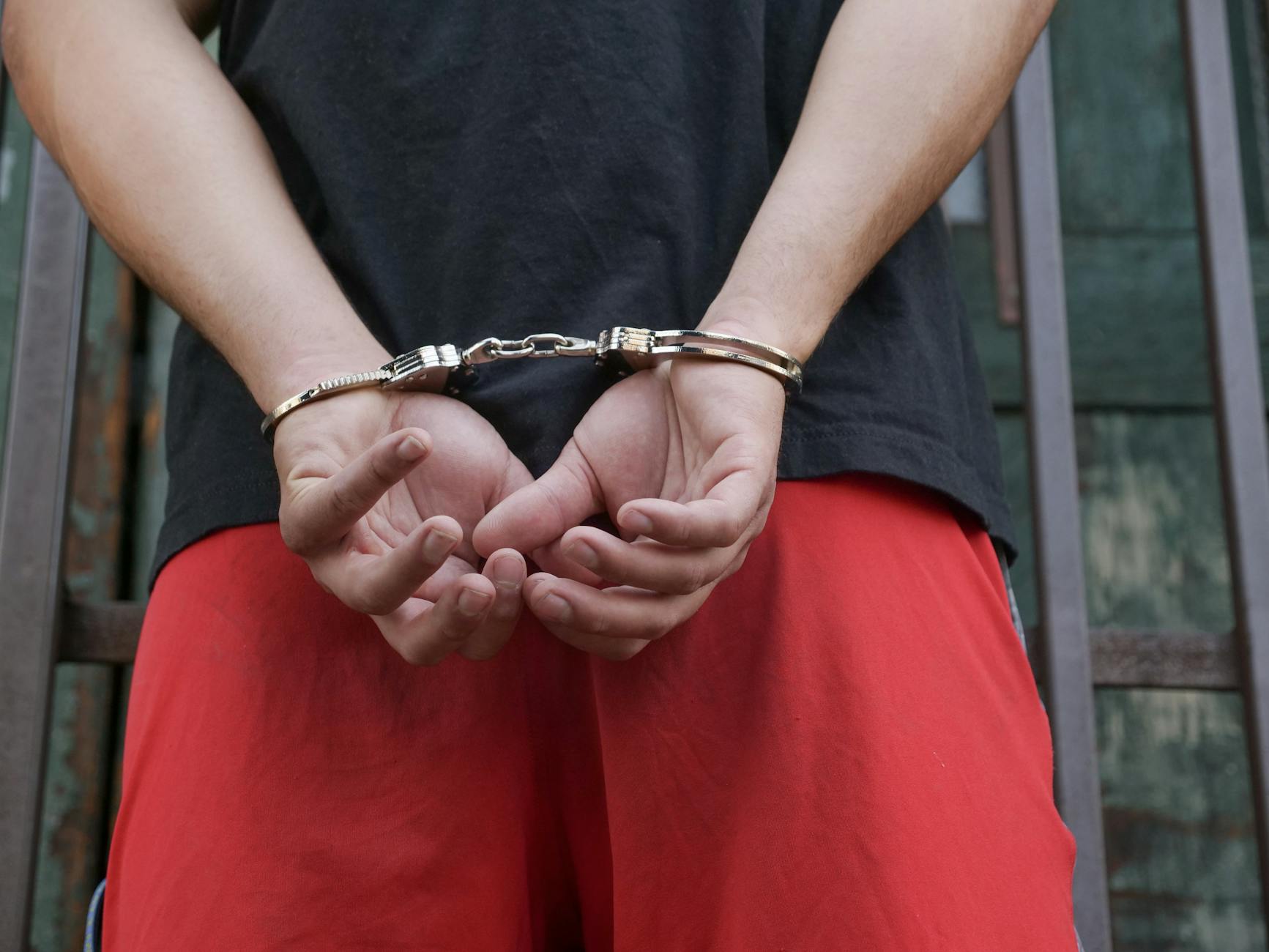
Shia LaBeouf was arrested in New Orleans shortly after midnight on February 17, 2026 — Fat Tuesday — after allegedly punching two bar employees with closed fists outside R Bar in the Faubourg Marigny neighborhood. The 39-year-old actor was kicked out of the establishment, co-owned by Afghan Whigs frontman Greg Dulli, for causing a disturbance. Video footage from the scene shows a shirtless LaBeouf shoving one person to the ground and striking another in the face, reportedly causing a possible nose dislocation.
He was initially charged with two counts of simple battery, and a third count was added after a second arrest on February 28, bringing his total to three misdemeanor battery charges. The incident has escalated well beyond a typical celebrity bar fight. At least one victim, identified as Jeffrey “Damnit,” alleges that LaBeouf targeted him with anti-gay slurs during the confrontation, repeatedly calling victims “faggots.” Jeffrey, who identifies as queer, has asked prosecutors to upgrade the charges to include a hate crime allegation. LaBeouf himself has since described his behavior as “dirty, ugly, disgusting,” while also making the controversial claim that “big gay people are scary” to him and that problems arise when his “masculinity” is “being challenged.” This article covers the full timeline of both arrests, the hate crime allegations and their legal implications, LaBeouf’s troubling public statements, the court-ordered substance abuse treatment, and what today’s scheduled court hearing on March 19, 2026 could mean for the case going forward.
Table of Contents
- What Happened When Shia LaBeouf Was Kicked Out of the Mardi Gras Bar?
- Why the Hate Crime Allegations Could Change Everything
- LaBeouf’s Second Arrest and the Expanding Case
- What LaBeouf’s Own Statements Reveal About Accountability
- LaBeouf’s History of Public Altercations and Legal Trouble
- What Today’s Court Hearing Could Decide
- Broader Implications for Accountability and Bias-Motivated Violence
- Conclusion
- Frequently Asked Questions
What Happened When Shia LaBeouf Was Kicked Out of the Mardi Gras Bar?
The sequence of events on February 17 followed a pattern familiar to anyone who has tracked LaBeouf’s long history of public confrontations. According to the New Orleans Police Department report, LaBeouf was inside R Bar during Mardi Gras celebrations when staff determined he needed to leave. After being removed from the premises, rather than walking away, he allegedly turned violent against the very employees who had escorted him out. The NOPD report states he struck victims multiple times with closed fists — not open-handed slaps or shoves, but full punches. Two bartenders were injured in the altercation. LaBeouf himself sustained injuries serious enough that he was transported to a local hospital before police took him into custody.
The nature of his injuries has not been publicly disclosed. After his arrest on two counts of simple battery, he was released on his own recognizance by Judge Simone Levine — a decision that drew criticism from some observers who questioned whether a non-celebrity defendant would have received the same treatment. What makes this incident distinct from a run-of-the-mill bar brawl is the power dynamic. These were service industry workers doing their jobs. Bartenders and bouncers who remove disruptive patrons should not have to worry about being physically attacked for it. Louisiana simple battery carries a maximum penalty of six months in jail and a $1,000 fine per count, but sentences for first-time misdemeanor offenders rarely approach the statutory maximum — a reality that raises questions about whether the legal consequences will match the severity of the conduct.

Why the Hate Crime Allegations Could Change Everything
The hate crime dimension of this case transforms it from a celebrity misconduct story into something with far broader implications. Jeffrey “Damnit,” one of the victims, told reporters that LaBeouf told him he would “kick my ass” and called him a “faggot” during the confrontation. Jeffrey identifies as queer and has formally asked prosecutors to upgrade the charges to include hate crime enhancements. If prosecutors agree, the legal stakes for LaBeouf would increase substantially. However, hate crime enhancements in battery cases are notoriously difficult to prove. Prosecutors must demonstrate not just that slurs were used, but that the victim was targeted because of their sexual orientation or gender identity.
Defense attorneys in such cases frequently argue that slurs uttered during a heated altercation reflect general hostility rather than bias-motivated targeting. Louisiana’s hate crime statute, R.S. 14:107.2, does cover sexual orientation, but the burden of proof requires showing that the victim’s identity was a substantial factor motivating the offense — not merely that offensive language was used. The video evidence could cut both ways. If it captures the alleged slurs, it strengthens the hate crime argument considerably. If it only shows physical violence without audible slurs, prosecutors may determine that the existing battery charges are the more viable path. Victims and advocacy groups have pointed out that regardless of the legal outcome, the pattern of using anti-gay slurs during a violent attack sends a dangerous message, particularly from a public figure with a large platform.
LaBeouf’s Second Arrest and the Expanding Case
On February 28, 2026, eleven days after the initial incident, LaBeouf turned himself in to NOPD after learning that a new arrest warrant had been issued. He was charged with a third count of simple battery, still stemming from the same Fat Tuesday altercation. This time, he posted a $5,000 bond to secure his release. The additional charge suggests that investigators identified a third victim or that further review of evidence revealed an additional act of battery that warranted a separate count. The voluntary surrender is worth noting.
LaBeouf’s legal team apparently learned of the warrant and arranged for him to turn himself in rather than risk the optics — and legal complications — of being picked up by police. It is a standard strategy for defendants with competent counsel, but it also signals that LaBeouf’s attorneys are aware the situation is serious enough to require careful management. With three counts now on the table, plus the potential for hate crime enhancements, the cumulative exposure is no longer trivial even by celebrity legal standards. This pattern of escalating charges after an initial arrest is common in cases where multiple victims come forward or where video evidence prompts additional scrutiny. Each count of simple battery in Louisiana is a separate offense, and while they stem from the same incident, a judge could theoretically impose consecutive rather than concurrent sentences — though that outcome remains unlikely for misdemeanor charges absent aggravating factors.
What LaBeouf’s Own Statements Reveal About Accountability
LaBeouf’s public comments following the arrests have been a study in contradictions. On one hand, he described his own behavior as “dirty, ugly, disgusting” — language that sounds like genuine remorse. On the other hand, he claimed he does not have a drinking problem, despite the fact that the incident occurred during Mardi Gras and a judge subsequently ordered him to undergo drug testing and enroll in substance abuse treatment. Courts do not typically impose substance abuse conditions on defendants who show no indicators of substance-related behavior. Perhaps most damaging was his statement that “big gay people are scary” to him and that conflicts arise when his “masculinity” is “being challenged.” For a defendant facing allegations that he used anti-gay slurs while beating people, volunteering that gay men frighten him is a remarkable strategic miscalculation.
Prosecutors could potentially use these public statements to support a hate crime enhancement, arguing that they demonstrate bias against LGBTQ individuals. Defense attorneys almost universally advise clients to say nothing publicly about pending cases, and these comments illustrate exactly why. The contrast between claiming accountability (“dirty, ugly, disgusting”) while simultaneously offering justifications (“my masculinity is being challenged”) undermines the credibility of the remorse. Genuine accountability does not come paired with explanations for why the victims provoked the response. This framing shifts blame onto the people who were attacked, suggesting that their identities or behavior somehow triggered an understandable reaction rather than an unprovoked assault.
LaBeouf’s History of Public Altercations and Legal Trouble
This is far from LaBeouf’s first encounter with law enforcement. The actor has a documented history of public incidents spanning more than a decade, including arrests for public intoxication, disorderly conduct, and obstruction. In 2017, he was arrested in Savannah, Georgia, during a confrontation with police where he used racist language toward a Black officer. In 2020, singer FKA Twigs filed a lawsuit alleging physical, emotional, and sexual abuse during their relationship — allegations that LaBeouf acknowledged by stating he had been “abusive to myself and everyone around me for years.” The pattern matters legally because it undermines the narrative that the Mardi Gras incident was an isolated lapse in judgment.
While prior incidents are not automatically admissible in a criminal trial, prosecutors can sometimes introduce evidence of prior bad acts to establish a pattern of behavior, particularly if the defense argues that the conduct was out of character. A defendant with a decade-long trail of violent and bigoted public behavior has a harder time making that argument. For the court system, the challenge is determining appropriate consequences for a repeat offender whose wealth and fame have historically insulated him from serious repercussions. The fact that he was released on his own recognizance after the first arrest — despite a history of violence — reflects a systemic tendency to treat celebrity defendants differently. Whether that pattern holds through sentencing remains to be seen, but the court-ordered substance abuse treatment and drug testing suggest the judge is taking the case more seriously than a standard misdemeanor.
📨 Get Free Accountability Coverage Alerts
Free · No spam · Unsubscribe anytime

What Today’s Court Hearing Could Decide
LaBeouf’s next court hearing is scheduled for March 19, 2026 — today. This hearing could address several pending issues, including compliance with the court-ordered drug testing and substance abuse treatment, the status of the hate crime enhancement request, and any pretrial motions from the defense. Misdemeanor cases in Louisiana can move relatively quickly through the system compared to felony prosecutions, and the court may set a trial date or entertain plea negotiations.
If prosecutors have decided to pursue hate crime enhancements, today’s hearing may be the first public indication of that decision. The victims and their advocates have been vocal about wanting upgraded charges, but the decision ultimately rests with the Orleans Parish District Attorney’s office. A plea deal that avoids trial but includes meaningful consequences — such as anger management, extended probation, and restitution to the victims — is the most statistically likely outcome in a case like this, though public pressure could push prosecutors to take a harder line.
Broader Implications for Accountability and Bias-Motivated Violence
The LaBeouf case arrives at a moment when debates about celebrity accountability and anti-LGBTQ violence are particularly charged. Hate crimes against LGBTQ individuals have been rising nationally according to FBI data, and advocacy organizations have pointed to this case as an example of how bias-motivated violence is often downgraded to simple assault charges that fail to capture the full nature of the offense. Whether the legal system treats this as a bar fight or a hate crime will send a signal about how seriously Louisiana takes violence motivated by anti-gay animus.
Beyond the legal outcome, the case raises uncomfortable questions about rehabilitation and public accountability. LaBeouf has repeatedly acknowledged problematic behavior, sought treatment, and spoken publicly about personal growth — only to end up in nearly identical situations. At some point, the cycle of offense, apology, and repeat calls into question whether the interventions are working or whether they simply provide a script for managing public relations between incidents. The victims in this case — working-class bar employees who were physically attacked while doing their jobs — deserve better than being footnotes in another chapter of a celebrity’s redemption narrative.
Conclusion
Shia LaBeouf now faces three counts of simple battery stemming from his violent assault on bar employees during Mardi Gras 2026, with the possibility of hate crime enhancements still under consideration. The case encapsulates several failures at once: a repeat offender whose prior accountability efforts have not prevented recurrence, a legal system that released him on his own recognizance despite a documented history of violence, and a public discourse that too often centers the celebrity’s personal journey rather than the harm inflicted on victims. His own post-arrest statements — simultaneously claiming remorse while expressing fear of gay people — suggest a defendant who has not yet grasped the severity of what he has done. Today’s court hearing represents the next concrete step in a legal process that will test whether Louisiana’s justice system treats this case with the seriousness the facts warrant.
For the bartenders who were beaten, for Jeffrey “Damnit” who says he was targeted with slurs while being attacked, and for anyone watching to see whether celebrity status continues to provide a buffer against real consequences, the outcome matters. The facts are on video. The defendant’s own words are on the record. What remains to be seen is whether the system responds accordingly.
Frequently Asked Questions
What charges does Shia LaBeouf currently face from the Mardi Gras incident?
LaBeouf faces three counts of simple battery in connection with the February 17, 2026 altercation at R Bar in New Orleans. Two counts were filed after his initial arrest, and a third was added when he turned himself in on February 28. Each count of simple battery in Louisiana carries a maximum penalty of six months in jail and a $1,000 fine.
Could the charges be upgraded to include a hate crime?
At least one victim has formally asked prosecutors to add hate crime enhancements, alleging that LaBeouf used anti-gay slurs during the attack. Louisiana law does cover sexual orientation under its hate crime statute, but prosecutors must determine whether the evidence supports the higher burden of proof required — specifically, that the victim was targeted because of their sexual orientation rather than slurs being incidental to a general altercation.
Was LaBeouf intoxicated during the incident?
The police report does not specify whether LaBeouf was intoxicated, and he has publicly claimed he does not have a drinking problem. However, the incident occurred during Mardi Gras celebrations at a bar, and a judge subsequently ordered drug testing and substance abuse treatment — conditions that are typically imposed when there are indicators of substance-related behavior.
What is LaBeouf’s history of legal trouble?
LaBeouf has a long history of public incidents and arrests, including a 2017 arrest in Savannah, Georgia, where he used racist language toward a police officer. In 2020, singer FKA Twigs filed a lawsuit alleging sustained physical, emotional, and sexual abuse during their relationship. He has been arrested multiple times for public intoxication and disorderly conduct over the past decade.
When is LaBeouf’s next court date?
His court hearing is scheduled for March 19, 2026. The hearing may address compliance with court-ordered substance abuse treatment, potential hate crime enhancements, and pretrial motions.
You Might Also Like
- IBM Crashes 13% — Worst Day in 25 Years — After Anthropic Says Claude Code Can Replace COBOL
- Trump’s America: Senate Vote on Proving Citizenship Before Voting Begins
- Trump’s America: Day 11 of the DHS Shutdown Crisis