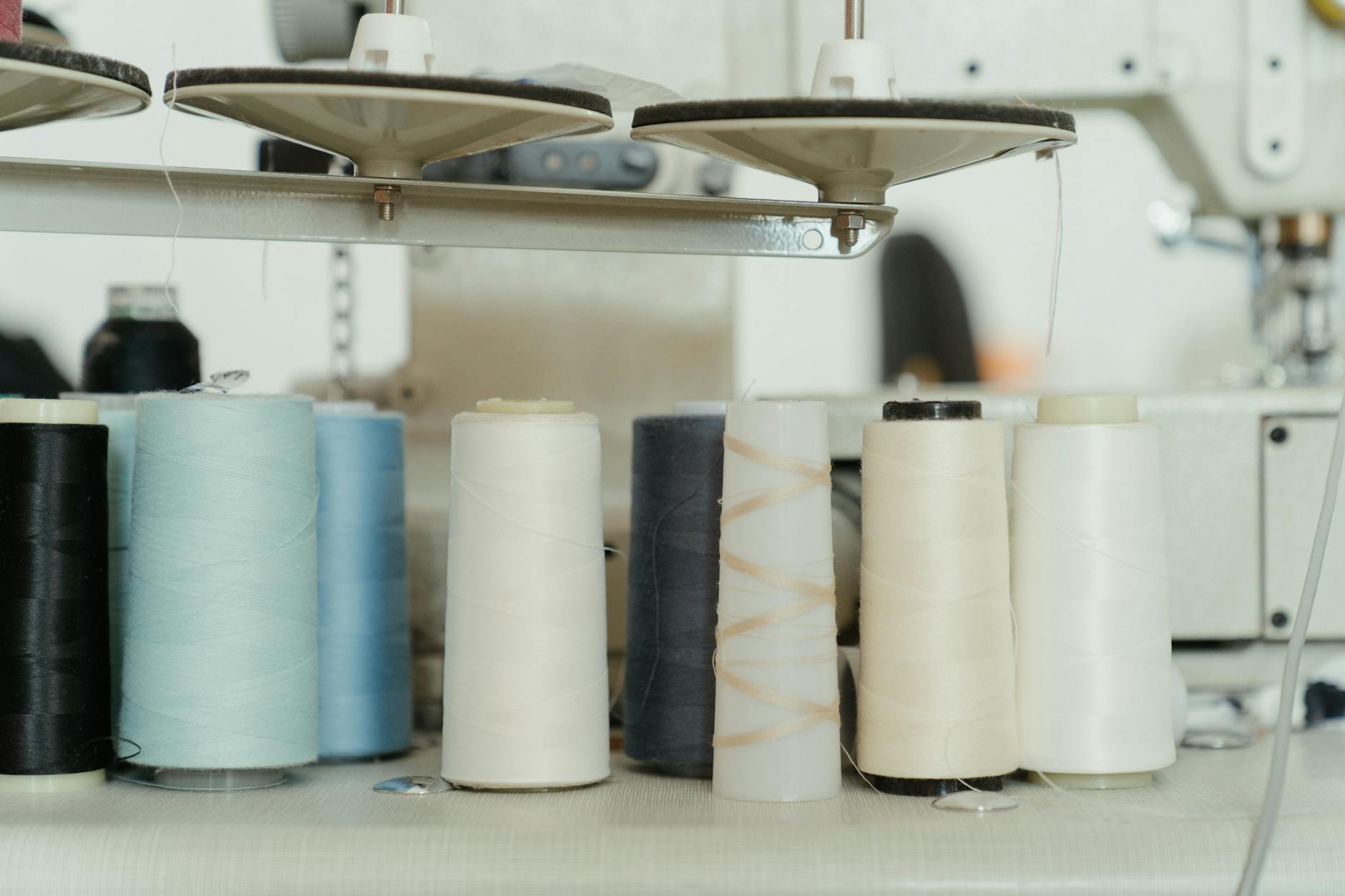
Sealy-branded bedding advertised as “1250 thread count” actually contained only 223 threads per inch according to laboratory testing — a nearly sixfold inflation of the real number. A federal class action settlement worth $750,000 is now open for claims, and if you bought any qualifying Sealy bedding between October 2016 and October 2025, you can file for up to $40 per household without even digging up a receipt. The claim deadline is May 12, 2026, and you can submit online at threadcountsettlement.com. The case, *Santiago v. American Textile Company, Inc.*, was filed in the U.S.
District Court for the Western District of Pennsylvania and presided over by Judge Christy Criswell Wiegand. The core allegation is straightforward: American Textile Company slapped a “1250 thread count” label on Sealy bedding products that, when tested using the industry-standard ASTM methodology, came in at just 223 threads per inch. That is not a rounding error. That is a consumer being told they are buying a luxury product when the actual thread density is closer to a mid-range sheet set you would find at a discount retailer. This article breaks down exactly how the company inflated its numbers, who qualifies, how to file a claim, what you will actually get paid, and why thread count labeling remains one of the most misleading metrics in the bedding industry.
Table of Contents
- How Did Sealy Inflate Its Thread Count Nearly 6x Above the Real Number?
- Which Sealy Products Qualify for the Settlement — and What If You Threw Away the Packaging?
- How the $750,000 Settlement Fund Actually Gets Divided
- How to File Your Claim Before the May 12, 2026 Deadline
- Why Thread Count Labeling Remains a Consumer Minefield
- What the Final Approval Hearing Means for Your Claim
- Will This Settlement Change How Bedding Companies Label Thread Count?
- Conclusion
- Frequently Asked Questions
How Did Sealy Inflate Its Thread Count Nearly 6x Above the Real Number?
The math behind the deception is worth understanding because it reveals how easily manufacturers can game a number that most consumers treat as a reliable quality indicator. When tested under ASTM standards, the Sealy bedding in question contained 57 warp yarns and 166 weft yarns per inch, totaling 223 threads. That is the legitimate thread count. What American Textile Company did instead was count the individual filaments within each warp yarn — 19 filaments per yarn — and multiply: 57 yarns times 19 filaments equals 1,083. Add the 166 weft yarns on top, and you land at 1,249, which they rounded up to 1,250. This is not some novel accounting trick that slipped through a regulatory gap. Both the Federal Trade Commission and the National Textiles Association have specifically warned that counting individual filaments within a yarn artificially inflates thread counts far beyond what the traditional industry standard recognizes.
Under the accepted methodology, you count yarns — not the tiny fibers twisted together to make each yarn. It is the difference between counting the number of ropes in a net versus counting every strand of fiber in every rope. One method gives you a useful measurement. The other gives you a marketing number designed to justify a higher price tag. To put this in perspective, a genuine 1,250 thread count sheet would be an extremely high-end product — the kind of thing you might find in a luxury hotel or specialty retailer at a significant premium. A 223 thread count sheet is a perfectly functional product, but it is not what anyone would consider premium bedding. Consumers who paid extra because they believed they were getting a 1,250 thread count product were paying for a quality level that did not exist.

Which Sealy Products Qualify for the Settlement — and What If You Threw Away the Packaging?
The settlement covers Sealy 1250 thread count bedding sold under five specific product lines: Ultimate Indulgence, Premium Comfort, Cool Comfort, Premium Cooling, and Superior Cooling. Eligible items include sheets, pillowcases, and other bedding pieces carrying the 1250 thread count label. The class period covers purchases made between October 19, 2016 and October 30, 2025, which is a nine-year window — long enough that many buyers will have gone through multiple sets of sheets during that time. Here is the part that matters most for people who did not save their receipts: you do not need proof of purchase to file a claim for up to eight products. That works out to $5 per product and a maximum of $40 per household, all submitted under penalty of perjury. You are certifying that you actually bought these products, and filing a false claim carries legal consequences, but you do not need to produce a receipt or order confirmation.
If you do have documentation — a receipt, an email order confirmation, a credit card statement showing the purchase — you can file for unlimited products beyond that eight-item cap. However, if you bought Sealy-branded bedding that was labeled with a different thread count — say, 800 or 400 — those products are not part of this settlement. The case is specifically about the 1250 thread count labeling. Similarly, if you bought the product outside of the class period, you are not eligible. And it is worth noting that this settlement is against american Textile Company, Inc., which manufactured the Sealy-branded bedding under license. If you have complaints about other Sealy products like mattresses, those involve different manufacturers and different issues entirely.
How the $750,000 Settlement Fund Actually Gets Divided
The total settlement fund is $750,000 paid by American Textile Company. Before any money reaches claimants, the fund has to cover attorney fees, administrative costs, and any service awards to the named plaintiff. This is standard in class action settlements and typically consumes a significant portion of the fund. What remains gets distributed among all valid claims at the $5-per-product rate. The practical question is whether the fund will cover all claims at the full rate. If the total value of approved claims exceeds the available money after fees and costs, payments get reduced proportionally — everyone gets the same percentage of their expected payout, but nobody gets the full $5 per product. Conversely, if fewer people file than expected, the per-claim payout stays at $5.
This is why filing early and filing accurately matters. The settlement administrators process claims on a first-verified basis, and the fewer fraudulent or inflated claims in the pool, the more money reaches legitimate buyers. For context, $5 per item is on the low end for a consumer products class action, but it is not unusual. Thread count inflation, while deceptive, did not render the products unusable. You still got sheets. They just were not the quality you were told you were getting. Courts tend to calibrate settlement payouts to the gap between what was promised and what was delivered, not to the full purchase price. If you paid $80 for a set of sheets that should have been priced at $40, getting $5 back is a fraction of your actual loss — but it is $5 more than you would get by doing nothing.

How to File Your Claim Before the May 12, 2026 Deadline
You have two options for filing. The fastest is online at threadcountsettlement.com, where you can complete and submit the claim form electronically. The alternative is downloading or requesting a paper claim form and mailing it to the settlement administrator. Either way, your claim must be submitted or postmarked by May 12, 2026. The online process is straightforward. You will need to provide your name, address, and information about the Sealy 1250 thread count products you purchased — which product line, how many items, and when you bought them.
If you are claiming without proof of purchase, you are limited to eight products and $40 total, and you will sign a declaration under penalty of perjury. If you have receipts or order confirmations, upload or include them to claim beyond the eight-item limit. Double-check that you are on the correct official site — threadcountsettlement.com — and not a third-party claims service that takes a cut of your payout or harvests your information. One tradeoff worth considering: if you opt to submit a claim, you are accepting the settlement terms and giving up your right to sue American Textile Company independently over the thread count issue. For the vast majority of buyers, the $5-per-product payout is a better deal than the cost and hassle of individual litigation. But if you purchased an unusually large quantity of this bedding — for a hotel, a rental property business, or institutional use — and you have documentation to prove it, you might want to consult an attorney about whether the settlement adequately compensates your specific losses. The exclusion deadline was January 21, 2026, so for most people, this decision point has already passed.
Why Thread Count Labeling Remains a Consumer Minefield
The Sealy case is not an isolated incident. Thread count inflation has been a known problem in the bedding industry for over a decade. The basic issue is that there is no single federal regulation mandating how thread count must be calculated and displayed on consumer packaging. The FTC has issued guidance, and the ASTM has published testing standards, but enforcement has been largely complaint-driven. Manufacturers who use multi-ply yarns or filament-counting methods to inflate their numbers face consequences only when someone files a lawsuit or a regulatory complaint — and proves the discrepancy through laboratory testing. The warning for consumers is this: a high thread count number on a package does not automatically mean you are getting a superior product.
Sheets marketed at 1,000 or 1,200 thread count may be using the same inflation tricks that American Textile Company used. Genuine high-thread-count fabrics do exist, but they are expensive to produce and are typically sold by manufacturers who can document their claims with independent lab testing. If a “1,200 thread count” sheet set is selling for $50 at a big box store, the math probably does not add up. Fabric quality, fiber type (long-staple cotton versus short-staple, for instance), and weave construction matter at least as much as thread count, and sometimes more. This case should also serve as a reminder that class action settlements, while imperfect, remain one of the few mechanisms consumers have for holding manufacturers accountable for deceptive labeling. No individual consumer is going to pay for independent laboratory testing of their bed sheets. But when one person does, and the results reveal a pattern of misrepresentation, the class action process allows millions of affected buyers to share in the recovery.
What the Final Approval Hearing Means for Your Claim
The final approval hearing for this settlement was held on February 11, 2026, at 10:00 a.m. before Judge Wiegand. At that hearing, the court reviewed the terms of the settlement, considered any objections from class members, and determined whether the agreement was fair, reasonable, and adequate.
📨 Get Free Accountability Coverage Alerts
Free · No spam · Unsubscribe anytime
The fact that the settlement has moved past this stage means the deal is done — the fund is established, the claims process is active, and there are no remaining legal hurdles that would prevent you from getting paid if you file a valid claim. If you had concerns about the settlement terms, the window to object or exclude yourself closed on January 21, 2026. At this point, your only action item is to file your claim before the May 12, 2026 deadline and wait for the settlement administrator to process payments.
Will This Settlement Change How Bedding Companies Label Thread Count?
Realistically, a $750,000 settlement is not going to reshape industry practices on its own. American Textile Company is a large manufacturer, and this payout, while meaningful to individual claimants, is a manageable business expense. What cases like this do accomplish is create legal precedent and public awareness.
Every thread count lawsuit that succeeds makes it slightly more expensive and risky for the next manufacturer to use filament-counting tricks, and it gives consumer attorneys a stronger foundation for future cases. The longer-term fix would be a clear, enforceable federal standard for thread count labeling — one that defines the counting methodology, requires independent testing, and imposes penalties for noncompliance. Until that happens, settlements like this one function as the primary check on deceptive practices. In the meantime, consumers should treat thread count claims with healthy skepticism, prioritize fabric feel and fiber quality over numbers on a label, and file claims when settlements like this one make it easy to recover at least part of what they lost.
Conclusion
If you bought Sealy 1250 thread count bedding — specifically the Ultimate Indulgence, Premium Comfort, Cool Comfort, Premium Cooling, or Superior Cooling product lines — between October 2016 and October 2025, you are likely eligible for $5 per product and up to $40 per household without any proof of purchase. The claim process is open now at threadcountsettlement.com, and the deadline is May 12, 2026. Laboratory testing showed that the actual thread count was 223 per inch, not 1,250, and American Textile Company has agreed to pay a $750,000 settlement fund to resolve the claims.
File your claim sooner rather than later. The process takes a few minutes online, costs you nothing, and does not require you to find old receipts for claims of up to eight products. This is not life-changing money, but it is money you are owed for a product that was not what the label said it was. And if nothing else, adding your name to the claim pool sends a signal that consumers notice when the numbers on the packaging do not match what is actually inside the package.
Frequently Asked Questions
Do I need a receipt to file a claim in the Sealy thread count settlement?
No. You can claim up to 8 products ($40 total) without any proof of purchase. You sign a declaration under penalty of perjury confirming you bought the products. If you have receipts or order confirmations, you can claim beyond the 8-product limit.
How much will I get from the Sealy settlement?
The payout is $5 per qualifying product, up to $40 per household without proof of purchase. If total claims exceed the available fund after fees and costs, payments may be reduced proportionally.
What is the deadline to file a claim?
May 12, 2026. You can file online at threadcountsettlement.com or mail a paper claim form.
Which Sealy products are covered by this settlement?
Only Sealy 1250 thread count bedding labeled as Ultimate Indulgence, Premium Comfort, Cool Comfort, Premium Cooling, or Superior Cooling. This includes sheets, pillowcases, and other bedding items purchased between October 19, 2016 and October 30, 2025.
Was the thread count actually fake?
The bedding contained 223 threads per inch under the industry-standard ASTM testing methodology. American Textile Company arrived at “1,250” by counting individual filaments within each yarn rather than counting yarns, a practice the FTC and National Textiles Association have warned artificially inflates thread counts.
Can I still opt out of the settlement?
No. The exclusion deadline was January 21, 2026. If you did not opt out by that date, you are bound by the settlement terms and cannot pursue an independent lawsuit against American Textile Company over this issue.
You Might Also Like
- Amazon, Walmart, and Target All Issue Warnings About Supply Chain Delays From Iran War
- The VIX Volatility Index Spiked to Levels Not Seen Since the 2022 Russia-Ukraine Crisis
- The Mines Iran Placed in the Strait of Hormuz Before the War Are Still There
Claim details: for the filing deadline, eligibility and proof requirements on this settlement, see OpenClassActions.com.