
The Republican “Big Beautiful Bill” didn’t just cut $880 billion from Medicaid — it actually cut closer to $911 billion over ten years, making it the largest reduction to the program in its six-decade history. Signed into law by President Trump on July 4, 2025, the One Big Beautiful Bill Act (H.R. 1) reshapes the American healthcare safety net through sweeping work requirements, funding rollbacks, and structural changes that the Congressional Budget Office estimates will leave 7.8 million more people without health insurance by 2034. The damage is not theoretical.
A hospital in northeast Georgia has already closed its maternity ward. A community health center in rural New Hampshire shuttered entirely. In Des Moines, Iowa, a hospital system laid off dozens of employees and closed a clinic. These are the early tremors of a law that pairs roughly $1 trillion in healthcare cuts with tax reductions primarily benefiting high earners — a tradeoff that has sparked fierce debate about who the federal government is actually serving. This article breaks down how the Medicaid cuts work, who loses coverage, what the work requirements actually demand, how hospitals and states are absorbing the financial blow, and what options remain for people caught in the middle of this massive policy shift.
Table of Contents
- How Much Does the “Big Beautiful Bill” Actually Cut From Medicaid?
- What Are the New Medicaid Work Requirements and Who Do They Affect?
- How Are Hospitals and Healthcare Providers Already Feeling the Impact?
- What Do the State-Level Funding Cuts Look Like?
- The Reproductive Health Funding Freeze and Its Ripple Effects
- How the Law Reshapes the Federal-State Medicaid Partnership
- What Comes Next for Medicaid and the People Who Depend on It
- Conclusion
- Frequently Asked Questions
How Much Does the “Big Beautiful Bill” Actually Cut From Medicaid?
The $880 billion figure widely cited in headlines falls within a range of CBO estimates that depend on how you count. The CBO’s Medicaid-specific score pegs the reduction at $840.2 billion in reduced federal outlays plus $21.1 billion in reduced revenues over the decade spanning FY2025 through FY2034. However, when the CBO accounts for interactions between overlapping provisions across the full bill, the estimated reduction in federal Medicaid spending climbs to approximately $911 billion. The difference matters because it reflects how stacked policy changes compound each other’s effects — cutting eligibility in one provision makes the savings from another provision larger than it would be in isolation. To put $911 billion in perspective, that is roughly the entire annual GDP of a country like the Netherlands.
It dwarfs previous Medicaid reductions, including the cuts proposed but never enacted during the Affordable Care Act repeal efforts in 2017. The scale here is not incremental trimming. It is a fundamental restructuring of how the federal government shares healthcare costs with the states, and it hits expansion states — the 40 states plus Washington, D.C., that expanded Medicaid under the ACA — particularly hard. The math on the other side of the ledger is what makes this politically combustible. The law pairs these healthcare reductions with tax cuts that independent analyses say flow disproportionately to households at the top of the income scale. Whether you view that as sound fiscal policy or a wealth transfer dressed up as deficit reduction depends largely on where you sit — but the numbers themselves are not in dispute.

What Are the New Medicaid Work Requirements and Who Do They Affect?
The single largest driver of coverage loss is a new mandatory “community engagement” requirement — the law’s term for work reporting — that applies to most Medicaid expansion adults between the ages of 19 and 64. This provision alone accounts for $344 billion of the total Medicaid reductions over ten years, according to the CBO. It takes effect on December 31, 2026, giving states roughly 18 months from the law’s signing to build the administrative infrastructure needed to track and verify compliance. The concept sounds straightforward: able-bodied adults should work, volunteer, or participate in job training to keep their Medicaid coverage. In practice, work requirements have a well-documented track record of knocking people off the rolls even when they are actually working or qualify for exemptions.
Arkansas tried a similar approach in 2018 before courts blocked it, and the state saw more than 18,000 people lose coverage in just a few months — many of whom were employed but failed to navigate the reporting system. The OBBBA’s version applies nationally at a far larger scale, and the administrative burden falls on state agencies that are already understaffed and underfunded. However, if you are a Medicaid enrollee over 64, or if you receive coverage through a pathway other than the ACA expansion — such as traditional Medicaid for pregnant women, children, or people with disabilities — these specific work requirements may not apply to you directly. The law targets expansion adults specifically. That said, the broader funding reductions affect all Medicaid populations because states that lose federal dollars often respond by tightening eligibility, cutting benefits, or reducing provider reimbursement rates across the board.
How Are Hospitals and Healthcare Providers Already Feeling the Impact?
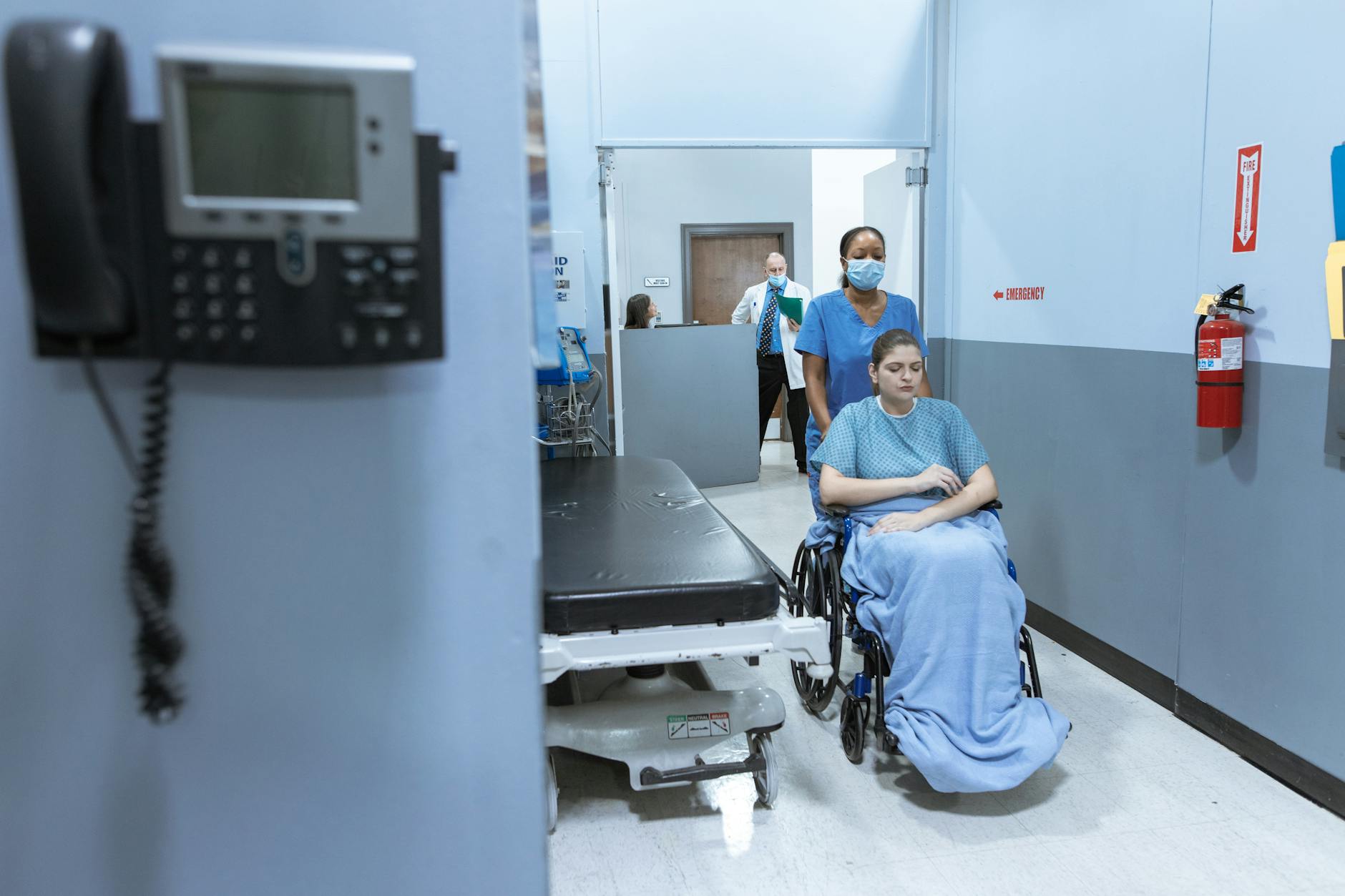
The law has been in effect for less than a year, and the fallout in the healthcare delivery system is already tangible. Nearly 100 financially distressed hospitals across the country are at risk of shutting down or significantly limiting services, according to reporting from CNN and healthcare industry groups. These are not hypothetical projections — they are facilities operating on razor-thin margins that depended on Medicaid reimbursements to keep their doors open. The real-world examples are grim and geographically diverse. The Georgia hospital that closed its maternity ward did so because it could no longer afford to deliver babies when a significant share of its obstetric patients were Medicaid beneficiaries whose coverage became uncertain.
In rural New Hampshire, a community health center that served as the only primary care option for miles simply ceased operations. The Des Moines hospital system’s layoffs and clinic closure signal that this is not exclusively a rural problem — urban and suburban systems are making painful calculations too. The CBO estimates that the law will generate $204 billion in uncompensated care over the decade, including $63 billion absorbed by hospitals and $24 billion by physicians. Uncompensated care does not mean the care stops happening. People still show up in emergency rooms with heart attacks, broken bones, and diabetic crises. The costs simply shift — to hospitals that eat the losses, to privately insured patients whose premiums rise to compensate, and to local governments that may have to bail out their public health systems.
What Do the State-Level Funding Cuts Look Like?
The Medicaid expansion incentive funding ended on January 1, 2026, affecting all 40 states plus Washington, D.C., that had adopted the expansion. States now face estimated reductions of 10 to 21 percent in their federal Medicaid spending, and the variation depends on how heavily a given state relied on expansion dollars and how its particular enrollment demographics interact with the new eligibility restrictions. For a state like West Virginia, where Medicaid covers more than a third of the population, a 15 percent reduction in federal funding is not something that can be absorbed through efficiency gains alone. The state either backfills the gap with its own revenue — which means raising taxes or cutting other services like education and infrastructure — or it reduces who gets covered and what services are available. Compare that to a state like Utah, which expanded Medicaid more recently and has a younger, healthier population on average.
Utah still faces cuts, but the proportional impact on its state budget is smaller. The law effectively punishes states that embraced expansion most aggressively, which creates a perverse incentive structure going forward. The KFF and RAND Corporation have both published state-level analyses showing that the cuts do not fall evenly. Southern and Appalachian states, many of which have the highest rates of chronic disease and the fewest alternative coverage options, tend to absorb larger relative reductions. This geographic pattern means the law’s consequences will be felt most acutely in regions that already have the weakest healthcare infrastructure — a compounding problem that state budgets alone are unlikely to solve.
The Reproductive Health Funding Freeze and Its Ripple Effects
Buried within the broader Medicaid provisions is a measure that withholds one year of Medicaid funding — from July 2025 through July 2026 — from certain nonprofit community providers whose primary focus is family planning and reproductive health services. While the provision does not name specific organizations, it is widely understood to target clinics in the Planned Parenthood network and similar providers. The practical limitation of this provision is that many of these clinics provide far more than reproductive services. They are often the entry point for STI screening, cancer screenings, prenatal care referrals, and basic primary care in underserved communities. Defunding them for a year does not just affect family planning — it removes a healthcare access point that some patients have no substitute for.
Rural areas are disproportionately affected because the next nearest provider may be an hour or more away by car, and many Medicaid patients lack reliable transportation. It is worth noting that this funding freeze is time-limited on paper. However, a year without Medicaid reimbursement is enough to force permanent closure of clinics operating on thin margins. Once a clinic closes, it rarely reopens — the lease is terminated, the staff disperses, and the community loses that access point indefinitely. The one-year framing understates the likely duration of the impact.
How the Law Reshapes the Federal-State Medicaid Partnership
Since its creation in 1965, Medicaid has operated as a federal-state partnership where the federal government matches state spending at rates determined by each state’s per capita income. The OBBBA fundamentally shifts that balance by reducing federal matching rates for expansion populations and imposing new conditions on states that want to maintain current coverage levels. This is not just a budget question — it is a structural change in how American healthcare for low-income populations is governed.
📨 Get Free Accountability Coverage Alerts
Free · No spam · Unsubscribe anytime
States that built their healthcare systems around the assumption of robust federal matching now have to reverse-engineer their budgets under new terms. For governors and state legislators, the choice is stark: raise state revenues, cut other programs, reduce Medicaid eligibility and benefits, or some combination of all three. None of those options are politically easy, and the timeline is compressed.
What Comes Next for Medicaid and the People Who Depend on It
The work requirements do not take effect until the end of 2026, which means the full impact of the OBBBA on Medicaid enrollment is still ahead. The coverage losses projected by the CBO — 7.8 million additional uninsured by 2034 — will materialize gradually as states implement the new rules and individuals cycle through eligibility redeterminations. Legal challenges are expected, particularly around whether the work requirement provisions survive judicial scrutiny under the same arguments that struck down Arkansas’s earlier attempt.
The 2026 midterm elections will also shape what happens next. If the political composition of Congress shifts, there is a possibility of legislative amendments that soften or delay certain provisions. But rolling back a signed law is far harder than blocking a bill, and the tax cut provisions that the Medicaid reductions fund have already created beneficiaries with a stake in keeping the law intact. For the millions of Americans whose healthcare coverage hangs in the balance, the most practical step right now is understanding whether and how the new requirements apply to their specific situation — and preparing for a system that is about to become significantly harder to navigate.
Conclusion
The One Big Beautiful Bill Act represents the most significant retrenchment of the Medicaid program since its inception. With CBO estimates ranging from $840 billion to $911 billion in federal spending reductions over a decade, 7.8 million more uninsured Americans projected by 2034, and hospitals already closing wards and laying off staff, the consequences are both massive in scale and intensely personal in impact. The law’s work requirements, funding rollbacks, and structural changes to federal-state cost sharing will reshape healthcare access for the country’s most economically vulnerable populations.
For individuals currently on Medicaid or likely to need it, the immediate priority is staying informed about your state’s implementation timeline and understanding whether the new community engagement requirements will apply to your coverage. Contact your state Medicaid office, reach out to local healthcare navigators, and document your employment or qualifying activities now — before the December 2026 deadline arrives. The system is changing whether people are ready for it or not, and preparation is the most concrete form of protection available.
Frequently Asked Questions
When do the Medicaid work requirements take effect?
The mandatory community engagement (work reporting) requirements for Medicaid expansion adults ages 19–64 take effect on December 31, 2026. States must build compliance infrastructure before that deadline.
How many people will lose health insurance under the Big Beautiful Bill?
The CBO estimates that 7.8 million more individuals will be without health insurance by fiscal year 2034 as a result of the law’s Medicaid provisions.
Does the Big Beautiful Bill affect all Medicaid recipients?
The work requirements specifically target expansion adults ages 19–64. However, the broader funding reductions affect all Medicaid populations because states facing 10–21% federal spending cuts often respond by tightening eligibility and benefits across the board.
How much did the Big Beautiful Bill actually cut from Medicaid?
The CBO’s Medicaid-specific score is $840.2 billion in reduced outlays over ten years. When accounting for overlapping provision interactions across the full law, the estimate rises to approximately $911 billion. The commonly cited $880 billion figure falls within this range.
What happens to hospitals that lose Medicaid funding?
The CBO projects $204 billion in increased uncompensated care over the decade, including $63 billion for hospitals. Nearly 100 financially distressed hospitals are already at risk of closing or limiting services, and several have already shut down wards or clinics.
Are there legal challenges to the Medicaid work requirements?
Legal challenges are widely expected, particularly drawing on precedent from federal court rulings that blocked Arkansas’s Medicaid work requirements in 2018–2019. However, no major litigation had been filed as of early 2026.
You Might Also Like
- Trump Said “I Could Destroy the Country”…Called It “Terrifying” Power
- Ghislaine Maxwell Testified Before Congress on Video From Prison…Invoked Fifth Amendment
- Fact Check: Trump Claims He Cut Deficit by 27%…Actual Figure Is 2.3%