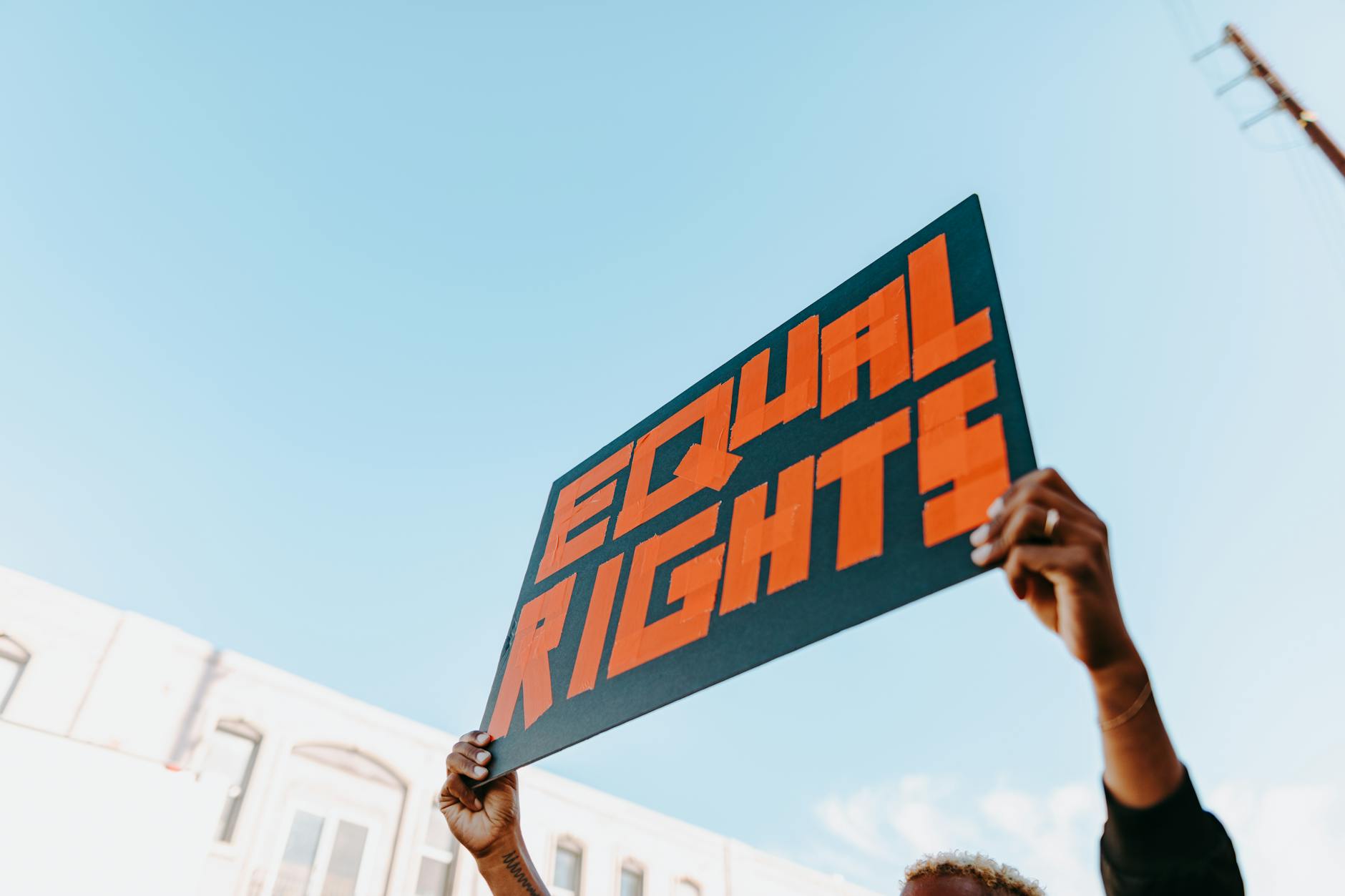
Homeowners associations across the country are facing legal challenges over rules that restrict political yard signs, creating a conflict between community aesthetic standards and First Amendment protections. While HOAs have the contractual authority to enforce deed restrictions and covenants, several recent cases have questioned whether blanket bans on political signs—especially when compared to permissive rules for other types of signage—violate free speech rights.
In 2023, homeowners in North Carolina challenged their HOA’s prohibition on political yard signs, arguing the rule was selectively enforced and unconstitutional, leading to a settlement that allowed limited political signage during election seasons. The core issue is simple in theory but complex in practice: Does an HOA’s power to regulate property appearance override a homeowner’s fundamental right to political expression? Courts and regulators have increasingly sided with homeowners in cases where HOA rules apply unequally, banning political signs while permitting real estate, holiday, or community event signs. The practical impact affects millions of Americans—roughly 70 million people live in HOA communities—many of whom face potential fines or legal action for displaying campaign signs, ballot initiative messages, or candidate endorsements on their own property.
Table of Contents
- What Legal Authority Do HOAs Have to Restrict Signs?
- When Do HOA Sign Bans Violate Free Speech Rights?
- State Laws That Protect Political Sign Rights
- What Options Do Homeowners Have When Facing HOA Sign Restrictions?
- Common Enforcement Problems and Legal Vulnerabilities
- Recent Court Cases and Settlements
- The Future of Political Signs and HOA Governance
- Conclusion
What Legal Authority Do HOAs Have to Restrict Signs?
HOAs derive their authority from state property laws and the governing documents (CC&Rs, or Covenants, Conditions, and Restrictions) that homeowners sign when they purchase property in a deed-restricted community. These documents typically grant the HOA broad power to enforce uniform aesthetic standards, prevent nuisance conditions, and maintain property values. Most state courts have historically treated HOA enforcement as a contractual matter between the homeowner and the association, not a constitutional issue, because the homeowner theoretically agreed to these restrictions by purchasing the property. However, state legislatures have increasingly carved out protections for political speech.
California, for example, amended its civil code in 2019 to explicitly protect homeowners’ rights to display political signs, requiring HOAs to allow signs up to four square feet from 45 days before an election until seven days after. Florida passed a similar law in 2021, and Virginia now prohibits HOAs from banning political signs entirely. These statutory protections recognize that the contractual consent argument—”you knew the rules when you bought”—conflicts with democratic values when enforced too rigidly. A Texas HOA attempted to fine a homeowner $100 per day for displaying a “Trump 2024” sign, but the homeowner fought back citing Texas Property Code Section 209.006, which protects election-related signage, and the HOA withdrew the enforcement action.

When Do HOA Sign Bans Violate Free Speech Rights?
Courts applying constitutional free speech analysis distinguish between content-neutral rules (which regulate all signs equally) and content-based restrictions (which target signs for their political, ideological, or religious message). An HOA rule that bans all signs is content-neutral; an HOA rule that bans political signs but permits “Sold” signs or holiday decorations is content-based and faces much stricter legal scrutiny. In some jurisdictions, courts have found that HOAs are private entities and the First Amendment doesn’t directly constrain their rules, but state law often provides the real protection. The limitation to this reasoning: it leaves homeowners whose states lack specific protections vulnerable to selective enforcement.
The practical warning is that HOA enforcement patterns matter enormously. An HOA that tolerates real estate signs and holiday banners but cracks down on political yard signs may face legal exposure even in states without explicit statutory protections. A Virginia case in 2022 revealed an HOA that had approved dozens of non-political signs while blocking political candidate signs; the homeowner’s attorney argued the selective enforcement proved the rule was content-based, and the case settled with the homeowner permitted to display the sign. The broader limitation: even when a homeowner wins, the legal battle is expensive, time-consuming, and the HOA can often appeal or rewrite rules to technically comply while maintaining the same practical effect.
State Laws That Protect Political Sign Rights
A growing number of states have passed legislation explicitly protecting homeowners’ rights to display political signs despite HOA restrictions. California allows signs up to four square feet from 45 days before an election until 7 days after; Florida requires HOAs to permit political signs at least 30 days before an election through 7 days after; and Virginia prohibits HOAs from banning political signs entirely, though they can impose reasonable restrictions on size and placement. Texas protects candidate campaign signs, and Colorado allows political signs during election periods. These laws represent a policy judgment that democratic speech outweighs HOA aesthetic preferences.
However, the patchwork creates significant gaps and compliance confusion. An HOA operating across state lines or in a state without explicit protections faces no legal barrier to enforcing sign bans. A homeowner in Missouri or New Hampshire has far fewer statutory protections than a California resident, placing the burden entirely on expensive litigation to challenge the HOA’s authority. Even in states with protections, the rules often apply only during election periods or have loopholes—an HOA might ban “political” signs while permitting signs supporting local ballot measures, or might enforce size restrictions in ways that disadvantage certain types of signage. A Colorado HOA in 2021 attempted to circumvent state election sign protections by enforcing a rule against “temporary” signs, arguing campaign signs were temporary and thus prohibited under the community’s general rules.
What Options Do Homeowners Have When Facing HOA Sign Restrictions?
Homeowners facing HOA enforcement action for political signs have several options, though each involves tradeoffs. The least confrontational approach is negotiation: requesting a waiver from the HOA board, often with legal justification citing state law or constitutional principles. Many HOA boards back down when confronted with legal liability, particularly if the homeowner provides case law or legislative citations. The limitation is that not all boards respond reasonably, and negotiation can signal weakness if the HOA is emboldened to enforce against other residents.
Litigation is the nuclear option and appropriate when negotiation fails and the homeowner has a strong legal claim. Homeowners can sue for declaratory relief (asking a court to declare the HOA rule unenforceable), damages (claiming the HOA wrongfully assessed fines), or injunctive relief (preventing the HOA from enforcing the rule). Class actions against HOAs are possible if multiple homeowners face the same restriction, though class certification requires showing common issues of law and fact. The significant tradeoff: litigation is expensive, creates lengthy disputes with the HOA, and even a winning homeowner may face legal fees exceeding the actual fines—a Californian who sued her HOA over a campaign sign spent $8,000 in legal fees to defeat $500 in fines, though she recovered costs under California’s fee-shifting law. A middle-ground option is escalating to a state attorney general’s office or consumer protection agency if the HOA’s enforcement appears fraudulent or unconscionable, though this path is slow and not guaranteed to succeed.
📨 Get Free Accountability Coverage Alerts
Free · No spam · Unsubscribe anytime
Common Enforcement Problems and Legal Vulnerabilities
HOA sign enforcement commonly creates problems because boards often lack clear policies on what signs are permitted, leading to arbitrary decisions. An HOA might approve a real estate sign, a holiday wreath, and a neighborhood event banner but deny a political sign, creating a pattern of selective enforcement that undermines the “content-neutral” defense. Another common problem is failing to document violations consistently—fining one homeowner for a campaign sign while ignoring an identical sign in another part of the community creates liability if the affected homeowner challenges the selective enforcement. A Texas HOA was sued in 2020 for fining one homeowner $500 for a Trump sign while ignoring Biden signs in the community; the homeowner’s attorney argued viewpoint discrimination, and the case settled with the homeowner’s fines reversed.
The warning for HOAs is that sign enforcement, more than almost any other community regulation, creates documented evidence of selective or viewpoint-based decision-making because signs are visible, time-stamped through photos, and easily comparable. Even a well-meaning board can face serious liability if enforcement records show differential treatment. The limitation for homeowners is that proving selective enforcement requires gathering evidence—photographing other signs that were permitted, documenting when the HOA took action against your sign, and building a record. This burden often falls on individual homeowners without HOA internal documents, which the HOA may not willingly produce without a legal discovery process.

Recent Court Cases and Settlements
A 2023 North Carolina case settled after a homeowner challenged her HOA’s blanket political sign ban, arguing it violated state constitutional free speech protections and was enforced selectively. The settlement permitted political signs during election periods if they met size requirements (maximum two per lot, four square feet each). In Florida, a 2022 case involved an HOA that tried to ban signs supporting a local school referendum, claiming it was political. The court found the HOA rules too vague to enforce consistently, and the homeowner won the right to display the sign.
These cases establish precedent that clear, consistently enforced, content-neutral sign policies are harder to challenge than vague or selectively applied rules. A cautionary example comes from a Massachusetts HOA that attempted to distinguish between “candidate” signs (banned) and “issue” signs (permitted), creating a rule that appeared content-based on its face. Homeowners sued, and the case has been ongoing for three years, with the HOA arguing the distinction is content-neutral because it doesn’t target viewpoint, just subject matter. The practical lesson: even sophisticated distinctions may not survive legal scrutiny if they functionally suppress political speech.
The Future of Political Signs and HOA Governance
The trajectory is clearly toward stronger homeowner protections, driven by state legislatures recognizing that strict HOA sign bans conflict with democratic values. More states are likely to pass election-season sign protection laws similar to California and Florida models. Simultaneously, HOAs may develop more sophisticated compliance strategies, such as permit systems that require pre-approval of signs based on objective criteria (size, placement, duration), which could theoretically pass constitutional scrutiny while still limiting political signage indirectly.
The forward-looking question is whether HOAs will pivot toward height and size restrictions that apply equally to all signs, or whether courts will increasingly recognize that narrow aesthetic concerns don’t justify limiting political expression. The emerging trend also includes HOA boards seeking legal guidance proactively—some associations now hire attorneys to review sign policies for liability before enforcement, recognizing that sign disputes create disproportionate legal risk relative to other HOA enforcement issues. This shift may actually reduce homeowner-HOA conflicts over signs by encouraging clearer, more legally defensible policies upfront.
Conclusion
Political yard sign disputes between homeowners and HOAs represent a fundamental tension between community governance and individual free speech rights. While HOAs have contractual authority to enforce aesthetic standards, an increasing number of state legislatures and courts have concluded that blanket or selectively enforced political sign bans infringe on protected speech, particularly during election periods. Homeowners facing HOA enforcement should first research their state’s specific protections, which now exist in at least 12 states, then attempt negotiation, and pursue litigation only if negotiation fails and they have evidence of selective enforcement or unconstitutional application.
If you’re facing an HOA sign dispute, document everything—take photos of other permitted signs, preserve all HOA communications, and consult a local attorney familiar with your state’s HOA and free speech laws. The legal landscape is shifting in homeowners’ favor, and HOAs increasingly understand they face significant liability for aggressive sign enforcement. The key is being informed, prepared to present clear legal arguments, and willing to escalate if negotiation fails.
You Might Also Like
- Fight Over Political Yard Sign Spirals Into Fatal Shooting
- Deadly Fight Over Yard Sign Shows How Political Tensions Can Explode
- Neighbor Dispute Over Political Sign Turns Into Murder Case