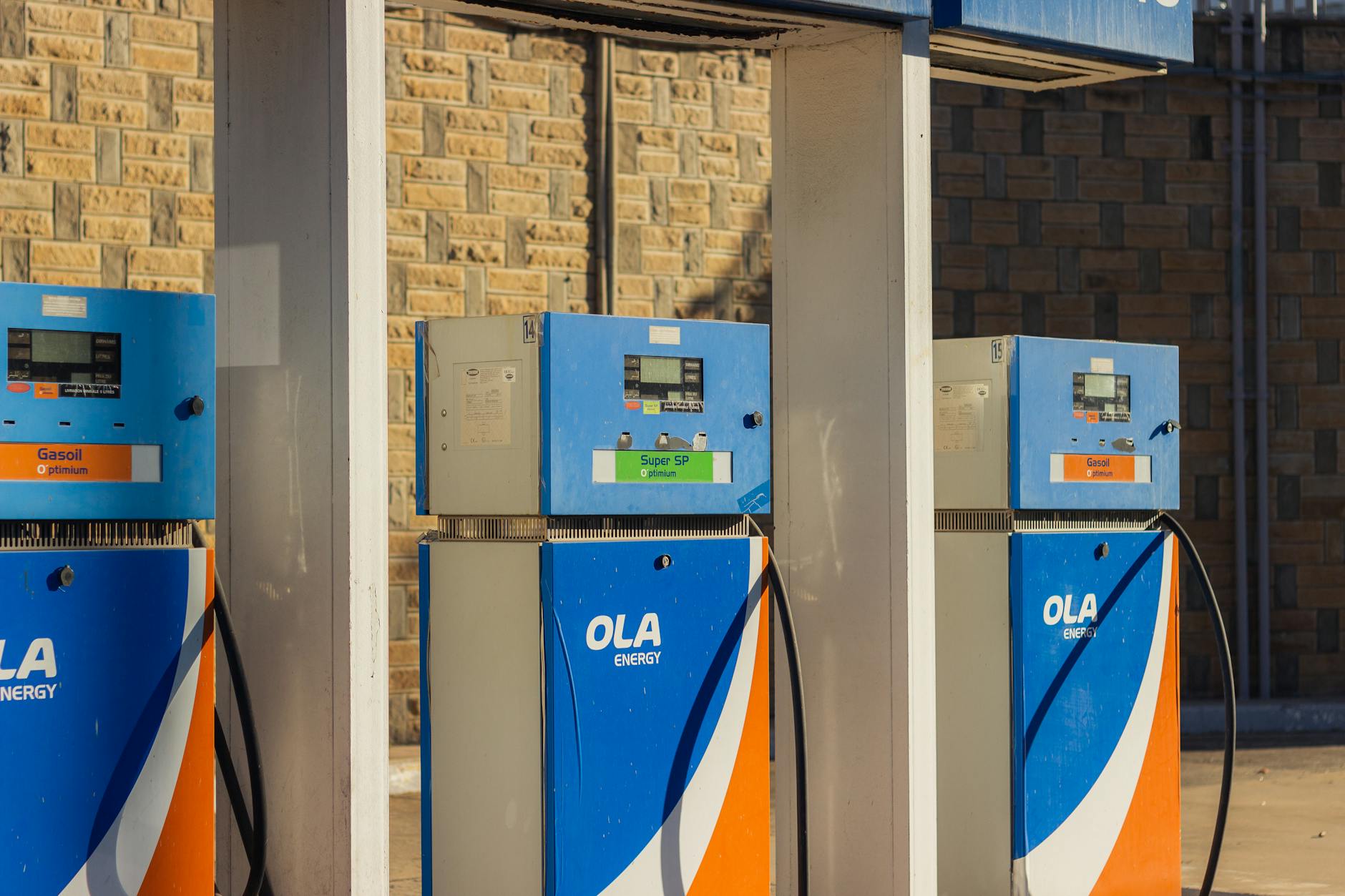
Yes, rising oil prices are directly affecting what you pay at the grocery store—and the impact is accelerating. As of May 2026, crude oil prices remain historically elevated following geopolitical disruptions to the global energy supply. This matters because oil touches nearly every part of the food chain, from fertilizer production to diesel for delivery trucks. When oil costs surge, those expenses eventually work their way into your grocery bill. The math is straightforward: grocery store bills rose 0.7% in April 2026 alone, marking the largest one-month jump in nearly four years.
The connection between oil prices and food costs isn’t theoretical—it’s already happening. Food prices have increased 3.2% over the last year as of April 2026, and the U.S. Department of Agriculture now projects “food at home” prices to climb 3.1% for the full year of 2026, nearly double what they initially forecast. This acceleration traces directly to oil pricing pressures that began when geopolitical conflict disrupted the Strait of Hormuz in late February 2026, sending Brent crude from near $60 per barrel in January to over $100 per barrel within weeks. The lag between oil price spikes and grocery inflation creates a dangerous disconnect: consumers often don’t realize why their food bills jumped until months after the initial crude price shock hit markets. Understanding this mechanism—and what’s actually driving your rising food costs—matters for anyone trying to manage their household budget in 2026.
Table of Contents
- How Do Oil Prices Connect to What You Pay at the Grocery Store?
- The Current Oil Price Crisis and Its Timeline
- Which Foods Are Being Hit Hardest by Oil-Driven Inflation
- Understanding the Cost Chain from Oil Well to Your Kitchen
- What the Data Shows About Food Inflation in 2026
- When Will You See These Price Changes at Your Register?
- What’s Ahead for Oil and Food Prices Through 2027
- Conclusion
How Do Oil Prices Connect to What You Pay at the Grocery Store?
oil prices affect grocery costs through multiple pathways, each adding cost at different points in the food supply chain. The most direct route is transportation: diesel fuel costs depend on crude oil prices, and trucks moving food from processing plants to distribution centers to retail stores consume substantial diesel. When a barrel of Brent crude costs $104.68 (as it did on May 22, 2026), the diesel pumped at truck stops reflects that elevated price within days. Farmers also feel the impact immediately through fertilizer costs, which depend heavily on energy prices. Fertilizer manufacturing is energy-intensive, and when crude prices spike, fertilizer companies pass those costs to farmers—costs that eventually get baked into the price of wheat, corn, and other staple crops. Vegetable oils represent the most visible example of direct oil-price impact on food. As of April 2026, vegetable oil prices jumped 5.9% to their highest level since July 2022, driven by both crude oil prices and increased biofuel demand (since biofuel producers compete for the same oil feedstocks). Palm oil, soy oil, rapeseed oil, and sunflower oil all track closely to petroleum prices.
These oils are embedded in thousands of food products—from salad dressings to baked goods to processed snacks. When oil prices rise 40% in a year (as Brent crude did from May 2025 to May 2026), vegetable oil prices don’t lag far behind. The cost multiplication effect shouldn’t be understated. A farmer paying more for fertilizer doesn’t absorb that loss; they pass it to suppliers. Suppliers add their own margin and pass it to distributors. Distributors add margin and pass it to grocers. Grocers, facing pressure on margins, pass it to you. By the time elevated oil costs filter through this chain, the percentage increase compounds. That’s why a $40-per-barrel oil price increase over a year translates to more than a proportional food price increase by the time you reach the checkout line.

The Current Oil Price Crisis and Its Timeline
The current oil crisis began with geopolitical disruption of the Strait of Hormuz, which became acute on February 28, 2026. This waterway handles approximately one-third of globally traded petroleum, making it a critical chokepoint. When tensions in the region escalated, traders immediately repriced oil upward, expecting supply constraints. Brent crude, which had been trading near $60 per barrel in January 2026, surged past $100 by March and reached $138 per barrel on April 7, 2026—the peak of the current crisis. April 2026 averaged $117 per barrel, a level not seen in years. As of late May 2026, prices have moderated somewhat but remain elevated.
Brent crude closed May 22 at $104.68 per barrel, down $4.08 from the previous day but still $40.46 higher than the same date a year earlier. Energy analysts project prices will hover around $106 per barrel through May and June 2026, then gradually decline to $89 per barrel in the fourth quarter of 2026 and $79 per barrel in 2027, assuming geopolitical tensions don’t escalate further. The critical limitation here is that this forecast assumes no additional supply disruptions; if conflict in the region worsens, prices could spike again. The timing matters enormously for grocery costs because of the lag between oil price spikes and consumer-facing food inflation. Typically, it takes 3 to 6 months for elevated oil costs to work through the food production and supply chain and reach retail shelves. This means the full impact of the February-April 2026 oil spike won’t be fully realized in grocery stores until mid-2026 or later. Consumers who think grocery prices will start falling soon as oil moderates should understand that benefit won’t show up at checkout for months.
Which Foods Are Being Hit Hardest by Oil-Driven Inflation
Processed foods and items heavy in vegetable oils are bearing the brunt of oil-driven inflation. The FAO Food Price Index, which tracks global food prices across multiple categories, averaged 130.7 in April 2026—2% higher than April 2025 and the highest level since February 2023. Oils and fats, which depend most directly on oil prices, have been the primary driver. Any packaged food product containing vegetable oil—which includes cookies, crackers, margarine, salad dressings, and countless other items—is experiencing upward price pressure that should be visible on store shelves by mid-2026. Grains and proteins are also affected, though more indirectly through fertilizer costs. Wheat prices are sensitive to fertilizer availability and cost; farmers facing higher fertilizer bills either reduce plantings (which tightens supplies and raises prices) or maintain plantings but accept lower profit margins. Elevated fertilizer costs also affect corn, soybeans, and other crops that feed livestock.
The Strait of Hormuz disruption has kept fertilizer prices elevated despite relative stability in other commodities, meaning farmers face sustained cost pressures. A farmer in the Midwest purchasing fertilizer in May 2026 still faces energy-cost premiums baked into fertilizer prices from months earlier. Fresh produce and dairy show more variable effects. Dairy depends on feed costs for cattle, which trace back to grain prices affected by fertilizer. Produce is heavily dependent on transportation costs (diesel) and storage/refrigeration (energy costs). Lettuce, tomatoes, and other temperature-sensitive produce shipped cross-country are especially vulnerable to diesel price spikes. For example, a head of lettuce shipped from California to the east coast in a refrigerated truck embeds not just the fuel cost to move it, but the refrigeration costs during transit—both tied to oil prices.

Understanding the Cost Chain from Oil Well to Your Kitchen
The path from oil fields to your grocery store involves multiple distinct cost layers, each responding differently to oil price changes. At the production level, farmers buying seed, fertilizer, and fuel in 2026 are paying prices that reflect oil costs from weeks or months earlier. Once crops are harvested, they move to processing facilities where additional energy costs apply. A corn processing facility turning corn into corn syrup, corn flour, or animal feed uses energy and equipment that depends on petroleum-derived inputs. That facility also uses transportation to move inputs in and outputs out. From processing, foods move through distribution networks. Food manufacturers buying processed ingredients incorporate their costs into packaged goods. A cracker manufacturer buying vegetable oil, wheat flour, and salt faces higher prices on the oil component when crude prices are elevated. They then sell these crackers to distributors, who add their margin and sell to retail chains.
Each handoff includes a markup, meaning a 10% increase in input costs might translate to a 15% increase in the price a consumer pays, depending on margin structures at each level. The comparison is stark when you look at timing. Oil prices respond to news within hours—a geopolitical event can move Brent crude 5% in a single trading session. Fertilizer prices respond within days to weeks as producers adjust pricing. Farmer input costs respond over seasons. Processed food prices respond over months. Your grocery store prices respond at the back end of this chain, typically 3 to 6 months after the initial oil shock. This creates a situation where consumers blame grocers or food producers for “greed” when prices spike, without understanding they’re actually seeing the delayed cost impact of earlier oil price moves. By the time grocery prices surge, oil might have already fallen—but the food chain is just now catching up.
📨 Get Free Accountability Coverage Alerts
Free · No spam · Unsubscribe anytime
What the Data Shows About Food Inflation in 2026
The numbers paint a clear picture of accelerating food inflation tied to oil prices. From April 2025 to April 2026, food prices increased 3.2% overall. That might sound modest, but it’s concentrated in oils, grains, and processed foods—not evenly distributed. The single-month jump in April 2026 (0.7% increase) is the largest monthly jump since 2022, suggesting acceleration is underway. The USDA’s projection of 3.1% food-at-home inflation for all of 2026 nearly doubles their initial forecast before the Strait of Hormuz disruption, indicating they now expect substantial further increases as the oil shock cascades through the system. One crucial limitation of these projections is that they assume the Strait of Hormuz remains disrupted but doesn’t deteriorate further. If geopolitical tensions escalate, oil could spike above the April 2026 peak of $138 per barrel, driving food inflation faster and higher.
Conversely, if the situation stabilizes and oil falls toward the projected $79 per barrel in 2027, inflation could moderate—but only after a lag period. Another limitation is that these projections are backward-looking; they’re based on data through April 2026. By the time this article is published in May, newer data may suggest inflation is tracking faster or slower than expected. Real-world food prices also depend on weather, supply shocks in specific commodities, and retailer competition—not just oil prices. The geopolitical element introduces unpredictability that standard economic models struggle to capture. If tensions ease and oil falls to $79 per barrel by late 2026, grocery prices won’t immediately follow—they’ll continue rising through late 2026 and into 2027 before moderating. Households should plan for sustained inflation through the middle of 2026 at minimum, with potential for further increases if the global situation deteriorates. There’s also the question of whether retailers will pass through their full cost increases or absorb some margin compression; typically, they pass through most costs while maintaining margins, but during periods of price competition, some absorption might occur.

When Will You See These Price Changes at Your Register?
The lag between oil price spikes and grocery inflation is both frustrating and predictable. When oil hit $138 per barrel on April 7, 2026, most consumers didn’t immediately see price changes at their local supermarket. The increase worked backward through the supply chain: food manufacturers first absorbed costs or negotiated with suppliers; distributors next received price increases from manufacturers; grocers finally received price increases from distributors and adjusted shelf prices. From the oil price spike to your receipt, the timeline is typically 3 to 6 months.
By June and July 2026, consumers should begin noticing significant jumps in prices for processed foods, oils, dairy, and grains—reflecting the April oil spike. If prices seem to stabilize in August, don’t assume inflation has ended; you’ll likely see another wave in September or October as the May-June oil prices (which remained elevated around $106 per barrel) cascade through the system. A specific example: a box of crackers that cost $3.99 in March 2026 might cost $4.29 by August 2026, not because the company changed much, but because every input cost more and each step in the supply chain applied markup to higher costs. That 7-8% increase seems small until you multiply it across hundreds of items in your weekly shopping trip.
What’s Ahead for Oil and Food Prices Through 2027
If projections hold and geopolitical tensions don’t escalate, oil prices should gradually decline from current levels around $104 per barrel to $89 in Q4 2026 and $79 in 2027. This would suggest grocery inflation moderates as 2026 progresses into 2027. However, “moderates” doesn’t mean prices fall back to 2025 levels—it means the rate of increase slows. Prices that jumped 7-8% due to the oil spike won’t fall 7-8%; they’ll stick at the higher level, and future inflation will be lower percentage increases on top of that elevated base. The forward-looking risk is geopolitical.
The Strait of Hormuz disruption began in late February 2026 without clear resolution. Any escalation—military action, additional sanctions, or supply disruptions—could drive oil back above $138 per barrel and restart the inflationary spiral. Conversely, a diplomatic solution could send oil falling faster than current projections, providing relief by late 2026. For consumers, the practical takeaway is that grocery price inflation is likely a persistent feature of 2026 and into 2027, driven by structural energy costs and geopolitical factors outside any individual company’s control. Expecting a return to 2024-2025 price levels before 2027 or beyond is unrealistic based on current commodity forecasts.
Conclusion
Rising oil prices are unquestionably affecting grocery costs, and that impact will intensify through mid-2026 as the Strait of Hormuz disruption that began in February cascades through the food supply chain. Brent crude has remained elevated above $100 per barrel since March, and though prices moderated to $104.68 by late May, they’re still $40+ higher than a year ago. Food prices are rising 3.2% year-over-year and the USDA projects 3.1% additional increases for all of 2026.
The connection is direct: higher oil means higher diesel for trucks, higher fertilizer costs for farmers, higher vegetable oil for processors, and ultimately higher prices at every grocery shelf. Consumers should expect grocery price increases to accelerate from June through August 2026 as the oil shock fully propagates through supply chains. Plan for sustained inflation through at least the end of 2026, with potential moderation only if geopolitical tensions ease and oil prices fall toward the projected $79-89 per barrel range by late 2026 and 2027. Until then, the daily price of Brent crude matters more than you might realize when you push your cart through the store.
You Might Also Like
- Oil Prices Today: Why Gas Prices Could Continue Rising
- Oil Prices Today: Why Experts Are Concerned About Energy Costs
- Oil Prices Today: OPEC Decisions Could Impact Drivers Worldwide