Oil prices have plummeted this week as U.S.-Iran peace negotiations signal potential breakthroughs, with Brent crude falling to $103.54 per barrel on May 22, 2026, and West Texas Intermediate dropping to $96.60—marking significant weekly declines of 5% and 8% respectively. This dramatic reversal reflects investor optimism that a resolution to the Iran conflict could reopen the Strait of Hormuz, the critical waterway through which one-third of the world’s seaborne oil passes and which has been nearly completely shut down since the war erupted in late February. Just weeks ago, crude prices were trading near $120 per barrel, a 55% surge from pre-conflict levels driven by fears that a prolonged supply disruption would cripple global energy markets and push consumers worldwide to pay unprecedented prices at the pump. The shift underscores how deeply geopolitical tensions affect everyday energy costs. On May 1, 2026, Brent crude stood at $116.10 per barrel; by May 20, it had fallen to $110.34.
This week’s acceleration lower reflects growing confidence that negotiations between Washington and Tehran over uranium enrichment restrictions and Strait tolls could succeed. However, market watchers remain cautious: the International Energy Agency has warned that if the Strait of Hormuz remains closed through summer, the global oil market will enter a “red zone” as stockpiles deplete during peak demand season, potentially triggering another spike in prices and gasoline costs at American pumps. For consumers and policymakers tracking energy security, the stakes in these negotiations are enormous. Every dollar of oil price movement translates into real cost changes at gas stations and for heating oil. Understanding how these talks progress—and what risks remain if they fail—is essential for anyone planning household budgets or business operations dependent on stable energy costs.
Table of Contents
- How Iran Conflict Fears Shook Oil Markets and What’s Changed
- The Strait of Hormuz Crisis and Why Summer Poses Unique Risks
- What These Oil Price Swings Mean for Consumer Gasoline and Heating Oil
- Market Conditions and Practical Implications for Businesses and Consumers
- Geopolitical Risks and the Reality That Negotiations Can Fail
- Where Oil Prices Stand in Historical Context and Why It Matters
- What Comes Next—Summer Risk and Beyond
- Conclusion
How Iran Conflict Fears Shook Oil Markets and What’s Changed
When the Iran war began in late February 2026, crude prices jumped from approximately $72 per barrel to peak levels near $120, driven by panic that the conflict would devastate global oil supplies. The Strait of Hormuz, which handles about 30% of all seaborne traded oil, became nearly inaccessible. The International Energy Agency called this “the largest supply disruption in the history of the global oil market”—a sobering assessment that captures just how vulnerable energy supplies are to Middle Eastern instability. For three months, oil markets remained in crisis mode. Even as the conflict dragged on, prices stayed elevated because investors feared a permanent loss of Iranian production and continued closure of the Strait. Refineries worldwide scrambled to adjust, finding alternate suppliers and draining strategic petroleum reserves.
For American consumers, this meant gas prices climbed to levels not seen in years, straining household budgets and threatening economic growth just as the recovery from prior recessions was gaining traction. The recent decline reflects a fundamental shift: U.S. and Iranian negotiators are now signaling real progress on key disputes—specifically over Tehran’s enriched uranium stockpile and the tolls Iran would charge ships transiting the Strait of Hormuz. Market traders, who had priced in catastrophe, now see a path to resolution. This doesn’t mean prices will crash to pre-war levels; even if talks succeed, reopening blocked shipping lanes and returning Iranian oil to export markets will take weeks, and buyers remain wary. But the direction is clear: hope has replaced panic, and prices are correcting downward.

The Strait of Hormuz Crisis and Why Summer Poses Unique Risks
The Strait of Hormuz is a chokepoint in the truest sense—a 21-mile-wide passage between Iran and Oman through which tankers carrying oil to Asia, Europe, and North America must pass. When the Iran war erupted and military action threatened shipping, nearly all traffic halted. Insurers refused coverage, and shipping companies routed vessels around Africa instead, adding days and millions of dollars to every journey. The blockade hasn’t been total, but volumes have plummeted, cutting Iranian oil exports to near-zero and disrupting the carefully balanced global supply chain that keeps refineries running. A critical limitation in the current market situation is that even if negotiations succeed and the Strait reopens, the damage to supply has been profound. For months, Iranian crude has not reached world markets, pushing prices higher than the supply cut alone would justify.
global oil inventories have been drawn down to manage the shortfall. The International Energy Agency warns that as summer arrives—when air conditioning demand spikes and refineries run at full capacity—the oil market will face a “red zone” scenario if the Strait remains closed. The mathematics are brutal: without additional supply flowing through the Strait, and with demand rising seasonally, shortages could become acute and prices could spike again despite current negotiation optimism. Another warning: negotiations can collapse. If talks break down over uranium enrichment terms or other disputes, market confidence would evaporate instantly, and traders would reprice crude upward just as abruptly as they’ve repriced it downward. Consumers celebrating lower pump prices should understand this is fragile and dependent on diplomatic success.
What These Oil Price Swings Mean for Consumer Gasoline and Heating Oil
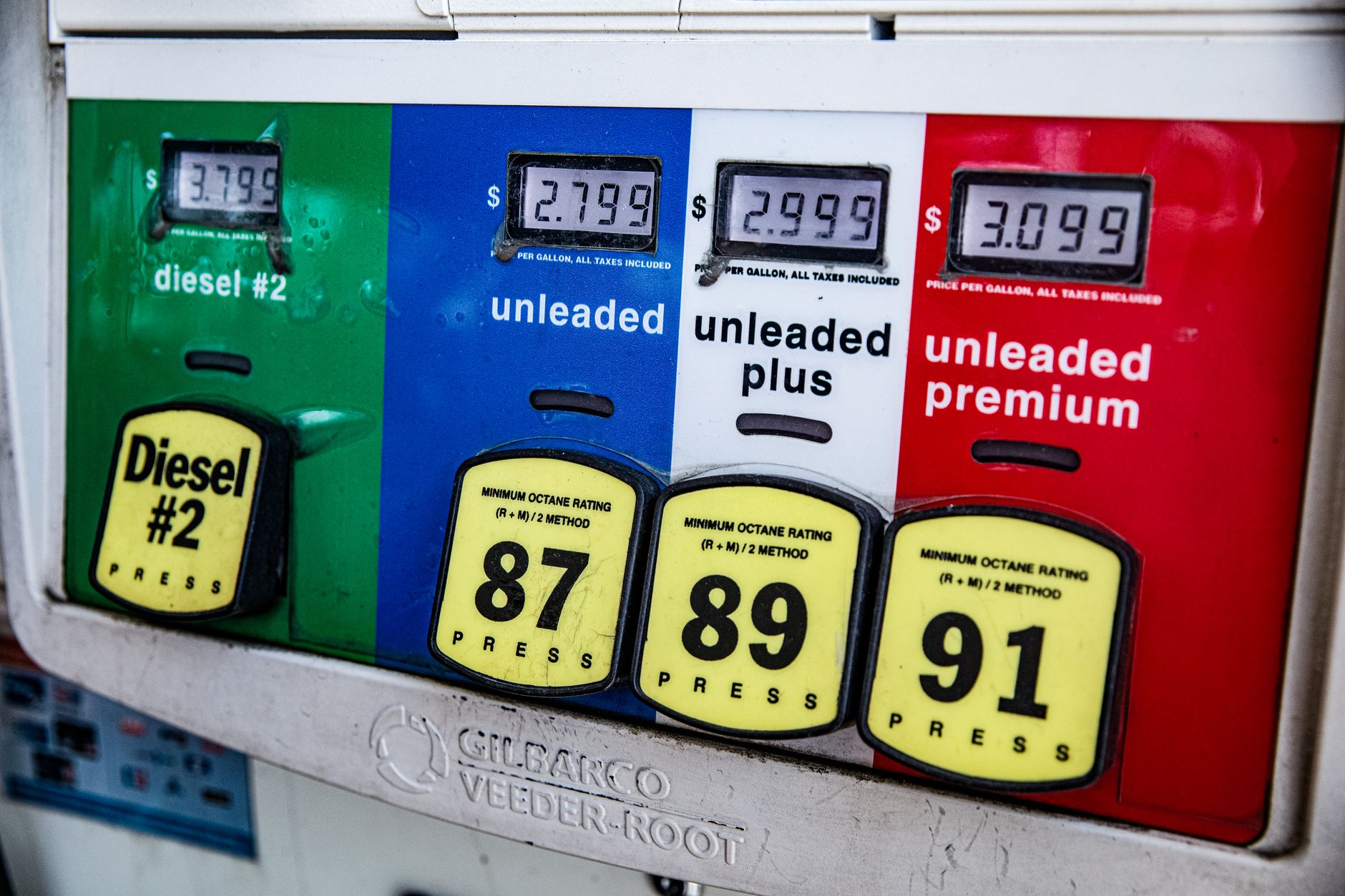
Oil prices and gasoline prices move together, but not in lockstep. A barrel of crude selling for $103 today determines the base cost of refined gasoline, but refineries add their own margins, taxes are applied, and transportation costs are baked in. Nonetheless, when crude falls from $120 to $103, consumers should see meaningful relief at the pump within one to two weeks—roughly 10-15 cents per gallon in many regions, sometimes more. The real-world example is stark: an American household running a car that travels 15,000 miles per year at 25 miles per gallon consumes 600 gallons annually. When oil prices fall by $17 per barrel (the May-to-current decline), that household might save $100-150 per year in gasoline costs, assuming refineries pass through most of the savings.
For low-income families already stretched thin by inflation, that’s meaningful money. Conversely, if prices spike again—as they would if negotiations fail—that same household faces a budget squeeze. This is why energy security is not an abstract policy concern but a household finance issue. Heating oil, used by millions in the Northeast and other regions with cold winters, tracks crude prices equally closely. Families who rely on heating oil for winter warmth are now watching these negotiations intently. A successful resolution could mean moderate heating bills next winter; a failed negotiation could mean severe price shocks entering the heating season.
Market Conditions and Practical Implications for Businesses and Consumers
Businesses dependent on stable energy costs face a critical window of opportunity right now. With oil prices down but uncertainty lingering, some companies are locking in fuel contracts at current or near-current prices, betting that volatility ahead could drive prices higher. Airlines, trucking firms, and shipping companies are making hedging decisions based on their confidence in the Iran negotiations. Those betting that talks will succeed and prices will drift lower lock in price protection at current levels; those betting on failure hold out hoping to wait further. For consumers, the practical advice is nuanced. If you’re planning a major trip involving fuel costs, lower prices today are a gift—capitalize on them.
If you’re a homeowner who buys heating oil, consider whether you want to lock in a price now or wait to see if negotiations hold. The comparison is worth making explicit: locking in at $103-105 oil equivalent today versus risking a price spike to $115+ if talks collapse is a real trade-off. The expected value depends on your confidence in the negotiations and your tolerance for risk. A key limitation is that no one—not market analysts, not government officials, not energy traders—truly knows whether talks will succeed. Market prices are already incorporating a probability that negotiations work. If you’re hedging against that bet, you’re essentially betting against the consensus, which historically doesn’t pay off more often than it does.
📨 Get Free Accountability Coverage Alerts
Free · No spam · Unsubscribe anytime
Geopolitical Risks and the Reality That Negotiations Can Fail
Energy markets are hostage to geopolitics, and negotiations between Washington and Tehran are not risk-free. Disputes remain over the size of Iran’s enriched uranium stockpile—critical because enriched uranium can be weaponized—and over what tolls Iran would charge ships transiting the Strait. Either of these issues could prove intractable. If Iran demands tolls so high that shipping companies find them economically unviable, the Strait effectively remains closed even if military blockades lift. If the U.S. demands uranium restrictions that Iran views as existential humiliation, Tehran might walk away from talks. A serious warning worth highlighting: market prices assume negotiations succeed, but don’t assume that yourself. History shows that Middle East negotiations frequently collapse unexpectedly.
In 2015, the Iran nuclear deal was struck; in 2018, the U.S. withdrew. Investors who became complacent about oil prices between 2015-2018 were blindsided when volatility returned. The same pattern could repeat. If you’re making major financial decisions—buying a car with long-term financing, committing to a heating oil budget, or running a business with tight margins—build in a safety margin for the possibility that these negotiations fail and prices spike again. Another limitation: even if negotiations succeed, the Strait of Hormuz won’t reopen overnight. Military and political sensitivities mean that reopening will be gradual and carefully managed. Full normalization of shipping might take weeks or months. During that transition period, prices could remain volatile as markets adjust to flows of Iranian crude trickling back onto world markets.

Where Oil Prices Stand in Historical Context and Why It Matters
Oil is currently trading at levels dramatically elevated compared to the pre-war baseline of approximately $72 per barrel on February 27, 2026. Even the recent decline to $103-104 represents a 40%+ premium over that baseline, which means global energy is still expensive by recent historical standards. This reflects two realities: first, that ongoing supply concerns from the disrupted Strait of Hormuz persist even with negotiation progress; and second, that global energy markets have become structurally tighter, with less spare capacity worldwide. The chart of price movements tells the story: February’s pre-war $72, the March spike to $120, the May swings between $110 and $105, and now the current $103-104 level.
Each inflection point represents a shift in market expectations about the conflict’s trajectory. For context, crude oil traded in the $70-85 range for much of 2024-2025. The current $103 represents sustained elevation, not a return to “normal.” Consumers should understand that even if negotiations succeed and the crisis passes, oil prices are unlikely to fall back to $60-70 levels in the near term. Global energy markets have adjusted to new realities.
What Comes Next—Summer Risk and Beyond
As summer approaches, three scenarios are worth considering. First, if negotiations succeed and the Strait of Hormuz reopens within weeks, prices should gradually decline toward $85-95 per barrel by late June or July as supply normalizes and panic selling subsides. Second, if negotiations stall but don’t collapse, prices may drift sideways in the $95-110 range as markets remain uncertain. Third, if negotiations fail outright, prices could spike back to $115-120 within days, and consumers should expect significant pain at the pump and in heating costs heading into winter.
The International Energy Agency’s warning about a “red zone” summer scenario carries real weight. If the Strait remains closed or only partially reopens, and if summer demand for cooling and gasoline peaks while inventories are depleted, the market could face genuine shortages, not just high prices. Such a scenario would ripple through the economy: airlines would pay higher fuel surcharges, trucking costs would rise, and plastic manufacturing would face elevated feedstock costs. For policymakers, this underscores why the Iran negotiations matter so much—they’re not just about oil prices; they’re about economic stability.
Conclusion
Oil prices have fallen sharply this week as U.S.-Iran peace negotiations signal progress, with Brent crude dropping to $103.54 and WTI to $96.60 after months of elevated prices caused by the Strait of Hormuz crisis. The 55% spike from pre-war levels has cooled into a 40%+ premium over the February baseline, providing some relief at gasoline pumps and heating oil contracts. However, this improvement is conditional on successful negotiations and faces real risks: disputes over uranium enrichment and Strait tolls remain, talks could collapse unexpectedly, and even if successful, reopening shipping lanes will take time.
For consumers and businesses, the practical path forward is to recognize both the opportunity and the risk. Take advantage of current lower prices where you can, but don’t assume they’ll decline further—build a safety margin into your planning for the possibility that geopolitical negotiations fail and energy costs spike again. The summer ahead will be critical: if the Strait reopens, expect continued price moderation; if it doesn’t, expect a volatile energy market and real economic headwinds. Stay informed on negotiation progress, because your household energy budget depends on it.
You Might Also Like
- Oil Prices Today: Why Experts Are Concerned About Energy Costs
- Oil Prices Today: Energy Prices Jump Following International Tensions
- Oil Prices Today: Crude Markets React to Supply Fears