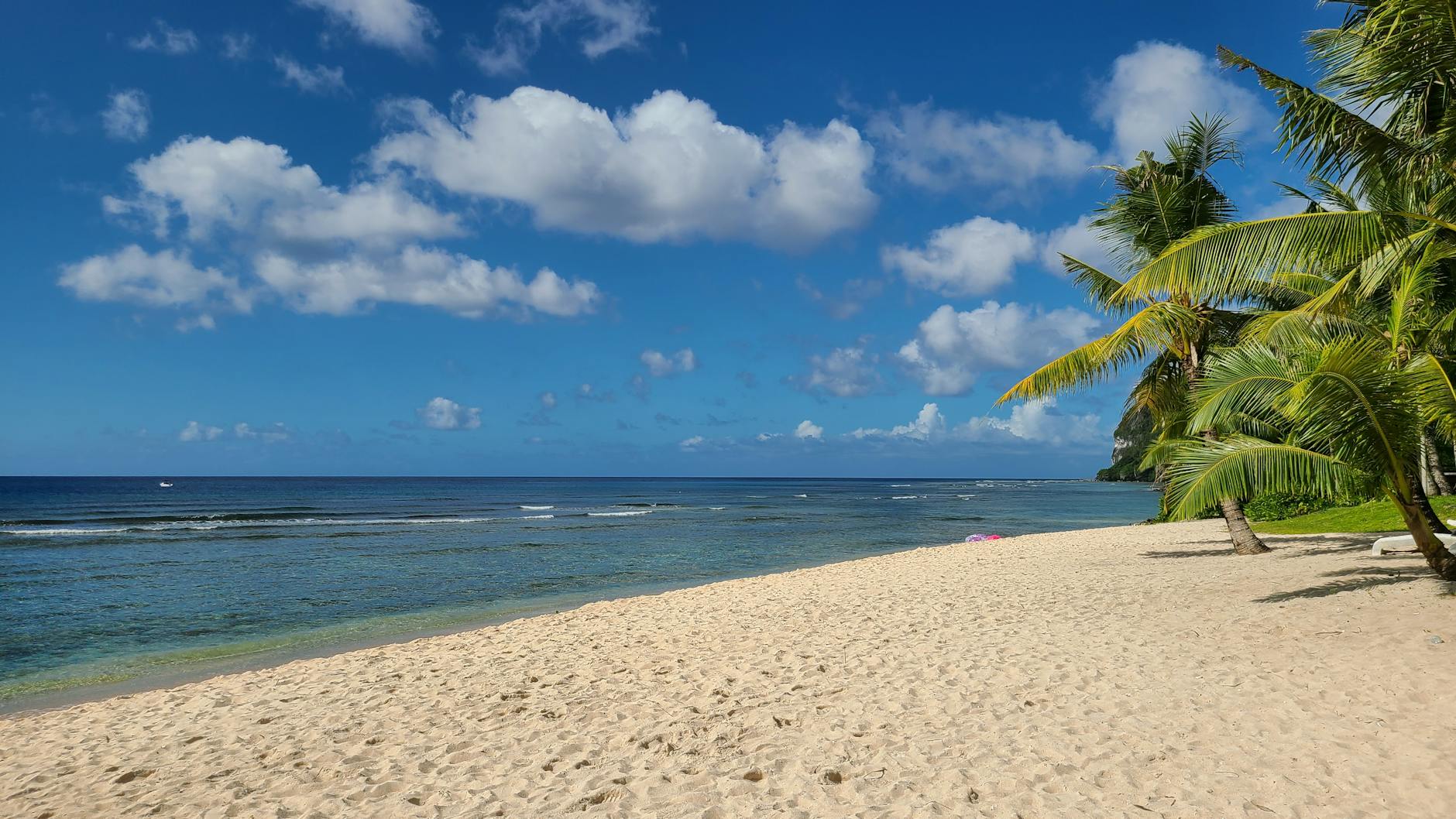
The Marshall Islands, a small Pacific island nation with a population of roughly 40,000, has done something no other country has managed to pull off: it launched a genuine, no-strings-attached Universal Basic Income for every resident citizen. The program, called Enra, began distributing payments on November 26, 2025, giving every enrolled Marshallese citizen approximately $800 per year in quarterly installments of around $200. That means a family of five living in Majuro receives roughly $4,000 a year — not a fortune by American standards, but a meaningful sum in a country where median incomes are low and the cost of imported goods keeps climbing. The program has no means test and no work requirement. Children qualify.
There is no application process beyond basic enrollment. As of September 2025, more than 33,000 resident citizens had signed up. The only real restriction is residency: you have to actually live in the Marshall Islands to collect, a deliberate design choice meant to discourage the steady outflow of Marshallese citizens to the United States and other countries. This article breaks down how Enra is funded, why it may actually be sustainable, the role of U.S. nuclear testing history in making it possible, and what limitations and risks come with being the world’s first national UBI guinea pig.
Table of Contents
- How Does the Marshall Islands Pay Every Citizen $800 Per Year in Universal Basic Income?
- Where Does the Money Come From — and Can It Last?
- Why Residency Requirements Are Central to the Program’s Design
- Digital Payments and Financial Inclusion in a Remote Island Nation
- What Are the Risks and Limitations of the Marshall Islands’ UBI Experiment?
- Climate Change and the Existential Stakes for the Marshall Islands
- What the Marshall Islands’ UBI Means for the Global Basic Income Debate
- Conclusion
- Frequently Asked Questions
How Does the Marshall Islands Pay Every Citizen $800 Per Year in Universal Basic Income?
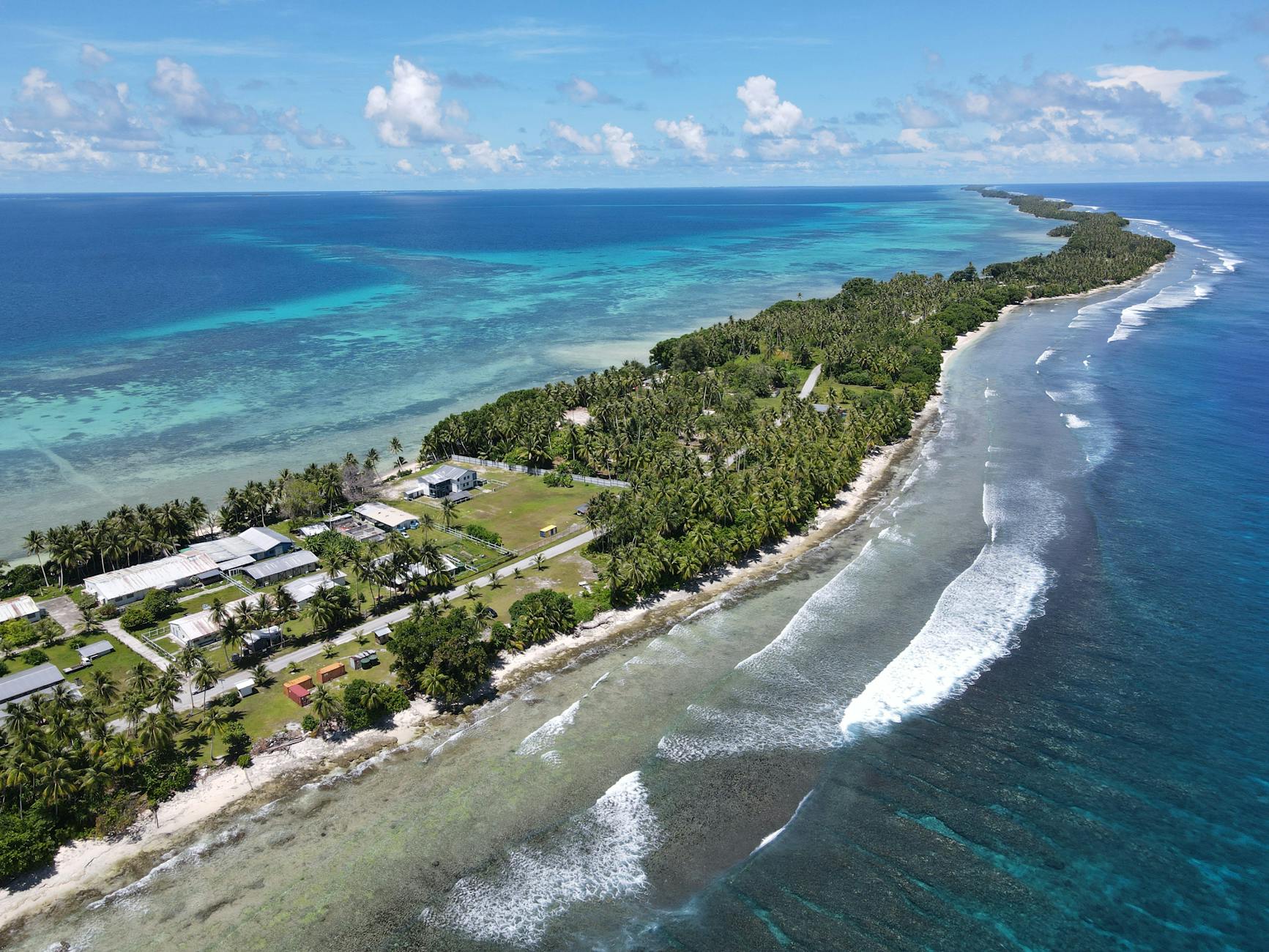
The mechanics are straightforward. Every enrolled resident Marshallese citizen receives a quarterly payment of approximately $200, totaling around $800 per year. Payments can be collected three ways: a traditional paper check, direct deposit into a bank account, or through Lomalo, a government-backed digital wallet. Lomalo uses a USD-linked stablecoin called USDM1, which runs on blockchain infrastructure. For a nation spread across 29 coral atolls in the middle of the Pacific Ocean, where physical banking infrastructure is sparse, the digital wallet option is not a gimmick — it is a practical solution to a real logistics problem. Compare this to other UBI pilots around the world. Finland’s much-discussed 2017 experiment gave payments only to 2,000 unemployed citizens.
Stockton, California’s program covered just 125 residents. Kenya’s GiveDirectly project, while large, is run by a nonprofit rather than a sovereign government. The Marshall Islands is the first nation where the government itself pays every qualifying citizen, universally, from public funds. That distinction matters because it tests UBI as actual national policy rather than as a limited academic experiment. The per-person structure is also worth noting. Many cash transfer programs pay per household, which can shortchange larger families or create perverse incentives around household composition. Enra pays per individual, including children. A single mother with three kids receives four payments, not one.
Where Does the Money Come From — and Can It Last?
The funding source is the Compact Trust Fund, a financial instrument established under the Compact of Free Association between the Marshall Islands and the United States. That compact exists in large part because the U.S. conducted 67 nuclear weapon tests on Marshallese territory between 1946 and 1958, including the Castle Bravo hydrogen bomb detonation on Bikini Atoll — the most powerful nuclear device the United States ever detonated. The trust fund is, in part, compensation for that history. The fund currently holds more than $1.3 billion in assets, and Washington has committed to contributing an additional $500 million through 2027. Enra and a related program called END (Extraordinary Needs Distribution) together draw approximately $50 million per year, which works out to roughly 3.6 percent of the fund’s total value.
Since the fund has grown at an average annual rate of 6.9 percent since 2004, the math suggests sustainability — the drawdown rate sits well below the growth rate. However, if global markets hit a prolonged downturn, that calculus changes fast. A trust fund growing at 6.9 percent annually during a period that included one of the longest bull markets in history is not guaranteed to keep that pace. The UBI alone is projected to cost about 8.1 percent of GDP once fully implemented, and the END program adds another 6 percent. That is a significant share of national economic output tied to investment returns. If the fund underperforms for several consecutive years while the population grows, the government would face a difficult choice between cutting payments and depleting the fund’s principal.
Why Residency Requirements Are Central to the Program’s Design
The Marshall Islands has been losing people for decades. Under the Compact of Free Association, Marshallese citizens have the legal right to live and work in the United States without a visa. Thousands have relocated to Arkansas, Hawaii, Oregon, and other states in search of better economic opportunities and healthcare. For a nation with a total population hovering around 40,000, every family that leaves represents a measurable demographic loss. Enra’s residency requirement is a direct response to this trend. Only citizens who actually live in the Marshall Islands can collect payments. The government is essentially making a financial argument for staying: leave, and you forfeit $800 a year per family member.
For a family of six, that is $4,800 annually — a non-trivial amount in a country where the formal economy is small. Whether this will actually reverse migration patterns remains to be seen. The forces pushing people toward the U.S. — better hospitals, higher wages, educational opportunities for children — are powerful, and $800 a year may not outweigh them. But the program at least creates a tangible financial cost to leaving. This design also means the Marshallese diaspora, which is substantial, gets nothing. Citizens living in Springdale, Arkansas — home to one of the largest Marshallese communities outside the Pacific — are excluded entirely. That is a political choice with real consequences for community relations.
Digital Payments and Financial Inclusion in a Remote Island Nation
One of the more interesting aspects of Enra is the Lomalo digital wallet option. The Marshall Islands is not a country with a bank branch on every corner. Many of its atolls are remote, accessible only by boat or small aircraft, and traditional financial infrastructure is thin. Getting a paper check to an outer island and then finding a place to cash it is a genuine logistical challenge. Lomalo addresses this by using USDM1, a stablecoin pegged to the U.S. dollar. Citizens can receive and spend their UBI payments digitally without needing a conventional bank account.
The tradeoff is that this requires digital literacy and access to a smartphone or similar device — not universal in a country where internet connectivity can be unreliable. For residents of Majuro and Ebeye, the two main population centers, this probably works fine. For someone living on a remote atoll with intermittent cell service, the paper check may remain the only practical option. The blockchain element has drawn attention from cryptocurrency enthusiasts, but it is worth keeping perspective. The stablecoin is pegged to the dollar; it is not a speculative asset. The government is using blockchain as payment infrastructure, not as an investment vehicle. Whether this approach proves more efficient than simply expanding mobile banking remains an open question, but it is a genuine attempt to solve a real problem rather than a crypto marketing stunt.
What Are the Risks and Limitations of the Marshall Islands’ UBI Experiment?
The most obvious risk is inflation. The Marshall Islands imports the vast majority of its consumer goods. Injecting $50 million a year into a small economy where supply is constrained by shipping logistics could push prices up, particularly for food and fuel. If a bag of rice costs 10 percent more because every household has more cash, the real value of the UBI erodes. This is not a theoretical concern — it is a well-documented phenomenon in small, import-dependent economies that receive sudden cash inflows. There is also the question of what happens when U.S. contributions to the Compact Trust Fund end.
Washington’s commitment runs through 2027, and while the existing fund balance may be sufficient to sustain withdrawals at current rates, the long-term picture depends on investment performance and political decisions in both Washington and Majuro. The Compact of Free Association itself has been renegotiated multiple times, and future U.S. administrations may have different priorities. Finally, $800 a year is not enough to lift anyone out of poverty on its own. It is a supplement, not a solution. Critics of UBI often point out that modest payments risk becoming a substitute for building the institutions — hospitals, schools, job training programs — that create lasting economic opportunity. The Marshall Islands government has not framed Enra as a replacement for other services, but in a country with a constrained budget, every dollar spent on direct payments is a dollar not spent on infrastructure or public services.

Climate Change and the Existential Stakes for the Marshall Islands
The Marshall Islands sits an average of about six feet above sea level. Climate change is not an abstract policy debate here — it is an existential threat. Rising seas are already contaminating freshwater supplies and eroding coastlines. Some projections suggest portions of the country could become uninhabitable within decades.
📨 Get Free Accountability Coverage Alerts
Free · No spam · Unsubscribe anytime
In that context, a UBI program designed partly to keep citizens from leaving takes on a different dimension. The government is trying to maintain a population on land that the ocean may eventually reclaim. This reality gives Enra a significance beyond economics. If the Marshall Islands depopulates before the world addresses sea level rise, it loses not just citizens but its claim to sovereignty, its exclusive economic zone, and its seat at international negotiating tables where Pacific island nations have been among the most vocal advocates for climate action.
What the Marshall Islands’ UBI Means for the Global Basic Income Debate
The significance of Enra is not the dollar amount — it is the precedent. For years, UBI advocates have argued that universal cash payments are feasible at a national level. Opponents have countered that no country has actually tried it. The Marshall Islands, however small, has removed that objection. A sovereign nation is now paying every resident citizen a regular, unconditional cash payment funded by public assets.
The question going forward is whether this model is transferable. The Marshall Islands has a unique funding source in the Compact Trust Fund, a small population, and specific geopolitical circumstances that most countries do not share. But if Enra succeeds in reducing poverty, slowing emigration, and maintaining fiscal sustainability over the next five to ten years, it will be the strongest real-world evidence UBI proponents have ever had. And if it fails — through inflation, fund depletion, or simple inadequacy — opponents will have a concrete case study to cite. Either way, the world now has a live national experiment to watch.
Conclusion
The Marshall Islands’ Enra program is a genuinely historic policy experiment. With over 33,000 citizens enrolled and quarterly payments flowing since November 2025, it represents the first time a sovereign nation has committed to paying every resident citizen a universal basic income. The funding mechanism — a $1.3 billion trust fund rooted in the legacy of U.S. nuclear testing — appears sustainable at current withdrawal rates, though it depends on continued investment growth and the broader U.S.
fiscal relationship. The program’s real test will unfold over years, not months. Whether $800 per year can meaningfully stem outward migration, whether the digital payment infrastructure works for remote communities, and whether the trust fund can absorb both UBI and supplemental distributions without eroding its principal — these are questions only time will answer. For now, a nation of coral atolls in the middle of the Pacific has done what no other country has been willing to do, and the rest of the world is watching.
Frequently Asked Questions
How much does each Marshall Islands citizen receive under the Enra UBI program?
Each enrolled resident citizen receives approximately $800 per year, paid in quarterly installments of about $200. The payment goes to every individual, including children, with no means test or work requirement.
Who is eligible for the Marshall Islands UBI?
All Marshallese citizens who reside in the Marshall Islands are eligible. Citizens living abroad — including the large Marshallese diaspora in the United States — do not qualify. Over 33,000 residents had enrolled as of September 2025.
How is the Marshall Islands UBI funded?
The program is funded through the Compact Trust Fund, established under the Compact of Free Association with the United States. The fund holds over $1.3 billion and has grown at an average of 6.9 percent annually since 2004. The U.S. has committed an additional $500 million in contributions through 2027.
Is the Marshall Islands UBI sustainable long-term?
At current rates, the Enra program and the related END distribution together draw about 3.6 percent of the fund annually, which is below its historical growth rate. However, sustainability depends on continued market performance and stable population levels. A prolonged market downturn could threaten the program.
How do citizens receive their UBI payments?
Payments can be received via paper check, direct bank deposit, or through Lomalo, a government-backed digital wallet that uses a USD-linked stablecoin called USDM1. The digital option is designed to serve citizens on remote atolls with limited banking infrastructure.
Why did the Marshall Islands implement UBI?
The program aims to help families cope with rising living costs and to discourage outward migration. Under the Compact of Free Association, Marshallese citizens can freely live and work in the U.S., and thousands have relocated in recent decades, creating demographic pressure on the island nation.
You Might Also Like
- Trump Says Foreign Countries Pay Tariffs…NY Fed Found Americans Pay 90% Instead
- Tired of Spam Texts? $500-$1,500 Per Message Owed
- SunTrust Bank Will Pay Up to $240 Million to Georgia Customers — Overdraft Fee Refunds